Retiring teacher, coach urges Colony grads to ‘find their 68’
By Jeremiah Bartz Frontiersman.com A football coach using a hockey reference as the centerpiece for his keynote address may


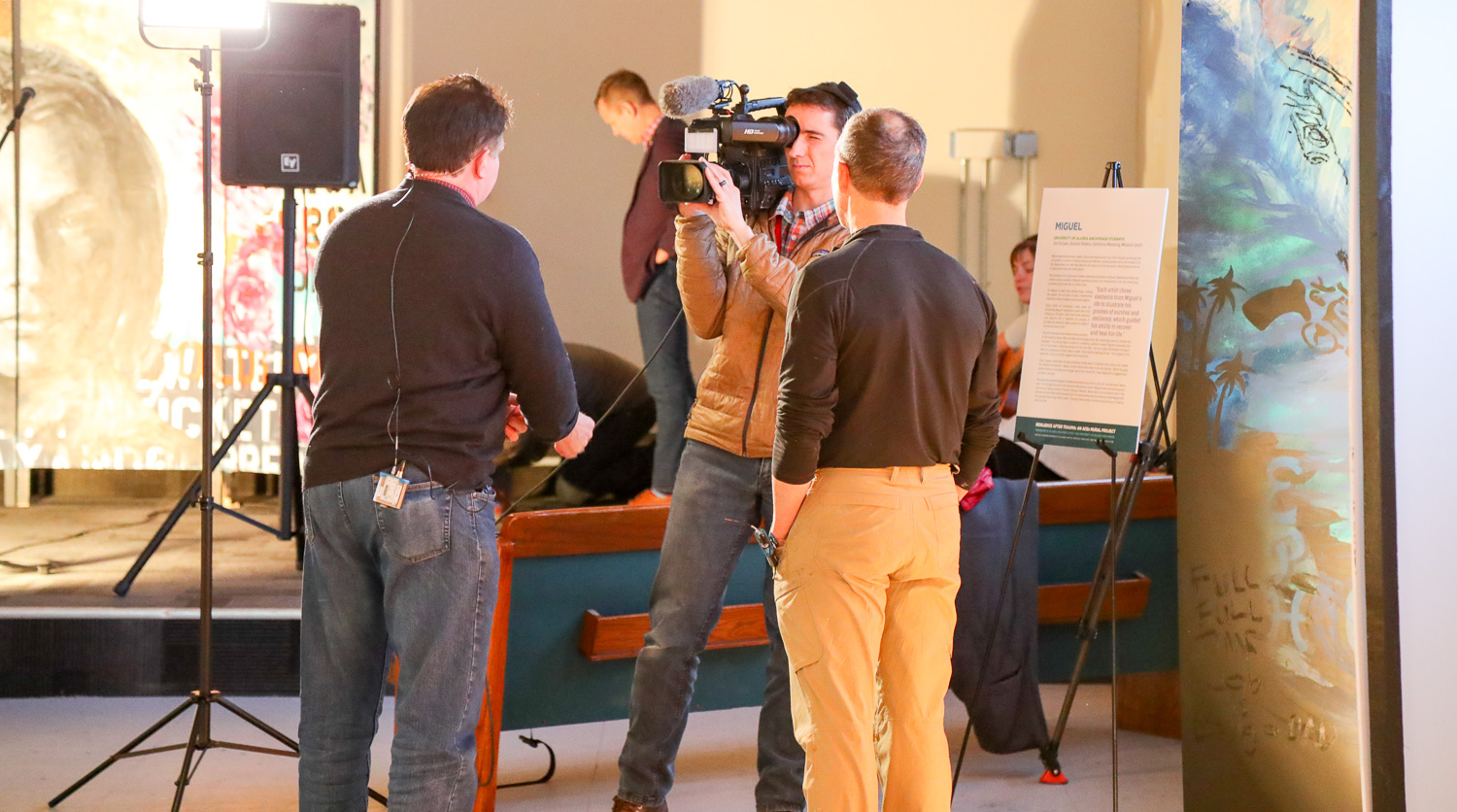
“Art is a powerful venue through which to have hard conversations,” said Trevor Storrs, President and CEO of the Alaska Children’s Trust, as he was drawing the attention of the crowd at the Church of Love for the opening of Resilience After Trauma: An ACEs Mural Project last week.
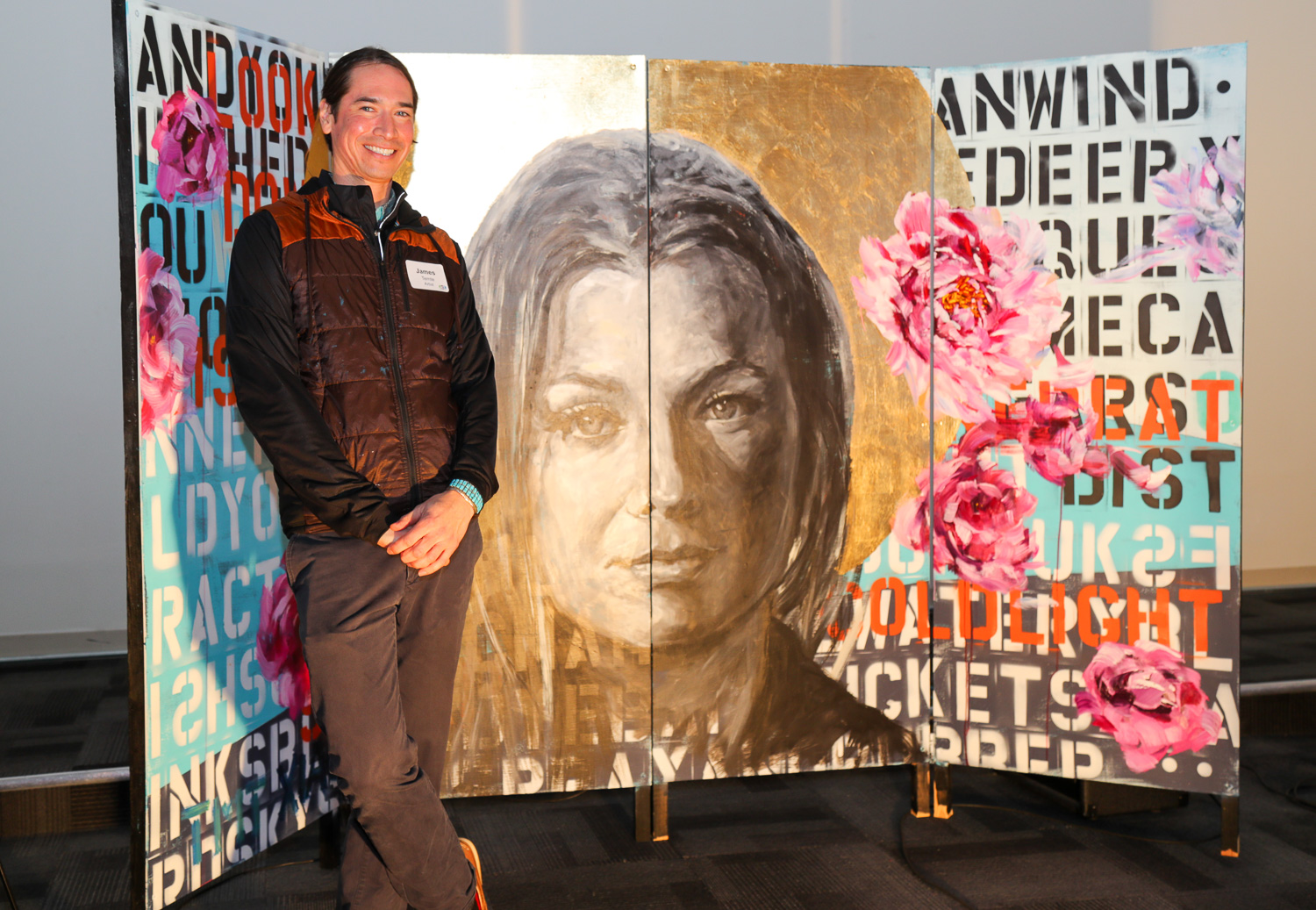
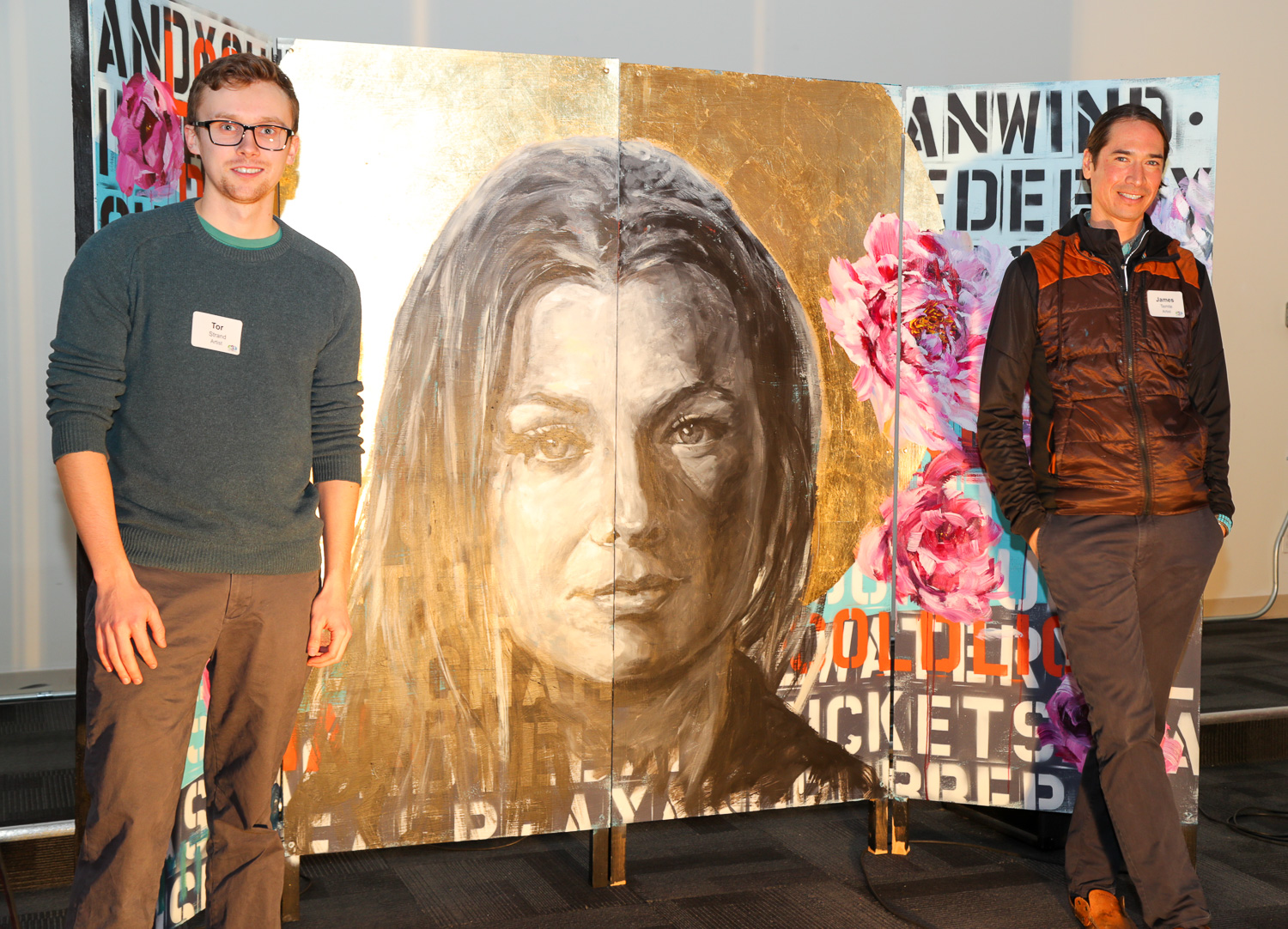
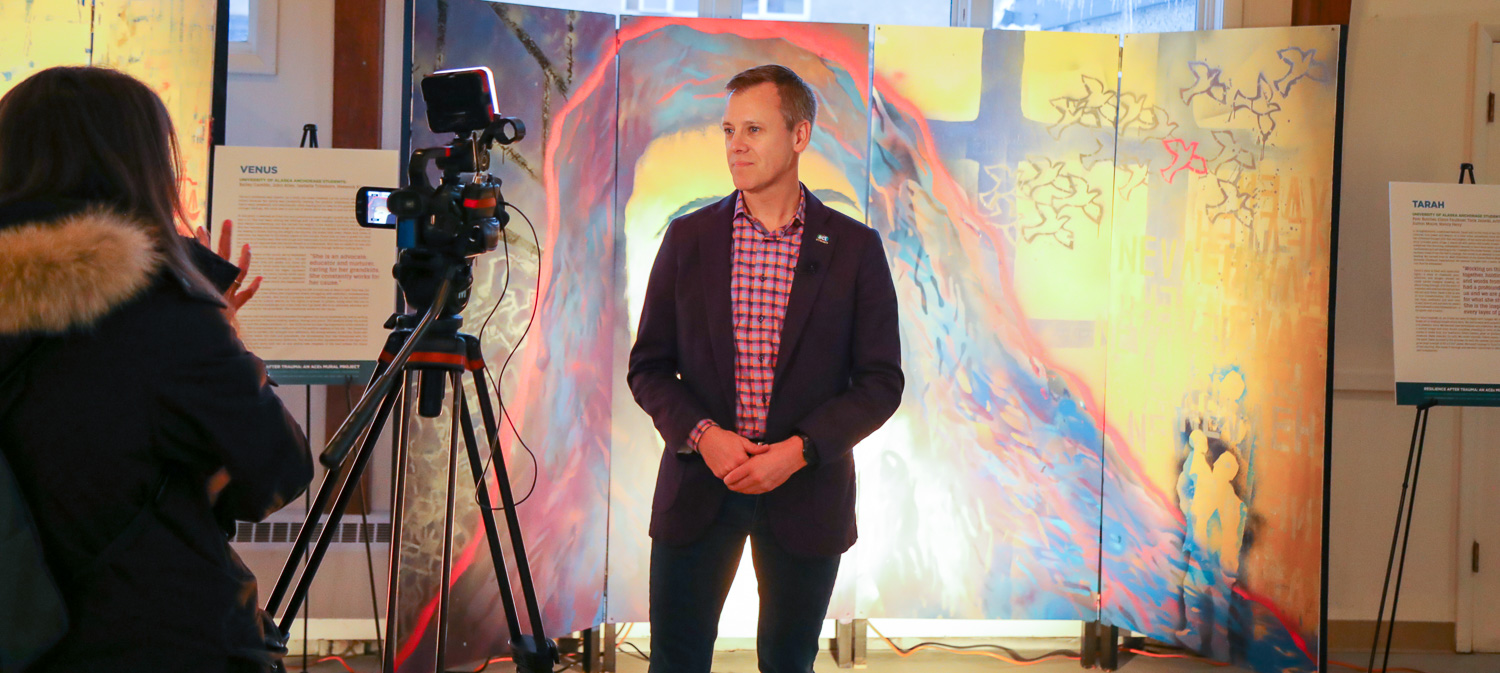
It was an accurate description for the nature of the project being unveiled. Steve Gordon, a renowned local artist, art instructor at UAA and creator of the project, explained that it had all started a year ago as he was exploring the opioid crisis and was introduced to a few recovering heroin addicts who came into his class to tell their life stories, so that his students could create mural art projects in response. As he was listening to their stories he discovered that “what was beneath the addiction, in every case, was childhood trauma and toxic stress.” From there, he reached out to find more people who might be willing to talk about what had led them initially into addiction and expand the project to include other local artists. “I didn’t want it to end there though,” he said. “I wanted the murals to also speak to hope, to show that change is possible and you can build resilience in your life.”
In the social services world, those traumas and toxic stress are referred to as Adverse Childhood Experiences, or ACEs for short, which are events in the life of a child that produce trauma and stress at a level that alters brain development. Researchers have discovered an unignorable correlation between the occurrence of intense stress and childhood trauma, and an increased chance of a wide range of long-term health and economic outcomes later in life. The higher your ACEs score, the higher the probability of negative social, economic and health outcomes down the road.
ACEs can include things like the death or incarceration of a parent, living in a home with parents who abuse drugs or struggle with mental illness, and physical, emotional or sexual abuse. The outcomes correlated to a higher incidence of these experiences include a dramatically higher risk of suicide, heart disease, cancer, asthma, depression, mental health disorders, addiction, intimate partner violence, low income, and a less-than-average life expectancy.
Brief periods of stress in the life of a child help kids to learn that while bad things happen, it is possible to get through them and come out OK. In the life of a child that lives on high alert though, that reprieve from stress never comes. When a child lives in fear, for instance, of his dad’s drunken rages, or the men her mom brings home from the bar, if someone is abusing them, or if they never know when the next explosion or outburst is coming, the neurological fallout includes a constant stream of adrenaline — fight, flight or freeze response hormones are released, as is cortisol, the body’s stress hormone. The impact that high and consistent doses of these hormones have on brain development in children can be profound, resulting in over-development of the amygdala, which handles our bodies responses to stress and fear, and potentially underdeveloped immune system development as a result of constant cortisol which is an immunosuppressant.
When Gordon became interested in this connection between a high ACEs score and the increased chance of addiction later in life, he wanted to do something to educate others. “People need to learn that trauma in kids matters because if you don’t help them on the front end you’re going to pay for them on the other end when they’re in prison, and for all the destruction in between,” he said. “I don’t think many people know how closely these things are all connected.”
The resulting project is huge, and not just metaphorically. The murals, which will be touring around the state over the coming weeks, are enormous in scale, each six-by-ten feet. Each one is different, reflecting the themes in experience each artist gleaned from the stories they heard. Some are abstract, and some are so true to life they could be photographs. Many include words or phrases, such as the poignant mantra, ‘You hold onto the love you have only by giving it away,’ and some are punch-in-the gut images, like the young man curled down over his own knees in either near madness, or deep gratitude, depending on your perspective. In each case though, their sheer size makes them impossible to ignore, which was Gordon’s hope in the first place.
In talking to the artists, and the people featured in the murals, there was in each a similar sense of resolute determination—a satisfaction that they’d found a way to use art for something larger. “Art has become so synonymous with money in most people’s eyes, that to actually be able to do something that has a really strong social meaning matters so much more,” artist Graham Dane said. “Mental health is something that’s almost never spoken about, but so many people have a mental health condition—I do—and you’ve got to pull the band aid off of that and show people what’s underneath before we can actually do something about it. But there is hope here; there is joy on the other side.”
This is the crucial point of everything Gordon and the artists were trying to accomplish—to show through art that even having lived through a nightmare as an innocent child and that the inherent high ACEs score that correlate to sadness and disruption and sickness later in life, correlation is not causation. The brain, lucky for us, is highly flexible and it is always possible, with effort, to rewire it in such a way that creates strength and resilience, the likes of which those who have never been through that sort of trauma don’t often possess or understand. The hope is they can attain a deeper intuition and perception about others than can’t easily be learned by those who never had to depend on those instincts for survival.
We as a community can’t remain forever in the cycles of trauma and addiction that plague so many of our citizens and are passed through generations. To break these cycles, the people trapped in them have to know there is a way out. These murals are the artists and recovering addicts collaborative effort to create a massive, flashing neon sign to that effect, as if to say, to all of us: you are worth something, you have a lot to give, there is hope, and it’s time to get to work.

By Katie Stavick Frontiersman.com The atmosphere was electric at the Menard Center on Tuesday evening as the Wasilla High

Frontiersman.com Mat-Su Regional Medical Center was awarded an “A” Hospital Safety Grade for the 5th consecutive grading round

By Katie Stavick Frontiersman.com As Alaska continues to grapple with the highest rates of suicide in the nation, including

By Katie Stavick Frontiersman.com Students from the Houston Middle School (HMS) Leadership Club are making waves in the Matanuska-