Retiring teacher, coach urges Colony grads to ‘find their 68’
By Jeremiah Bartz Frontiersman.com A football coach using a hockey reference as the centerpiece for his keynote address may


Featuring symphonic photochoreography by
Nicholas Bardonnay, multimedia artist of Westwater Arts
Saturday, Nov. 11, 2017 – 8 p.m.
Atwood Concert Hall, ACPA
On Saturday at 8 p.m., the Anchorage Symphony Orchestra pays tribute to the men and women who have served in our nation’s armed forces with a Veterans Day Salute. This patriotic homage begins with the world premiere of In Selfless Service... written by retired Army Band Chief Arranger, Paul Murtha. In remembrance of the 100th Anniversary of WWI, Aaron Copland’s poignant Quiet City will accompany a photo montage of “The Great War.” WWII images commemorating the 75th anniversary of mankind’s most widespread conflict will be underscored by the third movement of Vaughan Williams’ Symphony No. 5. The program also includes Veteran Samuel Barber’s Essay No. 2, excerpts from Richard Rodgers’ stirring Victory at Sea, and Copland’s inspirational, Lincoln Portrait.
A versatile composer-arranger, Paul Murtha is in constant demand in and around Washington, D.C. He has written music for some names you might recognize, such as acclaimed mezzo-soprano Denyce Graves, Patti LaBelle, Kathy Mattea, Lou Rawls, Kenny Loggins, and for Ken Burn’s “Music of the Civil War”. Murtha has also worked with the National Symphony Orchestra on arrangements for artists such as Trace Adkins, Jordin Sparks, Gloria Estefan, Gladys Knight, Huey Lewis and the News, The Four Tops, The Beach Boys, The Blues Brothers, and Five for Fighting to name a few.
From 1990 to 1996, he served as the Chief Arranger of the United States Military Academy Band at West Point, NY. He then went on to serve on the arranging staff of The United States Army Band, “Perishing’s Own”, in Washington, D.C., from 1996 to 2001, and was that band’s Chief Arranger from 2001 to 2016. Murtha will premiere his In Selfless Service...(Fanfare, Reflection, and Celebration), commissioned by the ASO commission club, Musica Nova.
When asked about his inspiration for the piece, Murtha commented, “In Selfless Service…(Fanfare, Reflection and Celebration) is a piece written in honor of and dedicated to all veterans of the United States Armed Forces. After discussions with Maestro Fleischer it was decided that the piece should be celebratory in nature and written in overture form, five-ten minutes in duration.
When I thought about writing a piece in honor of veterans I immediately thought of the concept of selfless service; that phrase is really the core of what being in the military is about…to put others, their needs and welfare before self. To use your talents and gifts to serve others or as the case may be - to protect others - without expecting anything in return; to be a part of something bigger than yourself. Veterans understand this, they have lived it and have expected nothing in return…it’s all in a day’s work. Truly an example the whole world can benefit from, I salute you and your service. It has been my pleasure and honor to write this piece dedicated to our veterans and it is my humble hope that it will warm the hearts of veterans who hear it…and help others to appreciate our veterans’ selfless service.”
Copland’s Quiet City was originally written as incidental music for Irwin Shaw’s play with the same name. Shaw’s play didn’t do well and closed after just two preview performances. A year later, Copland re-orchestrated the original music into an independent piece for string orchestra, solo trumpet, and solo English horn. According to Copland, the piece was "an attempt to mirror the troubled main character of Shaw's play," who had abandoned his Jewish heritage in order to pursue material success by Anglicizing his name, marrying a rich socialite, and becoming the president of a department store. As he plans his next move into ever higher socioeconomic echelons, he is stabbed with memories and is recalled to his conscience by the haunting sound of his brother's trumpet playing.
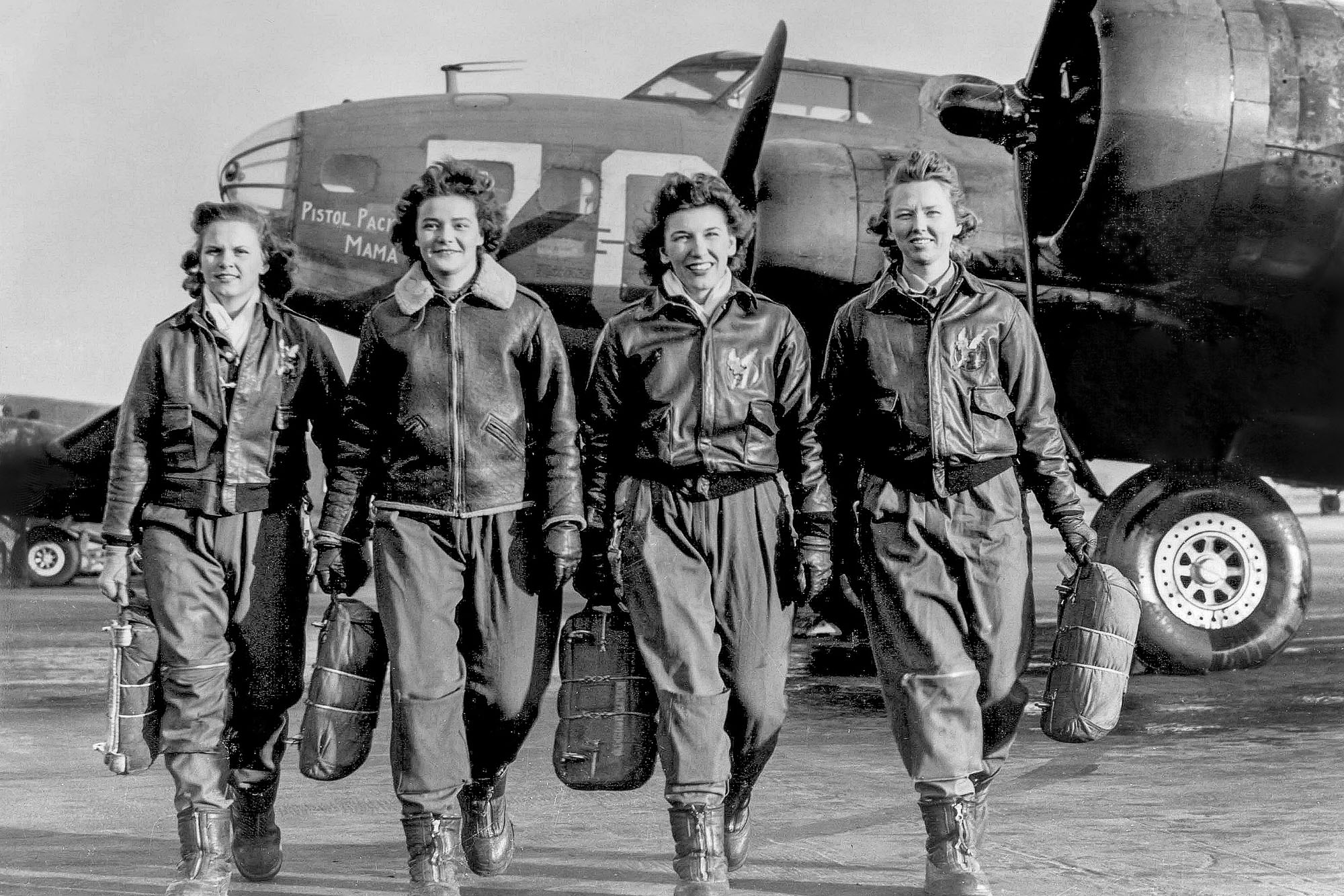
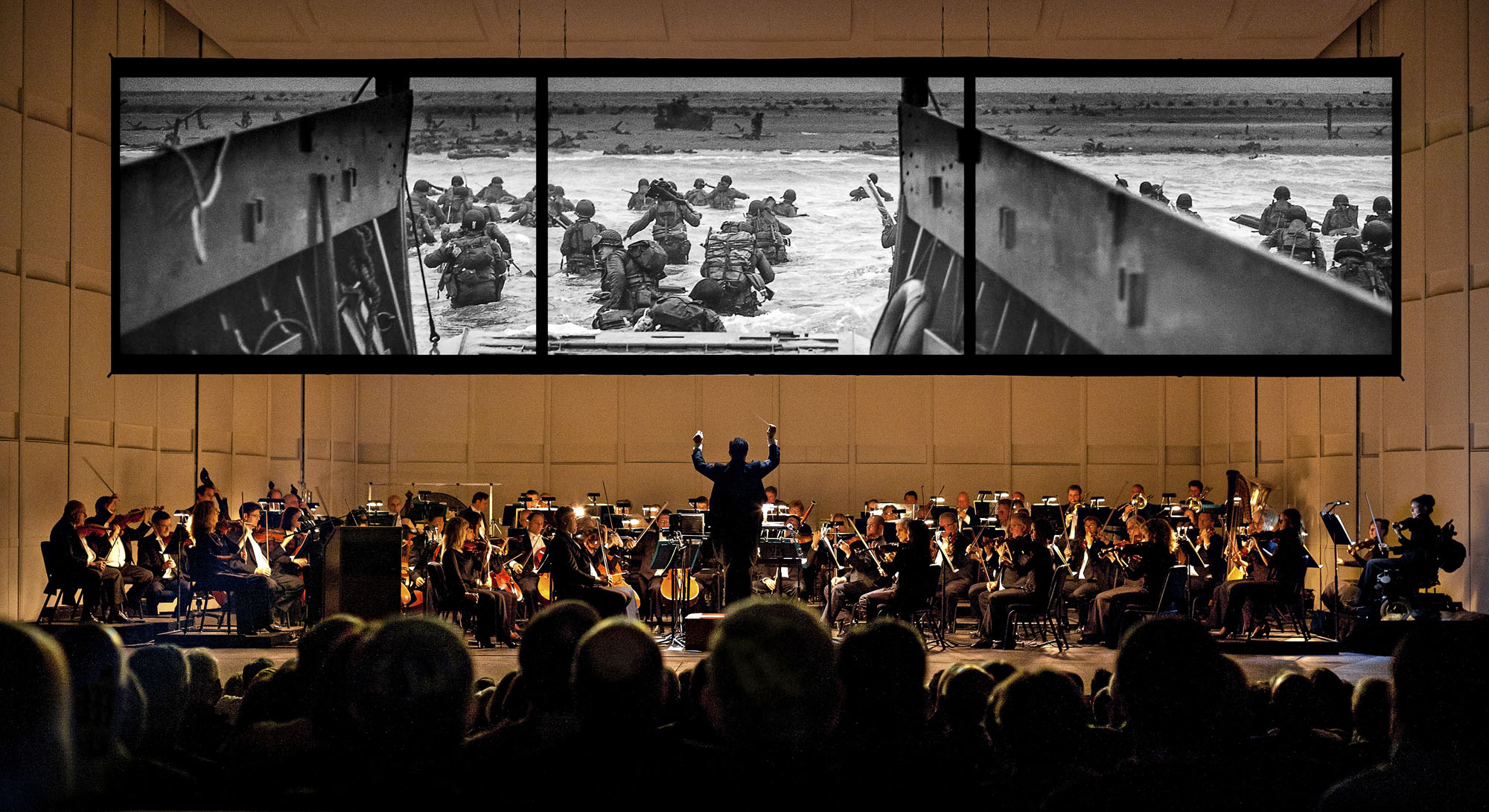
The ASO’s recognition of the ongoing 100th Anniversary of WWI includes Copland’s dramatic Quiet City accompanied by a photo montage of “The Great War,” a turbulent period from 1914 to 1918. Titled No Man’s Land, these thoughtfully selected photos from over a dozen countries emphasize the collision between centuries-old traditions and the emergence of modern warfare that set the stage for the 20th century’s abrupt coming of age. This is followed by the third movement of Vaughan Williams’ Symphony No. 5 featuring archival WWII images commemorating the 75th anniversary of history’s most widespread conflict. Referred to as Citizen Soldier, this presentation reflects on the struggle, sacrifice, and unprecedented economic, industrial, and human mobilization that occurred during World War II, reminding us why these men and women are called the “Greatest Generation”.
The symphonic choreography for these powerful pieces has been put together by Nicholas Bardonnay, photographer, multimedia artist, and the Creative Director and CEO of Westwater Arts. Since joining Westwater Arts in 2009, Nicholas has worked on more than 75 concerts with orchestras around the world. He has photographed, produced, and performed over a dozen photochoreography pieces. During concerts, Nicholas uses multiple digital projectors to fill a panoramic screen with hundreds of tightly choreographed image transitions, which he live-cues from memory. Anchorage audiences may recognize his name from his work with the ASO for our Season Finale two years ago that included images from Iceland and crowd sourced images of Alaska. Bardonnay comments, “As we celebrate Veterans Day, both pieces are meant to pay special tribute to the ordinary citizens who found themselves in the midst of these two history-changing events.”
The same broadcast that premiered his emotional Adagio for Strings also included Barber’s Essay for Orchestra (Op. 12), which explored a new single-movement format for a concert piece. As Barber’s talent became evident, so did the request for new works, and in 1942 he was commissions to write a piece to commemorate the centennial of the New York Philharmonic. He returned to his single movement “experiment” and wrote his Second Essay for Orchestra (a third would follow near the very end of his career). This Second Essay doesn’t have a particular program, Barber remarked that the piece “was written in wartime” which may have influenced him a great deal. Not long after completing this new piece Barber went on to serve in the Army Air Corps.
Six years after the end of WWII, Broadway composer Richard Rodgers, was approached by an NBC television executive and asked, "If you were approached to do some work for the United States Navy, we'd like your assurance that you wouldn't refuse to consider it." Rodgers replied, "Well, of course I wouldn't refuse to consider an offer from the United States Navy." “The work” was a score for the documentary television show, Victory at Sea about warfare in general during World War II, and naval warfare in particular. The 26-part series originally aired on NBC in 1952–1953, then was condensed into a film released in 1954. The series, which won an Emmy award in 1954 as "best public affairs program", played an important part in establishing historic "compilation" documentaries as a viable television genre. Rodger later went on to re-orchestrate and record excerpts from the music soundtrack.
Copland’s musical tribute, Lincoln Portrait, closes this special evening. When asked to write a musical portrait of an “eminent American”, Copland chose our 16th president, Abraham Lincoln. He developed themes using folk songs that were given lyrics and sung at rallies supporting Lincoln on the presidential campaign trail. These songs include Camptown Races and Springfield Mountain. To tell Lincoln’s story, Copland incorporates materials from speeches and letters he wrote, including the Gettysburg Address. Before the Boston Symphony premiere, Copland wrote, “I wanted to suggest something of the mysterious sense of fatality that surround Lincoln’s personality…something of his gentleness and simplicity of spirit.” Anchorage actor and Vietnam Veteran, John Ahearn will give voice to Lincoln’s words.
Anchorage Symphony’s Veterans Day Salute, Saturday, November 11, 2017, (8pm) in the Atwood Concert Hall, Alaska Center for the Performing Arts. Infrared headphones for the hearing impaired are available concert night from the House Manager on the Orchestra Level. Tickets: Adult, $52-$27; Youth, $24.75-$12.50; Senior, $46.50-$24.50 (prices include surcharges and fees). Military, student and group discounts available. To purchase tickets, visit the CenterTix Box Office at the Alaska Center for the Performing Arts orwww.centertix.com or call 263-ARTS (2787), toll free at 1-877-ARTS- TIX.
Program
Paul Murtha............................ In Selfless Service...
(Fanfare, Reflection, and Celebration)
(World Premiere)
Copland……..Quiet City, No Man’s Land (WWI)
Vaughan Williams….Symphony No. 5 in D Major
III. Romanza, Citizen Soldier (WWII)
Barber………………………………..Essay No. 2
Rodgers………………...Victory at Sea (excerpts)
Copland…………...…………….Lincoln Portrait

Frontiersman.com Multi-platinum, Grammy-winning artist Amy Grant will perform at the 2026 Alaska State Fair on Monday, August

By Katie Stavick Frontiersman.com Celebrated band director Dr. Jamin Burton received quite a surprise at Colony High School this

Frontiersman.com Singer, composer and actor Lyle Lovett will close out the 2026 Alaska State Fair with a performance on

Frontiersman.com Mat-Su Health Foundation has debuted a refreshed brand identity, including new logos for the Foundation and its