Retiring teacher, coach urges Colony grads to ‘find their 68’
By Jeremiah Bartz Frontiersman.com A football coach using a hockey reference as the centerpiece for his keynote address may


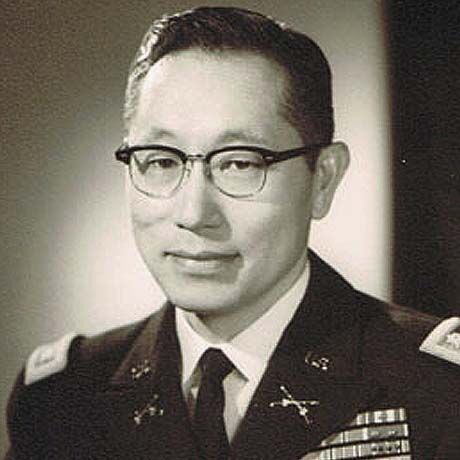
1941: Capt. Fred Ohr is the first and only American fighter ace of Korean descent
Dr. Fred Ohr was born in Portland, Ore., in 1919, and became an aviation cadet in 1941. He was later assigned to the 2nd Fighter Squadron, 52nd Fighter Group in North Africa and Sicily as a fighter pilot flying Spitfires. He scored his first aerial combat victory flying a Spitfire in 1943. The rest of his victories came after the group transitioned to P-51s in 1944. Ohr ended his tour of duty as the squadron’s commanding officer.Then-Maj. Fred F. Ohr served with: 2nd Fighter Squadron, 52nd Fighter Group; 116th Cavalry Regiment, Idaho National Guard; 183rd Field Artillery; 115th Cavalry; 12th Air Force; 15th Air Force; and 68th Material Service Squadron. After the war, he returned to college in California. He studied at the University of California, Berkley, and Northwestern Dental School in Chicago. He established a career as a dental surgeon in Chicago.
1951: The first Asian American to lead a combat battalion in a war
Col. Young-Oak Kim is also the only Korean American to be awarded the Distinguished Service Cross for his actions at the Battle of Anzio during World War II. Kim, having reenlisted and promoted to major, became the first ethnic minority to command a regular combat battalion, the first of the 31st Infantry. When then-2nd Lt. Young Oak Kim reported for duty at Camp Shelby, Miss., in February 1943, the commander of the 100th Battalion (Separate), Lt. Col. Farrant Turner, offered him an immediate transfer because “Koreans and Japanese don’t always get along. “Kim refused on the spot,”You’re wrong. They’re Americans, I’m American, and we’re going to fight for America.” The young Korean American lieutenant was being both patriotic and pragmatic. Born in 1919 in downtown Los Angeles; amid Japanese, Chinese, Mexican, and Jewish immigrants, Kim knew his opportunities for advancement would be limited in a “white man’s army.” If I wasn’t with the 100th,” Kim recalled many years later, “I would be a PR [Public Relations] officer or have some insignificant duty someplace else, because nobody was going to let me, as an Asian, command regular troops.”
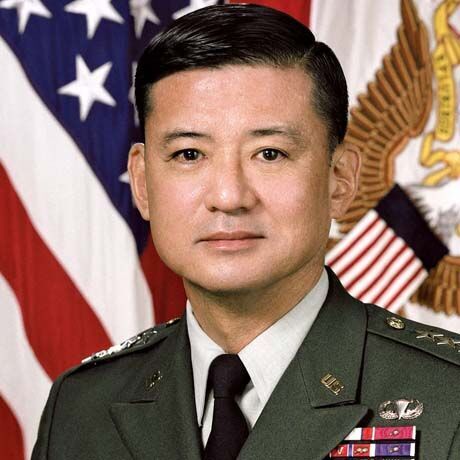
1999: The first Asian American four-star general and 34th Chief of Staff of the Army
Erik K. Shinseki made history in 1997 as the first Asian American promoted to the rank of general. He was tasked with being commanding general of U.S. Army Europe, commander of Allied Land Forces Central Europe and commander of NATO’s Stabilization Force in Bosnia-Herzegovina. Two years later, after a short assignment as the vice chief of staff, Shinseki became the 34th Chief of Staff of the Army. Shinseki credited his mother and the brave Asian Americans who served in World War II for paving the way for his success during a speech at the installation’s Asian Pacific American Heritage Month Observance.
Shinseki assumed duties as the 28th Vice Chief of Staff, United States Army, Nov. 24, 1998. Shinseki assumed duties as the 34th Chief of Staff, United States Army, June 22, 1999. He retired from the United States Army in June 2003. Shinseki made history again as the first Asian American to hold the post of secretary of veterans affairs, serving from 2009 to 2014 in the Obama administration.
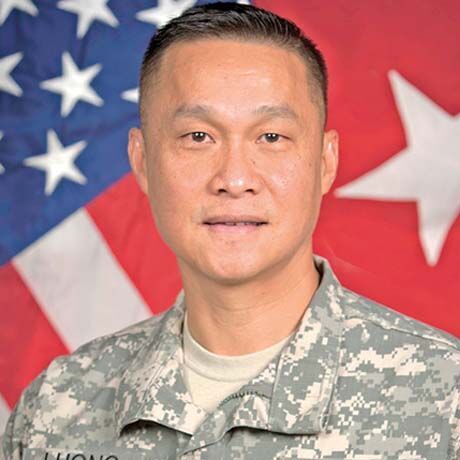
Luong emigrated from Vietnam with his family to the United States in 1975 as a political refugee. Luong came to the United States as part of Operation Frequent Wind, a mission to help rescue Vietnamese citizens from the country during the final days of the Vietnam War. Luong’s nearly 27-year military career stemmed from his experience on the deck of the USS Hancock when he was a little boy leaving Vietnam.
Almost 40 years after his rescue, family and friends watched as Luong became the first Vietnamese-born general officer in the U.S. military during a promotion ceremony on Cooper Field at Fort Hood, Texas, where he was promoted to the rank of brigadier general, Aug. 8, 2014.
Luong retired in 2021 after 34 years of dedicated and faithful service in the U.S. Army.

By Airman 1st Class Theodore Gowdy Joint Base Elmendorf-Richardson Public Affairs In July 2025, the Secretary of War released
Frontiersman.com Alaskans aged 17 to 28 have a unique opportunity to earn a college degree with major financial support
By Katie Stavick Frontiersman.com The United States Marine Corps has launched a strategic initiative known as "Campaign - Alaska,
By Katie Stavick Frontiersman.com As the 'Guardian of the North,' Alaska has historically been on the front