Retiring teacher, coach urges Colony grads to ‘find their 68’
By Jeremiah Bartz Frontiersman.com A football coach using a hockey reference as the centerpiece for his keynote address may


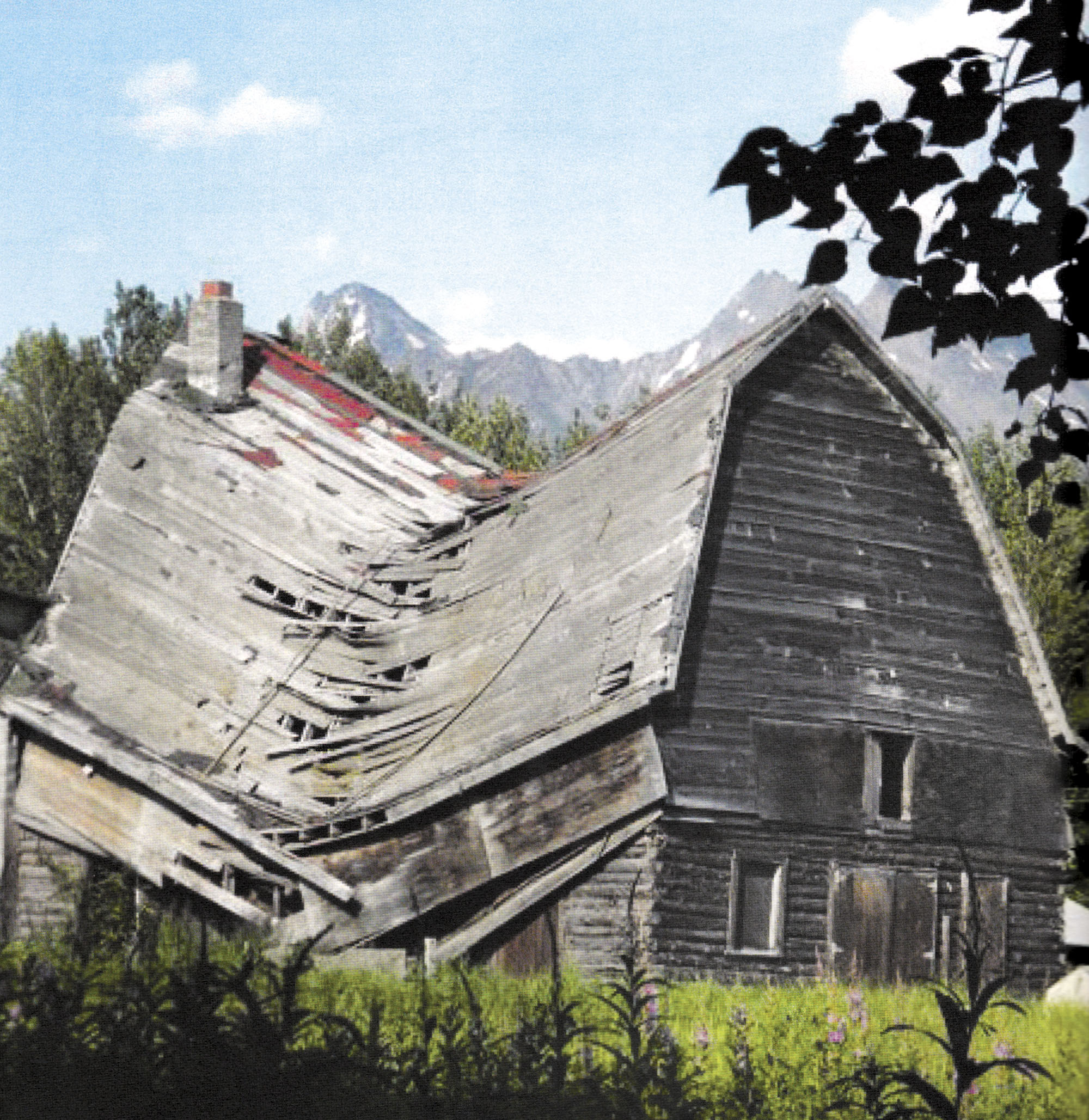
Matanuska Colony barns dot the Valley landscape. Some appear like jewels in the firmament. Others, sadly, jut like ribs of long-ago shipwrecks, while others still — from neglect, fire or bulldozer blade — have sunk, disintegrating slowly into the earth from which they sprang.
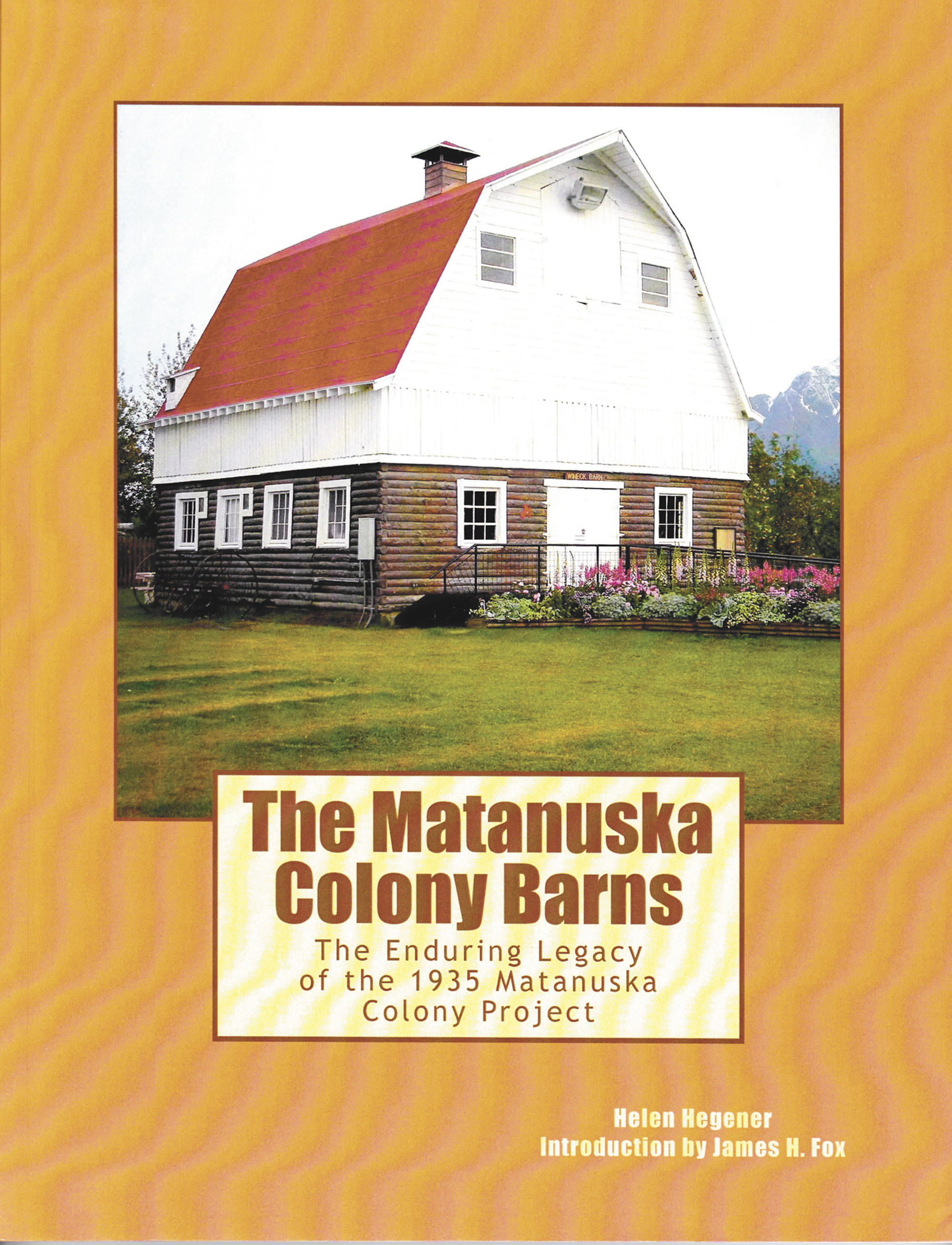
These simple and lovely structures, whether derelict or carefully restored, are the subject of a new book by local author and photographer Helen Hegener. “The Matanuska Colony Barns: The Enduring Legacy of the 1935 Matanuska Colony Project” (Northern Light Media, $29) has arrived in stores just in time for the annual spring Colony Days celebration.
Hegener has produced more than a coffee-table tome of lovely photos. Her book holds a succinct but comprehensive history — well-researched, reader-friendly, and amply illustrated with historic photographs, professional full-color images, and personal snapshots from friends and fans of the Colony barns.
The first chapters provide a historical, political and agricultural backdrop for the Matanuska Colony Project. Hegener provides examples of barns throughout Alaska, including intricate and impressive dog barns built to accommodate dozens of dog teams for engineering feats such as constructing the first telegraph line to span the Interior of Alaska. She tells of Charles and Anna Creamer who, in 1928, purchased a small dairy in Fairbanks that became the largest dairy operation in Interior Alaska and has since become the widely visited Creamer’s Field Migratory Waterfowl Refuge.
Barns were constructed for agricultural experiment stations as early as 1889 in Sitka and Kodiak. The Matanuska Agricultural Experiment Station, now called the Matanuska Experiment Farm, located on Trunk Road, was launched in 1917 by M.D. Snodgrass. In 1931, the federal government transferred ownership of all state experimental stations to the College of Agriculture and Mines in Fairbanks, renamed the University of Alaska in 1935.
It’s often assumed that farming in the Valley had its beginnings with the 1935 Colony project. However, local agriculture actually came into its own between 1915 and 1917 when 150 settlers arrived and filed for homesteads, most intending to farm. Nearly all of the available land was homesteaded, complete with homes, barns and outbuildings, during that period. Barns from the pre-Colonist era survive today, some lovingly maintained and restored.
It’s the 1935 Matanuska Colony, however, that turned the eyes of the nation to the Valley. Following the nationwide calamity of the Great Depression of the late 1920s and early 1930s, families, traditionally proud of their self-reliance, found themselves losing their land and homes, without jobs, nearly without hope.
The Matanuska Colony Project, as outlined in Hegener’s book, was one of a number of “complex, ambitious and controversial programs initiated under Franklin Roosevelt’s New Deal Federal Rural Development Program, … a series of economic programs designed to provide the ‘3 R’s’: Relief for the poor and unemployed, Recovery of the economy to normal levels, and Reform of the financial system to prevent a repeat depression.”
Among thousands of eager applicants, 203 families were chosen as settlers in the “New Frontier.” They had to be youthful (adults ages 35 to 40), healthy and strong, with a background in agriculture. They were chosen among families who had been on relief (welfare) for some time. And, they had to be ready to move. Right then.
Each family was limited to 2,500 pounds of personal possessions. The upright piano on display in the Colony House Museum was packed tightly with clothing and soft goods prior to shipping to Alaska. Only families from the northern tier states of Wisconsin, Minnesota and Michigan were chosen, as they would, presumably, more readily adapt to the rigors of the Alaska climate.
With the pioneers arrived 400 transient workers from the Pacific Coast to clear land, build roads, houses, a creamery, a school and a community hall. The emphasis the first year was on building houses for the families, allowing them to move their tent city dwellings. It wasn’t until 1936 that work on the barns was begun.
According to Valley historian Jim Fox, who contributed to the book, “Building a barn with a skilled crew took about three weeks. In summer, crews sometimes worked well past midnight into the sunny northern nights and new days. Non-Colonist crews of hired carpenters were used to start or even finish a great number of the barns. At a minimum, this crew laid out the pilings and joists to start the barns level and square, leaving groups of neighboring Colonists to raise their own barns, as farmers have traditionally done.”
While history of the political and economic climate of the era is key to comprehending the importance and impact of the barns as symbol of the grand agricultural experiment that was the Matanuska Colony, it is in the second half of Hegener’s book that beats the heart of her topic.
Nineteen barns, almost half of those remaining, receive the spotlight of personal familial history. Some lineages are long, as in the Stahler/Jensen/Bowens/McCormick/Olson barn. Only one entry boasts a single name: the Havemeister Dairy on Bogard Road. Still owned and operated by the Havemeister family, today the modern dairy maintains a herd of 150 cows with an on-site creamery that processes and bottles pasteurized, homogenized and hormone-free milk sold in Fred Meyer and Three Bears stores throughout Southcentral Alaska.
The barns are described as wholly dimensional characters portrayed with such tender compassion and admiration that the reader recognizes Hegener’s joy in a barn’s beauty and function, and her sadness at the decline of so many. The captivating images of barns projected against verdant or snow-blanketed fields, mimicking the heavenward stretch of encircling mountain peaks, remind us of a simpler agrarian culture in a beautiful setting.
Hegener is the first to admit that the book is not long enough, that too many barns go unmentioned or are given only a cursory glance. She already anticipates a much larger revision of the book in a few years, containing more barns, more stories and more history of the 1935 Matanuska Colony Project.
Copies of “The Matanuska Colony Barns: The Enduring Legacy of the 1935 Matanuska Colony Project” may be found or specially ordered at your local independent booksellers, Alaskana Books and Fireside Books in Palmer, and at the Colony House Museum, or ordered directly from the publisher online at bit.ly/14jNqOr.
Barbara Hecker is a local writer and longtime teacher.

Frontiersman.com Multi-platinum, Grammy-winning artist Amy Grant will perform at the 2026 Alaska State Fair on Monday, August

By Kyle Wilkinson For the Frontiersman Friday Fling returns to downtown Palmer this week and will continue through the summer.

By Barbara Hunt Palmer Buzz She walks in Palmer twice a day on Alaska Street from Arctic to Jenski’s.

By Russell Clark For the Frontiersman Obstacle courses. Alaska seafood. Live music. Farmers. Fishermen. Yoga. Art. Birds. Rock climbing. Kids