Retiring teacher, coach urges Colony grads to ‘find their 68’
By Jeremiah Bartz Frontiersman.com A football coach using a hockey reference as the centerpiece for his keynote address may


PALMER — Walking into Magpie Clothing Exchange, customers may sense a distinctly Palmer atmosphere enhanced by modern and retro influences.
Newsprint collages, a clock made from old vinyl albums and clothes hangers made from bent spoons are just a few of the things that line the little shop’s ever-changing, milk painted walls (milk paint, supplied locally by CoverUps, is non-toxic and essentially non-odorous).
A variety of new and high-quality, used, women’s clothing hang on box-store style and homemade racks, some fashioned from old snowboard decks and bicycles.
In fact, most of the interior fixtures of the store are recycled or repurposed — business owners Kim and Greg Scully even use homemade, non-toxic cleaning supplies and recycled shopping bags to service the store.
“There’s nothing quite like us in Palmer,” Kim said in an earlier interview.
What they sell is perhaps the most unique aspect of the store. Magpie offers purses made from recycled tires (“Remember not to leave this in the sun,” the tag reads) and T-shirts from Threads 4 Thought that consist of organic cotton and recycled water bottles that look just like regular shirts. They also sell clothing by the Minnesota-based company Soul Flower and fair trade items made in Nepal and imported by Washington wholesale provider Ganesh Himal Trading Company.
If this sounds too “hip” for you, consider Greg’s claim that “what used to be the thing of hippies and vegans” is not only becoming more accepted — even mainstream, in some cases — but important, even necessary.
Kim referenced the theme of a newly released movie (not yet viewed by the Scullys) called “The True Cost” to explain.
“It talks about … not only the human (cost) but the ecological cost of fast fashion,” Kim said.
While those costs are not always wholly discernable by the consumer, there are fairly simple ways for customers to get an idea of what’s ethical and what’s not, she said.
“It’s great to buy a pair of leggings for 3.99 but … if you buy something, you know that somebody has to make money somewhere, no matter what it is you’re buying,” Kim said.
So if the customer only has to pay $4, how much does the provider get, and how much does the manufacturer get paid? Is the manufacturer located within or outside the U.S.? Is the manufacturer a machine, or a human being?
These are the questions the Scullys say they ask before they buy from a big supplier — as opposed to an individual, who can bring in gently used clothing from anywhere, since it will have “already made its imprint on the planet,” Kim said.
That reflects Magpie’s slogan, “good for people and good for the planet.”
Greg sees an organic apple the same way he sees a shirt made from organic cotton, and hopes to see the fair trade/organic clothing movement parallel the organic side of the food industry, he said.
“I think they’ll be a pendulum swing just like there was for food toward (organic products),” Greg said.
As much as they love what they do, the Scullys — including the couple’s daughters, Madeline and Julia, who work at Magpie — have tried to get past the buzzwords like eco-friendly, sustainable, fair trade and organic and get out in the community to do something.
To celebrate the shop’s one-year anniversary this week, for example, the Scullys decided not to throw a party — instead, they donated 25 percent of their profits to Grow Palmer, the initiative led by Jan Newman to produce more healthy food locally. Magpie also regularly donates items to the Happy Run’s post-race raffle, facilitated by Active Soles.
And when customers forgo the plastic shopping bag (even though it’s being reused) at Magpie, Kim or Greg or one of the girls gives them a glass bead to put in one of three jars for Palmer, Colony and Wasilla High School music departments, representing 10 cents to be donated to the school of the customer’s choice. Kim said 320 beads fit in a single jar, amounting to $32. When a jar is full, they empty it, count the beads, sign a check and start again.
Magpie also engages with the community through the Palmer Art Walk, featuring local artists’ works on the walls of the shop every month.
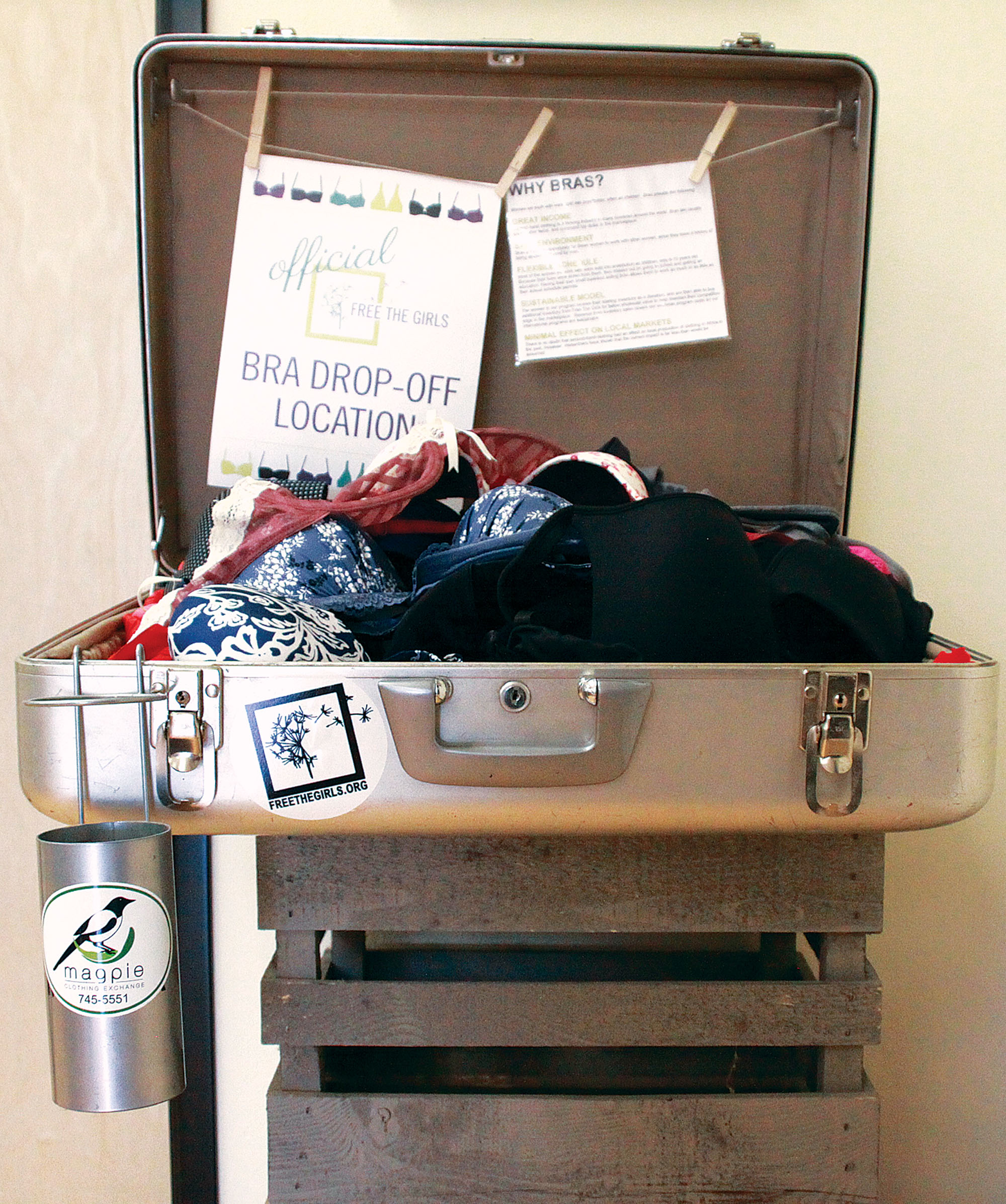
And, a few months ago, Magpie partnered with Free the Girls, a nonprofit corporation committed to helping women who have been rescued from sex slavery build a new life for themselves and their families. Free The Girls provides donated used bras to women recovering from a life of slavery in order to start their own businesses and begin rebuilding their lives.
Julia Scully said they’ve already collected multiple boxes full of bras from Valley supporters.
To make donations or have a conversation about sustainable and fair-trade clothing with Kim, Greg, Madeline or Julia, visit Magpie Clothing Exchange weekdays between 10 a.m. and 7 p.m. and Saturdays until 6 p.m. at 1901 N. Hemmer Rd., Suite 108. Contact them by phone at 745-5551 or online at magpieclothingexchange.com. For news and specials at Magpie, find them on Facebook and YouTube.
Contact Caitlin Skvorc at 352-2266 or caitlin.skvorc@frontiersman.com.
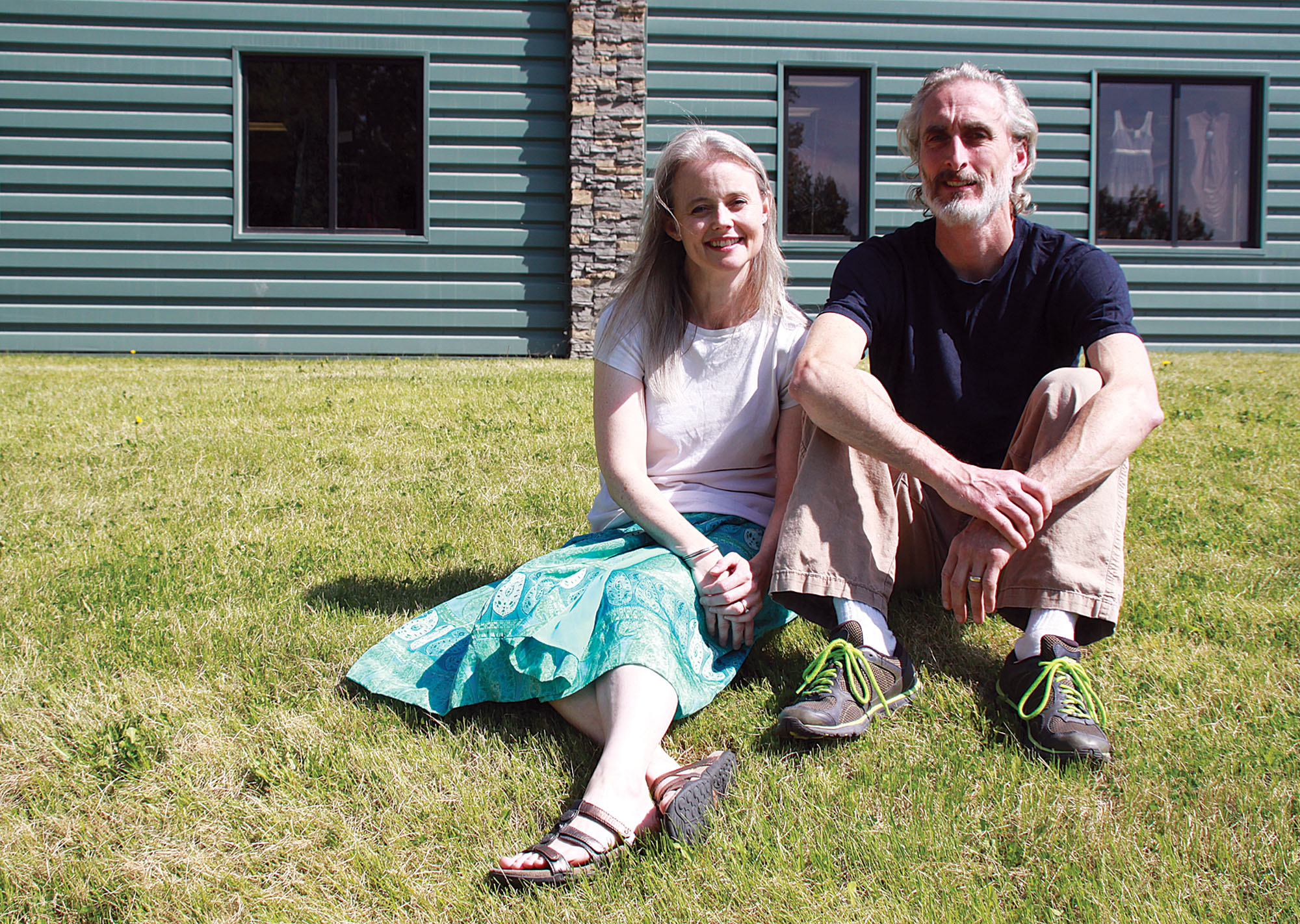
Kim Scully, co-owner of Magpie Clothing Exchange, says fair trade “typically affects women working in small cooperatives where they’re paid a fair living wage in safe and clean working conditions.”
“It is a lot of boxes to check,” she said, for those looking at fair trade certification.

Frontiersman.com Mat-Su Regional Medical Center was awarded an “A” Hospital Safety Grade for the 5th consecutive grading round

Frontiersman.com The Alaska State Fair announced the appointment of Blake Allen as its new Chief Executive Officer. Allen brings
By Frank Murkowski Opinion Hilcorp, in acquiring BP’s Alaska assets, follows a record of cooperation with our state government

Frontiersman.com Mat-Su Health Foundation (MSHF) has named Ashley Peltier as Director of Philanthropy, effective May 4. In her