Retiring teacher, coach urges Colony grads to ‘find their 68’
By Jeremiah Bartz Frontiersman.com A football coach using a hockey reference as the centerpiece for his keynote address may


PALMER — Alaska landscape architects and land planners at Sustainable Design Group demonstrate true knowledge of what “sustainability” means in their field by “connecting people, creating places.”
This summer, the small, woman- and veteran-owned business with the above tagline — most commonly known as SDG — took on two landscape architecture engineering students from France to work on their English language skills and on projects in the Mat-Su area.
Since the students — Robin Sellier, 22, from Paris and Kevin Terpant, 22, from Valence, France — were only in Alaska for a short time and did not have work visas, co-owner Eric Morey said, their internship was purely educational, and the cities of Palmer and Wasilla got upgrade designs for free.
“We ask, ‘what are the needs of the people, what are the needs of the city, how do we make a cohesive plan to meet everybody’s needs at once?’” Morey said of the company’s mindset.
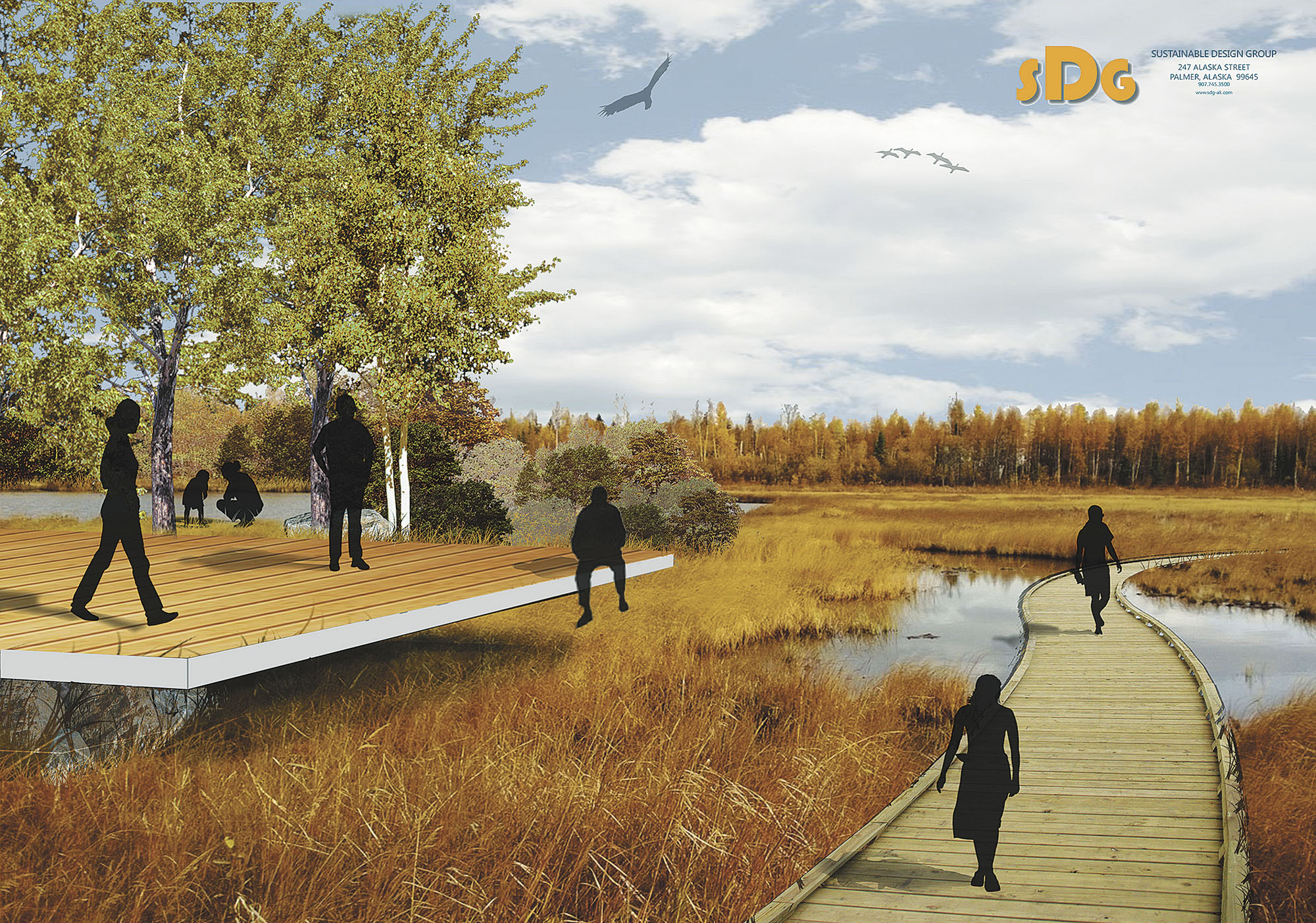
With the help of the French interns, co-owner Luanne Urfer said, SDG provided Palmer with an upgrade design for their arboretum and an adjoining property, designed Palmer’s park signs, updated the master plan of the Curtis D. Menard Memorial Sports Center in Wasilla, and completed additional planning for the future development and connectivity of Floyd Pederson and Cottonwood Creek Connector parks.
But the innovation and community driven spirit of SDG did not falter with the students’ return to their country.
Although Alaska’s engineering and architectural knowledge has functioned somewhat behind the times compared to other places around the world, Morey said, Urfer pointed out that their employees’ diverse experience in places all over the United States gives them an opportunity to change Alaska’s reputation.
“We are trying to put together a unique combination of designers and people with (a) forward-thinking approach to design,” Urfer said.
It took a few years to get SDG off the ground, the owners said. Morey was deployed to Iraq just months after the company began in 2009. But their success is clear as they attract people from places as exotic as Paris or traditional as Muncie, Indiana.
When current SDG associate Ryan King heard about the small firm in Alaska with “really nice people” from a fellow classmate at Ball State University a year and a half ago, he was immediately interested.
“You always dread graduating in a profession like landscape architecture, going to a big firm and being put behind a computer to do simple AutoCADD tasks for the first five years until you’re no longer considered ‘entry-level,’” King said. “With a small business and community like Palmer or Wasilla, I’ve gotten to branch out and do a lot of things that someone right out of college wouldn’t get to do. I’ve been exposed to a lot more types of designs, types of community process, than a lot of the kids I graduated with.”
But King isn’t the only one who benefits from working for the company, of course. Urfer and Morey said that they have plans to collaborate with other small starter businesses in related fields — including architecture, surveying, engineering and planning, to name a few — by offering office space to those companies in November. Morey anticipates up to 40 businesses working together in one “open library” — like building with two conference rooms, a kitchenette and two bathrooms.
“We put our money where our mouth is and believe these things will pay off not just for us but for Alaska’s economy in general,” Morey said. “This is something one- to two-year businesses can afford, and they’re not paying 6 to 8 hundred dollars a month for space they don’t need.”
So what else does SDG really do? Urfer said some people misunderstand them as a “green” group that is more about land preservation than development.
“Sustainable land development isn’t about not doing development, but doing development in a way that becomes cost-effective by reducing development impacts,” Urfer said. “It tries to look at the best way to develop land that will not create additional problems, or it deals with existing programs on a piece of land in a way that can be maintained using natural processes.”
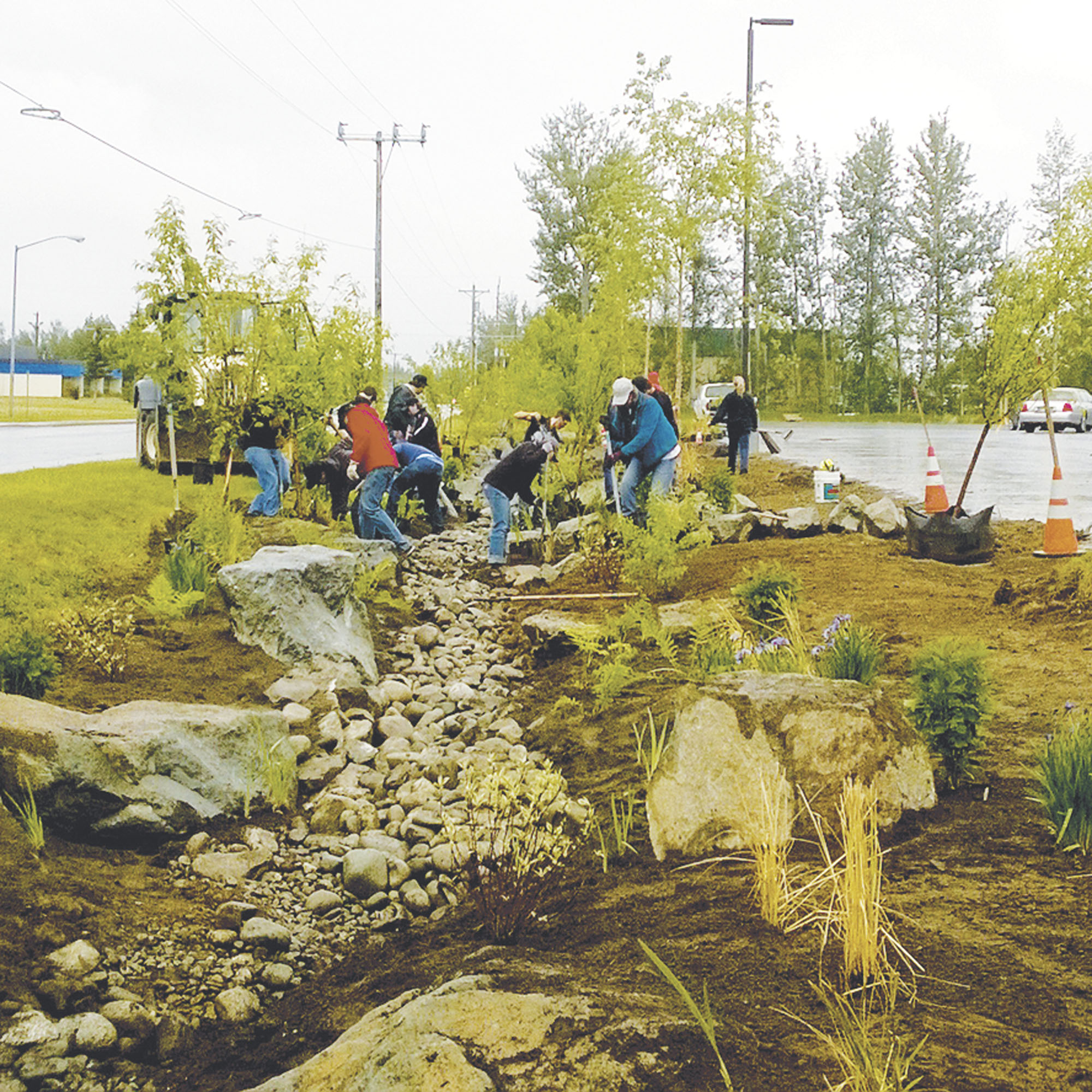
Urfer said that SDG aims to move other design companies away from traditional infrastructure and so avoid constant repair, replacement or renovation. In a place like Alaska that gets a lot of runoff from rain and snowmelt during the year, storm water management becomes especially important, and surface solutions — as opposed to underground pipes or vaults, storm drains and catch basins systems — are a must.
“It’s good for the community,” Urfer said. “It keeps your taxes down, and it’s also easier for public works to manage the types of infrastructure that we do because it isn’t as high-maintenance.”
Low Impact Development, or LID, as it is called, is perhaps the best way to describe the all-around work of SDG, rather than just its storm water management. That, and again, the collaboration and interaction with the community, “the crux” to success for small businesses, Urfer said.
For more information, visit sdg-ak.com.
Contact Caitlin Skvorc at 352-2266 or caitlin.skvorc@frontiersman.com.

Frontiersman.com Mat-Su Regional Medical Center was awarded an “A” Hospital Safety Grade for the 5th consecutive grading round

Frontiersman.com The Alaska State Fair announced the appointment of Blake Allen as its new Chief Executive Officer. Allen brings
By Frank Murkowski Opinion Hilcorp, in acquiring BP’s Alaska assets, follows a record of cooperation with our state government

Frontiersman.com Mat-Su Health Foundation (MSHF) has named Ashley Peltier as Director of Philanthropy, effective May 4. In her