Retiring teacher, coach urges Colony grads to ‘find their 68’
By Jeremiah Bartz Frontiersman.com A football coach using a hockey reference as the centerpiece for his keynote address may


The pandemic has slowed campus life at the University of Alaska Anchorage to a near standstill, but that hasn’t stopped the school from putting on a robust array of virtual events celebrating Black History Month.
Chief Diversity Officer Jennifer Booz says that what’s been missing without in-person interaction has, she hopes, been made up for and then some by the quality of nationally known speakers the Zoom format has enabled. Among those who’ve already participated are comedian and writer Ron Funches and Bryan Terrell Clark, who plays George Washington in the wildly popular Broadway show ‘Hamilton’.
“We would not have been able to afford for (Clark) to come to Alaska, but in this virtual environment, we’re able to team up with other University of Alaska (campuses), and other universities as well,” Booz said. “To be able to bring that caliber of speaker to the UAA has been really amazing for our students.”
Another blessing in disguise Covid has brought is a more diverse group of attendees.
“You could be a Caucasian student who’s maybe really interested in learning more about black students’ experience and in an on-campus, in-person event, you might not want to be uncomfortable, but the virtual environment brings in a person who might otherwise not come,” Booz said. “... and, you can wear your pajamas; you don’t have to bundle up and get in the car.”
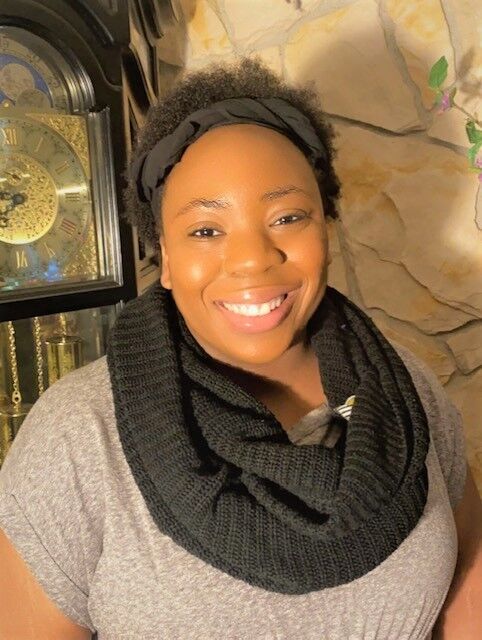
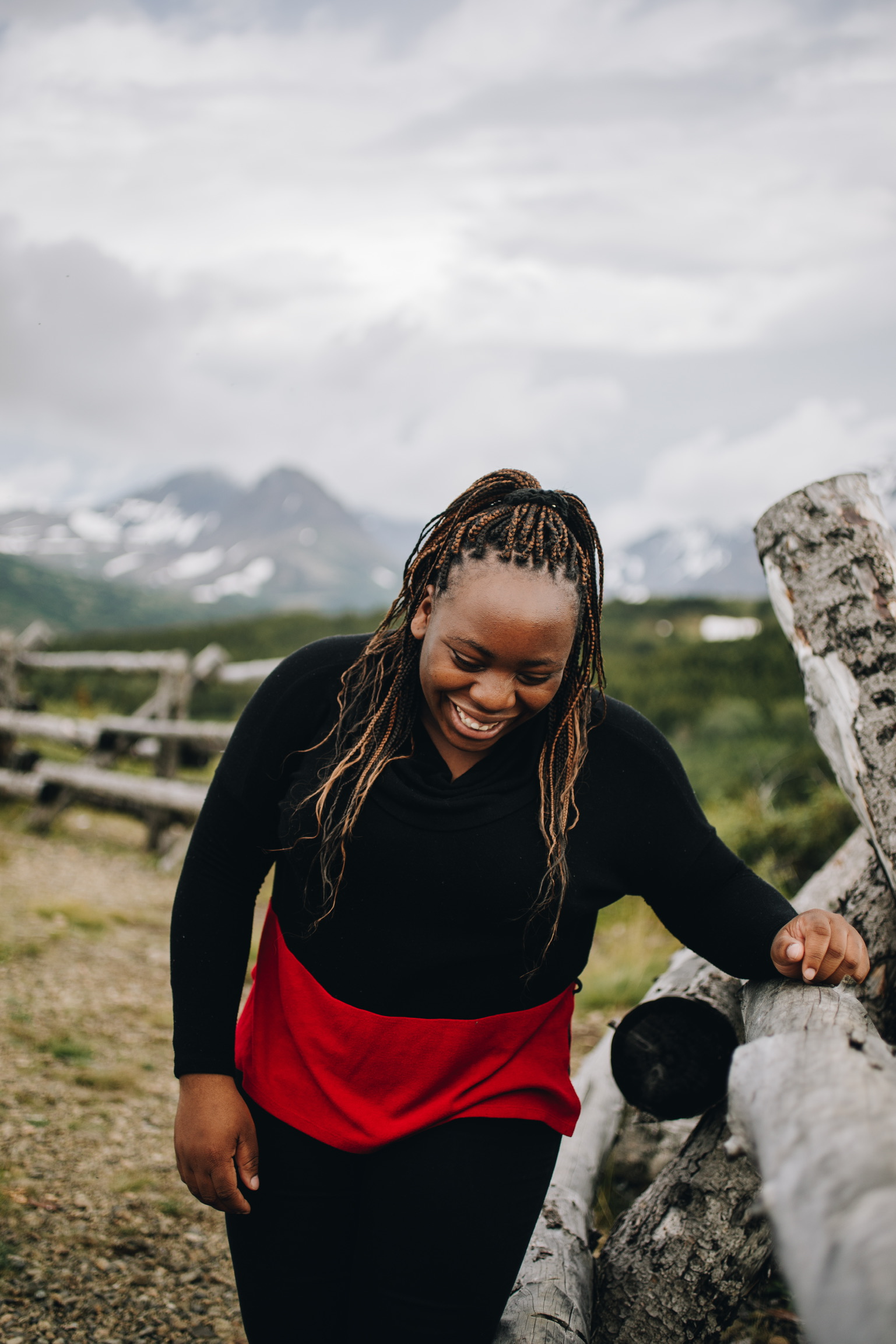
The month-long celebration includes plenty of local presenters, too, including Ugo ‘Destiny’ Woko, the recently elected President of the Black Student Union at UAA, who will be speaking on an important subject often overlooked when discussing the Black experience in America.
A second-generation migrant from Nigeria, Woko grew up in a military family, which brought her to Anchorage as a child. She never gave a second thought to the assumption that relaxing or ironing your hair was just something you did to look professional or stylish. Until one day she did.
“Wearing my hair natural was a big step for me,” Woko said. “I had to retrain myself into thinking there’s nothing unprofessional about your appearance. If people don’t like it, that’s their loss. It was a really huge step.”
Woko said her coworkers at the Chugiak Fire Department, where she works as an EMT, were supportive, as were her parents.
“A lot of that (hesitation) had to do with our current society, how we see beauty, especially for people of color,” she said. “It’s a point of self-esteem for me because when I was really young, the things my dad said impacted how I view myself and it’s how I carry myself to this day. My parents said, ‘you look really nice’ and that really helped boost my confidence. Before, I probably wouldn’t have stepped out of the house with natural hair.”
Woko’s story drew the attention of the UAA Career Services Center.
“They wanted my take on natural hair in the workplace,” Woko said. “Wearing natural hair at work and how it was received at interviews and things like that. It was great sharing.”
Booz was eager to get Woko on the Black History Month agenda, noting that her experiences apply beyond the African American community.
“It could apply to Alaska Native and definitely biracial students, so it’s really about putting forward the movement of talking about experiences in the workplace or professional environment about whether to wear your hair naturally or conform to the more western style using a flat iron or braiding your hair,” Booz said. “It’s starting a conversation about being your authentic self; normalizing hair or body features and saying you are still welcome and you belong in your environment. You don’t have to conform to European styles.”
In addition to the identity issues, the quest for ‘good hair’ has forced countless black women into a level of maintenance expense and harmful chemicals no other group can begin to appreciate. Woko estimates she used to spend $200 just purchasing ‘ethnic hair’ products and another $500 going to the salon.
“I was fortunate to have older sisters and friends to do my hair — and student discounts,” Woko said. “(The chemicals) are something I would really like to shine a light on. There’s stress — even the time you have to take off work just to get your hair done. It’s a long chemical process and some of them damage your hair… The chemicals are very tedious and sometimes you even cry. It’s really emotional and I just want to shed a light on that and encourage young girls to grow their hair out naturally. It doesn’t matter what society says.”
Woko had been the vice president of the BSU for a year-and-a-half before taking on the role of president.
“I’ve been a part of different organizations, but the BSU was the first one that strictly raised questions about culture and the things that go in in the world,” Woko said. “Touching on topics like this really pushed me out of my comfort zone and opened my eyes to biases I have as an individual.”
Woko said the experience taught her to not judge a book by its cover.
“You never really know who someone is until you talk to them; walk a mile in their shoes,” she said. “BSU has kind of helped me get over myself and some of the cultural biases I had.”
Tapping into that understanding, Woko said she doesn’t judge those who do straighten their hair.
“I just say, ‘you do you,’” she said. “If that’s something you want to do personally; if you think that’s what’s going to make you look beautiful and that’s a stepping stone in your life — go for it. But I don’t think you need it. Let your hair run its natural course. Don’t let society or American culture put a label on what beauty means.”
Woko’s online discussion is Thursday, Feb. 25 from 6 to 8 p.m.
To learn more about all of the Black History Month events at UAA log on to uaa.alaska.edu.


By Kyle Wilkinson For the Frontiersman Rainey Laine Spurlock is the youngest ever to graduate from the University of Alaska

By Corrine Smith Alaska Beacon University of Alaska staff announced a vote to form a union on Wednesday. The union
By Katie Stavick Frontiersman.com Following the January graduation of students from the Alaska Native Science & Engineering Program (ANSEP)
Governor Mike Dunleavy For decades, Alaska has operated under a fiscal and budgeting system unlike any other state, and some