Retiring teacher, coach urges Colony grads to ‘find their 68’
By Jeremiah Bartz Frontiersman.com A football coach using a hockey reference as the centerpiece for his keynote address may


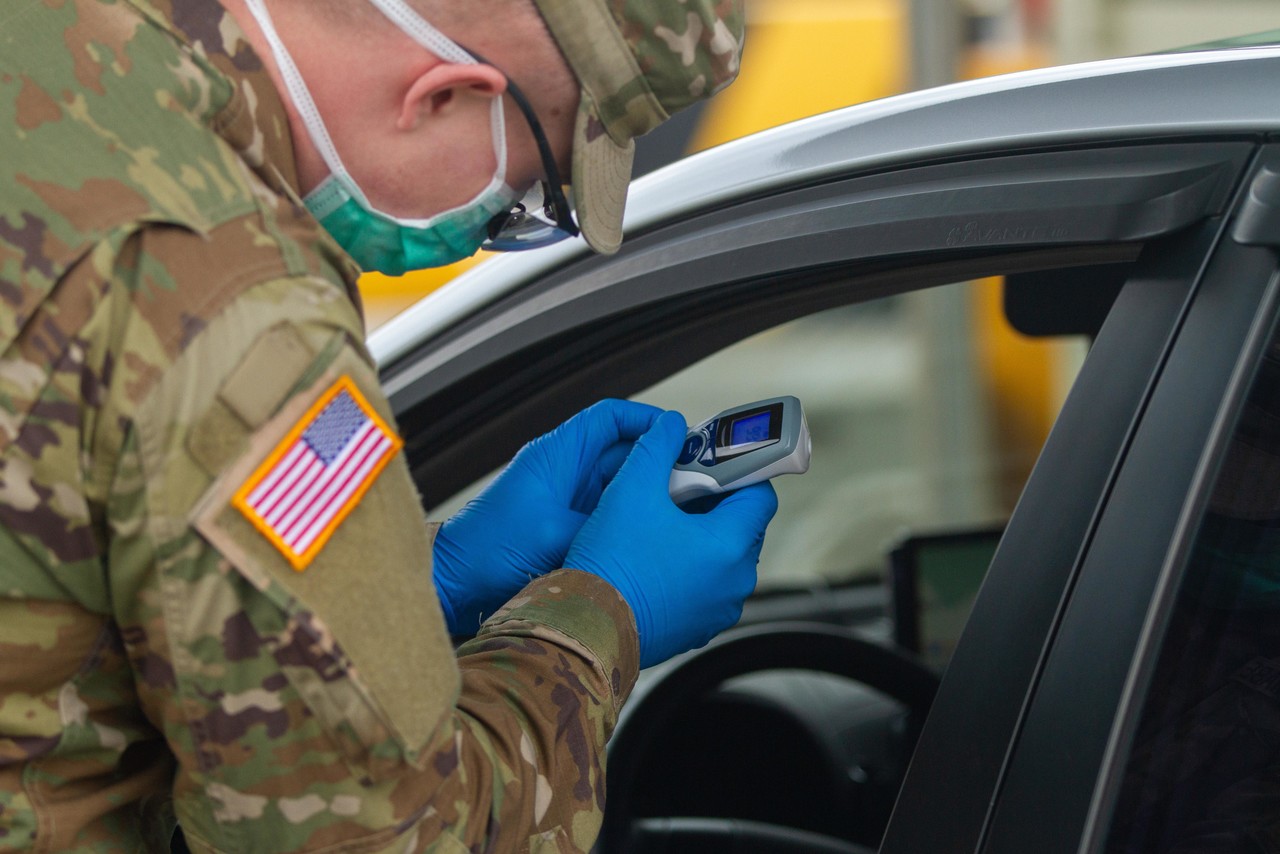
The Defense Department is taking positive action to protect people, safeguard critical national security missions and capabilities and support the whole-of-government approach to confronting the spread of the coronavirus, or COVID-19, DOD spokesman Jonathan Rath Hoffman said today.Combatant commanders have the authority to take measures to protect personnel from exposure to the new virus, Hoffman said during a press briefing with other DOD officials at the Pentagon. That may mean modifying, postponing or cancelling some training, he said.Training continues on a smaller scale in South Korea, Hoffman said, though a larger joint exercise was postponed late last month. The commander of U.S. Forces Korea has been at the forefront of DOD's response in containing COVID-19, he said, having "taken measures that have been highly, highly aggressive and effective in confronting it and helping secure his personnel from exposure."Planning continues for other exercises, he noted, such as the Defender 2020 division-size exercise scheduled for this spring in Europe."A lot of folks get a vote in as far as participation [in joint exercises] is concerned, but as far as we're concerned now, that exercise is good," said Navy Rear Adm. William D. Byrne Jr., the vice director of the Joint Staff.At the Pentagon, one of largest office buildings in the world, Hoffman said educational materials are being distributed and good hygiene practices are being reinforced. The visitor entry process is under evaluation, he said, and people are practicing social distancing for meetings and briefings. One example of that distancing effort is that chairs in the press briefing room are now spaced six feet apart.Across the force, three active-duty service members — one in South Korea, one in Europe and one in the U.S. — four family members, one government civilian and one contractor have so far been diagnosed with COVID-19, said Air Force Brig. Gen. Paul Friedrichs, the Joint Staff surgeon, during the briefing. "All are doing well at this point," he said.The department is taking these precautions because COVID-19 is a new virus and scientists are still learning about how easy it is to spread, Friedrichs said. "And in particular, in an environment like this — enclosed spaces — we're trying to figure out the best way to mitigate the risk until we have solid data on that," he added.All 13 of DOD's clinical labs can run the necessary tests to determine whether a person has COVID-19, the general noted."The Department of Defense has had plans for dealing with disease outbreaks like this for years," Friedrichs said. Each base has a plan that is coordinated with local authorities, he added."If we go back to any successful response, it starts with a strong local public health authority and good plans that are not unique to one employer, like the DOD, but to the whole community," the general said.Friedrichs later told reporters that the No. 1 thing he’d like to know about COVID-19 is whether it's seasonal. "Because if it is seasonal, then it will start to burn out in the next couple of months," he said. "And that buys us a little bit more time until the fall when it comes back. And that means that we have more time to work on medical countermeasures, work on vaccines, and all the other things that we have for the flu."

Frontiersman.com Mat-Su Regional Medical Center was awarded an “A” Hospital Safety Grade for the 5th consecutive grading round

By Airman 1st Class Theodore Gowdy Joint Base Elmendorf-Richardson Public Affairs In July 2025, the Secretary of War released
Frontiersman.com Alaskans aged 17 to 28 have a unique opportunity to earn a college degree with major financial support
By Katie Stavick Frontiersman.com The United States Marine Corps has launched a strategic initiative known as "Campaign - Alaska,