Retiring teacher, coach urges Colony grads to ‘find their 68’
By Jeremiah Bartz Frontiersman.com A football coach using a hockey reference as the centerpiece for his keynote address may


MAT-SU — It’s no secret that the course changes to the 2015 Iditarod Trail Sled Dog Race will impact the amount of revenue checkpoint businesses pull in, but sled dog racing isn’t the only thing that brings in the bucks this time of year.
Yentna Station Roadhouse co-owner Dan Gabryszak said he and his wife Jean typically see a lot of snowmachine traffic in these late winter months from people who want to watch the Iditarod, but also those who just want to enjoy the Alaskan wilderness.
The Yentna Roadhouse has been a checkpoint for both the full and junior Iditarod races in years past, as well as the Knik 200 and Northern Lights 300 qualifying races.
The moves of all but one — the K200, which did move this year but still used Yentna as a checkpoint — have made “a really huge difference” in the station’s finances, Gabryszak admitted, but that’s mostly because of all the hype about lack of snow, he said. When snowmachine riders think there’s nothing to run on, they don’t come.
“You get warm weather and people think there’s no snow (but) the rivers are good right now,” Gabryszak said.
The roadhouse did see some traffic from the Iron Dog and the human-powered Iditarod Trail Invitational (competitors race on foot, on skis or by bike), but they still anticipate monetary losses this season. In all, the roadhouse will probably lose between $3,000 and $5,000 as a direct result of the course change, Gabryszak said.
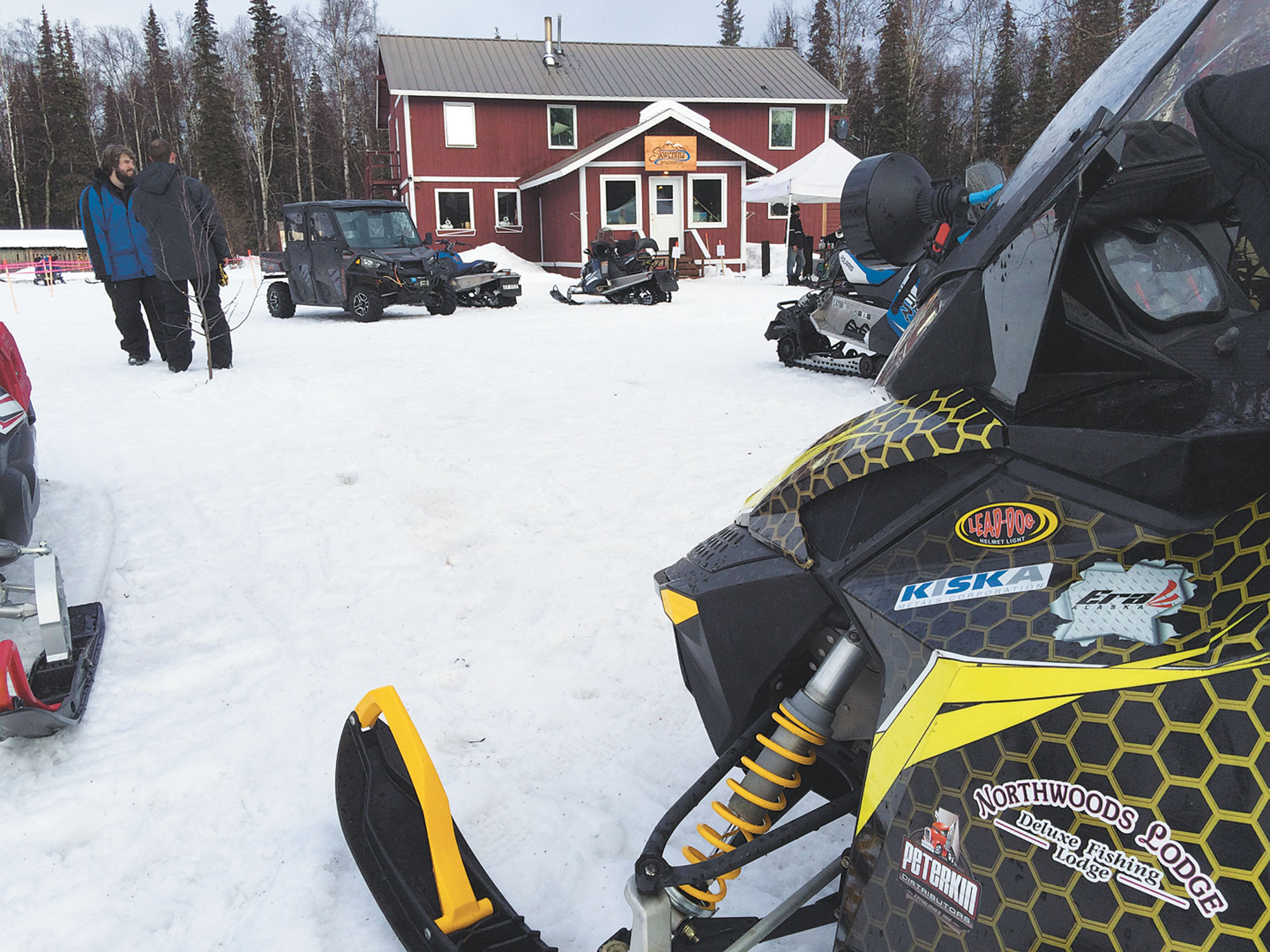
The Skwentna Roadhouse just up the river from Yentna has also been affected by the move.
Co-owner Cindi Herman estimated a loss of somewhere between $15,000 and $25,000.
“We advertise all year to have people here (for the Iditarod),” she said. “There’s not a whole lot we can do when they just pull the rug out from underneath us.”
The roadhouse has had to issue nine 100-percent refunds for travelers who had paid for food, lodging and snowmachine rental, then canceled their plans because of the weather. Four more decided to leave “money in the pot for next year,” she said.
But it’s not all bad. Many people are still following through on their Skwentna travel plans.
“We have been fortunate to keep most of our customers this year because they’re Alaskan,” Herman said. “There are so many people that just bring their families out here because it’s spring break.”
And for the people who are coming, Herman said, she and co-owner Mark Torkelson are going to “make lemonade” of their “lemons.”
In lieu of offering front row seats to the spectacle of 78 seasoned and not-so-seasoned mushers flying by, the Skwentna Roadhouse plans to host a “Spirit of the Iditarod Fun Run” — a poker run on snowmachines complete with Iditarod-inspired awards, such as the Gold Coast award for the first one to get three of a kind, the Cripple Creek award for a “half-way hand” and the Red Lantern award for the worst hand.
Several other lodges in the area also are participating, Herman said.
The third traditional checkpoint, Finger Lake (not the one in Wasilla), has been less fortunate with snow coverage than the checkpoints around it, however.
“Our winter business altogether, because of lack of snow, has suffered,” said Carl Dixon, owner of Winterlake Lodge near Finger Lake. “We normally have about 8 feet on the ground, and right now there’s about 20 inches. There’s been a really dramatic drop in snow pack.”
Dixon said their biggest issue, after issuing refunds, is just being able to maintain the lodge. Having enough staff to keep the place clean, keep the generators running and prepare food this time of year is something they always have to bear in mind, and with just eight employees, losing one is tough on business.
“After Iditarod time, if the weather stays lousy and we have to cancel a few more bookings, we’ll be sending employees back to Anchorage,” Dixon said. “That’d be a problem and we hate to see that but we wouldn’t have any choice.”
Winterlake Lodge still has the potential to draw people in for the Iditarod, however, as Iditarod sponsor GCI will set up a live feed of the race at the lodge.
“We’ve got a group of people coming out here who are all very enthusiastic about it,” Dixon said. “We’re disappointed the dogs won’t be out on the lake in front of the house but we’ll still be (on the trail) in spirit.”
Rainy Pass, the last checkpoint within the Mat-Su Borough, has a foot of new snow, according to lodge owner Steve Perrins, but with “all the other business that (usually) comes out this way” during the Iditarod, he said, they’re taking a hit this year.
Perrins said they, too, have loyal customers maintaining their trips or moving deposits to next year, but the lodge has still had to give “several thousands of dollars in refund checks,” he said.
Their losses in gross revenue could run between $25,000 and $40,000, but that’s not exactly indicative of how much the Iditarod is “worth” to the lodge.
“That money is a help, no question, but our lodge will exist with or without the Iditarod,” he said.
In past years, Rainy Pass and other checkpoints have had an agreement with Iditarod pilots to take advantage of empty backhauls and have groceries and other supplies flown in to them. In exchange, the lodge owners feed and shelter volunteers.
“We’ve exchanged services with each other that basically amount to monetary benefits for both of us,” Perrins said.
So when those planes don’t come in, Rainy Pass needs a backup plan.
Sort of.
This year, before the Perrins family arranged the shuttling of goods on their own, a pilot friend called up to say he was headed to pick up some buffalo hunters on the Rohn side of the Alaska range, and he was going in empty — did they need anything?
“That’s the spirit (of Alaska),” Perrins said. “When challenges come up, everybody picks up the phone and (asks), ‘what can we do to help?’”
Also, the year the Perrins bought Rainy Pass Lodge, 2003, was the only other year the Iditarod restart was moved to Fairbanks.
“We signed the papers within a week of (the Iditarod Trail Committee) cancelling the race,” Perrins said.
And it worked out. The year off actually turned out to be a help, giving them time to figure out the true meaning and economic impact of being an Iditarod Trail checkpoint.
The question remains what will become of the Iditarod if the weather pushes the race farther and farther from the original trail.
“What about next year? People are going to be skeptical and won’t wanna put dollars out ahead of time,” Perrins said. “I would bet you that our deposits and our bookings lag way behind simply because people are watching the weather.”
Contact Caitlin Skvorc at 352-2266 or caitlin.skvorc@frontiersman.com.


Frontiersman.com Mat-Su Regional Medical Center was awarded an “A” Hospital Safety Grade for the 5th consecutive grading round

Frontiersman.com The Alaska State Fair announced the appointment of Blake Allen as its new Chief Executive Officer. Allen brings
By Frank Murkowski Opinion Hilcorp, in acquiring BP’s Alaska assets, follows a record of cooperation with our state government

Frontiersman.com Mat-Su Health Foundation (MSHF) has named Ashley Peltier as Director of Philanthropy, effective May 4. In her