Retiring teacher, coach urges Colony grads to ‘find their 68’
By Jeremiah Bartz Frontiersman.com A football coach using a hockey reference as the centerpiece for his keynote address may


Mead Treadwell didn’t wind up catching COVID-19 from an 8-minute conversation with then-undiagnosed, then-President Donald Trump, but he did catch it weeks later at a college football watch party-turned-super-spreader event that also wound up infecting Alaska’s at-large Congressman Don Young.
Ever the innovator and ever a Harvard Man (MBA 1982), the former Lt. Governor of Alaska under Sean Parnell, reached out to his friend, Harvard Chief Anesthesiologist Warren Zapol, and in true Treadwell fashion he volunteered himself and found three others to be guinea pigs for Zapol’s ongoing study on the use of Nitric Oxide in treating the virus.
“My breathing had gone down to almost half of its capacity,” Treadwell said. “I was really glad to have it and I didn’t have to be hospitalized.”
Zapol has earned acclaim for his use of nitric oxide in treating infants with Blue Baby Syndrome. He and Treadwell met when both were part of the Arctic Research Coalition.
“Small amounts of nitric oxide expands capillaries and Warren determined that if you applied a small amount of gas, babies who would often die, it would open up their capillaries and they would start breathing, and it’s now on crash carts in about 15% percent of hospitals in the world,” Treadwell said.
The problem with the crash cart implementation is that it is very expensive and the tanks are cumbersome, Treadwell said, and so Zapol sought an almost ‘Back to the Future’ solution to that problem.
“He saw data from a NASA stormchaser flight when all these aircraft would be hit by lightning bolts and produce a lot of nitric oxide and all of a sudden thought, ‘gee, if I can do that I could make nitric oxide rather than having to carry around containers, mountain climbers could use it… 95 percent of hospitals could use it.”
The result was a ‘cigar box’ sized device that produced a spark sufficient to produce results in patients like Treadwell, struggling with the pulmonary effects of COVID.
“I had sore muscles, headache — very little loss of taste or smell — and the exhaustion and everything else,” Treadwell said of his bout with the virus. “I was functional; I was just scared. It wasn’t like the flu where you have lots of junk moving through your sinuses and throat; it was just kind of a closing down — not even a hurting, just a swelling. If I had to blow out 100 birthday candles, I could only get 40 or 50 of them.”
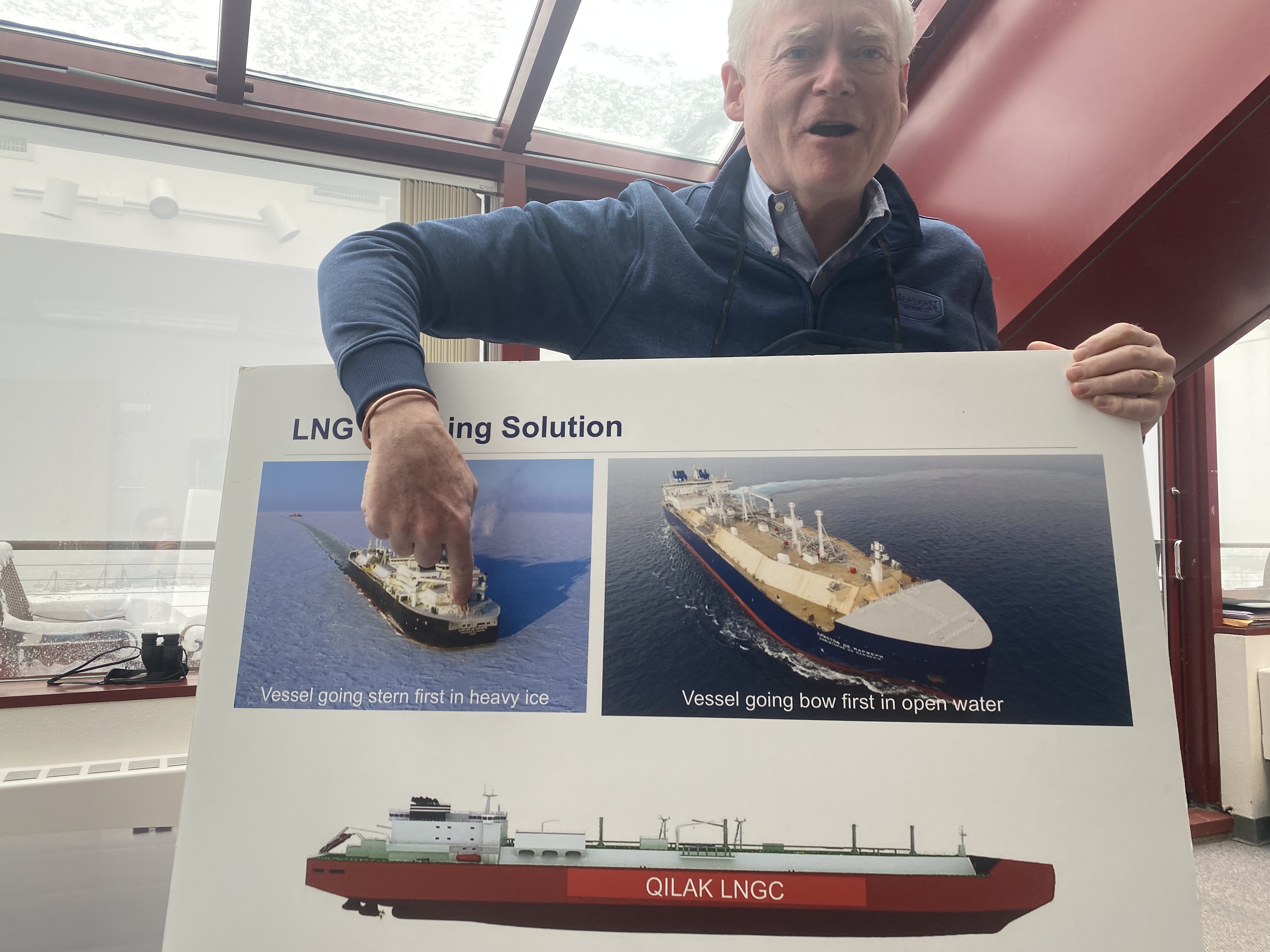
On the eve of COVID’s arrival, Treadwell was his usual globetrotting, jet-setting self, visiting Dubai, London, Tokyo and Toronto before winding up in Washington D.C. where his meetings with Senators on his projects regarding LNG and the A2A Railroad proved to be the last action in the Hart Building before it was shuttered for the pandemic, Sen. Lisa Murkowski told him at the time.
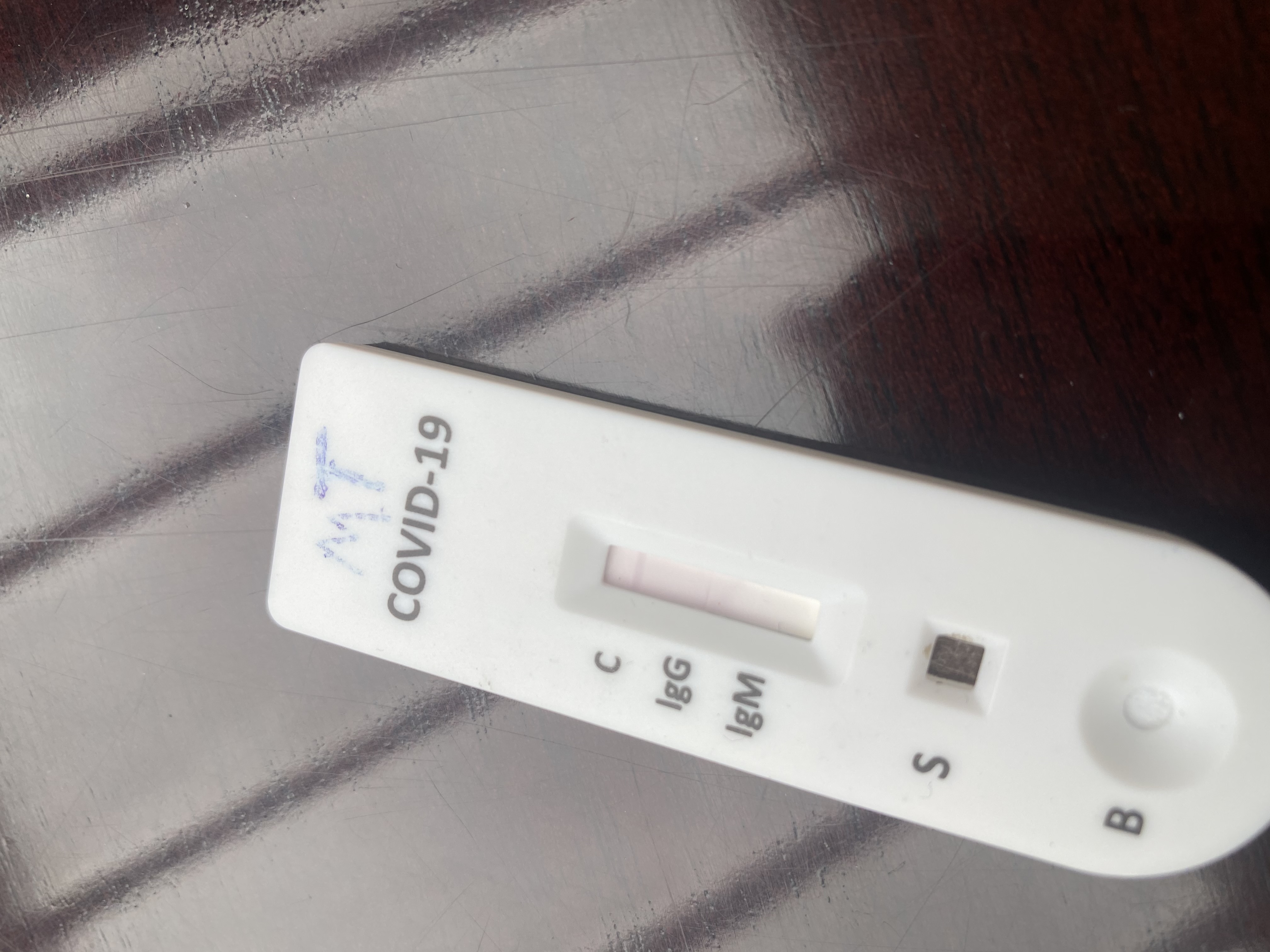
As soon as the ravages of the virus took hold, Treadwell began dreaming up ways to help Alaska, in particular, fight it off. The result was the development of light, disposable antibody tests wherein a person could prick their finger and let the drop of blood interact with colloidal gold that could identify presence of COVID antibodies.
“It’s a similar technology to, say, a pregnancy test,” Treadwell said. “One of these three lines here will turn red. If it’s C, you don’t have antibodies and means you probably don’t have the disease. If it’s G you’ve had the disease and probably have good antibodies… The value of these tests is if you’re trying to go to an event, you can easily take this test and in 10 minutes know if you have the antibodies from the disease, the vaccine or both.”
The tests were produced and distributed in some quantity, but Treadwell never lost sight of the big Alaska-specific projects he took with him into 2020 — LNG production and distribution and the A2A Railroad which would connect Alaska with Alberta, Canada by train.
After Treadwell met at the White House with a likely COVID-positive Trump, the President gave executive clearance for the A2A project, which means, if all goes according to plan, the railroad could be moving bitumen, oil, commodities and maybe even passengers from Alaska to Alberta by the latter part of the decade.
“It’s the first green light, but we need several more greenlights,” Treadwell said of the permit. “I really have to give credit to the Alaska delegation, especially Don Young. He’d served in Congress with the President’s Chief of Staff.”
Treadwell has been a chief proponent of the railroad for years, from his time working with PT Capital to his current role as Chairman and CEO of Qilak LNG and Vice-Chair of the A2A Railroad.
“Both are very big projects funded by very wealthy entrepreneurs who believe that something can happen,” Treadwell said of the $14 billion project with 200 of the approximate 1,400 proposed miles existing in Alaska. “We would like to get through permitting in two years from some time in 2021, so 2023, and then another 3 to 5 years of construction, so sometime this decade.”
Treadwell sees the eventual arrival of rail transport as something that could revolutionize, not only Alaska’s, but specifically Anchorage’s future economy.
“Sometimes it’s hard to think about rail building, but we’re way behind the rest of the world. Two European countries are competing for a project with an arctic port railroad and there’s large new ports in China and Africa, so this would certainly keep us competitive. And in Alaska, we’re talking about thousands of jobs,” Treadwell said. “The point of it is, you want to have a robust, diversified economy to be able to keep people employed and housing prices up. Clearly (cargo) transportation, which did better in COVID, is something that is enduring in the economy.”
Treadwell said he’s been perplexed that city officials have not been more supportive or even curious about what the A2A Railroad could mean to the Port of Anchorage.
“What people don’t realize is that this can make Anchorage a major container port — like Long Beach, but not as big as Long Beach; like Tacoma, but not as big as Tacoma… but big enough that we would have the fastest route that’s not aircraft between Asia and North America,” Treadwell said.
That lack of inquisitiveness and imagination is something someone wired like Treadwell simply can’t abide. With that in mind, he decided to throw his efforts behind local businessman Mike Robbins in his bid for mayor.
“I just think the city’s kind of lost its way dealing with distractions rather than the core business of the city. My son worked for Mike at his radio stations and he’s very customer service-oriented and he has credibility,” said Treadwell, who is serving as co-chair for Robbins’ campaign. “Mike is realistic about getting things done, and why? Because he tries. He’s got a vision and he’ll try.”
Back in 2018, Robbins was campaign manager for Treadwell in his unsuccessful bid to defeat Mike Dunleavy in the Republican primary for governor.
Treadwell’s run was hindered by a leg injury he suffered after being tripped up by his dog, and with a relatively late entry in the race, there was no catching up to the momentum Dunleavy had gathered, especially once the Wasilla Senator left his legislative post and began campaigning for governor full-time.
“Dunleavy hit a cord on the PFD, but what has been a challenge for him ever since is how to pay the bill and not deplete the savings,” Treadwell said. “He won on a populist mandate to hand our larger dividends. I was very careful about that. There were people telling me, ‘you gotta be there for giving money away,’ but I see the trap he’s in now… I hope he’s able to get out of it.”
Treadwell’s race in 2018 shares a similarity with Robbins’ push in 2021 in that both struggled to get around a populist candidate positioned to their right. The Dunleavy role in Robbins’ case is being played by Dave Bronson, who, buoyed by the far right Save Anchorage Facebook Group and the political blog Must Read Alaska, leads Robbins in early polling and on the proverbial applause meter among conservative voters.
“Populism grabs headlines but in my mind a true conservative does this — try to limit spending to revenue, avoid interfering with the economy, avoid getting into people’s lives and stands up for freedom,” Treadwell said. “If Mike’s not the candidate in one of the top positions for the runoff, I’ll probably support somebody else, but the point for me as a candidate was in the end I was running against a guy taller than me, better funded than me and in the end his populism helped him, but I don’t think it was the only reason. He had a much better start than we realized and that the polls showed.”
When asked whether he eyes any of the juicy political offices up for election in 2022, Treadwell says he’ll be too busy focusing on his two major projects.
Somehow, though, it’s hard to imagine he won’t pick up at least a couple more.
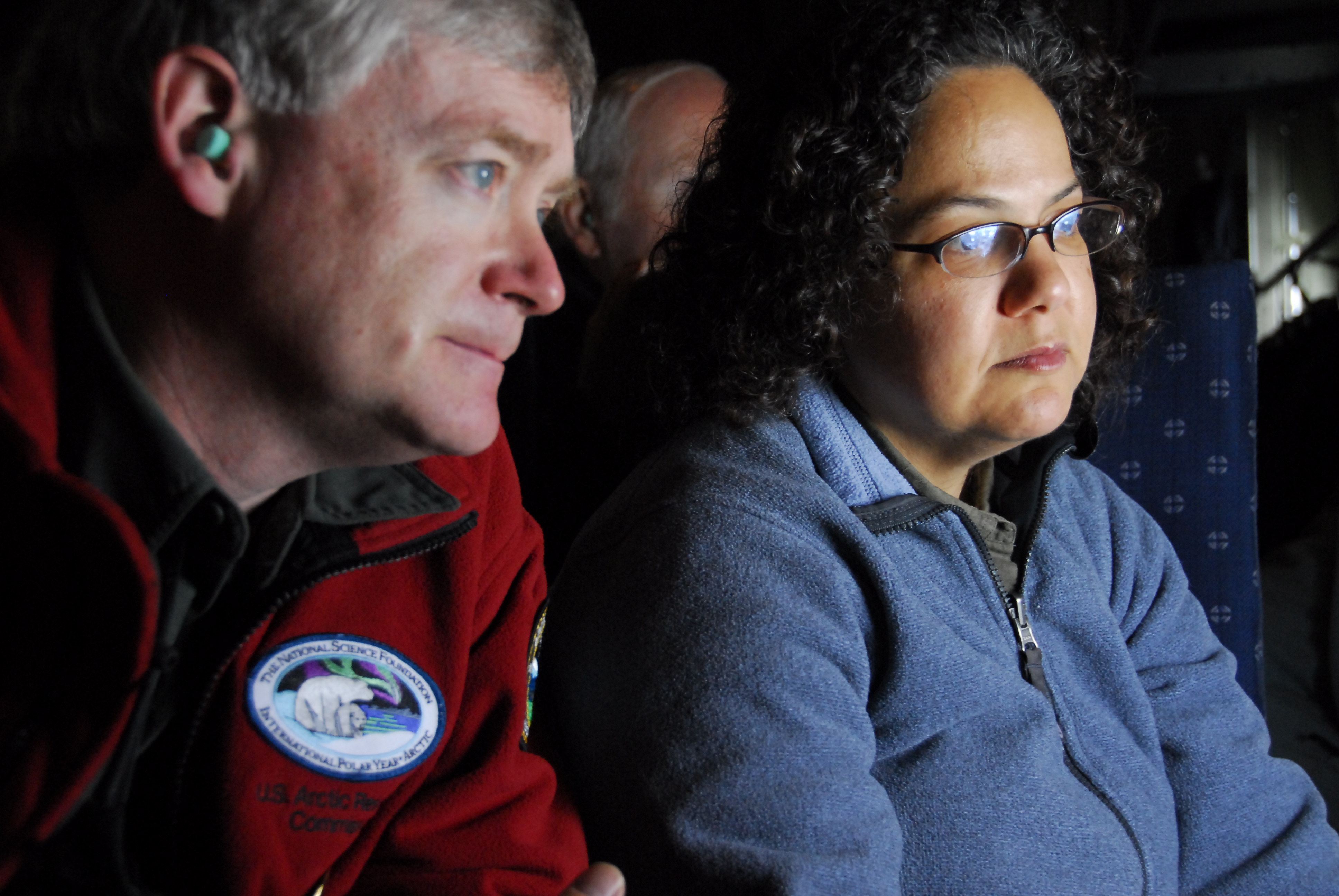
Mead Treadwell, Arctic Research Council, and Nancy Sutley, Chair CEQ, during Arctic Domain Awareness Flight in 2009. (Wikimedia Commons)

By Christian Hartley Now You Know If you have ever wondered what the borough attorney actually does, you are not

By Katie Stavick Frontiersman.com In a direct response to public outrage over a horrific animal neglect case, the Matanuska-

Frontiersman.com Mat-Su Regional Medical Center was awarded an “A” Hospital Safety Grade for the 5th consecutive grading round
By James Brooks Alaska Beacon State lawmakers are acting to fix technical errors affecting the boundaries of several Alaska wildlife