Retiring teacher, coach urges Colony grads to ‘find their 68’
By Jeremiah Bartz Frontiersman.com A football coach using a hockey reference as the centerpiece for his keynote address may


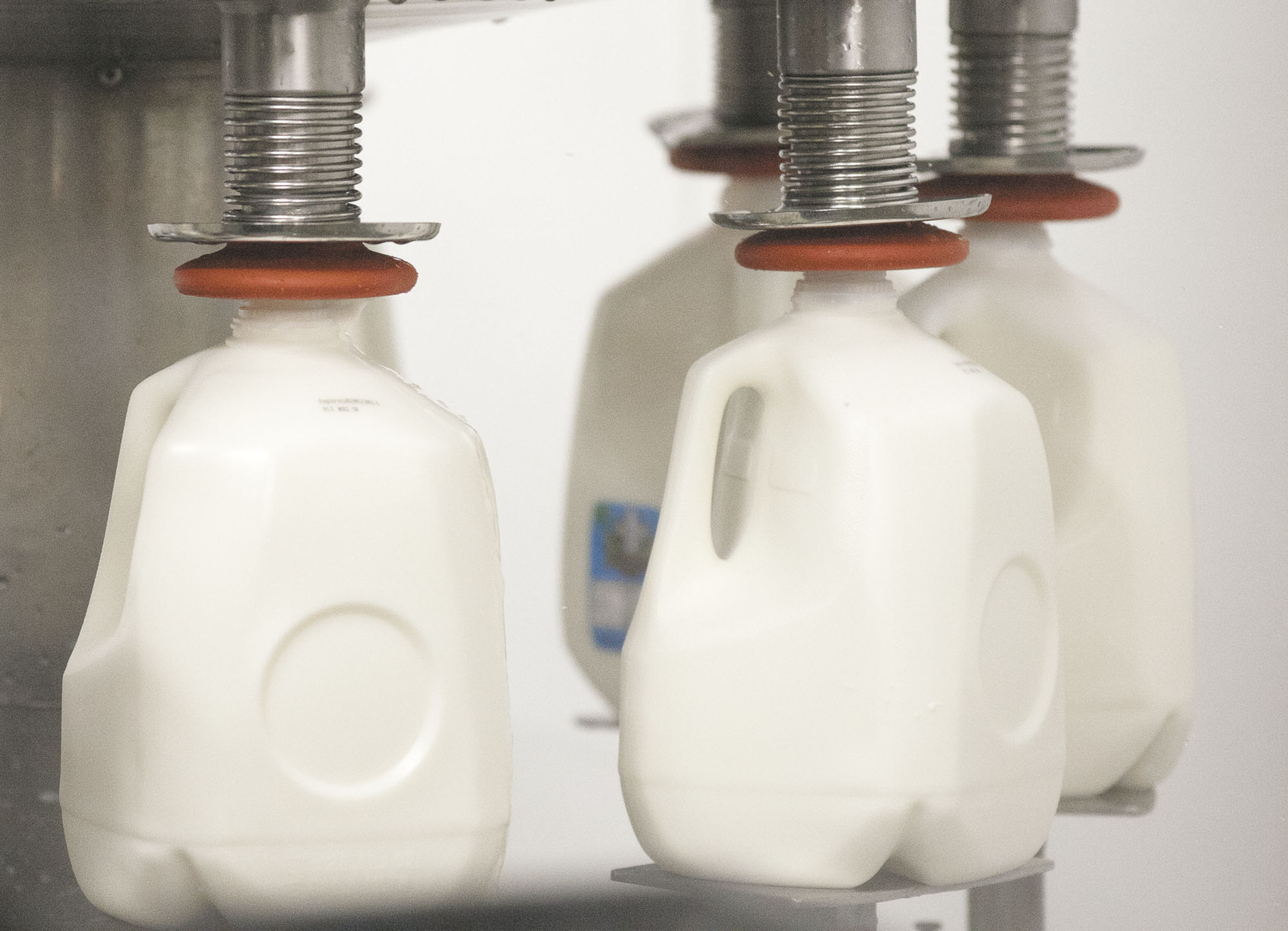
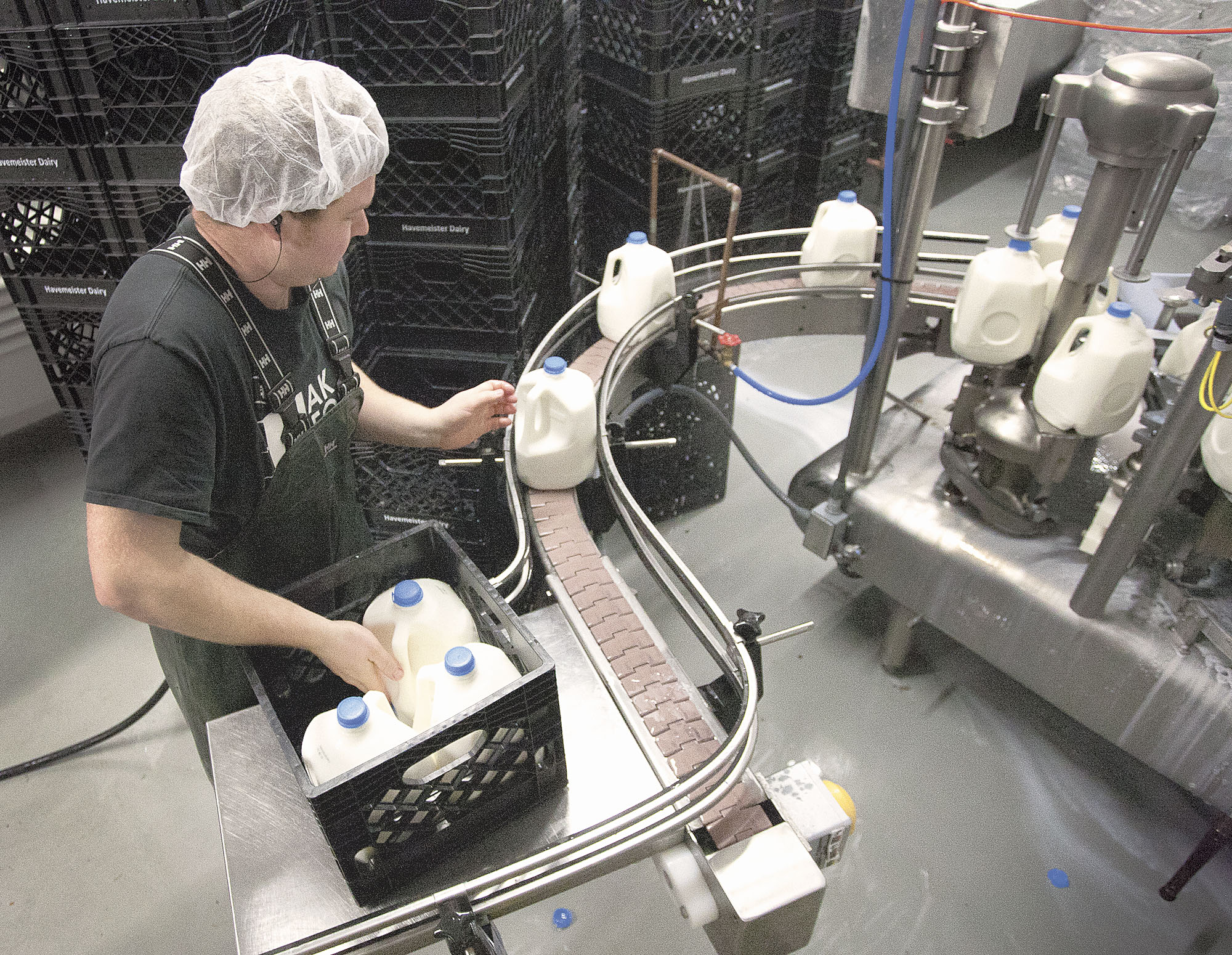
WASILLA — It’s noon on Saturday, and Ty Havemeister is wheeling a pallet-load of milk into a walk-in refrigerator.
“Three weeks ago we went from having 500 gallons excess per week and now we’re running out of milk,” he said.
Which is to say, that things are going well for the Havemeister Dairy, a family-owned milk processing plant.
Until this past week, the dairy was just processing its own milk. But, in an announcement on Facebook, Havemeister declared he was finally ready to start taking in other people’s milk.
He said the business would be fine just using milk produced on the farm, but he has the capacity and wants to take in milk from family farmers at Point MacKenzie.
“You’ve got a good family. They’re hard workers. If there’s a market there then I’m going to support that,” Havemeister said. “I want to do that. I want the dairy industry to succeed.”
The Havemeisters very recently became the only dairy in the Valley with the collapse into bankruptcy of Matanuska Creamery. In the wake of that collapse, there was fear that dairy herds would be liquidated — sent to slaughterhouses and sold as meat.
Havemeister said he has enough capacity to take on milk from the Brost/Yoder herds at Point MacKenzie. He said he can take all they’ve got right now.
“They dried up a bunch of cows,” he said, meaning that a lot of the cows at Point MacKenzie are in the part of their yearly cycle during which they are not producing milk. “Their production isn’t at full capacity.”
But when it is? Maybe he could take on more. He’ll have to see how that works out, he said. It will be a market-driven decision.
Right now, Havemeister milk can be found at Fred Meyer, Three Bears, New Sagaya in Anchorage, Steve’s Food Boy in Big Lake and Cubby’s Market, near the turn off the Parks Highway to Talkeetna. They also provide all the milk and cream for Vagabond Blues and Fresh Start Espresso. The milk is trucked to retail outlets and coffee shops within a couple of days of bottling.
Which, Havemeister said, is both the reason he doesn’t need a gigantic refrigerator and the advantage he has over larger national brands. His milk is much fresher and will stay fresh at least a week longer than anything shipped up from out of state. Those big dairy brands, he said, are eight or nine days older than his product and always will be so long as milk is barged to Alaska.
Alaska cows are also fed mostly hay and kept hormone-free. The milk is pasteurized, but not ultra-pasteurized. And, not to beat a point to death, it literally moves from the cow to the grocery store in two days, he said.
“This stuff getting bottled today will be on the shelves tomorrow,” Havemeister said.
Starting up a processing plant over the past few months has been a rollercoaster of a ride for him. He came back to Alaska from Florida, where he’d been working in finance. Nobody asked him to come back.
But when he was told the farm was about to go under he knew he had a choice — come back and try to save it or just let his kids grow up in a family that’s no longer in the dairy business.
And, if at times he’s wondered if he’s ever going to sell all the milk or if this dairy thing was going to fly, Havemeister said Saturday things are looking great.
“Certainly, a huge thanks to those stores,” he said. “But, more importantly, to the people that buy our milk, that are supporting it.”
Contact reporter Andrew Wellner at andrew.wellner@frontiersman.com or 352-2270.

Frontiersman.com Mat-Su Regional Medical Center was awarded an “A” Hospital Safety Grade for the 5th consecutive grading round

Frontiersman.com The Alaska State Fair announced the appointment of Blake Allen as its new Chief Executive Officer. Allen brings
By Frank Murkowski Opinion Hilcorp, in acquiring BP’s Alaska assets, follows a record of cooperation with our state government

Frontiersman.com Mat-Su Health Foundation (MSHF) has named Ashley Peltier as Director of Philanthropy, effective May 4. In her