Retiring teacher, coach urges Colony grads to ‘find their 68’
By Jeremiah Bartz Frontiersman.com A football coach using a hockey reference as the centerpiece for his keynote address may


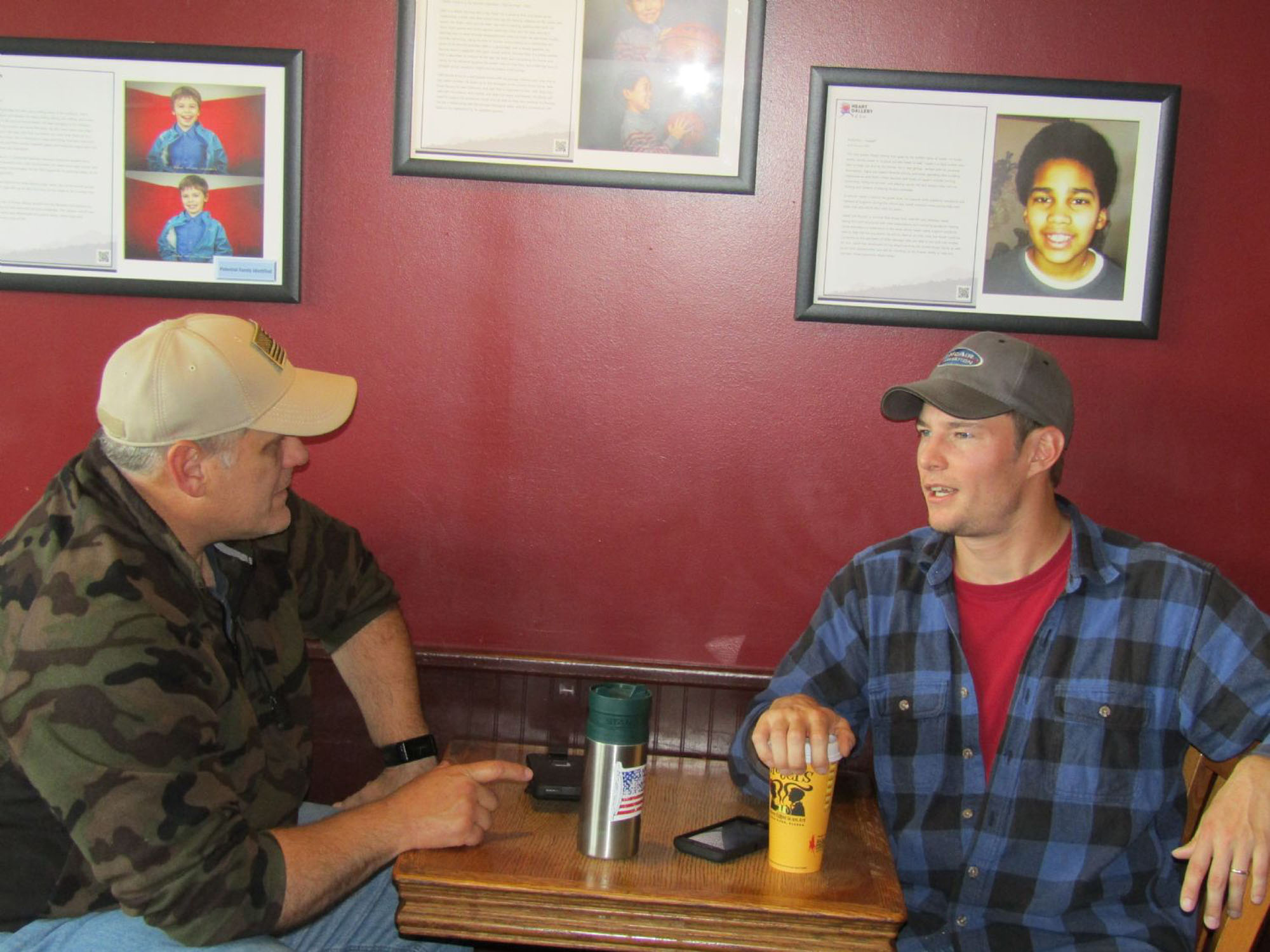
EAGLE RIVER — There are more children than usual at Jitters coffee shop in Eagle River. They hang on the walls in large black frames, surrounding patrons who sip their beverages and munch on treats.
The professional pictures, taken by volunteers, highlight children in the Alaska foster care system who are legally free and available for adoption. Also included is information the children chose to share about themselves.
“It’s a pretty big deal to have your story in public,” says Dawn Adams, South Central regional permanency specialist for the Office of Children’s Services. “Some people are uncomfortable with the idea of the use of a Heart Gallery or Adoption Exchange. Most of our children listed are excited to participate. It gives them hope that OCS is trying to find them a forever family.”
Kenny, born in 2001, holds a lightsaber. Nathan, born in 2004, hopes he finds a family that will let him keep his pet guppies. Stone, born in 1999, wants to be an FBI agent.
“People are all googly over animals when there are children who need homes,” says Stella Huffer, Jitters customer and resident of Eagle River, as she eyes the pictures.
Her coffee companion, Barbara Crittenden, winces.
“I’m sad for them,” she says.
Sharon Bronnee, Heart Gallery of Alaska administrator, describes the Heart Gallery as a “multi-media effort to connect children with forever families.” There are two galleries that travel the state. Profiles and photographs can also be viewed online. The Heart Gallery is run by Beacon Hill, a non-profit agency dedicated to child welfare.
According to Bronnee and Adams, the preferred goal of the foster care system is to reunify families. When the worst happens and a child cannot return home, parents’ rights are terminated and the child becomes a ward of the state.
Adams says the children in the Heart Gallery are generally older, predominantly male and have been waiting for families for a long time.
“All children deserve families, regardless of their age,” Adams notes.
“I’ve grown up professionally with some of these kids. I think of them as my surrogate kids,” Adams shares. She has worked to find families for children in need for the past nine years. Adams says the kids sometimes ask her, “When are you going to quit like everyone else?” Her answer is always the same.
“When you get adopted.”
Prospective foster/adoptive parents can be married, single, same-sex couples and unmarried couples. Foster care providers must be at least 21. All applicants must pass a background check.
Children adopted from foster care will qualify for Medicaid and an adoption subsidy until the age of 18. Teens who were in custody after the age of 16 are eligible for an education training voucher.
Adams believes there are several characteristics that successful foster/adoptive families demonstrate. They are well-regulated and can provide structure and stability. They are patient and do not take things personally. They are okay with a child who has a difficult time trusting and might not want to call them “Mom” or “Dad.” Successful foster/adoptive parents know how to take care of themselves, take breaks, provide self-care and have a strong support system.
“It’s not going to be easy,” Adams says. She stresses that everyone in the household needs to be on board. “It’s a family decision,” Adams adds.
Adams encourages foster/adoptive families to honor the child’s previous life experiences, family culture and any current relationships that will benefit the child.
“Don’t shake the dirt from the roots,” she shares, a metaphor common in the adoption world. It’s her reminder to adoptive families to “value and recognize all that has allowed a child to survive.”
Brenda Ursel, Adoptions Support Specialist for the Alaska Center for Resource Families, provides support to foster/adoptive families. She has three bulletin boards covered with pictures of children who were lucky enough to find their forever family. She knows that is not always the case.
“Our children have survived abuse, neglect, and multiples moves. They have experienced more trauma and loss in their young lives than most of us do in a lifetime. Behind the survival behavior is a scared child who believes they are unlovable and that their needs don’t matter. We as a community need to show them otherwise,” she writes in an email to Alaska Family Fun.
Adams agrees.
“Some of our kids have aged out. I cry with other workers when we release youth we have tried so hard to find families for,” she says.
Author’s note: The Alaska Heart Gallery will be at Jitters in Eagle River through the end of August. Visit http://www.heartgalleryak.com for more information and to view the FAQs. Contact the Alaska Center for Resource Families at 1-800-478-7307 or email them at: acrf@nwresource.org.
Melinda Munson is a Co-Conspirator with Alaskafamilyfun.com. Reach her at Melinda@tripodcommunications.com.

Frontiersman.com Mat-Su Health Foundation has debuted a refreshed brand identity, including new logos for the Foundation and its

By Christian Hartley Now You Know When politicians disappoint us or propose ideas we do not feel reflect our values
A new study takes a comprehensive look at the health and well-being of Mat-Su residents. The Mat-Su
Mark Kelsey A new study takes a comprehensive look at the health and well-being of Mat-Su residents. The