Retiring teacher, coach urges Colony grads to ‘find their 68’
By Jeremiah Bartz Frontiersman.com A football coach using a hockey reference as the centerpiece for his keynote address may


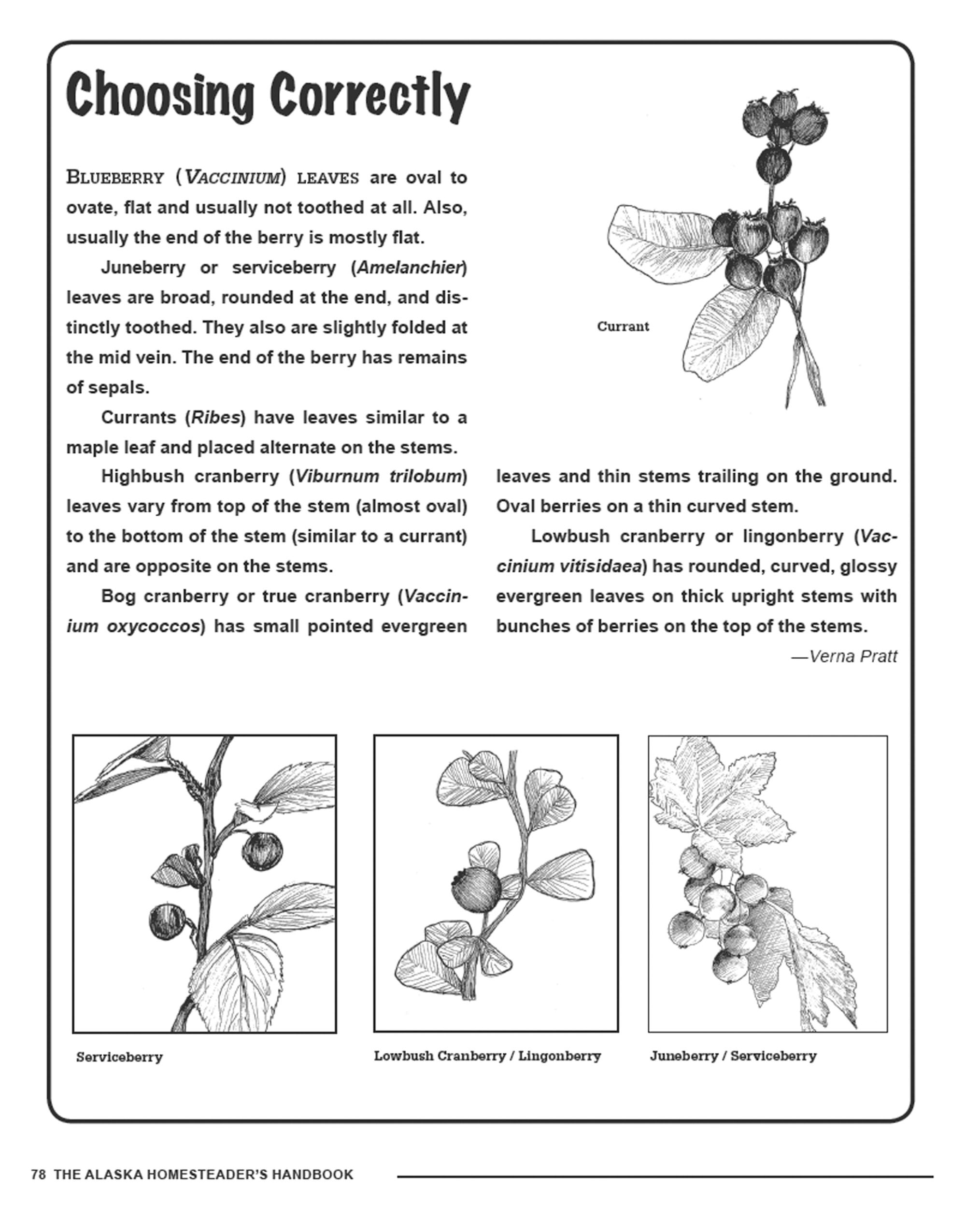
PALMER — “The Alaska Homesteader’s Handbook” is overflowing with advice on how to live in Alaska.
But if greenhorns brought it with them into the woods, could they make a go of it?
Maybe, but probably not.
“It’s not meant to be a complete how-to on living in the back country, but it is a good snapshot about what has to happen and it is a good basic sharing of knowledge from a lot of people who have been there,” said Nancy Gates, one of the book’s co-authors, along with Tricia Brown.
Over the course of 44 how-to chapters, the book, released this year, elucidates such topics as “How to Build an Airstrip” and “How to Avoid — or Survive — Falling Through the Ice.” It’s $18.08 on amazon.com as of Thursday evening and Gates said hopefully the local Fireside Books in Palmer will have some in stock soon.
Gates said it took her and Brown two years to put the book together, conducting interviews all over the state.
“They were really wonderful interviews, the people were so gracious and so humble about their accomplishments,” she said.
One she recalled fondly was Bud Helmericks, who provided the book’s forward.
“He dictated the forward to me. He was in his 90s and he was too frail to write it, but he dictated it to me,” Gates said. “He was there in this frail body, but when he would talk about his life in Alaska he would lean forward and he had these incredible blue eyes.”
The advice comes from all over the state, but a lot of it originated right here in the Valley. Each chapter comes with an introduction and then a step-by-step set of instructions.
For instance, Charilyn Cardwell in the Butte is featured in the chapter “How to Spin Dog Fur.”
“I never cared about wool. I liked all the exotic fibers,” she says in the introduction, explaining she’s also spun alpaca fibers and even some from a locally sourced camel.
In Chapter 25, Maxine DeVilbiss of Lazy Mountain lets readers know how to build a root cellar.
The introduction to her chapter includes the story of how she and her husband, Ralph, arrived in Alaska after having met in Portland where Maxine tended to Ralph as he recovered in a hospital from an injury.
Maxine, mother of borough mayor Larry DeVilbiss, died in 2009. But not before she passed along her root-cellar building story, she and her husband cut the 100-by-40-foot cellar into the side of a hill and put a Quonset hut on top of it. The cellar had concrete, waterproofed walls.
“At harvest time, if you put produce in there while the outside temperatures are still mild, it holds the heat and so you have to cool it down. Then if it gets too cold in the winter, you have to start the fire and let the warm air circulate,” Maxine DeVilbiss wrote. “You monitor it by simply going out every day and looking at the thermometer hanging inside the cellar. If it’s extremely cold and windy, you check more often.”
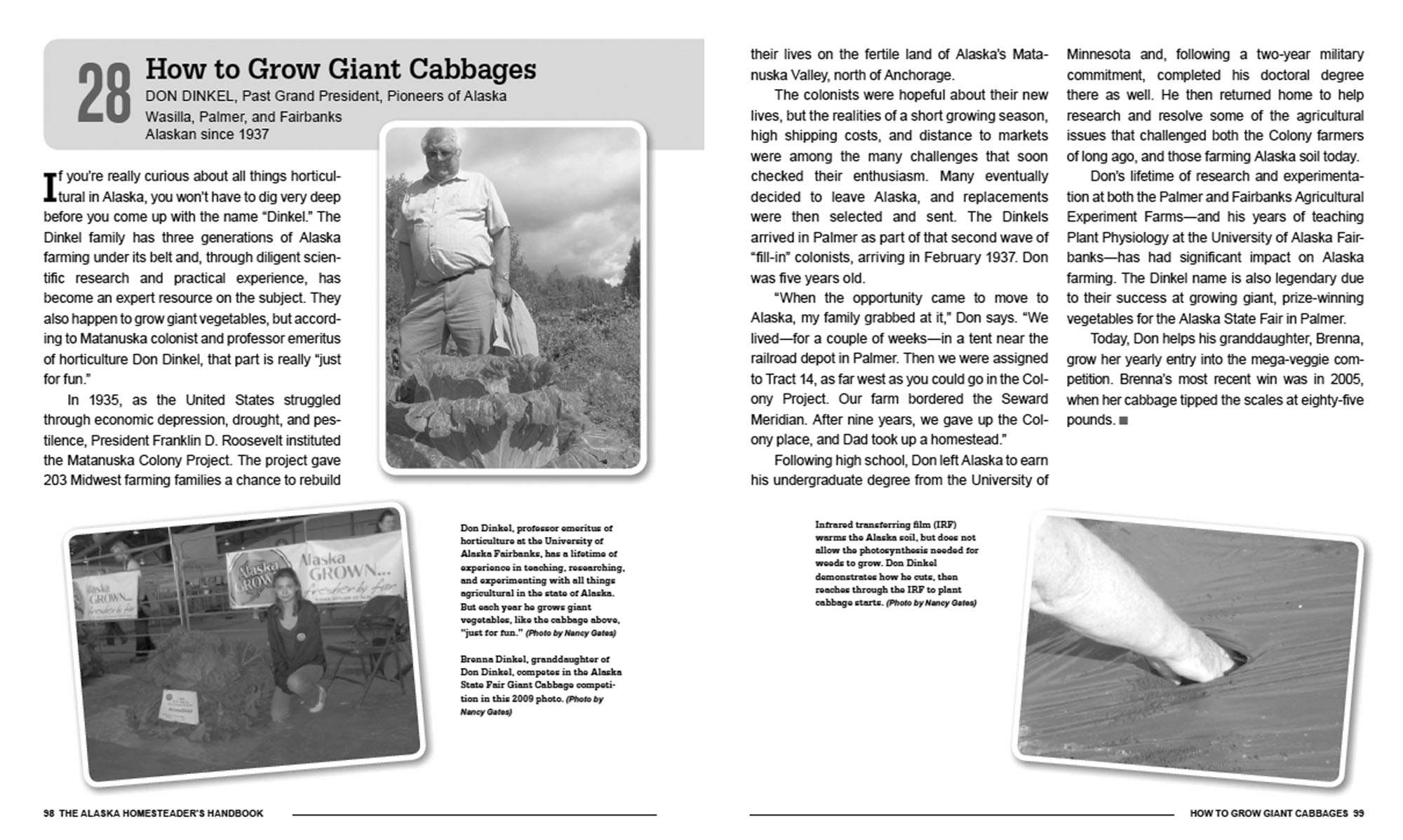
Meanwhile, Don Dinkel of Palmer shares a skill for which Alaskans have grown world famous in his chapter, “How to Grow Giant Cabbages.”
Dinkel is a child of the Matanuska Colony project and a professor emeritus of agriculture at Matanuska College. His advice includes using plastic mulch and what kind of fertilizer to use. It ends with this gem:
“The best time to harvest your big cabbage is 30 minutes before you show them. If you’re taking them to the dinner table, shorten the time to thirty seconds. Everything is best fresh, of course.”
Dolores Steffes, who lives in the Knik River area, told her interviewers she came to Alaska for an adventure.
“We just wanted to see what color the grass was up here,” Steffes recalls.
Her chapter is on canning salmon on the beach.
“You can any meat the same way,” Steffes writes. “Moose, bear, yak, caribou, chicken or turkey. When company shows up, you can simply open a can of meat, make some gravy and it’s like having fast food! It will keep forever as long as the seal doesn’t break.”
Contact reporter Andrew Wellner at andrew.wellner@frontiersman.com or 352-2270.


Frontiersman.com Multi-platinum, Grammy-winning artist Amy Grant will perform at the 2026 Alaska State Fair on Monday, August

By Kyle Wilkinson For the Frontiersman Friday Fling returns to downtown Palmer this week and will continue through the summer.

By Barbara Hunt Palmer Buzz She walks in Palmer twice a day on Alaska Street from Arctic to Jenski’s.

By Russell Clark For the Frontiersman Obstacle courses. Alaska seafood. Live music. Farmers. Fishermen. Yoga. Art. Birds. Rock climbing. Kids