Retiring teacher, coach urges Colony grads to ‘find their 68’
By Jeremiah Bartz Frontiersman.com A football coach using a hockey reference as the centerpiece for his keynote address may


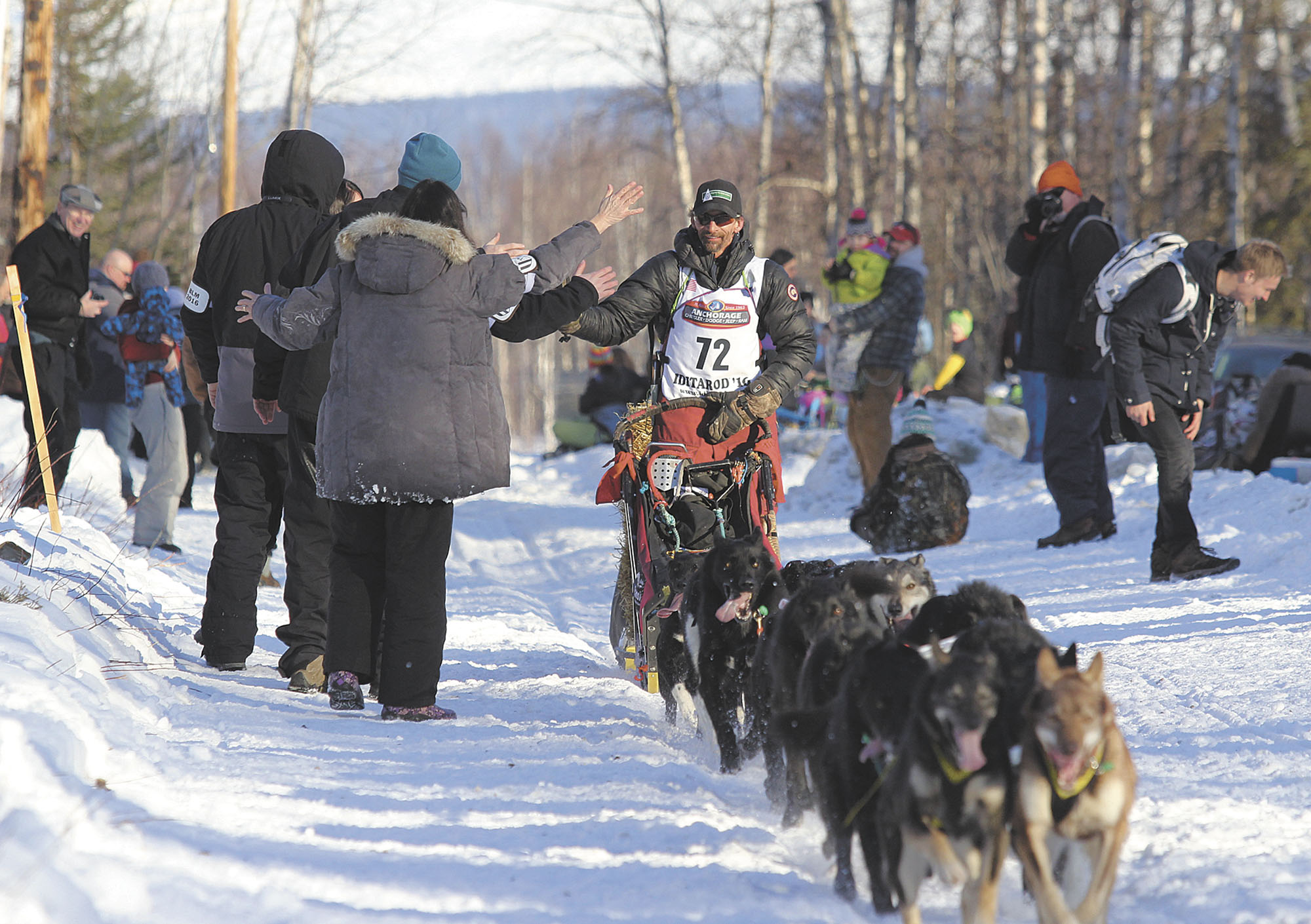
Lance Mackey’s hands are permanently cold. He’s sitting out this year’s Iditarod, just the second time he hasn’t participated in the 1,000 mile race since 2001. Sitting in his driveway, to be precise. He reports that the truck heater gives his hands a concentrated blast his home cannot provide, bringing relief from the debilitating effects of frostbite and infection.
It’s easy to love a winner, and ‘winner’ is an understatement for Mackey. Elite athleticism is prone to romanticism approaching mythology. The sinewy 46-year-old Fairbanksian has always defied the latter, while charting an impressive arc in the former. There are the unmatched four consecutive Iditarod victories (2007-2010), interspersed with four victories of the more remote, equally demanding Yukon Quest race. He twice captured both crowns in the same year, a feat previously thought impossible by mushing insiders. Induction to the Alaska Sports Hall of Fame and Iditarod Hall of Fame. Sweeping film festivals with the intimate, dramatic Greg Kohs’ documentary The Great Alone. Legend car racing, again for the win. But for all his triumphs, his rugged humility may be better revealed through his trials. His difficulties have only seemed to intensify his authenticity.
And they are well-documented trials — medical, financial and marital. 2015’s Iditarod was a withering affair that saw Mackey endure the death of two dogs mid-race. His younger brother Jason hung back to ensure they crossed the finish line together. He spoke tearfully from the Tanana checkpoint that year, declaring himself retired. This was followed by a 2016 attempt, in which he finally scratched at Galena, citing the health of his dogs.
Mackey's extremities are slowly succumbing to Raynaud’s disease, which affects circulation and leads to tissue damage. Severe cold — perhaps the only guarantee in his beloved sport — exacerbates his condition. He has already lost one finger on his left hand. That infection may have progressed due to near-constant exposure to the chemicals in handwarmers, which he was carrying by the case and lining his mittens with, in an attempt to keep his fingers functional. Tying out dogs, dealing with dozens of booties, feeding chores — details which must be reliably performed under grueling conditions — are now outside his abilities in a race setting. Dog mushing has been described as less about driving dogs forward and more about tempering their desire to run until they die. It’s a cruel parallel for the man said to share a preternatural connection with his dogs: fate has delivered that temperance for Mackey himself, in the form of physical constraints. Widely acknowledged as someone who would probably continue to race with a wooden leg, the crippling of his hands has proven to be a game changer.
“It just really sucks, man”, said Mackey on a recent afternoon, speaking by phone from his home outside Fairbanks — “ and I usually don’t let stuff get to me.” He seems neither philosophical or resolute; he is suffering. “There are a few things I’m good at in this life, and mushing dogs is one of them.” Noting his customary resilience, he still feels as if longing for mushing violates his code of coping without complaint. Mackey describes the platitudes offered by those around him as he adapts to his limitations. “People say, ‘you have a great family, you had a great career’, and that’s all true, but it’s frustrating. I would say it’s a daily difficulty.”
For this year’s Iditarod, Mackey leased dogs to his brother Jason, as well as 2011 champion John Baker, and veteran racer Katherine Keith. He knows they’re contenders. In his more reflective moments, such as the aftermath of 2015, it wasn’t his own legacy he spoke of preserving, but a duty to his dogs. “I let them down,” he said of his team at the time. Plenty of seasoned athletes would find a career as a consultant rewarding; for Mackey it’s clearly a consolation prize.
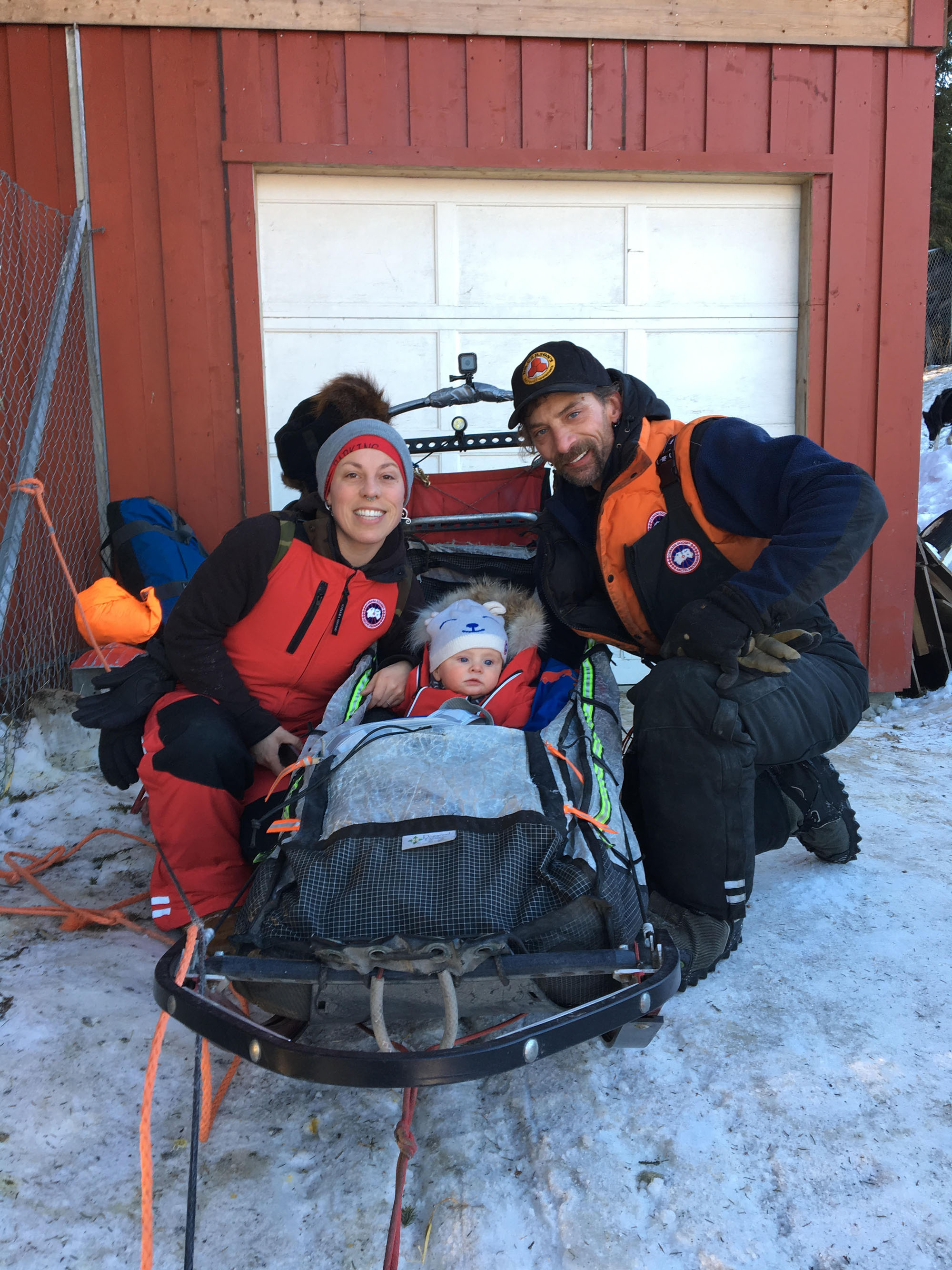
A few years ago he met an Oregon woman who has now given him a son, born in midsummer 2016. Jenne Smith spent 2015 working at a small produce farm in North Pole when she decided to stay for the winter. “I was bartending at the Howling Dog Saloon in Fox”, explained Smith in an email to the Frontiersman. She described herself as a lifelong animal lover unaware of who she had met. “Lance asked me, before I knew who he was, if I wanted to meet his 100 dogs.” Smith now looks after Comeback Kennels’ daily logistics, leaving the dogs and manual labor to Mackey. Just last month, the small family travelled to Norway to compete in Mush Synnfjell, with Mackey taking third place, his team provided by Thomas Warner.
European sprint races are one thing, but to be a serious dog musher is to exist in the shadow of the Iditarod, the pinnacle of the sport — an institution in which Mackey has undeniable pedigree. His father Dick was part of the origins of the race with Joe Redington in 1973, and earned the rose wreaths for his dogs in 1978. His brother Rick was the first legacy winner, in 1983. In the opening scenes of The Great Alone, Mackey describes being eight years old, watching his father’s victory, besting Rick Swenson by just one second. All three Mackey men became champions on their sixth attempt, each while wearing Bib #13.
In 2009, nearing the peak of his ascendancy, Lance Mackey’s marijuana use was targeted as a testing policy was adopted by the Iditarod Trail Committee. In an era when athletes are often quick to offer disingenuous apologies, Mackey was unflinching. “Jealous”, he dismissed the small number of mushers who were intent on capturing urine samples from their fellows. Then he beat them all again.
That unvarnished ego mixed with vulnerability is key to Mackey’s enduring appeal. One memorable example was begun online by an elementary school teacher in 2013. She had entrusted a cartoonish paper character to him, created by her 2nd grade students in the Lower 48. The ‘Flat Stanley’ was to travel with Mackey in daily life, who would send photos back to the class. The plan never materialized. She detailed her disappointment in vivid hysterics on Facebook, declaring him thoughtless and uncaring for children. Mackey answered her blistering public post, explaining, in effect, that life had been rough. He offered plainly, “I was going through a divorce and didn’t keep up with many things that I otherwise would have. There’s a lesson for your students. You can tell them that life sometimes hurts, bad.”
If not for defying conventional wisdom, Mackey’s long-distance mushing might have ended in 2001 with his throat cancer diagnosis, extensive surgery and radiation. Instead, the adversity propelled him but the victories haven’t appeared to change him. Says childhood friend Danny Moffitt, of the whispered hopes by more tightly-wound mushers or officials that Mackey might clean up his act: “Lance ain’t gonna change for nobody. He does these things that are almost superhuman, and then shows up to formal stuff, with a ponytail and an old Metallica T-shirt.” Moffitt recalls junior high winters spent racing Mackey’s dogs with snowmobiles on the outskirts of Wasilla. Over the years they’ve shared chance encounters, each time reinforcing Mackey’s warmth and accessibility. “I’m always glad when other people get to see that, because at the core of who he is, it’s that simple. Lance is a good dude. Rock solid.” Standing nearby was his father, Bernie Moffitt, who chalked it up to hometown grit. “There is not one politically correct person on Pittman Road. Or if there is, we just haven’t found ‘em yet.”
For a man who has probably named a thousand puppies throughout his career, baby son Atigun (named for a Brooks Range mountain pass) now leads the pack. “Our home on the hill here, we got a nice place. I look at this little guy and he’s just smiling away, doesn’t care about anything.” As for life beyond the Last Great Race, the domesticated badass concedes: “I’m as involved as I can possibly be, now.” Of his busy kennel tour and excursion business, he offers a cheerful sigh. “We get to share the joy, pass it along, I get that.”