Retiring teacher, coach urges Colony grads to ‘find their 68’
By Jeremiah Bartz Frontiersman.com A football coach using a hockey reference as the centerpiece for his keynote address may


The current Alaska Rock Gym might seem new to some people, having opened in July of 2016, but the business itself has been around for a long time. ARG has been providing quality indoor climbing to the Anchorage community since 1995, and regardless of whether you are brand new to the sport, interested because of the fitness aspect, or simply looking for something new to do with your time, this facility could be the answer.
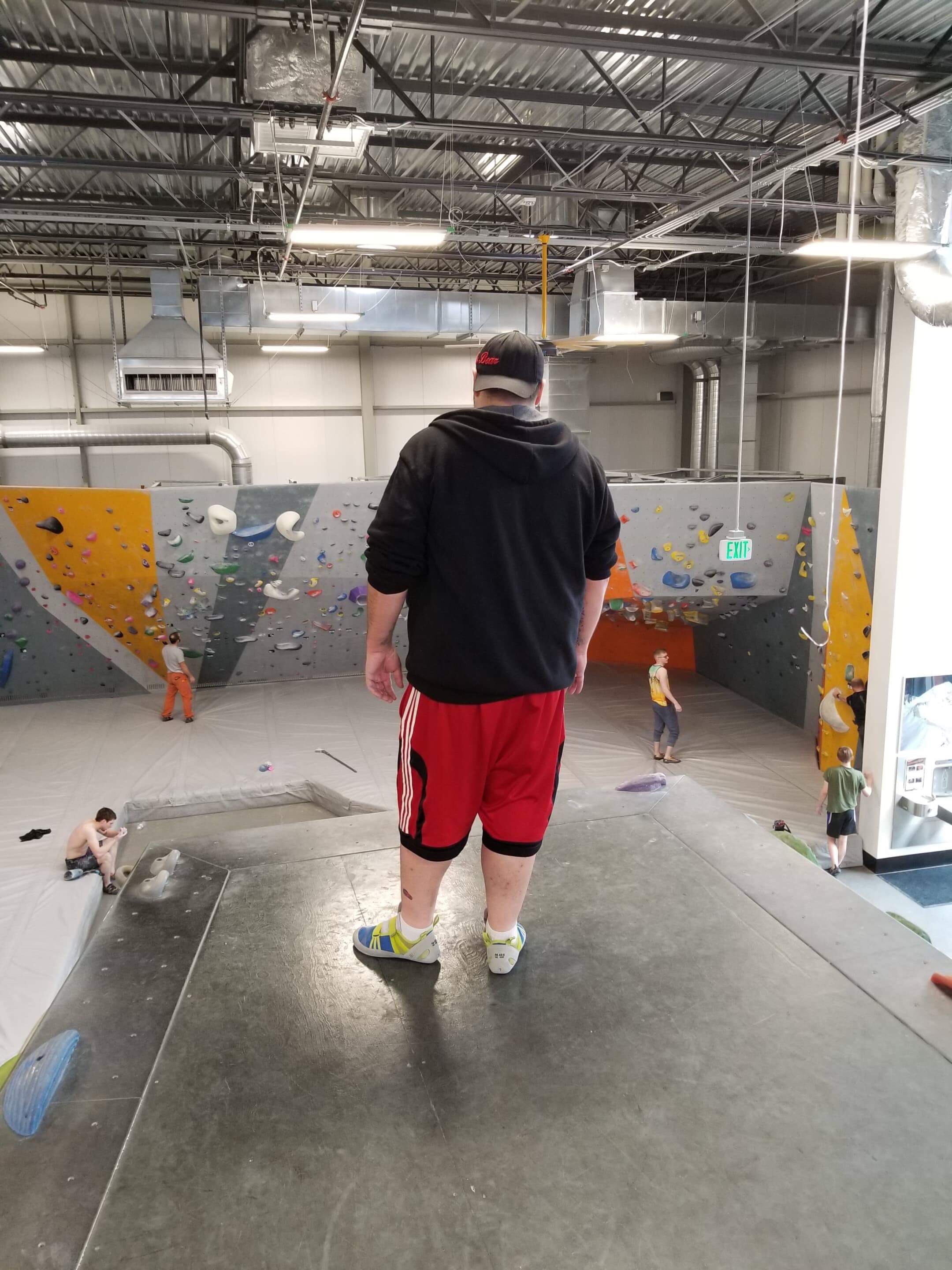
Inside the 24,000 square-foot facility you will find more than just folks climbing walls. There is also a fitness and cardio area, a peaceful yoga studio, and an entire floor dedicated to boulder climbs. It’s all part of what Operations Manager Eric Wickenheiser describes as “a lifestyle”. He has been with the company for about three years but has been climbing for almost seven. He sees the gym as something different than what is offered anywhere else in town. “We are not your everyday fitness facility, and we are not trying to be. We have an entirely different view of how fitness fits into not only your athletic life, but your everyday life. We view the body as a whole. We see that climbing, along with yoga and other sports are these functional movement practices. I might be doing a complex series of movements, but what is actually going on is a very natural form of human movement.”
Recently I spent an afternoon with Wickenheiser while getting a feel for the gym, and he took me through some of these movements, something we both described as “vertical dancing.” Rock climbing is not something I ever saw myself being excited about, but the more time I spend at ARG, the more addicted I get. Something that Wickenheiser says is common. In the fitness sense, the sport uses muscle groups that you will not realize that you had, isolating and working out your full body as you climb. The rest of the skill is in your head. You must approach each wall and decide your path as you are climbing. “It’s a physical puzzle. I can see the holds, but what am I supposed to do with my body?” said Wickenheiser in agreement.
For beginners, everyone starts on the boulders. This type of climbing does not involve the ropes and harnesses that many associate with rock climbing. This area is used by many to get used to the concept of holds and movement while dancing up a wall. Unlike many other fitness methods, there is an overwhelming sense of accomplishment the first time you complete the task. The sense of achievement is also there the next time, and every time after. Wickenheiser says that the feeling never fades.
“It doesn’t matter if you are a beginner or the best in the world, you have that same experience,” Wickenheiser said. Part of it is also the support from the community of climbers that frequent the location, and devotees of the sport. “You get judged on the effort. When you are trying your best, people are excited for you,” he added.
The community has experienced a surge recently, following the trend toward rock climbing in Europe about a decade ago. The trend will likely continue, following the Oscar win for the documentary Free Solo, as well as the upcoming games in Tokyo 2020 and Paris 2024, where rock climbing will debut as an Olympic sport. This surge is partially about people interested in the competition aspect, but Wickenheiser says there is another group that he has seen coming in often.
“The other demographic is the young professionals,” he said. “Those that have a gym membership, but they want something different, something social, they want to go outside the box. This fills that niche. It could be climbing, it could be anything. They like the community and environment. It’s one of the reasons why climbing has a universal approach; it is a full body movement practice.”
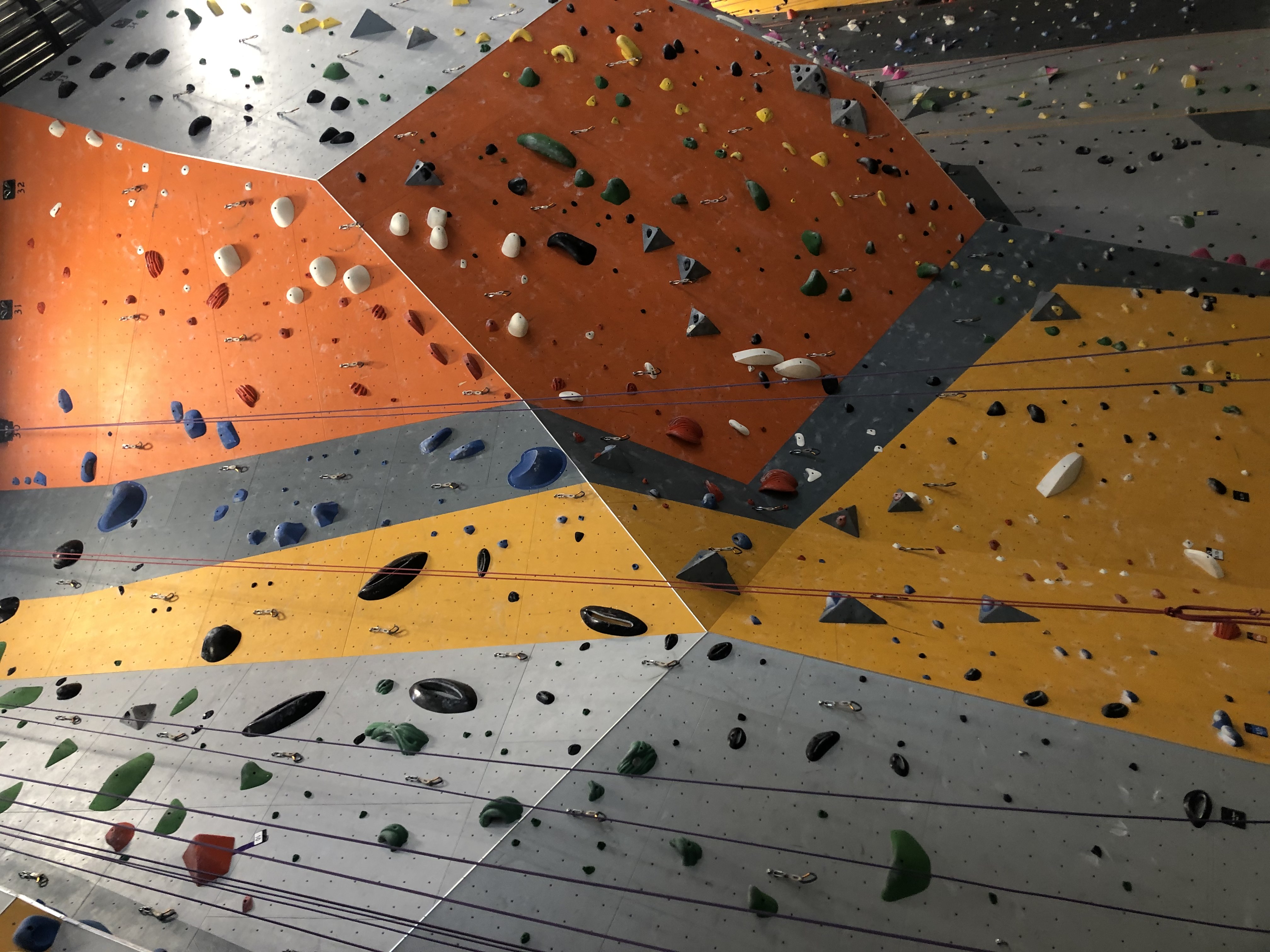
The main space in the building is dedicated to the 45-foot walls that are what most people will recognize when they think of climbing. It was here, in what he described as ‘the ultimate partner experience challenge,’ that I strapped on my harness and started to climb. While I have never had a fear of heights, there was still something that rattled me as I watched more experience climbers get higher on other parts of the wall. That is something that my climbing partner for the day could relate with and had recently discussed with someone.
Wickenheiser also said that he had that fear when he started the sport.
“Nothing had scared me more, so I had to go into that,” he said. “This woman told me that she had bungee jumped, and she had skydived, and was still afraid of heights. I told her that the difference here is that every time you step up, you are in control; you are choosing to go higher with every step. That’s what is so scary, you get to say no at any moment. You are in your own head, wondering whether you want to go up or down. That is the thing about this sport, the mental component and the physical component.” There is also a trust component with the person who is holding your rope. As I followed instructions, letting go with my hands about half way up the wall and sitting back into my harness, my fear turned into a feeling of peace.
The fitness area is also geared towards different types of body movement, and different goals. “What we try to provide in there is a facility for people who are going to train to go into the Alaska range, or train for climbing, or heal their injuries. We are not a body building facility. In general, we view all of these things as one big thing.” Wickenheiser said, explaining, “You are using the same muscles, the same neural pathways, the same movements, you are just isolating or focusing on them differently.” The yoga instructors will also be different than most people are used to, having a background in anatomy and physiology. “We have a great facility for both yoga and fitness, but we are a little non-traditional in that our yoga teachers are a little different. We view sport science in a different way, and I like to think of it as cutting edge.”
No matter what your level of fitness, or what size you are working with, climbing is something that most people will be able to find a level of success doing. Wickenheiser shared a story with me about another climber that was the same size as me. “It’s a sport for every body type. I was at a facility with this guy who was a really good climber and he probably clocked in at around 300 pounds,” Wickenheiser said. “The one that’s hard for us to get into people’s head is that it’s not just doing pull-ups. It’s more akin to gymnastics or yoga in that there is a high level of skill and strength is the last component.”
As our time came to an end, I paid attention to my body, where I felt the workout, and where my head was at. While climbing is called realistic functional movement, I found what I had been able to accomplish somewhat surreal, and like most who begin, I am hooked.

Frontiersman.com Mat-Su Health Foundation has debuted a refreshed brand identity, including new logos for the Foundation and its

By Christian Hartley Now You Know When politicians disappoint us or propose ideas we do not feel reflect our values
A new study takes a comprehensive look at the health and well-being of Mat-Su residents. The Mat-Su
Mark Kelsey A new study takes a comprehensive look at the health and well-being of Mat-Su residents. The