Retiring teacher, coach urges Colony grads to ‘find their 68’
By Jeremiah Bartz Frontiersman.com A football coach using a hockey reference as the centerpiece for his keynote address may


WASILLA — Alaska indie musician Marian Call will bring her soulful, clever and quirky sound to the Glenn Massay Theater Saturday, part of the AK Home Concert Series.
Call, a Juneau resident for more than 10 years, has released 10 albums since 2007 and is working on the 11th, “Standing Stones,” which is set for release this year.
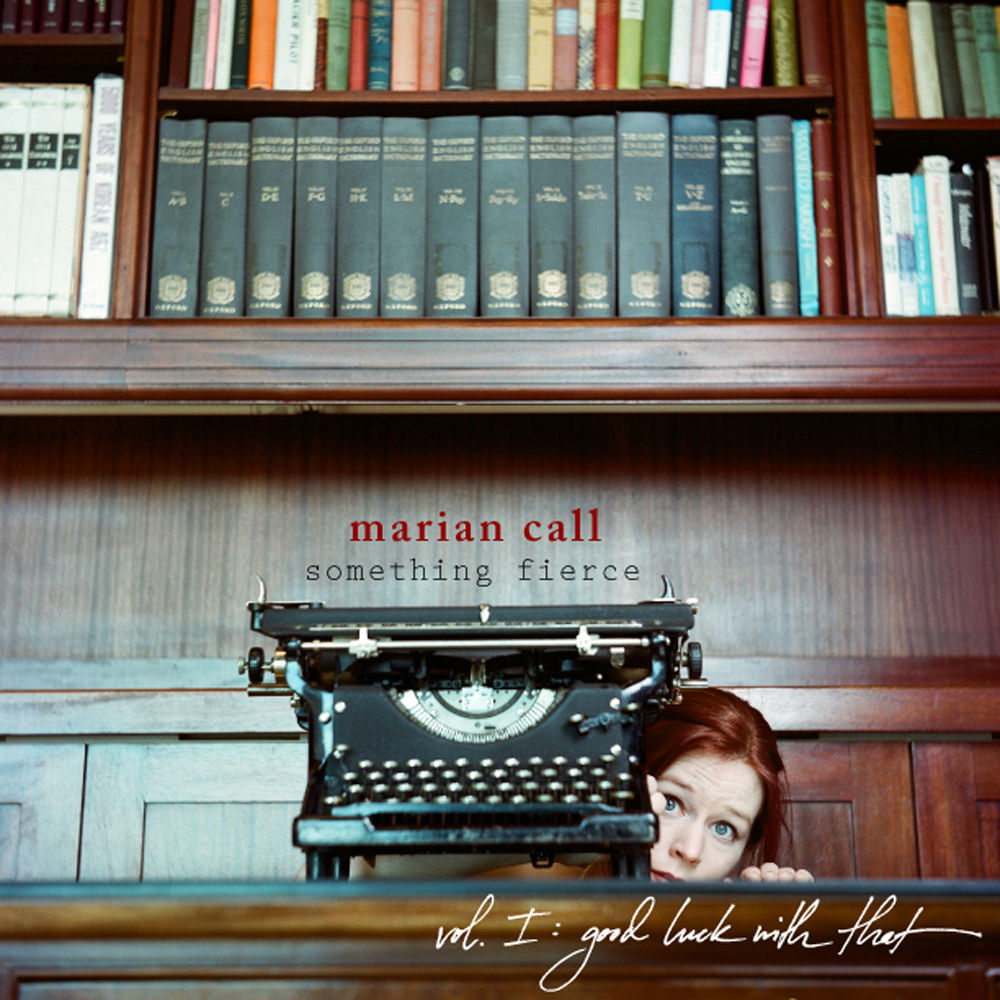
Known for her ever-present manual typewriter — which she often uses for percussion during a show — and original songs that can feature Jane Austen, the Mars Rover and sharks, Call’s acoustic set is scheduled for 7:30 p.m. Tickets are $15 for adults and $10 for students.
To learn more about Call and her music, visit www.mariancall.com
Known for music that comes from a place of humor and self-reflection, Call carved out some time this week to talk about her craft, the Internet and Alaska.
Frontiersman: Is this your first visit to the Massay Theater? Valley folks are pretty proud of the venue.
Marian Call: The theater is gorgeous! I got to perform there as part of a songwriter showcase last year with Steven Bacon, and I don’t think I’ve been in another venue in Alaska quite as lovely for the intimate size. Such a gem to have it in Palmer now!
Frontiersman: Each venue is different, but how do you like to interact with the audience? How do you incorporate that typewriter?
MC: With a stage and lights the audience can feel a bit distant, but I do my best to be very open and personal and have an intimate show, just like a living room or coffeehouse show. Only with completely perfect sound and lighting!
The typewriter has been a friend of mine for a long time; it’s my mascot. I have a growing collection of typewriters and each has a story. It’s just simple percussion, but it’s a sound and a feel that I love, and no other instrument quite makes the same noise.
Frontiersman: Your style has been aptly called “acoustic joy jazz,” with lyrics that have an improvisational feel. Is that a fair assessment? How do you characterize your style?
MC: I’ve always liked the “acoustic joy jazz” description from my high school best friend. I write in lots of styles, from punk rock to folk to blues to power ballads. The unifying factor is probably that all my songs sound like they escaped from some weird musical and went on the road as a revue, only I’m not sure what the plot is yet.
But the characters and the settings are very vivid, and there’s lots of storytelling — tiny comedies and tragedies in turns.
Frontiersman: What do you try to achieve — or build on — in your songwriting?
MC: My mission is to help people feel their own feelings. I think music does that, it helps us reach parts of ourselves that can be hard to contact. I’ve done my job if someone connects with their own heart for a moment through one of the stories I tell.
Frontiersman: On a more current events note with the recent death of David Bowie, your video with Alaska Robotics, “Space Weird Thing,” — a take on “Space Oddity” — made it to Bowie’s official website. Tell us about that, especially the story on the lyrics.
MC: Phew, this may not make good copy! We loved making this video but it’s tough to explain:
The beautiful thing about the Internet is that it creates all these little corners that have their own cultures and communities. There’s a webcomic I love called xkcd, made by Randall Munroe, and he does great work on science, such as in his bestselling book “What If.” He drew a diagram of the Saturn V rocket and explained how it works, but he used only the 1,000 most commonly used words in English (which makes explaining a rocket very difficult) and the diagram was called “Up Goer Five.”
My boyfriend Patrick Race and my friend Molly Lewis thought the exercise was so wonderful, using only the 1,000 most common words, and all together we decided to cover our favorite song about space, “Space Oddity.” We had to change the name to “Space Weird Thing,” of course, since we are using only the 1,000 most common words.
We filmed a “sweded” version of the original Bowie music video in our apartment one afternoon, in the style of Michel Gondry’s “Be Kind Rewind,” using materials we had on hand. It was tremendous fun.
So we created this bizarre piece of art for our little corner of the Internet that knows and loves me, Molly Lewis, Randall Munroe, David Bowie, and Michel Gondry — and our fans just loved it, they went crazy. It was a spontaneous little weird piece of art, made in the best possible spirit, and that resonated with some folks out there.
Imagine our surprise when the official David Bowie website picked up the video and posted it last summer, and webcomic Randall Munroe posted a link from his site xkcd.com as well!
A few weeks ago the film changed from an homage to a tribute, and his passing hit us all very hard, it was such a surprise.
Frontiersman: You say in your bio that some of your songs are inspired by the “Firefly” and “Battlestar Galactica” series and contain themes of geek culture. Where do you fall on the geek meter?
MC: I don’t really believe in a Geek Authenticity Score or an exam that people have to pass to qualify. But I spend an awful lot of my time thinking and talking about nerdy subjects, and I love them very much. I go to big conventions like Comic-Con, I’ve done a little cosplay, I read comics, I think a lot about phantom planets like Number Nine, the celebrities who make me swoon are mainly scientists and engineers — and I’ve hosted concerts at Space Camp in Huntsville, ESA in the Netherlands, and at two particle colliders, CERN and Fermilab.
Frontiersman: Your use of social media and the Internet in general is formidable — and in this era that is saying something. What is your secret for online success?
MC: Ha, if there were a secret all the snake oil salesmen trying to sell the secret would be rich by now! There’s no secret except to make something you’re proud of, present it to the world with humility and honesty, and then find the corner of the world that likes it — and make friends with them. To me, even before money enters into it, that is success. Finding your community is success.
How to monetize things on the Internet is another story, and I don’t think any of us will be positive how that works for a long time.
Frontiersman: Staying on the web topic, your 2015 Kickstarter tally of $67,000 toward your new album “Standing Stones” was the fourth highest in funding for the state of Alaska. What has been the key to success there? How tough is the planning for a Kickstarter?
MC:This was my second Kickstarter and planning for it was a full-time job for at least a month. Fulfilling it will be a full-time job for many more months, so the money doesn’t go nearly as far as you’d think. But the key to success with the Kickstarter was not the work and planning I did last year, but rather the work and planning in the seven previous years. I spent a long time honing my craft and finding the small community that loves my music, in Alaska and around the world. I visited them, stayed on their couches, played shows for them over and over in far corners of the country, and asked them what kind of projects they liked. I had to earn years of trust to make a big ask. By the time I was ready to raise a lot of money, it felt like a joint effort among old friends, a party — not just launching a long-shot wish out into the cold universe. I’m familiar with the names of well over half of my backers, they’re my community.
Frontiersman: You have lived in Alaska for a few years, but have toured all over the Lower 48 and Europe. What does Alaska mean to you?
MC: I moved here in 2003 not planning to stay. But by 2004 I knew it was something special, and by 2005 I think I knew I was hooked. I travel everywhere but Alaska has stayed my home base for over 12 years now, my whole adult life since college. I’m working on the 20-year badge; I’ll get there.
I think some people don’t care about geography much, but some of us are very finely attuned to place. I’m one of those people. I could write endless songs about the feeling of being in Homer or Mendocino or Maine or Edinburgh. And of all the places I can live without a visa — and I’ve done all 50 states, I’ve taken a thorough survey — Alaska is the place where I make sense. Something about the mountains and the water and the people. It woke me up; it works for me.
Alaska gets its claws in some of us. You know what I mean. So this is home.
Marian Call in concert
Feb. 6, 7:30 p.m., Glenn Massay Theater
Tickets: $15 for adults and $10 for students
www.mariancall.com
Contact reporter Steven Merritt at 352-2269 or steven.merritt@frontiersman.com

Frontiersman.com Multi-platinum, Grammy-winning artist Amy Grant will perform at the 2026 Alaska State Fair on Monday, August

By Kyle Wilkinson For the Frontiersman Friday Fling returns to downtown Palmer this week and will continue through the summer.

By Barbara Hunt Palmer Buzz She walks in Palmer twice a day on Alaska Street from Arctic to Jenski’s.

By Russell Clark For the Frontiersman Obstacle courses. Alaska seafood. Live music. Farmers. Fishermen. Yoga. Art. Birds. Rock climbing. Kids