Military Committed to Protecting Environmental, Cultural Resources, Service Officials Say

A Mojave Desert Tortoise rests near some beaver-tail cactus flowers, aboard Marine Corps Logistics Base Barstow, Calif., April 15. Marine Corps Logistics Base Bars

Senior officials from the Army, Navy and Air Force assured lawmakers that military readiness and environmental concerns can coexist.

The services’ principal deputy assistant secretaries for energy, installations and environment testified today at the House Armed Services Committee’s readiness subcommittee hearing on building military readiness while protecting natural and cultural resources.

Jordan Gillis, representing the Army, said land is one of the most important resources needed to accomplish Army readiness. It provides maneuver space for units training, weapons range complexes, as well as land for Army military education complexes, he explained.

Examples of two of the most important training areas in the United States are the National Training Center at Fort Irwin, California, and the Joint Readiness Training Center at Fort Polk, Louisiana. Besides those, each installation has its own training area where troops prepare for larger-scale training at NTC and JRTC and real-world operations, Gillis said

Most installations were established decades ago, and some more than a century ago, he noted. At the time, he said, they were in remote locations to decrease the impact on local communities. However, over time, communities have grown, increasing encroachment issues that affect training, he said.

However, the Army is dedicated to working with local communities to mitigate encroachment challenges, such as noise from live-fire training or aircraft, Gillis said.

Gillis said that besides the goal of attaining a high level of readiness, he said, the Army is also committed to environmental and cultural protection of its land.

Jennifer L. Miller, representing the Air Force, and Todd C. Mellon, representing the Navy, said their land-based ranges also are critical to readiness, and they echoed Gillis in saying their services are committed to the environmental and cultural protection of their land.

The three officials told lawmakers that they consult and cooperate with the Department of the Interior, the U.S. Fish and Wildlife Service and state and natural resource agencies to prepare robust and integrated natural resource management plans.

Regarding the protection of cultural resources such as archaeological sites and historical structures, the three service leaders said they consult with and partner with state historical preservation offices and tribal leaders.
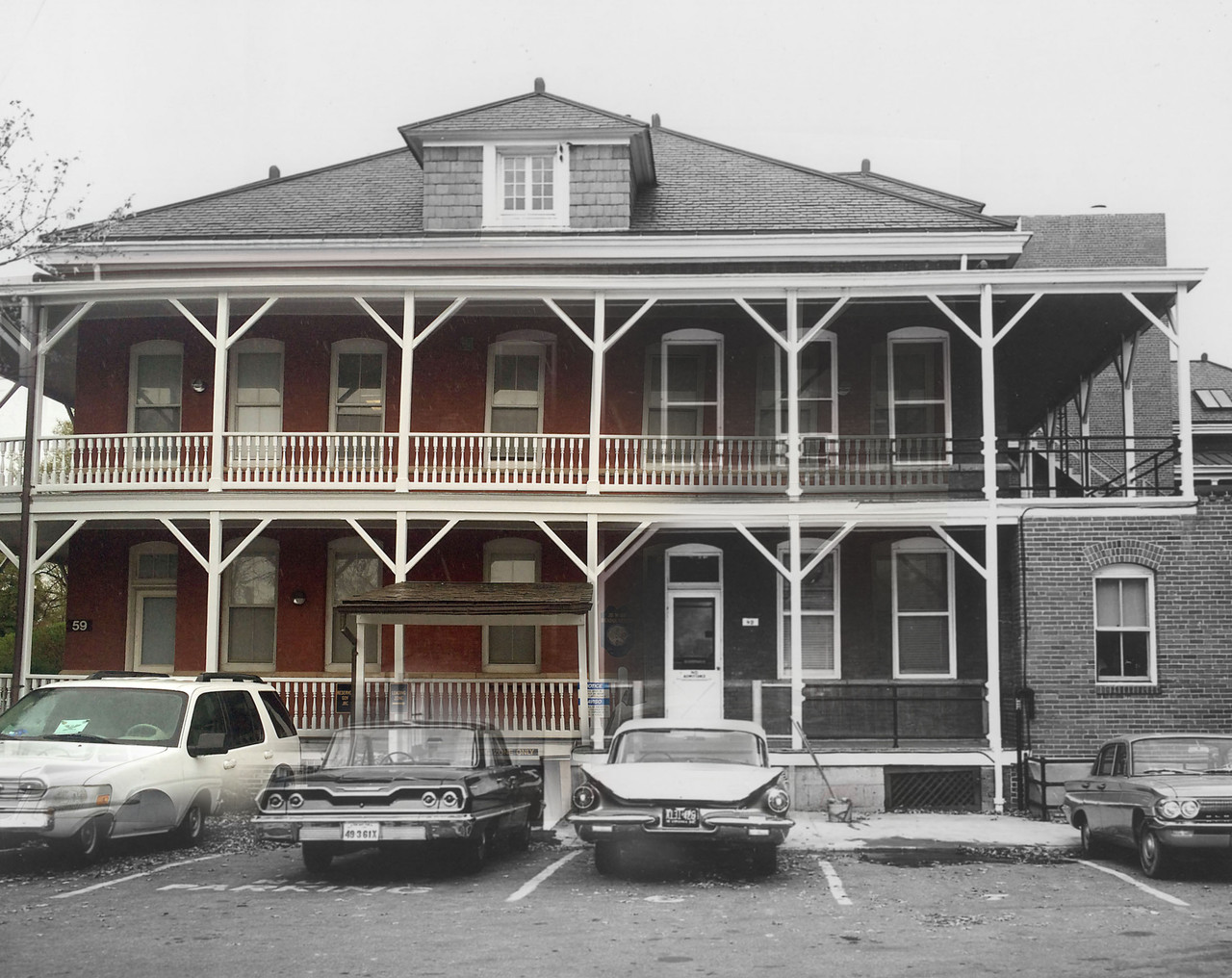
This photo illustration of the rear entrance to Building 59 on the Fort Myer portion of Joint Base Myer-Henderson Hall blends an undated, black and white image of the building and a color image of the same structure taken April 14. Although the building currently serves as the headquarters building for the joint base, it was built in 1895 as the post hospital and consisted of a two-building structure, complete with a garage for ambulances. According to retired JBM-HH Historian Kim Holien, 1st Lt. Thomas Selfridge, for which JBM-HH’s Selfridge Gate is named, died in this building in 1908 after an airplane crash with Orville Wright during a flight demonstration on the post. Wright survived, but spent six weeks in this building recovering from broken bones. Gen. George Patton received medical treatment in this building as did all U.S. Army chiefs of staff until the late 1960s when the Andrew Rader U.S. Army Health Clinic was built. The road that leads from Jackson Avenue along the rear of the historic quarters along Lee Avenue and into where the hospital’s garage was located (now a parking lot on the north side of the building) is appropriately named Hospital Lane. Although the appearance of the building has changed through renovations over the years, the building is recognizable in most historic images dating back more than 100 years. Helen Klein
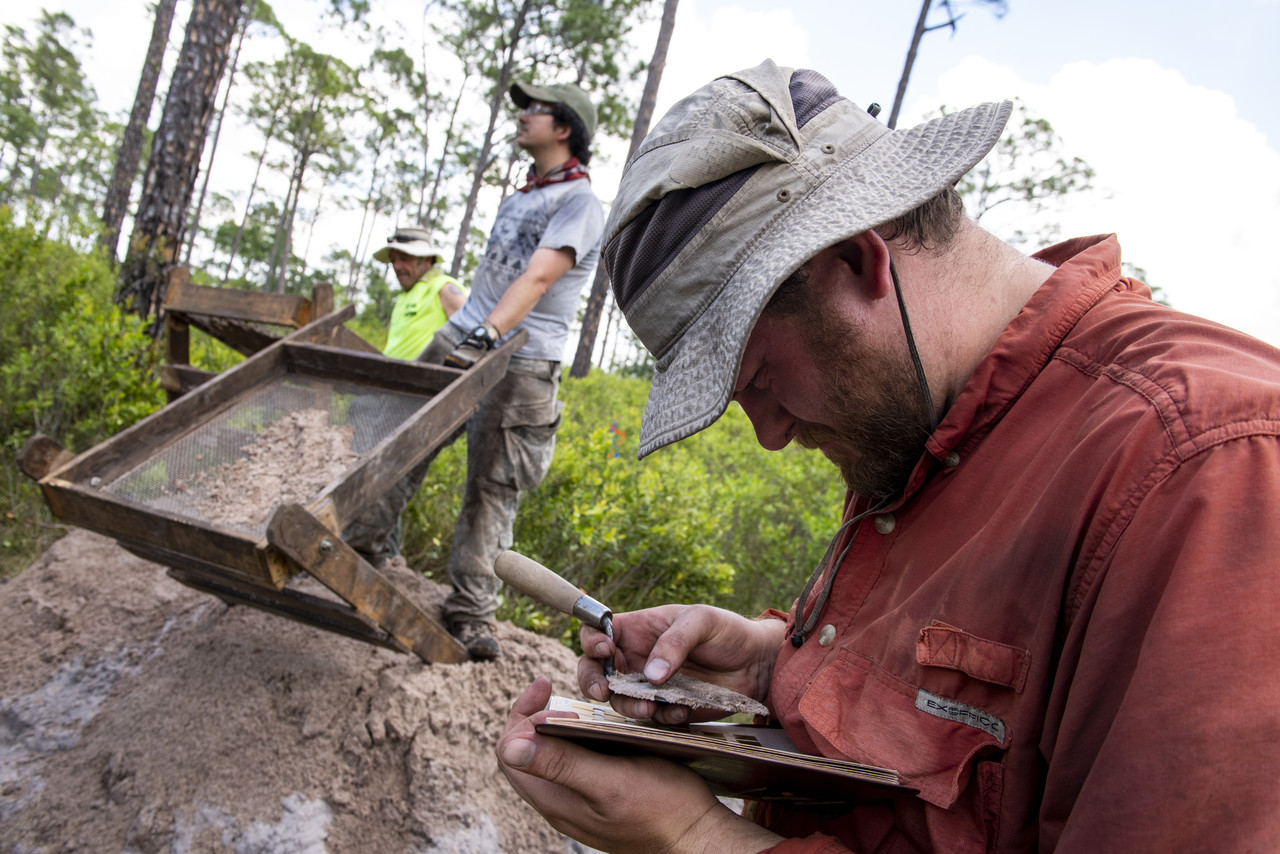
Matthew Crabtree, a dig crew chief working for the Air Force, compares soil color on a Munsell soil chart for later analysis in the lab. At Avon Park Air Force Range in Florida. Excavating The Air Force is excavating a newly found archaeological site for Eligibility on the National Register of Historic Places (NRHP). (U.S. Air Force photo by Tech. Sgt. Perry Aston) Tech. Sgt. Perry Aston

Great! You’ve successfully signed up.

Welcome back! You've successfully signed in.

You've successfully subscribed to Frontiersman.

Success! Check your email for magic link to sign-in.

Success! Your billing info has been updated.

Your billing was not updated.
