Retiring teacher, coach urges Colony grads to ‘find their 68’
By Jeremiah Bartz Frontiersman.com A football coach using a hockey reference as the centerpiece for his keynote address may


Growing up in a Korean American household, ramen was as much a household staple for my family as bread and butter. I am, of course, referring to the innumerable instant varieties out on the market; many of which I still horde and gleefully consume to this very day. It wasn’t until later in life that I experienced a more authentic representation of ramen on a family trip to Honolulu. It was then that my third eye had awoken to the vastness and richness of this humble dish, and since then, I’ve been obsessed with finding some of the best in the world—even going so far as to make a pilgrimage out to Tokyo where I experienced not just the best ramen I've ever had, but some of the best food in general.
To the uninitiated, ramen looks to be made up of nothing more than a few key elements—noodles, broth, and toppings. But what you’ll find under the surface are two additional building blocks that distinguish a truly great bowl of ramen from all the pale imitations—tare, a sauce which seasons the broth and defines the overall flavor profile; and aroma oil, which is often layered with fragrant ingredients to bring a little je ne sais quoi to the equation. Ramen truly exists as an art form, because outside of these fundamental qualities, there exists a multitude of regional variations and styles spanning the entire globe and not just exclusive to Japan.
We haven’t quite seen the same boost in ramen fervor here in Alaska as found elsewhere—at least not yet. What’s worse is that if you decide to order ramen at a random Japanese restaurant in town, odds are you’ll receive a bowl of instant noodles that are barely zhuzhed up, but not nearly enough to warrant the significant upcharge. The good news for ramen junkies is that two brand-new dedicated restaurants are currently in the works: Whiskey and Ramen on 4th Avenue, and Kami Ramen, which I got to try back when they existed as a pop-up concept back in 2020. As I toil through the days until we reach their respective opening dates (TBD), I thought it would be worth revisiting one of the first ramen shops in Anchorage to see if they still have what it takes to hold me over.
I brought my wife along to check out Naruto, which people might automatically assume to be a reference to the popularized manga series. That may be partly true, based on the several shelves worth of manga titles available for your right-to-left reading pleasure, but it’s worth noting that Naruto is also a type of fishcake identifiable by its signature pink spiral. In any case, we found ourselves to be the only patrons in a dining room best described as cold and frankly, a little depressing. Things soon livened up once a few more parties rolled in, and it only took 10 quick minutes for our food to arrive.
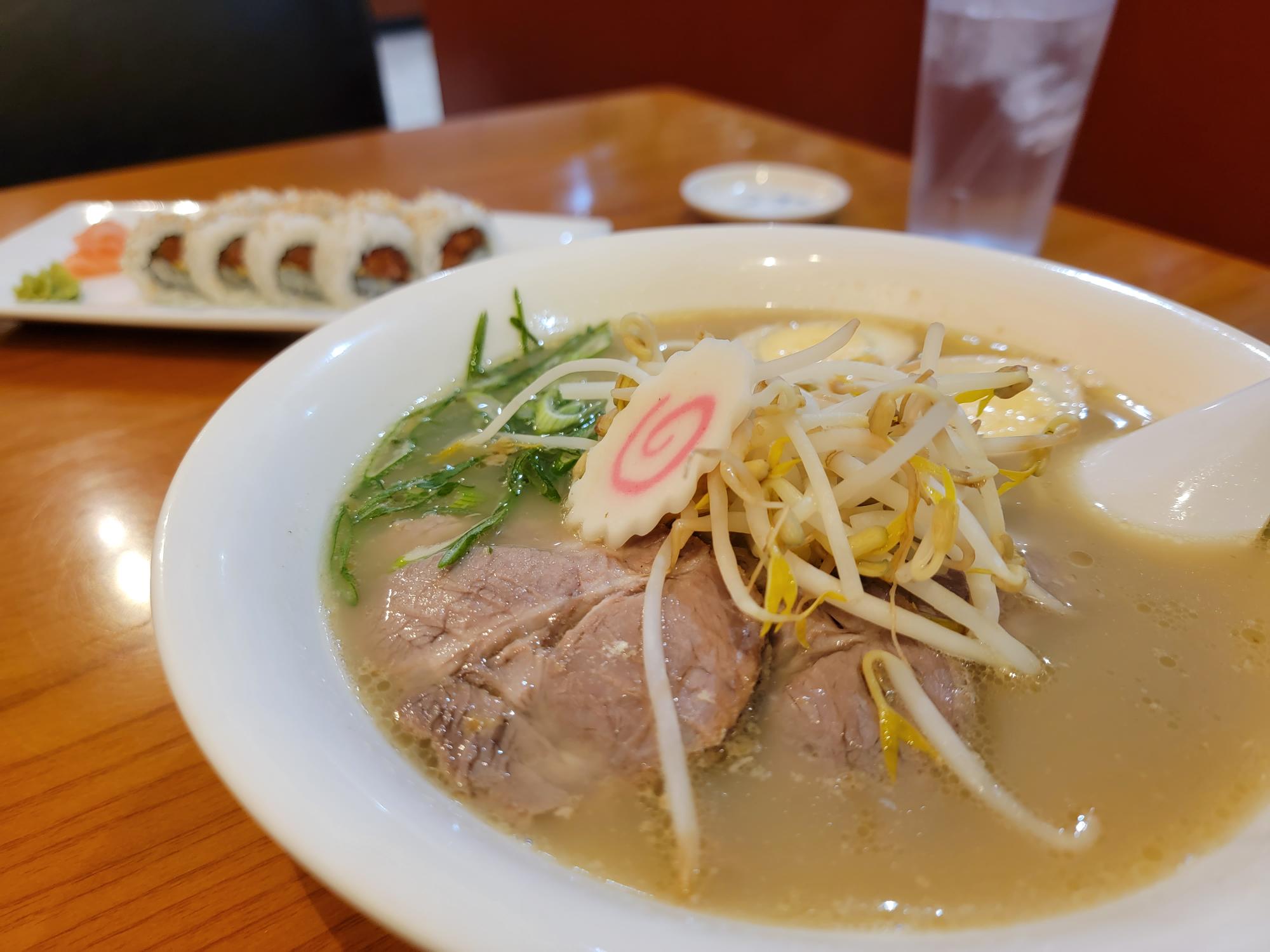
My bowl of choice was the Naruto Ramen, sans miso. It’s described on the menu as a pork and chicken broth topped with chashu pork, green onion, bean sprouts, and “tasty” egg. I distinctly remember when this restaurant used to incorporate halibut bones in their broth, which had a subtle flavor and brought a uniqueness to their ramen. Sadly, that seems to have been abandoned some time ago. Still, this was still a very potent broth, one that smelled meaty and leaned more towards chicken than pork, in terms of flavor. The salt content was definitely up there, but it wasn’t anything a few gulps of water couldn’t fix.
The quality and doneness of the noodles can easily make or break a bowl of ramen, and the ones here are usually excellent and sourced from a mysterious supplier that I wish to identify so I can bolster my own creative attempts at home. On this day, they were just a tad bit overdone in that there wasn’t as much bite to them. However, they were far from mushy and I was impressed at the quantity alone, which combined with the magnificent flavor of the chashu made for a hearty meal. The soy-marinated egg was indeed tasty, but would’ve benefited from shortening the cooking time to produce a more luxurious, creamy mouthfeel.
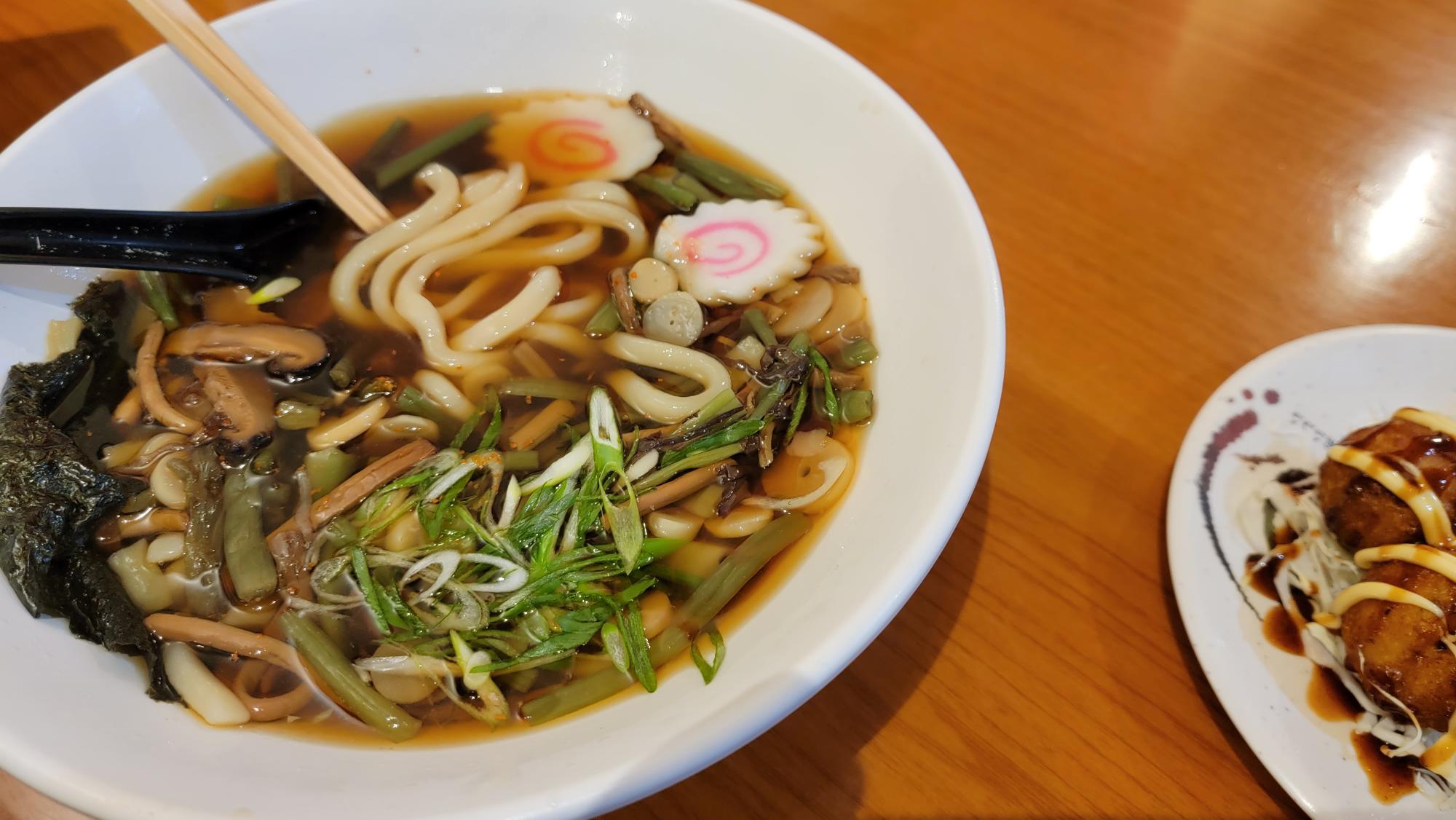
My wife decided to try the wild vegetable udon. She seemed pretty happy with it, so I offered to trade before being amazed by how umami-rich and savory the broth was. There were some fibrous vegetables, bamboo shoots, and shiitake mushrooms that enabled this soup to live up to the wild vegetable designation, along with the fact that the noodles had more heft and chew than most versions I’ve had, making for a very enriching experience.
There’s one item at Naruto I consider to be a must-have every time—the esoteric treat known as takoyaki. These are wildly popular in Japan as a delectable street food and best thought of as savory donut holes—made with an eggy batter stuffed with diced octopus and topped with dried bonito flakes and a generous squirt of Kewpie mayo. Takoyaki is difficult to come by around these parts, which is a shame given that the textural and borderline sensual pleasures derived from having one is a true delight.
Naruto might not be serving up the best ramen in the world, yet they remain a worthy addition to the Anchorage dining scene regardless of where they stand on a global scale. While I believe a little more attention could be paid to their atmosphere, the range of affordable options and overall quality of their food make it easy to get sucked in time and again. Ramen aficionados and newbies alike will find a lot to appreciate about this casual slurp shop.
Frontiersman.com Grape Tap cooking class still has openings Kristin Cook, chef and owner of the Grape Tap, has announced

Landmark farm stand continues to expand inventory Bushes Bunches, the long-running farm stand outside Palmer on the Old Glenn

By Mark Kelsey For the Frontiersman A farm-fresh carry-out dinner service is giving busy families a healthy alternative

Whether you’re looking for a break from the overindulgence of holiday eating, or looking for assistance keeping up with