Retiring teacher, coach urges Colony grads to ‘find their 68’
By Jeremiah Bartz Frontiersman.com A football coach using a hockey reference as the centerpiece for his keynote address may


‘The decline in letter writing constitutes a cultural shift so vast that in the future, historians may divide time not between B.C. and A.D,. but between the eras when people wrote letters and when they did not. … (The letters) left behind are invaluable evidence of how life was once lived. We know what our ancestors ate, how they dressed, what they dreamed about love and what they thought about warfare, all from their letters. Without that correspondence, the guesswork mounts.’
Malcolm Jones, “The Good Word,” Newsweek, Jan. 17, 2009
MAT-SU — I realized from an early age that my family was different than the families of most of my classmates.
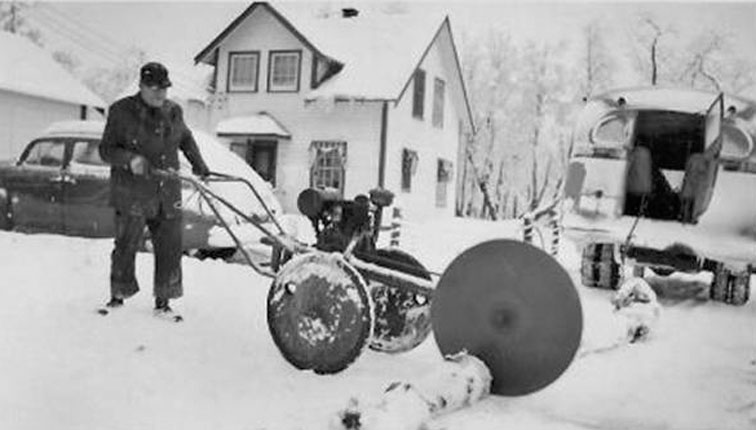
Growing up in Palmer in the 1950s, I benefited from a full raft of paternal grandparents, aunts, uncles and cousins (of varying degrees). I owed this rich — but rare, then, in Alaska — family network to Franklin Delano Roosevelt’s New Deal economic recovery programs, specifically to the Matanuska Valley Colony Project.
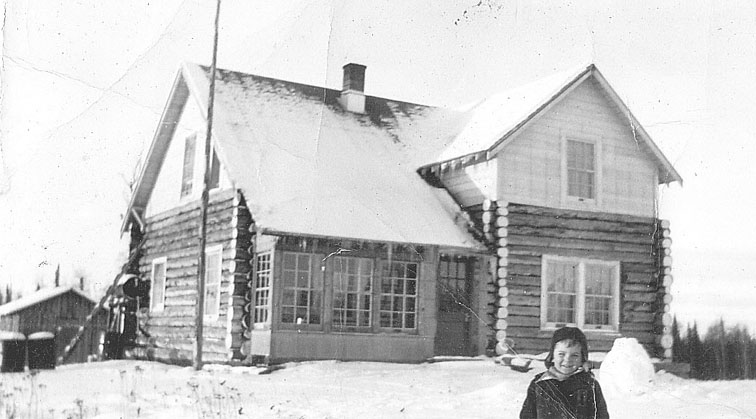
These economic recovery programs aimed not only at helping Dust Bowl farm families struggling to rebuild their lives due to the drought and financial hardships of the Great Depression, but to foster agriculture in the far north. It was a hardscrabble life for those early colonists. Land needed clearing, homes, facilities and roads needed building, supplies and communication needed establishing, and reading for the harsh winter to come.
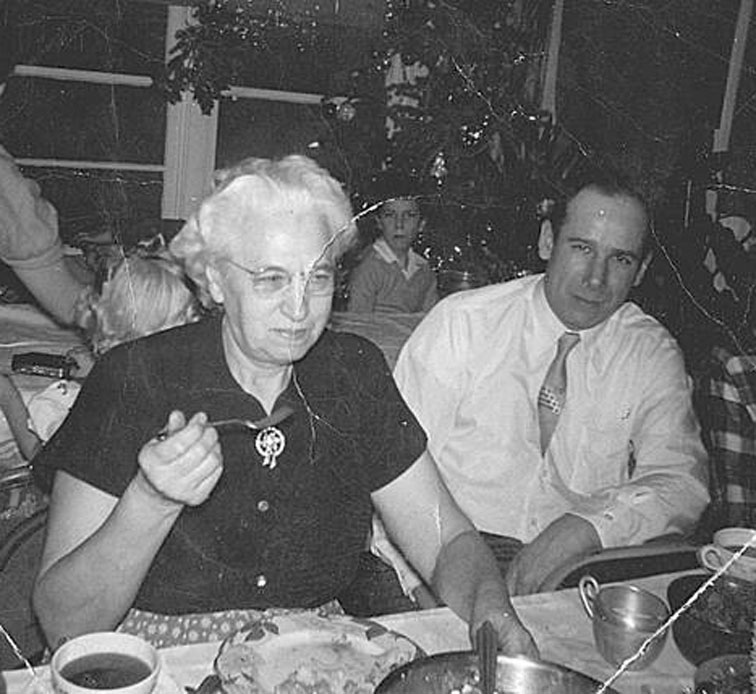
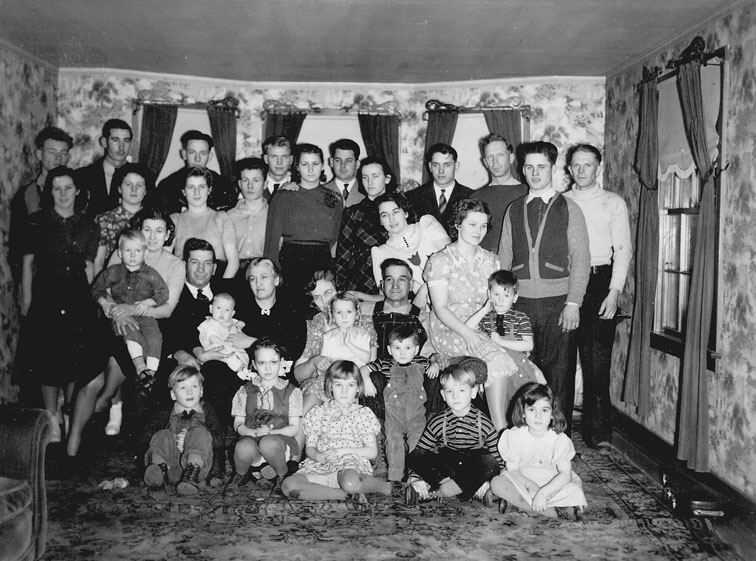
Among the original colonists to arrive in 1935 were Alice (Moffitt) and Leonard Bergan and their young son, Archie. Alice soon wrote home to her parents in Minnesota — Archie and Sarah “Sadie” Moffitt — imploring them come north also, to apply for replacement colonist’ status, thus joining the ranks of homesteaders in the Matanuska Valley. In 1937, Archie and Sarah and six of their nine children — Ruth, Owen, Leonard, Wallace, Betty and Ann (daughter Clema didn’t come to Alaska until the following year) — joined the Bergans in Palmer.
En route, they visited Sarah’s older brother, Earl Hecker and his family, in Oregon City, Ore. As son Tom had traveled ahead of the family group, there was an empty berth in the family’s boat reservations to Alaska. My father, Sarah’s nephew William Earl (Bill) Hecker, was invited to fill that berth. He arrived in Palmer on the eve of his 21st birthday in early December 1937. Egged on by Sadie, and captivated by the romantic adventure of homesteading in Alaska, his mother, Kathreen Gibson Hecker, convinced her husband, Earl (it was a hard sell as he was enamored with Oregon), to pack up their five daughters (June, Alice, Ferne, Joyce and Barbara) and move to Alaska. They, along with Clema (Moffitt) and Art Olson, rejoined the larger family group in 1938.
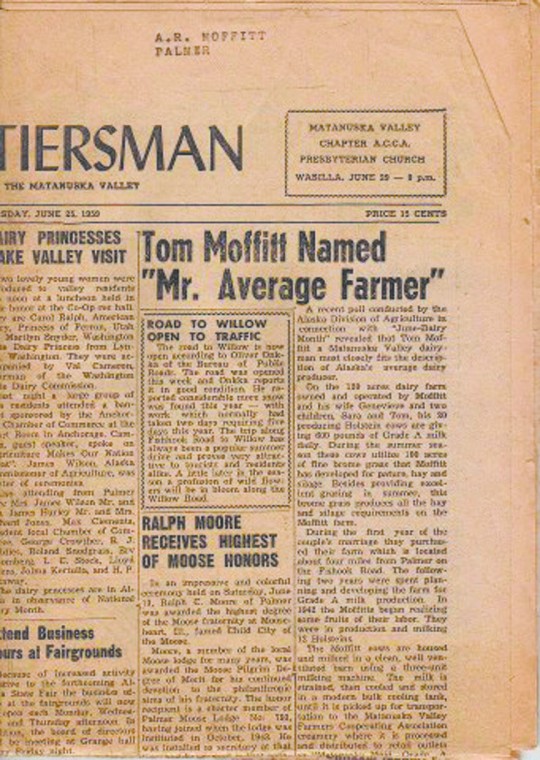
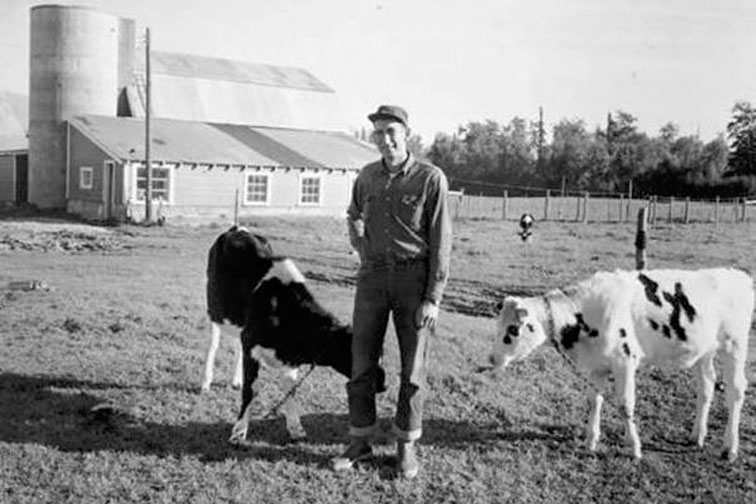
Archie and Sadie Moffitt established a dairy farm on what is now Archie Road, just up the hill from the present-day Musk Ox Farm. Son Tom operated his dairy farm at the end of Moffitt/Hodsdon Road, off the Palmer-Fishhook. Owen and Wallace both had dairy farms on Archie Road. Leonard farmed on Marsh Road. His was once the largest milking herd in Alaska. Though no longer a dairy, the farm is operated by Leonard’s son, Tracy. Bill Hecker ran his dairy operation on Campbell Road, off the Palmer-Fishhook.
While most of the family remained in Alaska, Alice (Moffitt) and Leonard Bergan soon relocated to California, Ruth (Moffitt) and Howard Hansen moved to Oregon and, following World War II, Clema (Moffitt) and Art Olson chose to reside in Olympia, Wash.
Two springs ago in 2010, the original Matanuska Valley Colonists celebrated their 75th anniversary of arriving in Alaska. This July 1 weekend, my heritage — the clans of Archie Moffitt and William Hecker — celebrate their coming to Alaska as replacement colonists.
Keystone to this momentous anniversary is the recently published 544-page book, “Letters to Clema: Moffitt/Hecker Memories 1952-70.” The size and heft of a college textbook, it comprises 18 years of typed letters, the bulk of which were written by Sarah “Sadie” Moffitt to her daughter, Clema. Archie took over letter writing in October 1962 after Sarah suffered a stroke. Letters by her daughters Betty (Moffitt Durand Stewart), Ruth (Moffitt Hermon Hanson), Alice (Moffitt Bergan), her uncle Adam Hecker and other various family members fall within the embrace.
Containing 235 letters full of family memories — “inky visits,” as Sarah called them — are news, views, political, spiritual and philosophical musings, weather reports, recipes, newspaper clippings, photographs, vegetable or flower seeds (sometimes all the above), packaged together in a small envelope and sent across the miles for a few cents. The letters are artifacts of a disappeared era when long-distance communication took place via pen, pencil or a manual typewriter with tired ribbons and onion skin, a thin, light paper designed for slipping as many pages as possible into the then popular airmail envelope.
Kristine Olson Ringsrud of Cashmere, Wash. (Clema’s granddaughter and Sarah’s great-granddaughter), compiled the letters. She found them in a long forgotten drawer, read them and said to herself, “She wrote this. He held this in his own hands. They were my family; I am here because of them. This is how they lived. This was their world.”
In her introduction, Kristine states, “I’ve come to think of this collection as a rescue of sorts, saving a portion of our shared family history from obscurity by preserving these letters and making them available for the delight of future generations.”
Of the first Moffitts and Heckers to embark for Alaska, only one remains, my father, Bill Hecker. Age 94, he has resided in the Palmer Veterans and Pioneers (of which he is both) Home since 2001. He has two living younger sisters, Barbara (Terry) Richardson of Palmer and Beverly Joyce Hecker of Texas. The last of the “Moffitt Mohicans,” Betty Jane, to whom this impressive volume is dedicated, passed away this spring at age 88.
The Moffitt/Hecker 75th Family Reunion is from 1 to 5 p.m., July 1 at the Palmer Train Depot. Donations of $10 for adults and $5 for children are requested to cover expenses and food for the grill. Potluck food contributions will also be welcome.
Copies of “Letters to Clema: Moffitt/Hecker Memories 1952-70” will be available for purchase.

Frontiersman.com Multi-platinum, Grammy-winning artist Amy Grant will perform at the 2026 Alaska State Fair on Monday, August

By Kyle Wilkinson For the Frontiersman Friday Fling returns to downtown Palmer this week and will continue through the summer.

By Barbara Hunt Palmer Buzz She walks in Palmer twice a day on Alaska Street from Arctic to Jenski’s.

By Russell Clark For the Frontiersman Obstacle courses. Alaska seafood. Live music. Farmers. Fishermen. Yoga. Art. Birds. Rock climbing. Kids