Retiring teacher, coach urges Colony grads to ‘find their 68’
By Jeremiah Bartz Frontiersman.com A football coach using a hockey reference as the centerpiece for his keynote address may


North Korea remains a security challenge, and the United States continues to pursue North Korean denuclearization, a senior Pentagon official told the House Armed Services Committee.
In a security update on the Korean Peninsula today, John C. Rood, the undersecretary of defense for policy, said that by any measure, North Korea poses an ongoing, credible threat to the U.S. homeland and to allies in South Korea and Japan. In addition, he said, the North Koreans are undermining international arms control agreements and are engaging in human rights violations and abuses.
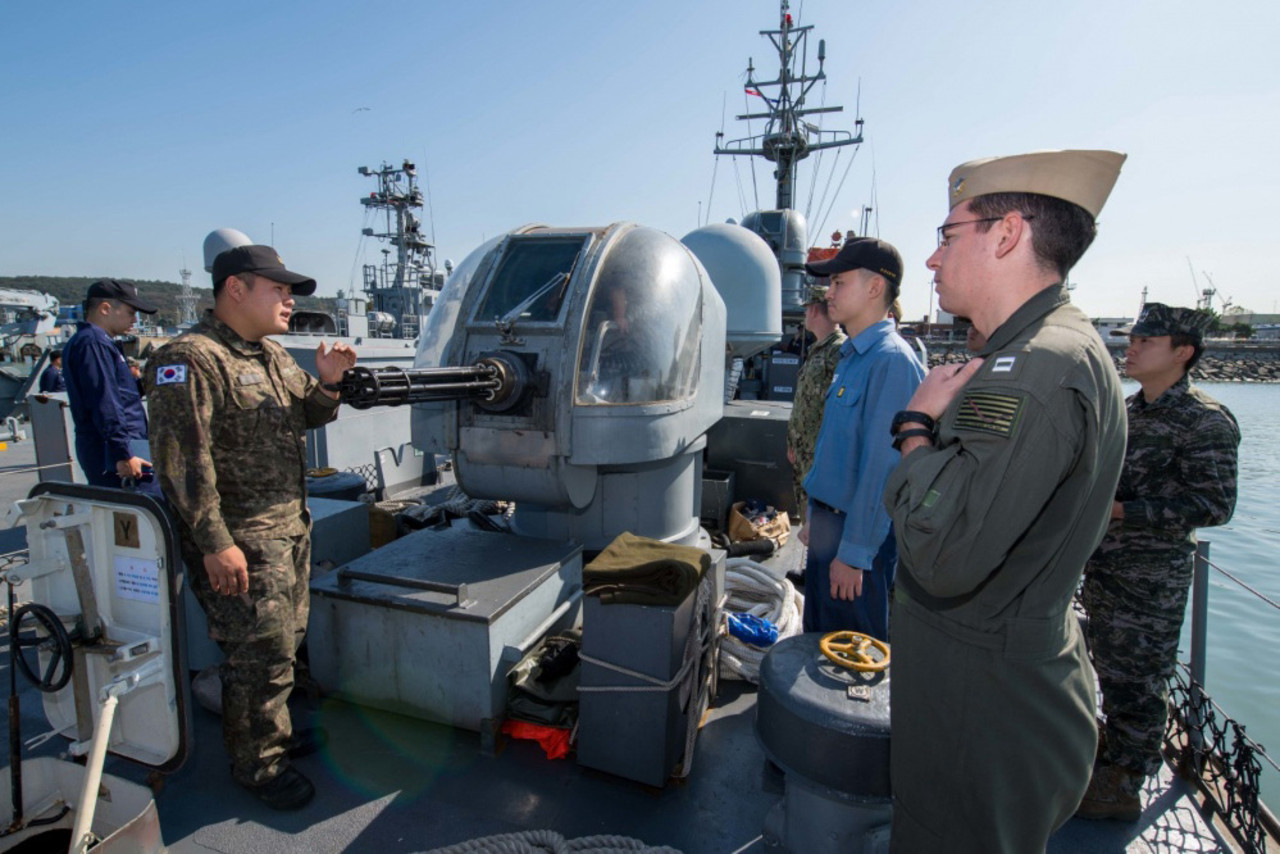
The U.S. partnership with South Korea is very important to the Defense Department, Rood said. "Our goal is to maintain and strengthen our alliance while also transforming it to meet the needs of the future," he added.
The alliance is transformational on several fronts, Rood said.
"First, we're working to transition our wartime operational control from the Combined Forces Command led by a U.S. officer to one led by officer to meet the requirements necessary to assume operational control during wartime," he said, adding that South Korea is undertaking a major military modernization program.
Additionally, the State Department is leading negotiations for the 11th Special Measures Agreement, Rood said. The burden-sharing agreement is the mechanism by which South Korea shares the costs of U.S. forces to defend South Korea.
"Looking to the future, we're adapting by investing more robustly in our defense and asking our partners and allies — particularly our wealthy ones — to shoulder a larger share of the burden to maintain peace, security and stability," Rood said.
Although both nations are engaged in tough negotiations on the Special Measures Agreement, they remain committed to reaching a mutually beneficial and equitable agreement that will strengthen the alliance and combined defense, he said.
The U.S.-South Korean alliance is both broad and deep, Rood told the House panel, built not only on common security concerns, but also political, military and economic ties and shared values. "It remains our goal to maintain a strong and ready force to enable the diplomatic space that's necessary for diplomacy to succeed," Rood said.
President Donald J. Trump's North Korea strategy is multifaceted, he said, adding that the United States is working across the spectrum of national power with the aim of the complete denuclearization of North Korea.
"North Korea must understand that its only path out of economic isolation is for it to engage in meaningful, good-faith negotiations toward complete denuclearization," the undersecretary said.
DOD's role is to provide a credible force and to field the capabilities necessary to ensure that the United States is always negotiating from a position of strength, he said.
North Korea has the world's fourth-largest standing army — more than 1 million men, Rood said.
"Aged and obsolete equipment is offset by targeted and aggressive modernization of conventional weapons, as well as nuclear, chemical and biological programs," he said. "Over the last decade, North Korea's leaders have prioritized increasing the range survivability, complexity and lethality of key military systems such as ballistic missiles, special operations forces and long-range artillery."
One of DOD's most visible lines of effort is implementing and enforcing United Nations sanctions on North Korea, he said.
"The U.S. operates a multinational enforcement coordination cell out of Yokosuka, Japan, where eight nations work together toward this effort," Rood said. "The effort is primarily focused on illicit North Korea exports of coal and refined petroleum."
Additionally, the undersecretary said that U.S. authorities are continuing to analyze and identify 55 boxes of human remains from the Korean War that the North Koreans returned to the United States.
"Thus far, 43 U.S. service members missing from the Korean War have been identified, and more than 100 identifications are expected from those remains," Rood said. "This is a sacred duty, obviously, that we have on behalf of the armed forces that fight."

By Christian Hartley Now You Know If you have ever wondered what the borough attorney actually does, you are not

By Katie Stavick Frontiersman.com In a direct response to public outrage over a horrific animal neglect case, the Matanuska-
By James Brooks Alaska Beacon State lawmakers are acting to fix technical errors affecting the boundaries of several Alaska wildlife

By Katie Stavick Frontiersman.com A man recently arrested after reports of prowling and attempting to enter a family shelter