Retiring teacher, coach urges Colony grads to ‘find their 68’
By Jeremiah Bartz Frontiersman.com A football coach using a hockey reference as the centerpiece for his keynote address may


The five short films nominated for the Oscars in the documentary category all have one thing in common: they hold a mirror up to the current state of affairs and dare viewers to watch. The reflection in the mirror is raw and uncompromising humanity, whatever the viewers’ political bents may be, it doesn’t matter, because these films should matter to everyone.
USA and Greece, 26 minutes, 2016
Daphne Matziaraki, Director
All things considered, the distance of 4.1 miles from Turkey to Lesbos is pretty short–a ferry will take about an hour and a half and cost just under 50 Euros. Why, then, is this such a deadly journey for refugees? The obvious answer is that the political situation and lack of compassion at a global level have made refugees into outcasts and undesirables, without options, tools or recourse. Director Daphne Matziaraki captures the harrowing reality of Afghani refugees as they risk everything to find safety from war and a new life, crossing the deadliest 4.1 miles imaginable.
Between 2015 and 2016, 600,000 migrants crossed the 4.1 miles of water between Turkey and the Greek island of Lesbos. The documentary reveals the shocking reality of refugees and their saviors, the people of the island, who are not only impacted, but are weighted with an unrelenting economic and emotional burden as they rescue one boat load of people after another. Matziaraki’s lens follows Kyriakos, the Coast Guard captain who is called hour after hour to rescue drowning refugees. He is taciturn and deep, but the sorrow is visible as he and his crew do the best they can. Men, women and children are all at the mercy of the choppy sea. The images and events in the documentary speak for themselves, all viewers have to do is watch to understand.
USA, 24 minutes, 2016
Dan Krauss, Director
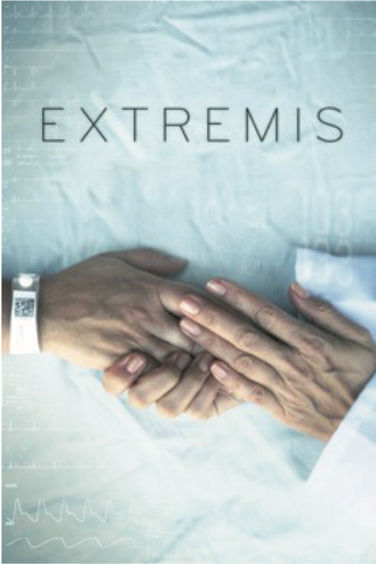
Everybody dies, but that’s not the question—the real question is when, how and who decides when a person has reached a point where he or she may not be able to decide for him or herself. In Extremis, Director Dan Krauss takes viewers into a delicate space, that of an intensive care unit at a public hospital where decisions are being made through the convergence of beliefs, medicine and love. The documentary follows the stories of a few patients as their families undergo the harsh reality of weighing in their values and economic circumstances to decide the fate of their loved ones. Through the experiences of the patients and their families, viewers are given an opportunity to evaluate their own ideas about death and decision making. There are no right answers, there may not even be any answers, just a continual process of evaluation–suffering versus benefits, holding on versus letting go.
USA, 24 minutes, 2016
Kahane Cooperman, Director
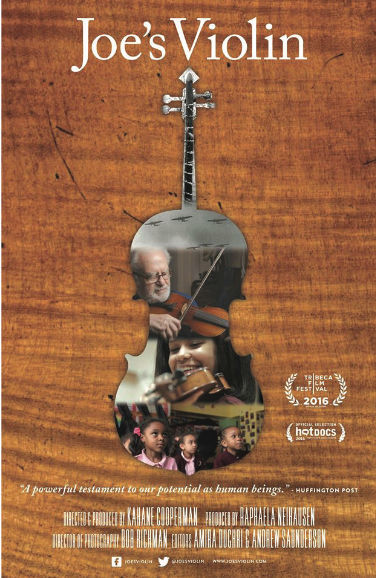
Kahane Cooperman directs Joe’s Violin, a documentary about Joseph Feingold who at the age of 91 decides to donate his violin, and Brianna Perez who becomes the violin’s new player. The violin is an inanimate object that gains value through its history and the symbolism that it carries–Joe’s own history as a Holocaust survivor.
Joe was born in Warsaw, Poland in 1923. When he was 17, the country was invaded by the Nazis and the Soviets and he was sent to Siberia, where he worked at a labor camp for six and a half years. Joe was reunited with his father and brother, but his mother and youngest brother were exterminated. As a child, he had learned to play the violin, as music was one of the languages spoken at home. In 1947, after WWII and as he waited to come to America, Joe traded a carton of cigarettes for a violin at a camp for displaced persons in Germany. A lifetime later, after a career as an architect, marriage and family, Joe decided to donate his violin because he no longer played it. The violin went to the Bronx Global Learning Institute for Girls (“BGLIG,” pronounced Big League) to a bright and talented student, Brianna. Brianna comes from a modest and struggling family in the Bronx so being paired with the violin is not only a gesture of hope, but also an opportunity to bridge the intergenerational experiences of kindred spirits through music. Cooperman covers a lot of ground in a relatively short film, but the delivery and editing make some parts of the 24-minutes feel like an hour, and at times the director solicits insights from his subjects that feel forced.
USA, 41 minutes, 2016
Orlando von Einsiedel, Director
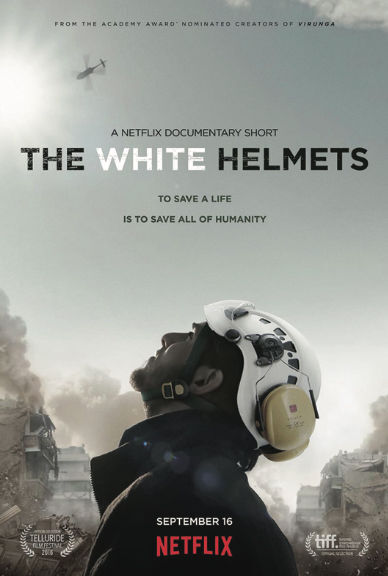
Now that the 2016 Presidential election is over, does Gary Johnson and the rest of America know what Aleppo is? After 5 years of war, 400,000 Syrians have been killed and millions have fled. Among those that have chosen to stay are a group of 2,900 civilians who comprise the White Helmets. The White Helmets are builders, blacksmiths, tailors, etc. Regular people who love their country, fellow human beings and feel a duty to help.
Von Einsiedel follows a handful of White Helmets through the destruction of Syria by ISIS on the ground and by air in Russia. Since 2013, the teams of White Helmets have saved over 58,000 people and have suffered a loss of about 130 heroes. This documentary exposes the truth about Syria and the war that is being fought with total disregard for civilian lives. The members of the White Helmets usually have no prior experience or training in rescue operations. Once in the White Helmets, some go for training in Turkey. As the camera follows them from war zones to training, the White Helmets members have an opportunity to speak frankly about the situation that their country and families are facing. The differences between Turkey and Syria can be seen as a simple borderline on a map, however, that line is the difference between war or peace, and living freely or dying under rubble.
The White Helmets choose to stay because, as one of them puts it, it’s better to rescue a soul than to take one. And so, while everyone runs away from the bombs, the White Helmets run towards them in order to look for survivors. This documentary really shed light on the love that the Syrian people have for one another and their inexhaustible sense of hope.
UK, 39 minutes, 2016
Marcel Mettelsiefendel, Director
The place is Aleppo, Syria, the year is 2013 and the story of Syria and its refugees is told through the fracturing and journey of one family as they seek safety in Germany, the place where safety and the American Dream can be found these days. The family featured in Watani: My Homeland could be any family going through the Syrian Civil War. Much of the story is told through the young children, three of the four are girls. The film is rich with overlapping dynamics that break all conventions. From the role of women in traditional Muslim households to childhood innocence shattered and the mental health shifts that come when a child learns to tell the difference between an air missile and a projectile from a tank just from the sound of it. As if war at home isn’t bad enough, the family has to adapt to a new country and language, and learn the hardships of being strangers in a strange land. Watani: My Homeland is thoughtful and provides insights into the new emotional and psychological state of a world with shifting populations under regimes that turn a blind eye to the pain they inflict.
Showtimes: Mon 2/13 5:30 PM
Run time: 2:30 h
Movie Rating: Not rated.
By Rick Morgan Community spectrum For most people, the last week of school is joyful, if bittersweet. Summer is here,

By Katie Stavick Frontiersman.com The playground at Larson Elementary was filled with laughter, helmets, and colorful tricycles on April
Frontiersman.com A Fort Wainwright soldier was sentenced today to 32 years in prison for possessing thousands of images of
By Richard Wexler Opinion Last August, the Beacon published a story under the headline “Is Alaska’s foster care system