Retiring teacher, coach urges Colony grads to ‘find their 68’
By Jeremiah Bartz Frontiersman.com A football coach using a hockey reference as the centerpiece for his keynote address may


HONOLULU — More Soldiers will be forward deployed longer in the Indo-Pacific region next year, as part of a new Pacific Pathways effort to allow units to build stronger partnerships and readiness.
Called Pacific Pathways 2.0, the program will place units in partner nations for up to six months at a time, much longer than the previous weeks-long exercises.
Soldiers recently tested the new strategy by staying four months in Thailand, Philippines and Palau.
Launched in 2014, Pathways is a U.S. Army Pacific-led initiative that has units conduct several stops in the region and train with foreign militaries during an expeditionary-style deployment.
The extended presence of units in the theater will provide the Indo-Pacific Command commander options for contingencies, such as humanitarian assistance or even conflict.
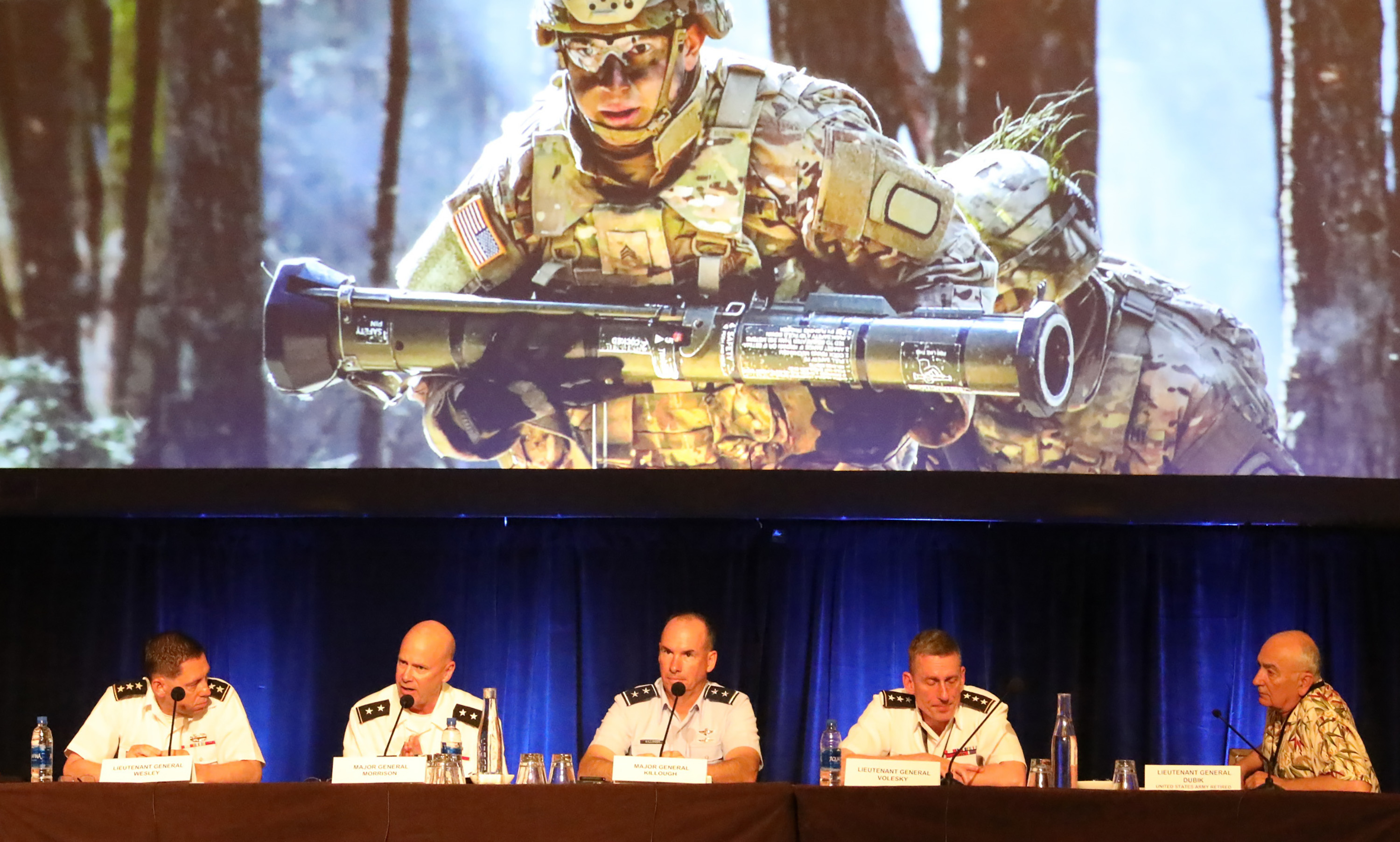
“What we were doing originally was just going to countries for exercise purposes,” said Lt. Gen. Gary Volesky, commander of I Corps. “Pathways 2.0, starting next year, we’re going to put U.S. forces in the Pacific for 10 months of the year.”
In Pathways, units are using a hub-and-spoke approach during deployments to increase visibility in the region. Countries next year will include Thailand, Philippines and Australia.
“We’re looking at three real hubs where we would go to the countries that have more capacity and then spoke off of those,” Volesky said May 21 at the Land Forces Pacific Symposium, hosted by the Association of the U.S. Army.
The new construct also deploys a two-star command and control node in the hub nation, in which a commander can quickly plug into and assist in a contingency operation.
“It’s not so much an exercise for the division headquarters as it is a mission,” said Maj. Gen. Ronald Clark, commander of the 25th Infantry Division.
Based in the Philippines at the time, the node provided a redundant capability so Clark’s headquarters could train in a division-level live fire exercise in Hawaii in April.
“We’re able to do that while we’re exercising Pathways,” he said. “So, if something had happened in the Philippines or elsewhere, we could have unplugged and jumped right into that C2 node.”
The I Corps’ campaign plan for Pathways also includes area of operations specific to certain formations. For instance, the 25th ID is AO Lightning and 7th ID is AO Bayonet.
“We’ll have habitual relationships with the same countries and the same series of exercises,” Clark said.
The longer presence allows units to train in countries rarely engaged by the Army. About 200 Soldiers from I Corps, for example, trained in Palau in April for the first time in 37 years.
“As we start to build more visibility in the region for a longer term, I think that’s going to help get after it,” Volesky said.
While the region is mostly water, leaders said Pathways still plays a critical role in the region where seven of the 10 largest armies in the world are located.
About 106,000 Soldiers are assigned or allocated to USARPAC and each year the command conducts around 200 engagements with 34 countries.
“Although we consider this is a joint theater, the land component is absolutely important and paramount for our allies and partners,” Clark said, adding the Army needs to remain engaged with them. “Make no mistake about it, relationships matter. Because it’s too late to build relationships at the start of a crisis.”

By Airman 1st Class Theodore Gowdy Joint Base Elmendorf-Richardson Public Affairs In July 2025, the Secretary of War released
Frontiersman.com Alaskans aged 17 to 28 have a unique opportunity to earn a college degree with major financial support
By Katie Stavick Frontiersman.com The United States Marine Corps has launched a strategic initiative known as "Campaign - Alaska,
By Katie Stavick Frontiersman.com As the 'Guardian of the North,' Alaska has historically been on the front