Retiring teacher, coach urges Colony grads to ‘find their 68’
By Jeremiah Bartz Frontiersman.com A football coach using a hockey reference as the centerpiece for his keynote address may


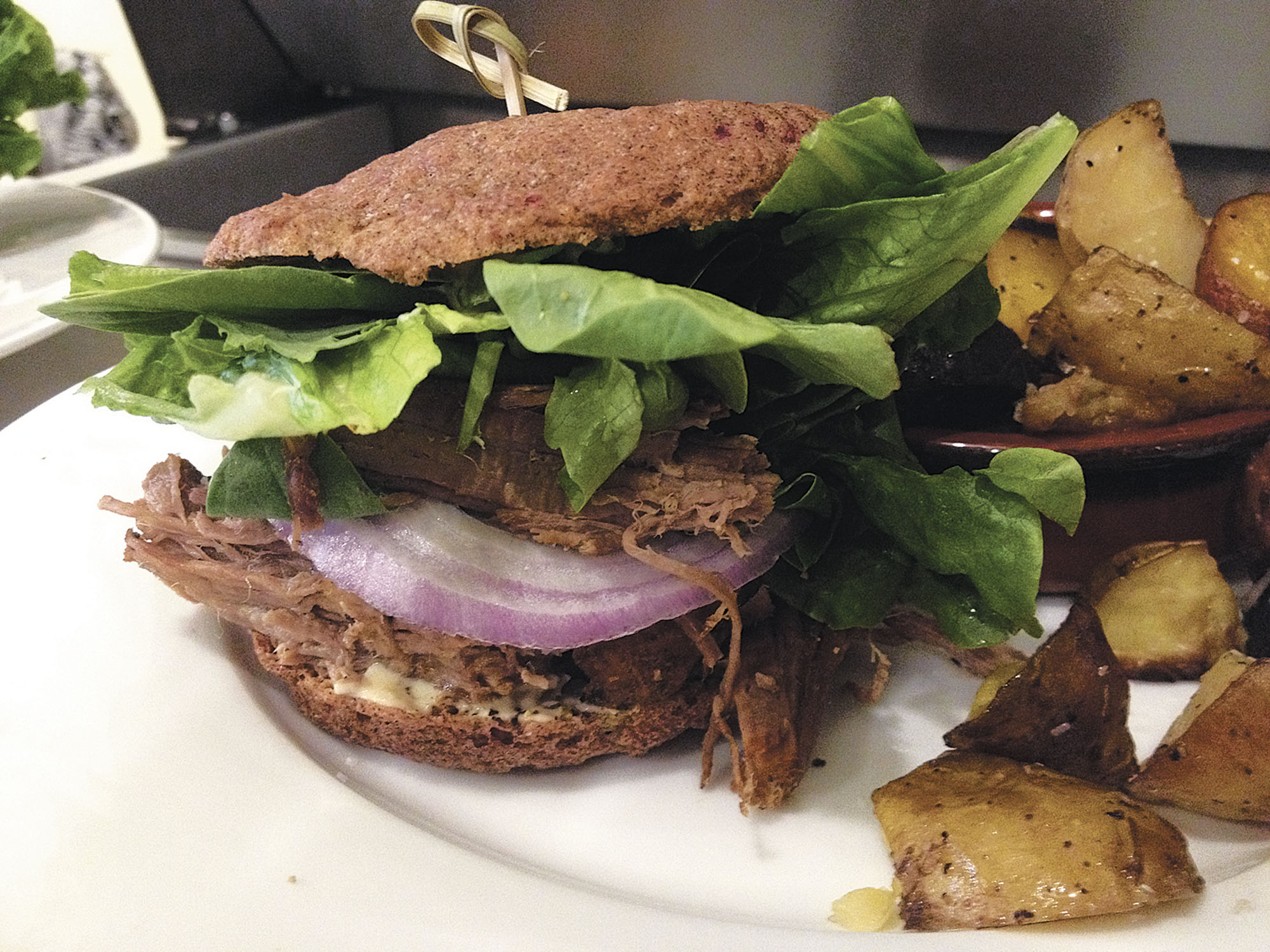
WASILLA — The Bistro Red Beet hasn’t changed it’s flavor since the February fire that closed the bistro for several months, but owner Sally Koppenberg hopes the taste buds of the rest of the restaurant industry will come to appreciate clean, local food the way she does.
“We would like to think that we might be leading the restaurant industry a little bit in a different direction,” Koppenberg said. “Maybe that’s a little heady, but I think the restaurant industry needs to change and somebody’s got to start it, somebody’s got to try.”
Although the Beet’s owner said she thinks “we sometimes get stuck in what’s new rather than what’s good,” she said re-opening her business has provided some new opportunities for change.
“If you’re moving, you suddenly are thrown a whole list of things that you could possibly improve for your business that were certainly not an option prior to that,” Koppenberg said, recalling the months-long renovation period in 2010, after the Beet moved from Palmer.
The fire, she said, allowed similar improvements, however negative its immediate effects appeared. Koppenberg said the fire “was disastrous, but it was not all bad.”
“It’s always good to find something positive out of something negative,” she said.
Her customers, surely, agree. That perspective is what the Beet is founded on, after all.
“I came from a very humble family that lived in sort of the Bush in Alaska where you ate what you made and what you grew and it never occurred to me that life was any different than that,” Koppenberg said.
When she went off to college in Washington state, she said, she was surprised by her fellow students’ lack of resourcefulness, letting fresh apples and blackberries fall to the ground to rot. So, she picked them herself. It gained her the nickname “Mother Nature” around campus, she said, but it also gave her the insight she needed to start her small, gluten-free eatery back home.
The Beet’s mantra, “eat smart, eat local, eat clean,” is a result not just of individuals’ ignorance, but of the corruption in the food industry as a whole.
“It occurred to me then that in 30 years our food chain would be completely FUBAR, and in fact it is,” Koppenberg said. “It’s nasty.”
That downward spiral started in the 1950s, she said, with the introduction of the TV dinner. With convenience as the focus of food in those days, preservatives were added and nutritional corners cut that have remained problematic today.
“We don’t believe in bad food and we don’t believe in chemicals, and the food industry is just steeped in that right now,” Koppenberg said.
So, Red Beet is trying to bring it back to basics. In creating her weekly menu — yes, it changes every week — Koppenberg first compiles a list of ingredients immediately available by local producers, then decides how to combine those foods into something that “tastes really good, that somebody will want to eat.” Customer approval has to be her first priority, she said, because “it’s a business, it’s not a charity.”
But that doesn’t mean Koppenberg is a slave to the expectations a customer might have at, say, “a pizza joint.” Rather, the Beet caters to those open to new dishes that are not only healthy, but also tasty.
“It’s about nutrients, it’s about flavors, it’s about texture, it’s about presentation and how we can do it, but it has to stay simple and to the root of the food,” she said.
“The closer to home our food is grown, the fewer the hands that have been involved in its production, which makes it easier to know its history and nutrient value,” reads a portion of Red Beet’s mission statement.
It’s not just local food that the Red Beet serves either, but gluten-free food.
Koppenberg gave more than one reason for keeping gluten out of her restaurant.
“If you don’t have an actual gluten-free-certified kitchen, it’s virtually impossible to keep it fully separated,” she said.
For people who need to be gluten-free due to severe allergies — such as those resulting from Celiac Disease — even a trace of gluten on a cutting board or in an oven can have dire health consequences.
“Because we do that, we are sort of a magnet for people who have allergies and eating concerns, because they can come in and go, here are my allergies, and we can say with complete confidence, ‘here’s what you need to not eat, here’s what you can eat,’” she said. “Just because of the nature of how we cook, that has become, we’ve become sort of a stronghold for a customer who has those needs.”
So, yes — customers allergic to foods other than gluten also are safe eating at the Red Beet, since the cooks cater to them. If they need to leave onions out of the soup of the day, for example, they can do that for just one customer.
But general practice in the Red Beet kitchen is to stay on the safe side anyway.
“We are very careful with cross contamination in the kitchen, so we don’t like, chop onions with a knife and then chop something else with it,” Koppenberg said.
Customers still have some responsibility, however, to watch what they eat at the Red Beet, and notify the kitchen of any eating concerns they may have.
“We take full responsibility for what we put on the table, but we expect in turn that our customers take responsibility for what they’re eating as well,” she said.
Another thing about gluten-free food, she said, is that, contrary to popular belief, it still tastes good.
“It’s the same caliber as anything else that you would get, actually better than most, it just happens to be gluten-free,” she said. “It’s not so much that we’re ultra-purists, but the benefit is, if we can offer breads that are world-class breads, then why not leave the gluten out?”
Her claims about the taste of gluten-free food, at least, seem to be true, as customers keep coming through the door — and they’re not all allergic to or anti-gluten.
“I’ve had business consultants over the years tell me that we would never be successful if were exclusively gluten-free, we would never be successful if we, if our menu changed all the time, and I think we’ve happily proven them wrong,” she said.
So what does the Beet do to maintain a higher ratio, on average, than their goal of serving 85 percent local, 85 percent organic food?
One thing is preparation.
While canning and heating certain foods to preserve them can remove their original nutrients, pickling is a great way to make foods keep through the winter while retaining those nutrients, Koppenberg said. Freezing and drying berries and roots to make wild teas is another method of preservation that retains the maximum nutritional value, and some sprouts and “microgreens” can even be grown inside during the winter.
“There’s a lot of things that can be done year round if you know what to do and you think a little bit ahead,” she said. “At least half of my cooking is really more preparing food that we can utilize throughout the year.”
Although the Beet still has to import USDA certified eggs and a few exotic fruits every once in a while — persimmons are a favorite — all their meat, baked goods, and the majority of their fruits and vegetables come from within Alaska.
Koppenberg mentioned wild dock seed, “lamb’s quarters,” local grasses, and even quinoa as potential substitutes for flour that grow in-state.
“We can use almost anything as a flour if it’s ground fine,” she said.
As “exotic” as those grain alternatives may sound, the Beet makes no bones about being down-to-earth, in more ways than one.
“We don’t try to do fancy food,” Koppenberg said. “We’re certainly capable of it, we could do food that’s as mind-boggling as the next person, but that’s not what we emphasize. I think it’s better to let the food present itself.”
Contact Caitlin Skvorc at 352-2266 or caitlin.skvorc@frontiersman.com.






Frontiersman.com Mat-Su Regional Medical Center was awarded an “A” Hospital Safety Grade for the 5th consecutive grading round

Frontiersman.com The Alaska State Fair announced the appointment of Blake Allen as its new Chief Executive Officer. Allen brings
By Frank Murkowski Opinion Hilcorp, in acquiring BP’s Alaska assets, follows a record of cooperation with our state government

Frontiersman.com Mat-Su Health Foundation (MSHF) has named Ashley Peltier as Director of Philanthropy, effective May 4. In her