Retiring teacher, coach urges Colony grads to ‘find their 68’
By Jeremiah Bartz Frontiersman.com A football coach using a hockey reference as the centerpiece for his keynote address may


KADENA AIR BASE, Japan --
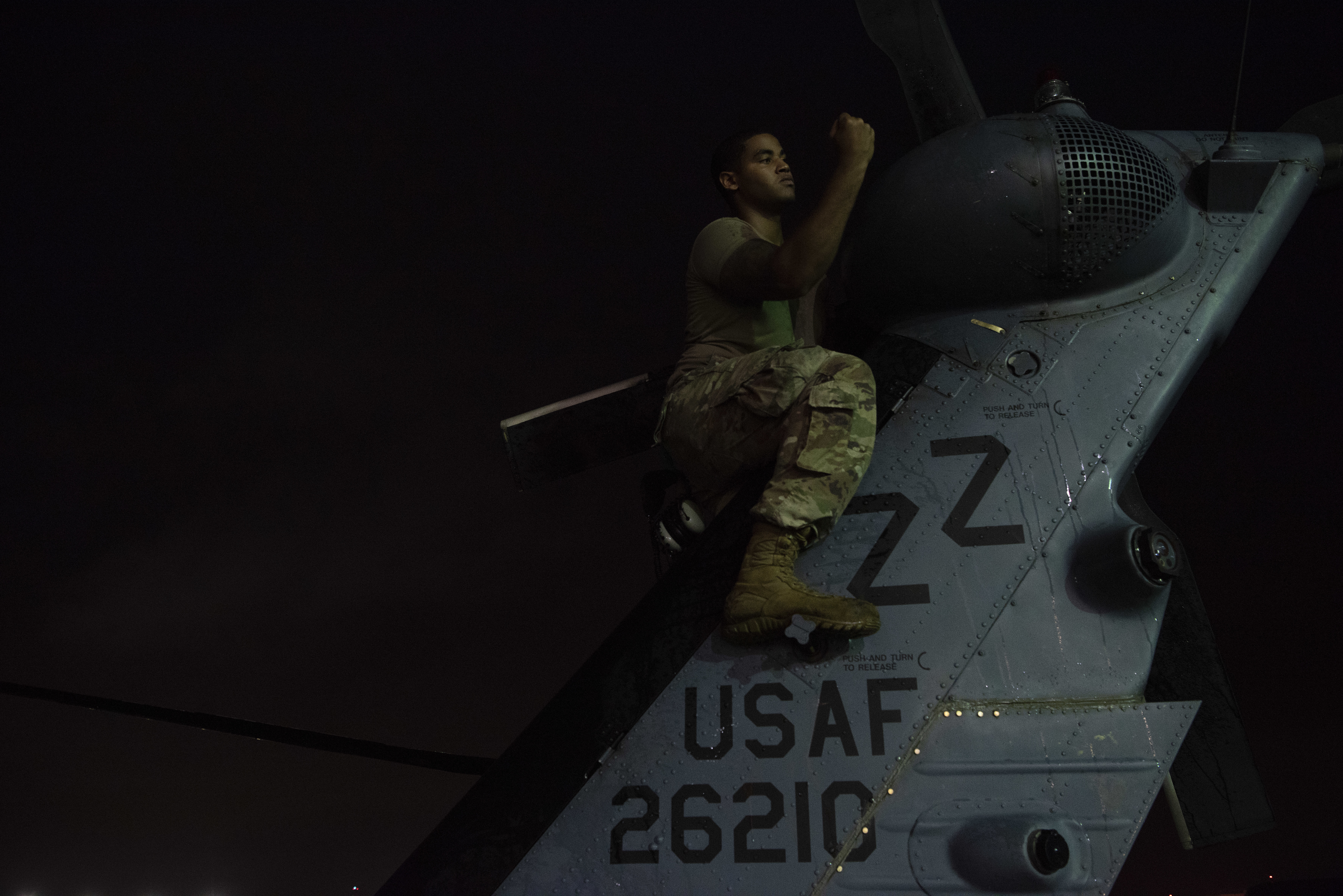
The 33rd Rescue Squadron at Kadena Air Base, Japan, train, plan and execute every day to ensure they have what it takes to help when someone’s life is on the line.
With a motto as succinct as, ‘That others may live’, it’s clear the priority of the 33rd RQS is saving as many people as possible from otherwise dire circumstances no matter the cost to themselves.
“We provide a reliable combat search and rescue platform to aid in exercises and real-world operations in the Indo-Pacific Command area of responsibility,” said Airman 1st Class Jack Peterson, 33rd RQS special missions aviator. “I think we give people peace of mind, knowing somebody’s going to come looking for them if they go down.”
Being capable of providing this high-priority service at a moment’s notice doesn’t happen without extensive training to ensure the entire team is prepared for what’s required on a rescue mission.
“We go out and practice regularly,” said Capt. Howard Palmer, 33rd RQS flight commander. “We’ll fly out and train in situation with simulated bad guys where we have to get through them to rescue members.”
These training missions also cover many other aspects needed during a real-world rescue such as low-level flying, hoisting, water operations, entering contested environments, and many others the rescue Airmen rely on. Conducting operations with so much on the line requires Airmen to have an unwavering, as well as caring, mindset.
“I decided to go into the rescue mission because it allows me to help people,” Palmer said. “When someone’s having the worst day of their life, you get to be the one that goes in and saves them.”
Airmen from the 33rd RQS have found one thing above all others makes the hard work worth it.
“It’s a small community,” Palmer said. “People have said, ‘Low density, high demand’ and it helps build some pretty strong bonds. I stay because of those bonds and being able to do a mission that means a lot to me.”

By Airman 1st Class Theodore Gowdy Joint Base Elmendorf-Richardson Public Affairs In July 2025, the Secretary of War released
Frontiersman.com Alaskans aged 17 to 28 have a unique opportunity to earn a college degree with major financial support
By Katie Stavick Frontiersman.com The United States Marine Corps has launched a strategic initiative known as "Campaign - Alaska,
By Katie Stavick Frontiersman.com As the 'Guardian of the North,' Alaska has historically been on the front