Tools are aligned on a mock airstrip during a Rapid Airfield Damage Repair bilateral training exercise at Gwangju Air Base, Republic of Korea, Nov. 8. Approximately 40 U.S. Airmen from the 773d Civil Engineer Squadron and 40 Republic of Korea Airmen from Gwangju trained together for a week to learn a new runway repair process for wartime contingencies. The RADR process makes use of rapid-setting concrete which enables vehicles to pass over it after one hour; after two hours of cure time, it can support any aircraft. Senior Airman Curt Beach
Approximately 40 U.S. Airmen from the 773d Civil Engineer Squadron and 40 Republic of Korea Airmen from Gwangju trained together at Gwangju Air Base for a week to learn a new runway repair process for wartime contingencies.
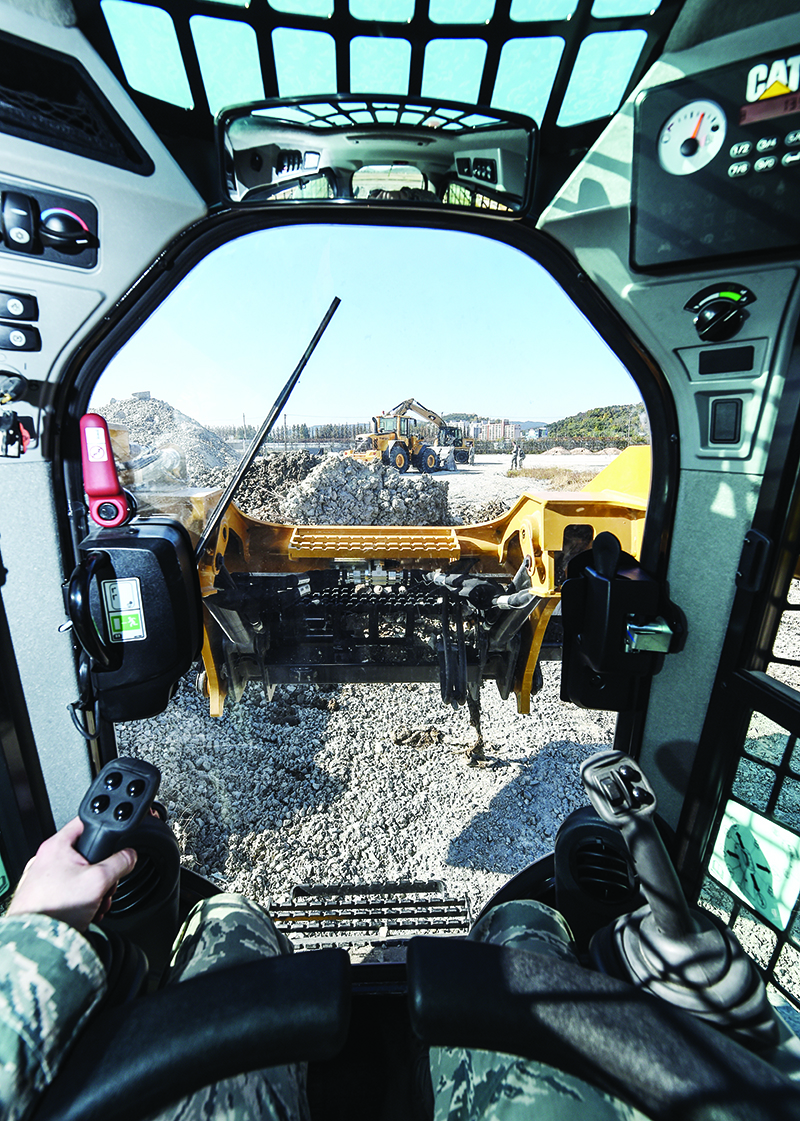
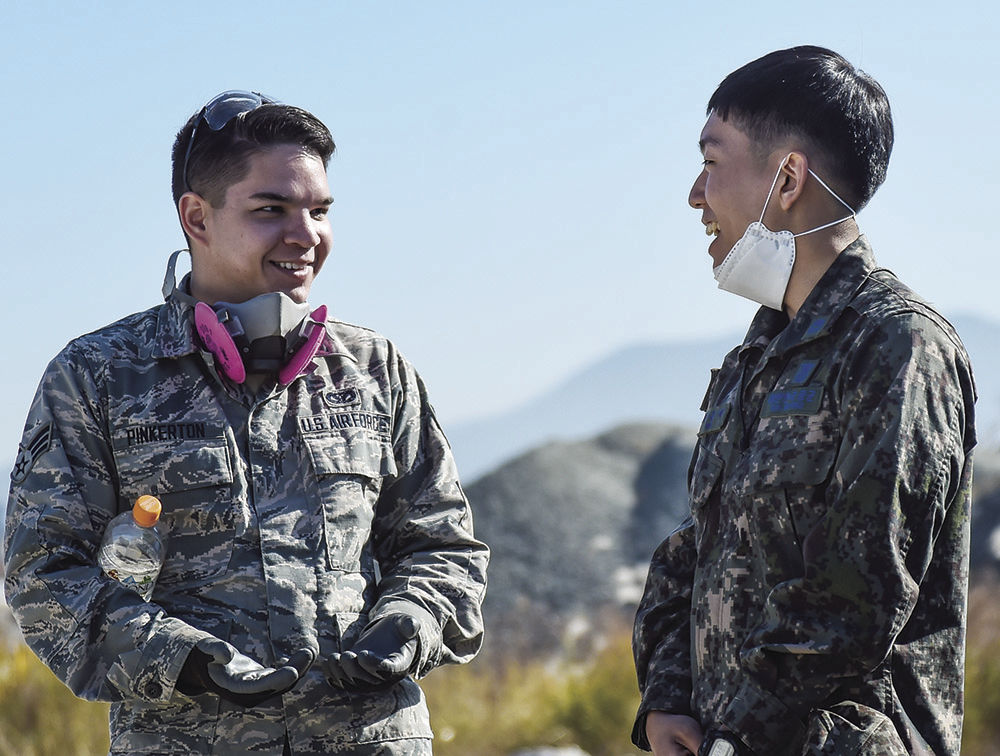
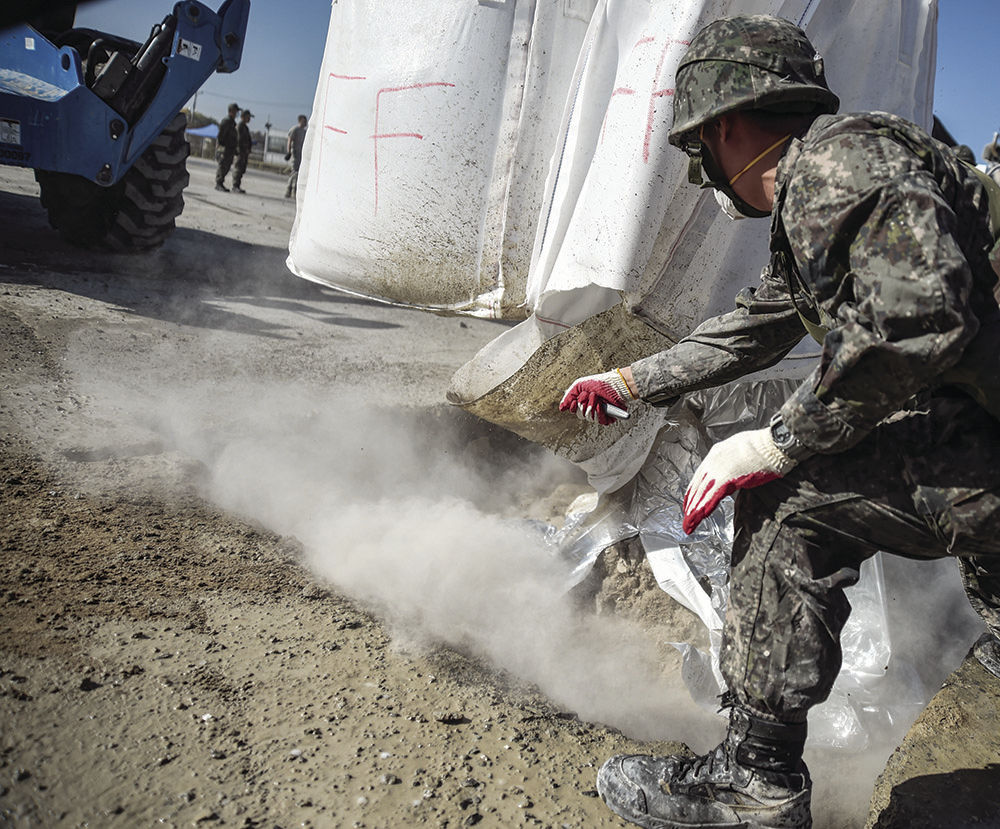
An Airman from the 673d Air Base Wing operates a compact track loader during a Rapid Airfield Damage Repair training exercise at Gwangju Air Base, Republic of Korea., Nov. 9, 2017. Approximately forty U.S. Airmen from Joint Base Elmendorf-Richardson, Alaska, and 40 R.O.K. Airmen trained together for a week to learn a new runway repair process for wartime contingencies. The bilateral training exercise enhanced interoperability and strengthen partnerships in the Indo-Asia Pacific region. Senior Airman Curt BeachU.S. and Republic of Korea Airmen communicate during a Rapid Airfield Damage Repair bilateral training exercise at Gwangju Air Base, R.O.K., Nov. 9, 2017. U.S. and R.O.K. Airmen trained together for a week to learn the new RADR process, preparing them for response to wartime contingencies, enhancing interoperability and building partnership capacity in the Indo-Asia Pacific region. Senior Airman Curt BeachRepublic of Korea Air Force Senior Airman Jinguk Kim, civilian engineer electrician, slices open a bag of quick-set concrete during a Rapid Airfield Damage Repair bilateral training exercise at Gwangju Air Base, Republic of Korea, Nov. 9. Similar to an assembly line, RADR systematically lines up civil engineer personnel and equipment to quickly repair a runway after attack. The training exercise was designed to enhance interoperability, prepare for wartime contingencies and strengthen partnerships in the Indo-Asia Pacific region. Senior Airman Curt Beach