Retiring teacher, coach urges Colony grads to ‘find their 68’
By Jeremiah Bartz Frontiersman.com A football coach using a hockey reference as the centerpiece for his keynote address may


U.S. Army Pacific partnered with the Mission Command Training Program to host the U.S. Army’s first Warfighter exercise concentrated in the Indo-Pacific that combined the simulation of two major military operations, joint forcible entry operations (air and maritime-based incursions) and large-scale ground-based combat operations, Sept. 24 through Oct. 3.
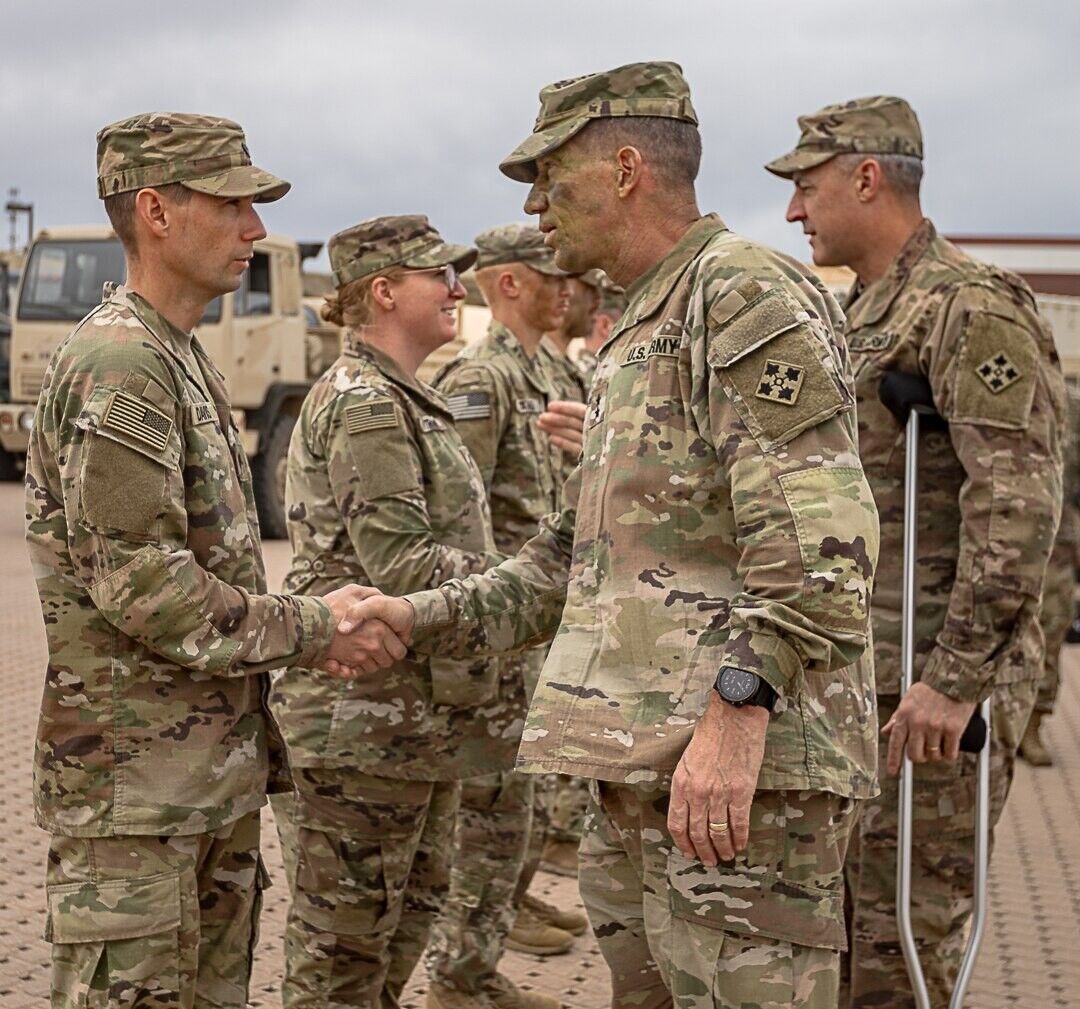
The primary training audiences were the U.S. Army’s I Corps, 4th Infantry Division, and 25th Infantry Division at Joint Base Lewis-McChord, Washington, Fort Carson, Colorado, and Schofield Barracks, Hawaii.
I Corps trained as the tactical headquarters leading the divisions as the primary units of action.
In late 2021, the Secretary of the Army, Hon. Christine Wormuth, outlined five core tasks the Army needed to focus on to prepare for combat operations in the Indo-Pacific. They included establishing bases and staging areas, providing ground-based fires, operating secure communication networks, providing operational headquarters, and attacking and defending with maneuver forces, including aviation.
In a brief earlier this year, Col. Bryan Babich, MCTP Commander, shared with Wormuth that the Warfighter exercise was set to incorporate and train all the tasks she highlighted.
Babich also said USARPAC’s commander, Gen. Charles Flynn, wanted to “push the envelope” and was looking for outcomes that identify potential gaps and logistical and force structure needs.
Consequently, USARPAC and MCTP developed a sophisticated simulation-based scenario that looked reminiscent of WWII battles in the Pacific. It presented a number of complicated problem sets for the training audiences to practice solving.
The exercise was broken into two segments to account for the complex maneuvers needed to traverse the vast distances presented by the Indo-Pacific in a contested operational environment as well as the challenges of engaging a highly capable adversary on restrictive terrain.
Both segments involved operational environments contested by MCTP’s adaptive World Class Opposing Force. The WCOPFOR presented a free-thinking adversary, expert in both U.S. and its main adversaries’ doctrine. A combination that made them a highly formidable force to spar with. ,
The first phase tested U.S. forces’ ability to penetrate enemy defense systems as part of the U.S. joint force, take initial objectives, establish lodgments, and seize key terrain. They also had to build combat power as quickly as possible, integrate with coalition forces, and prepare for follow-on offensive operations.
The operations took considerable foresight, ingenuity, and detailed planning from the commanders and their staffs. It involved complicated decisions on task organizing, prioritizing force packages, and deployment timing. Not to mention developing a joint forcible entry plan that could overwhelm an entrenched enemy while limiting the effects on the civilian population.
The second part of the exercise comprised ground-based combat operations on highly urbanized and restrictive terrain with Army forces supported by a myriad of joint enablers and capabilities. The corps and division formations had to execute decisive action, which the Army defines as “the continuous, simultaneous combinations of offensive, defensive, and stability tasks.”
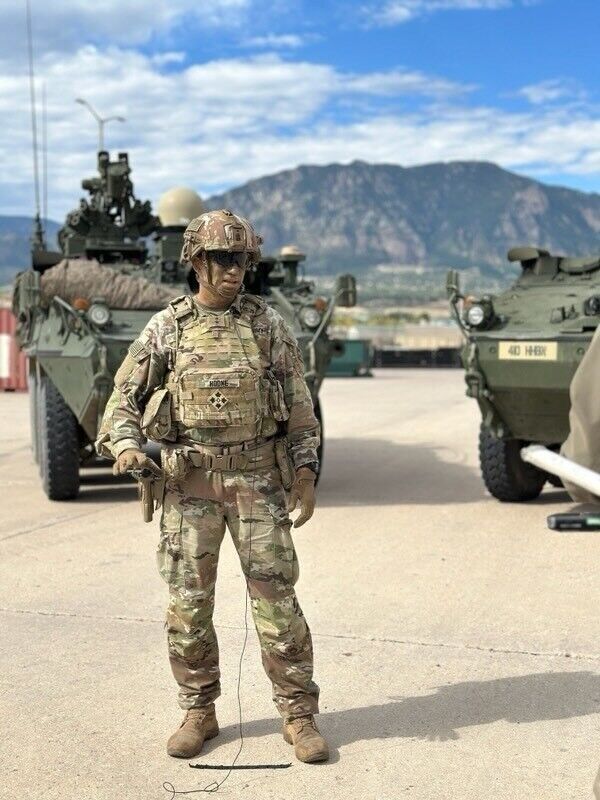
To meet the need, the divisions morphed into composites of diverse capabilities, with combinations of infantry, Stryker, and armored brigade combat teams that were further mixed below the brigade level. They were also augmented with niche assets to deliver tailored force packages for the missions assigned.
The simulation and scenario also facilitated the application of multidomain operations, known as MDO.
In October, the Army published the latest version of the Field Manual 3-0 (Operations), marking the Army’s official adoption of MDO to replace Unified Land Operations as its doctrine.
The FM defines MDO as the “combined arms employment of joint and Army capabilities to create and exploit relative advantages.” It was introduced as an operating concept in 2018 by Training and Doctrine Command for preliminary testing and refinement.
After several years of research, experimentation, and analysis, including incorporating insight from the Russia-Ukraine conflict, the concept proved viable for full implementation.
In the publication’s foreword, Gen. James McConville, the Chief of Staff of the Army, admitted that operating in multiple domains such as land, space, and cyberspace isn’t new for the Army.
However, he pinpointed the significance of MDO, saying that the U.S. has never faced a conflict involving “opponents capable of effectively contesting the U.S. joint force in space or cyberspace.” Nor has it encountered threats that could challenge U.S. forces’ air, ground, and maritime integration.
The new FM 3-0 addresses the new dynamics of modern warfare, according to McConville.
He said further, “it demonstrates the first principles of speed, range, and convergence of the cutting-edge technologies needed to achieve future decision dominance and overmatch against our adversaries.”
His description seemingly encapsulates what he sees as the most vital elements of MDO.
Ultimately, the Warfighter exercise proved to be fertile ground to exercise the new doctrine and the tenets McConville highlighted.
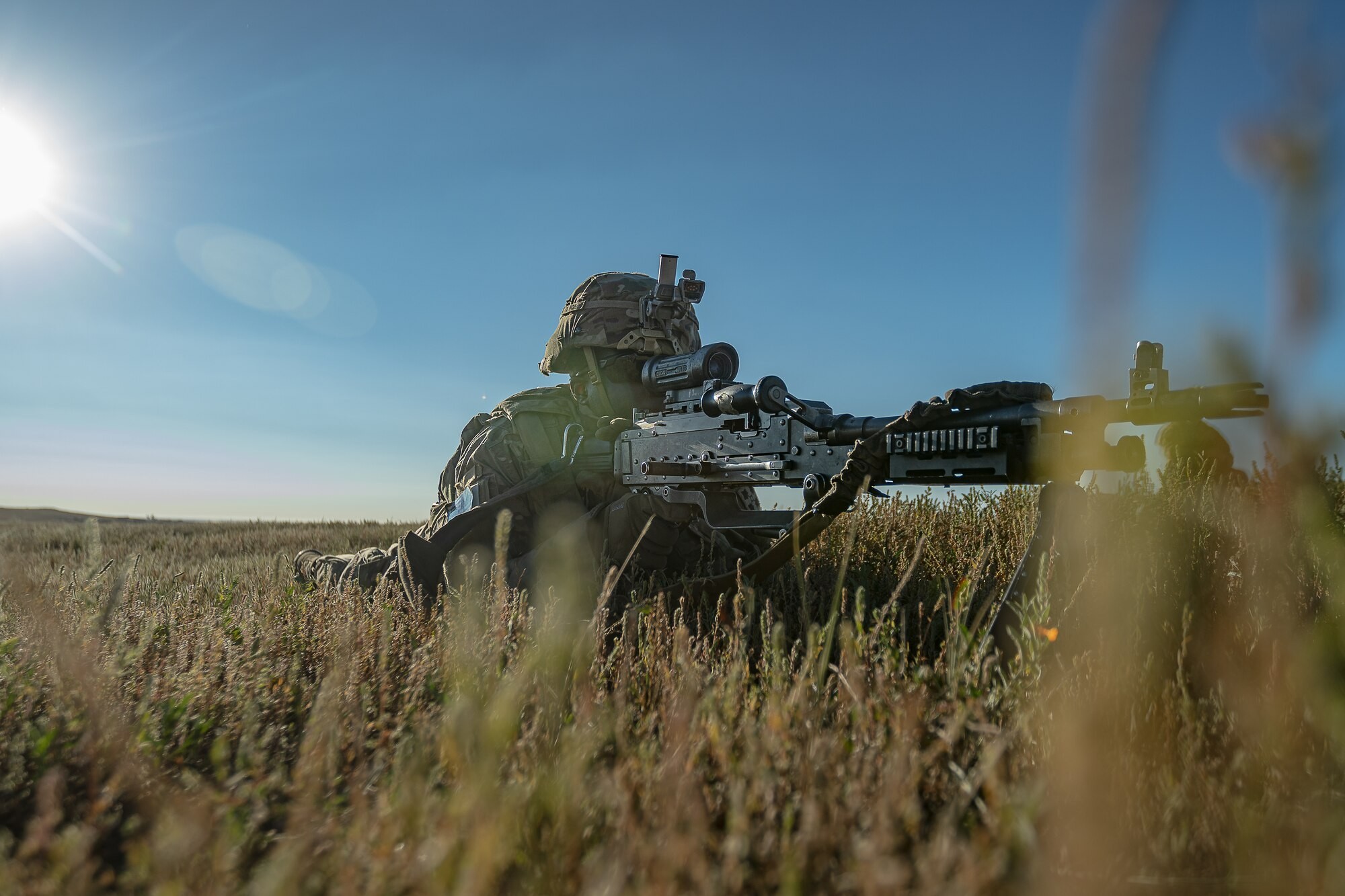
The participating units got multiple repetitions executing MDO in an immersive training environment that simulated the rigors of large-scale combat operations against a peer-threat.
It was a valuable opportunity to train the Army’s new doctrine, capabilities, and organizations toward achieving McConville and Wormuth’s ultimate vision and intent for the force.

By Airman 1st Class Theodore Gowdy Joint Base Elmendorf-Richardson Public Affairs In July 2025, the Secretary of War released
Frontiersman.com Alaskans aged 17 to 28 have a unique opportunity to earn a college degree with major financial support
By Katie Stavick Frontiersman.com The United States Marine Corps has launched a strategic initiative known as "Campaign - Alaska,
By Katie Stavick Frontiersman.com As the 'Guardian of the North,' Alaska has historically been on the front