Retiring teacher, coach urges Colony grads to ‘find their 68’
By Jeremiah Bartz Frontiersman.com A football coach using a hockey reference as the centerpiece for his keynote address may


JOINT BASE ELMENDORF-RICHARDSON, Alaska — You are on a red-eye flight out of Anchorage. Row 27. Middle seat, with a child behind you kicking your seat. Great, could this day get any worse? Seatbelts fastened, tray table up, ready for takeoff - Let’s get this flight going. The plane lifts off the ground, and you are just about to close your eyes when suddenly... BOOM! A flock of geese impacts the engine. In a daring move reminiscent of Captain Sully Sullenberger’s famous “Miracle on the Hudson,” the pilots deftly maneuver the aircraft back to land safely. Phew! Thank goodness pilots are regularly trained to handle these types of scenarios, and not all bird strikes are that severe. But let’s roll it back – what could have been done to prevent this from happening in the first place?
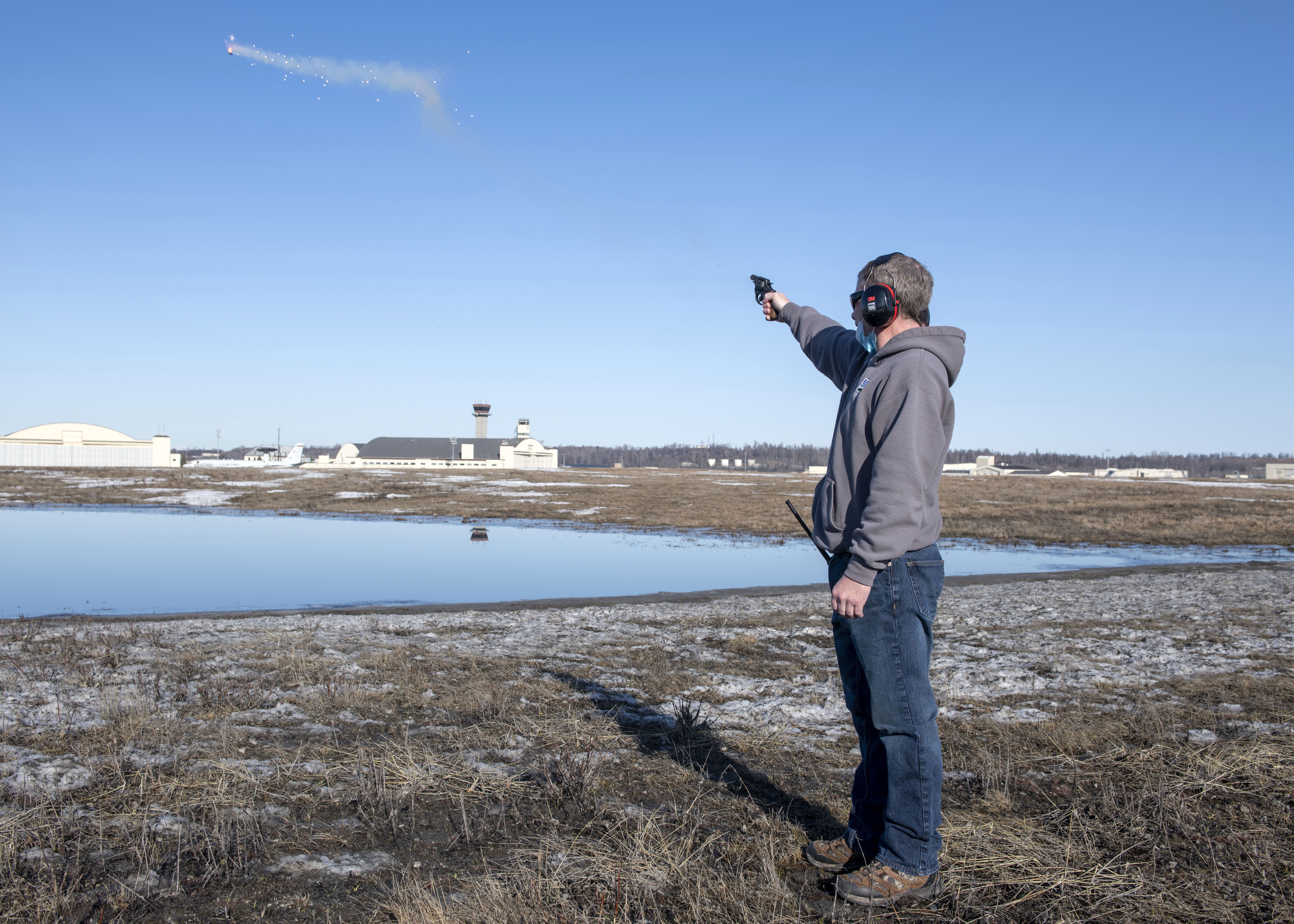
Both military and civilian airports utilize a method called the Bird and Wildlife Strike Hazard (BASH) program to deter birds and other wildlife from an airfield area. This program is a huge asset, and has done wonders in increasing the safety of air travel for more than 25 years. At Joint Base Elmendorf-Richardson, the United States Department of Agriculture (USDA) works hand–in–hand with local and federal environmental protection agencies to ensure the safe removal of such hazards while protecting the natural environment of Alaska.
JBER employs fully–dedicated teams 24/7 to scare birds off the runways, remove nests and food sources such as insects, geotag endangered species, remove invasive ones, and utilize many other tactics to keep our airplanes flying without incident. The local USDA’s Raptor Relocation Program has displaced over 200 raptors from base without harm since 2016, and they gladly welcome your support. As part of an educational outreach program, The JBER USDA will begin broadcasting times when anyone on base can come hold an owl! Be sure to watch the JBER Facebook page closely for this unique opportunity to learn more about local wildlife.
While birds are the primary danger to aircraft – both the 1995 Yukla 27 E-3 Incident here in Alaska and the famous “Miracle on the Hudson” were caused by a flock of Canadian Geese – other animals pose a threat as well. Just last year, an Alaska Airlines Boeing 737-700 impacted a brown bear on landing in Yakutat, Alaska. Aircraft flying into Ted Stevens International Airport have struck several coyotes in the past few years. And if you travel all the way to Australia, look out for kangaroos on the runway!
So how can you help? Remember – only YOU can prevent wildlife mishaps! If you see birds or wildlife congregating on base, call 552-BIRD (2473) any day, any time. Ensure your trash cans lids are firmly seated, and do not feed the geese! Every animal discouraged from residing near the airfield is a potential mishap prevented. Stay safe.

By Airman 1st Class Theodore Gowdy Joint Base Elmendorf-Richardson Public Affairs In July 2025, the Secretary of War released
By Rep. Kevin McCabe Community spectrum I was a Federal Flight Deck Officer. Most folks have never heard of the

By Kyle Wilkinson For the Frontiersman The aviation community from across the state gathered at the Alaska State Fairgrounds this

By Katie Stavick Frontiersman.com Wasilla High School was filled with buzzing excitement last week as students participated in a