Retiring teacher, coach urges Colony grads to ‘find their 68’
By Jeremiah Bartz Frontiersman.com A football coach using a hockey reference as the centerpiece for his keynote address may


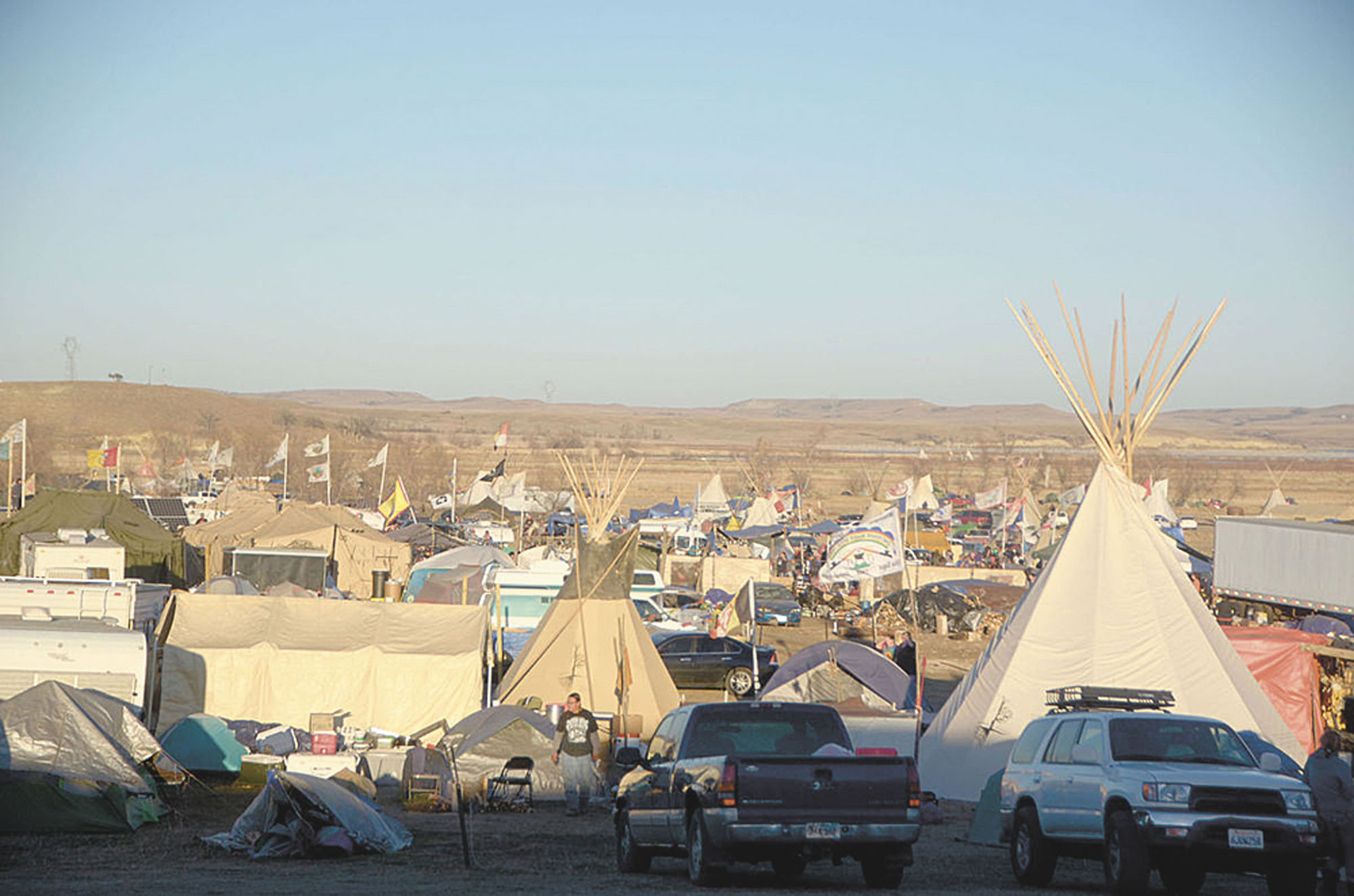
At 78, or 78-and-a-half as he puts it, Willow resident John Spitzberg just returned from a short, but in his opinion, life-changing trip to the Standing Rock Indian Reservation. The approximately 9,200-square-mile reservation straddles North and South Dakota and has received international attention because of a planned oil pipeline.
The Dakota Access pipeline is an almost 1,200-mile-long, 30-inch crude oil pipeline that is planned to run from the Montana-North Dakota border southeast to south-central Illinois. An announced change in the pipeline’s location led to a standoff between those pushing for the line’s completion next year and those opposed due to environmental concerns.
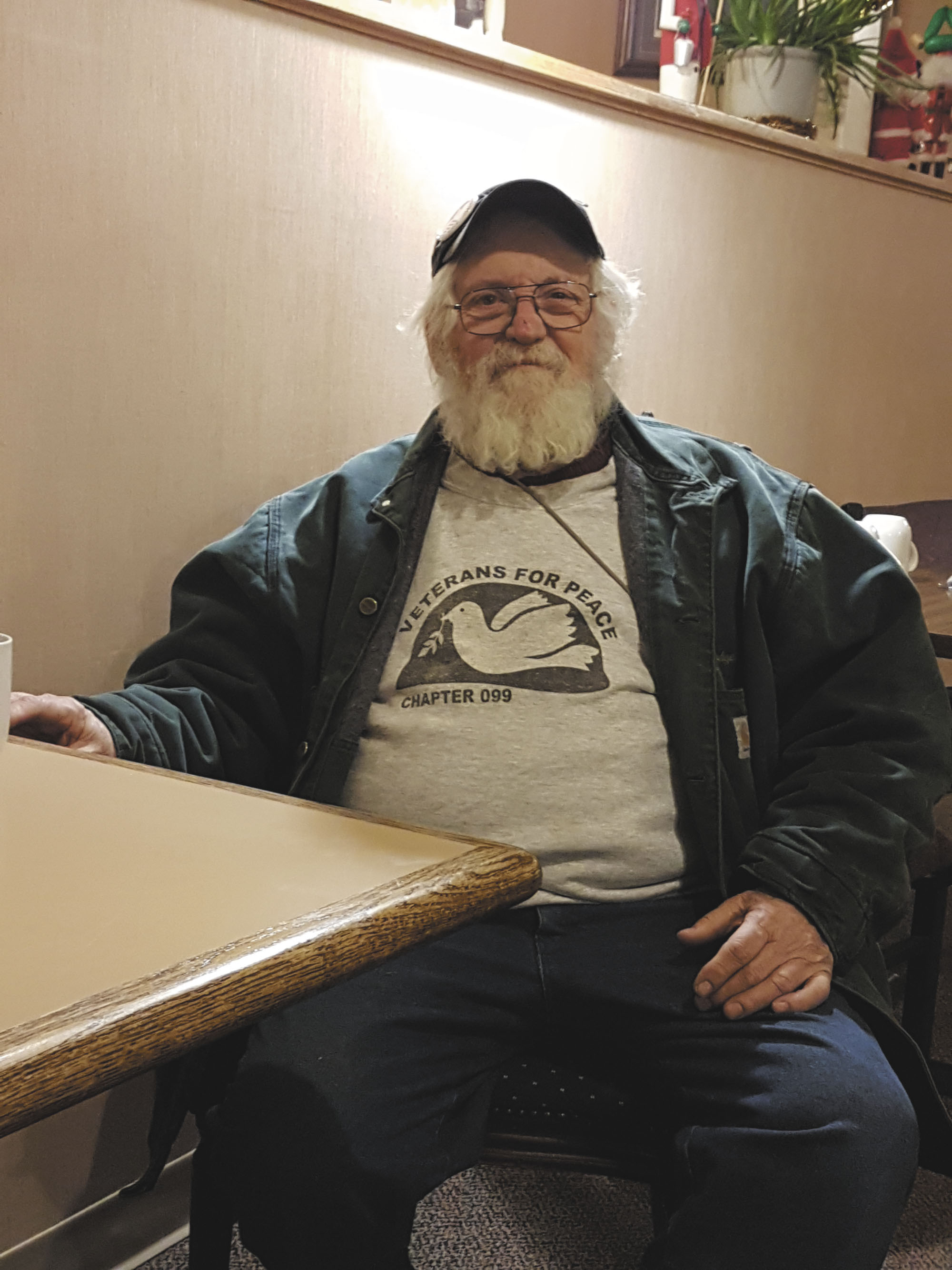
The man
Although relatively new to the Willow area, Spitzberg has spent many years traversing between various rural Alaskan locations and the Lower 48’s East Coast. Spitzberg, a retired teacher and social worker, has taught in Teller, Holy Cross up the Yukon, Newtok and Bethel, among other remote areas of the state.
“I do not consider I am an Alaskan,” Spitzberg said. “I’m a cheechako, not a sourdough. I labeled myself that.”
After his years as a public educator, Spitzberg returned to learning himself, this time as a student earning his master’s degree in social work. Following that, he returned to the Bethel area as a social worker. In between all of that, he has written three books and is “... kind of working on the fourth.”
“I’m calling it ‘Wheel Dog Cheechako’,” Spitzberg said. On a dogsled team, the wheel dog team is the one closest to the sled, the strongest pair that anchors the entire team. “I’ve been going to Willow for six or seven years as an Iditarod volunteer and I hope to be at Deshka Landing in 2017.”
“I decided it was time for me to settle down about six months ago. I love Willow,” Spitzberg said “I take care of dogs who are abandoned, neglected abused, even special needs dogs if it comes up. My goal is to provide a (pet) sanctuary of the people in Willow need it.”
Spitzberg began his military career in February of 1958 as an artilleryman firing eight-inch SP’s, a high track gun He served in Germany during the Cold War and was stationed at Grafenwoehr near Czechoslovakia border serving in the Seventh Army. He continued his active duty service until 1967 and remained in the Army National Guard in Illinois and Virginia, retiring as a major.
Veterans for Peace
The international group Veterans for Peace, of which Spitzberg joined in St. Louis in 2003, sent a large contingent to participate in the Standing Rock protest. Spitzberg said he did not serve in Vietnam. He said many Veterans for Peace (VFP) members are Vietnam veterans. Spitzberg said there are many more who, in retrospect, feel they were bamboozled by the government in fighting a war that America shouldn’t have been involved in.
A VFP chapter president while living in North Carolina, Spitzberg said he has kept involved with the group which includes more than 4,000 members from chapters in the United States, England, Ireland, Germany and Australia. In addition to lending support at Standing Rock, he said VFP has been active in protecting veterans’ rights.
“Our stand is we will stand between violent authority and people who are protesting but we do it non-violently,” Spitzberg said. “We follow Martin Luther King, Gandhi, anyone who believes that non-violence is the manner in which peace will be achieved, not through violence. I believe that.”
Standing Rock
“The issue with the pipeline, I understand, is they wanted to put in Bismarck. But those people said (not in my back yard). So they went onto reservation land considered to be holy ground,” Spitzberg said. “Point one — the Native population doesn’t wish to have the pipeline on holy ground. The second thing is the water. The pipeline is supposed to go under the Missouri River. That’s their drinking water and if anything happens...their water is shot.”
Spitzberg said all Armed Services divisions were represented by VFP at the gathering.
“Our bottom line is nonviolence. We are willing to put our bodies on the line between goons that companies hire and the people who are protesting and to say to both sides ‘no violence...no violence’. (VFP members) have stood tall to keep people from being beaten. Our job is to say ‘no way...we’re not going to allow that...’,” Spitzberg said.
Spitzberg said he made the decision to go late last month.
“I knew that (VFP members) were going to congregate there. There had been rounds of people (Veterans for Peace ) and Iraq Vets against the war already there.,” Spitzberg said. “(They) decided they were going to open the gates to all Vets who cared about indigenous population and they invited all kinds of veterans.”
He was supposed to depart early Dec. 3 but missed his flight. So instead of arriving midday on a Saturday, he made it to the rally during the wee hours of Dec. 4. He said he didn’t see many VFP members but he was impressed with the flag display. Spitzberg estimates there were 200 flags representing indigenous peoples from all over North America.
“I got there around 12:30 a.m. A huge party bus picked me up, some folks from Colorado. They also had this need to come and help. We got to campsite and I don’t think the storm had gotten really bad yet. It was snowing and windy though,” said Spitzberg. “They took me to an unfinished building with no roof. I was so tired. I threw my stuff down and got into my sleeping bag. Woke up, covered with snow and I was wet. That’s the way I remained for four days...a mess.”
Spitzberg said when daylight finally arrived, a group of people he didn’t know told everyone if they were veterans, there was a special area for them to go to.
“I picked up my stuff and found a group of Army green tents. There were about four in a row. A young man, a corporal named Carlos ran the whole thing. He was an amazing young man who took it on himself to help,” Spitzberg said. “There were a bunch of us and only about 30 cots. He made sure the elders got a cot. I was the oldest veteran there.
“Then I went to a prayer meeting. Ran into (Armed Services) buddies from Mexico I hadn’t seen in many months. We hugged and cried. I don’t know why. Ran into many acquaintances while I was there. As we went to those meetings the blizzard started getting bad, bad, bad,” Spitzberg said. “The Natives called them prayer meetings. All of the veterans that came there, came there with the notion that we weren’t telling the Sioux what to-do , they were going to tell us what to do.”
Spitzberg said he felt some of the VFP members in attendance had an agenda of living up to the group’s cause — teaching nonviolence in various forms. Having always considered himself a loner, Spitzberg said he shied away from that pretense. He said not all members had that in mind and he even after the visit, he’s not convinced that some of the Natives themselves were committed to non violence.
“The Sioux were warriors. They are very religious, spiritual, committed to the earth, but I’m not fully convinced that our thing is their thing. We were invited to come. I personally decided to do I wanted to do what I knew how to do. I went to tent where they provided medical services. I worked with people who had hypothermia, frostbite, on the trauma team and helped those who may have needed counseling,” said Spitzberg.
“I did a lot of things but I was not a major part of anything. I love to work from midnight -6 a.m. That’s my favorite time. Most people hate it. I loved it,” Spitzberg said. I did a lot triage. One of the things that happened...one night the winds were beyond belief (stronger than he’s seen in Bethel). That night, an entire tent collapsed on those people who were sleeping. I’m guessing around 30 or so. I had to triage, get them bedded down. I also looked for people who may have been experiencing flashbacks or PTSD. I was able to provide a person who they could talk to if they wanted to.”
Spitzberg said he worked with a wide variety of individuals. He said a main part of the compound — the road with the hundreds of Native flags, contained a huge medical area with yurts, natural healers, alternative medicine specialists, and social worker tents. He said the veterans area had the same offerings but on a smaller scale.
“I worked in the veteran’s area medical tent. We heated them with wood stoves. One night the storm was so bad n the winds broke the pipes broke off the roofs and then some of the flame embers were inside. We had to stop all the heat in there,” Spitzberg explained. “I started telling people I know you don’t know each other, but the Inuit have something called bundling. I told them to get to know it,” said Spitzberg.
One of the days I was there, we decided to have a huge march, it was incredible. A march to the river,” Spitzberg said. “Some people were water-cannoned. One girl had her arm shattered although I didn’t actually see that. I marched along with all these other people — hundreds of them. It was really interesting. I saw Natives on these huge horses. I was standing next to one. He had long hair and a spear. I couldn’t see very well because of blizzard...I felt like I was living in a historical period...It was very personal. Somehow I was living in another age. Didn’t last long. I saw people on a hill thought police officers were ready to shoot us but they weren’t. No one shot at us...I marched with them...I felt so totally a part of everything,” he added.
Spitzberg said word came down the tribal leadership wanted everyone to leave because of the storm.
“I just kept going. Everybody did, not just me. People were coming in with food and firewood . Carlos (the corporal running the veteran tent) crashed. My cot next to his and we talked. He was just very tired.
We began to run out of wood, we began to run out of food. Cars were stranded. Port-a-Johns were completely...just piled up. Felt sorry for the women. We got the word that we had to evacuate,” Spitzberg said. “There was a casino 15-20 miles away. Somehow I got a ride. It was inundated with people. Natives. families, kids, even little dogs. I was getting sick. I am a diabetic but I wasn’t taking my insulin. My blood sugar got to 560 (a normal after a meal level is about 130) and I knew better.”
Spitzberg said either he was too cold to get stuff out or too busy.
“Sure enough I began to get really sick. They had a big pow wow and then they called all veterans up. I’m guessing there were about 150...maybe less. I was too wiped out to move. A whole bunch of people came over and put me in a chair. They came to each of us, and blessed us and gave us a feather, an eagle feather. Then they took me to a medical tent with real doctors.”
By this time, Spitzberg said the blizzard had begun burying cars and temperatures dropped to minus 10 degree Fahrenheit without the wind chill factored in. Again, word was going around that everyone should leave and go home. At the same time, Spitzberg said everyone had received word that the Army Corps of Engineers determined the project wouldn’t continue .
“They were going to do another study. But I know this issue is still alive and well. It’s a very political issue... everyone was very happy,” said Spitzberg. Now I understand, that was just eyewash. They are going to start up again... we don’t know when.”
Spitzberg arrived back in Alaska Dec. 9.
“My motivation for going was because I believe in peace and social justice. What Natives are enduring flies in the face of social justice. It’s my interpretation of right and wrong. It is corporate greed fighting against a culture that says you can’t even own land... the concept is foreign to the Native American,” Spitzberg said. “I had to go...maybe someday I’ll go back....this is far, far from over. What did I take away? A sense of camaraderie with people fighting for a cause that is righteous and I’m a part of it. I played a part of it. I was just there doing what I could. We were all doing what we could.”
Spitzberg said he was overwhelmed with the amount of support given him in his venture — both locally and regionally.
“There is one woman from Willow, I can’t remember her name, but she makes beautiful baby blankets...quilts. She gave me two gorgeous blankets which I gave out. A local woman, Kathy Watkins, makes beautiful potholders and gave me a bunch. The ladies down there loved them,” Spitzberg said. “Someone from Fairbanks gave me a bunch of (spiritual) tobacco pouches.”
Spitzberg said he also received monetary donations for the trip. He said he set up a table at a recent book fair to generate revenue for the trip. Not only did they contribute financially, Spitzberg said he received numerous donations from the Veterans for Peace website itself.
“They weren’t large donations, but they added up,” he concluded.
Spitzberg said VFP did have an Anchorage chapter some years ago but that it has since folded. He is very interested in trying to start another. He said the organization allows for associate members (those who are non-veterans) to join. Anyone interested in pursuing the matter can contact Spitzberg at 1-828-230-6902.