Retiring teacher, coach urges Colony grads to ‘find their 68’
By Jeremiah Bartz Frontiersman.com A football coach using a hockey reference as the centerpiece for his keynote address may


PALMER — MSBSD students engaged in peaceful protests on Tuesday and Wednesday this week to honor the 17 people who died at Marjory Stoneman Douglas High School in the Parkland, Fla. Su Valley Jr/Sr High staged a walkout of about 75 students Tuesday. Wednesday, Palmer High had 75 students walk out, Colony High had 30 walk out, and Career Tech had a silent moment and reflection time inside the school. Protests were carried out at high schools nationwide on Wednesday.
PHS
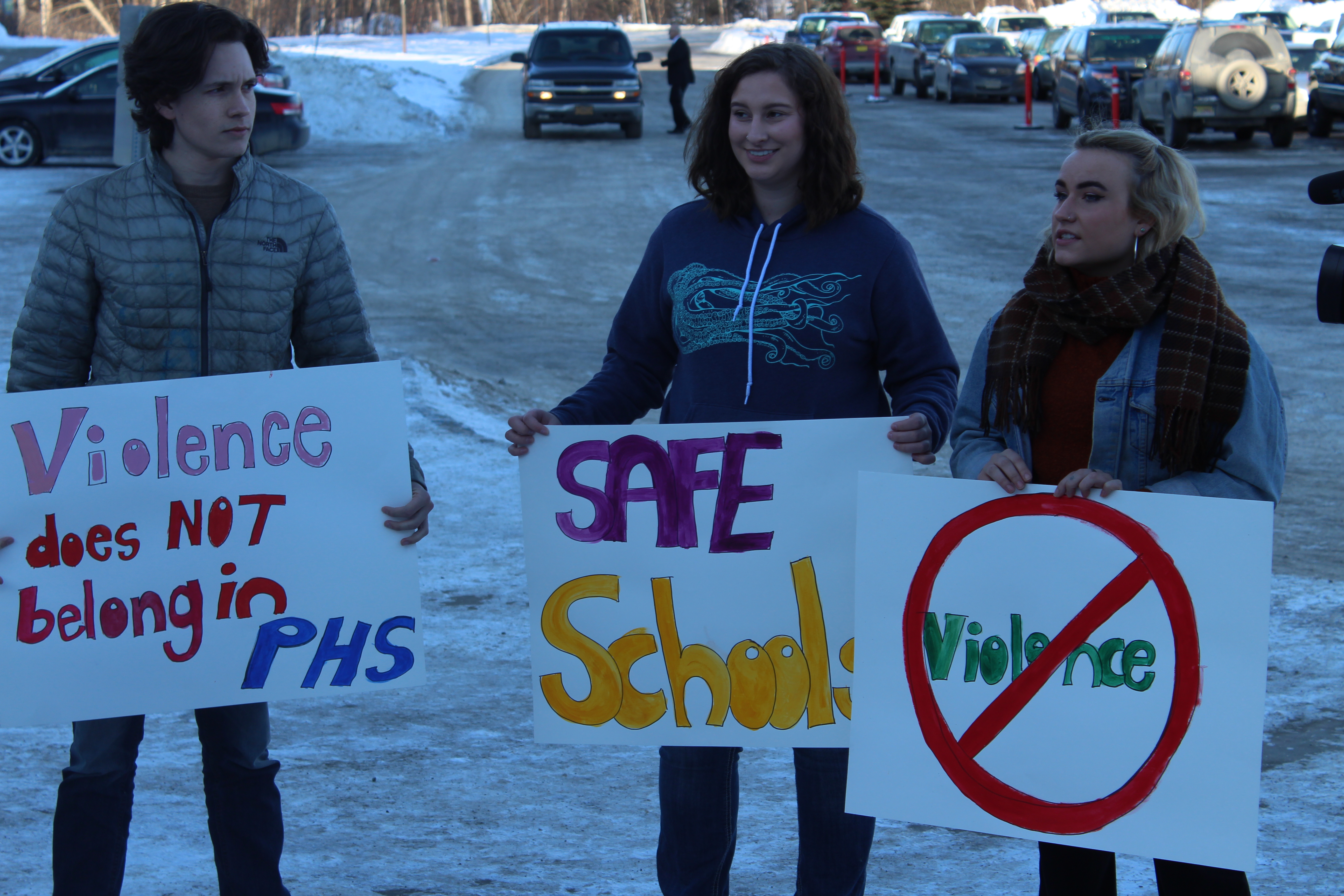
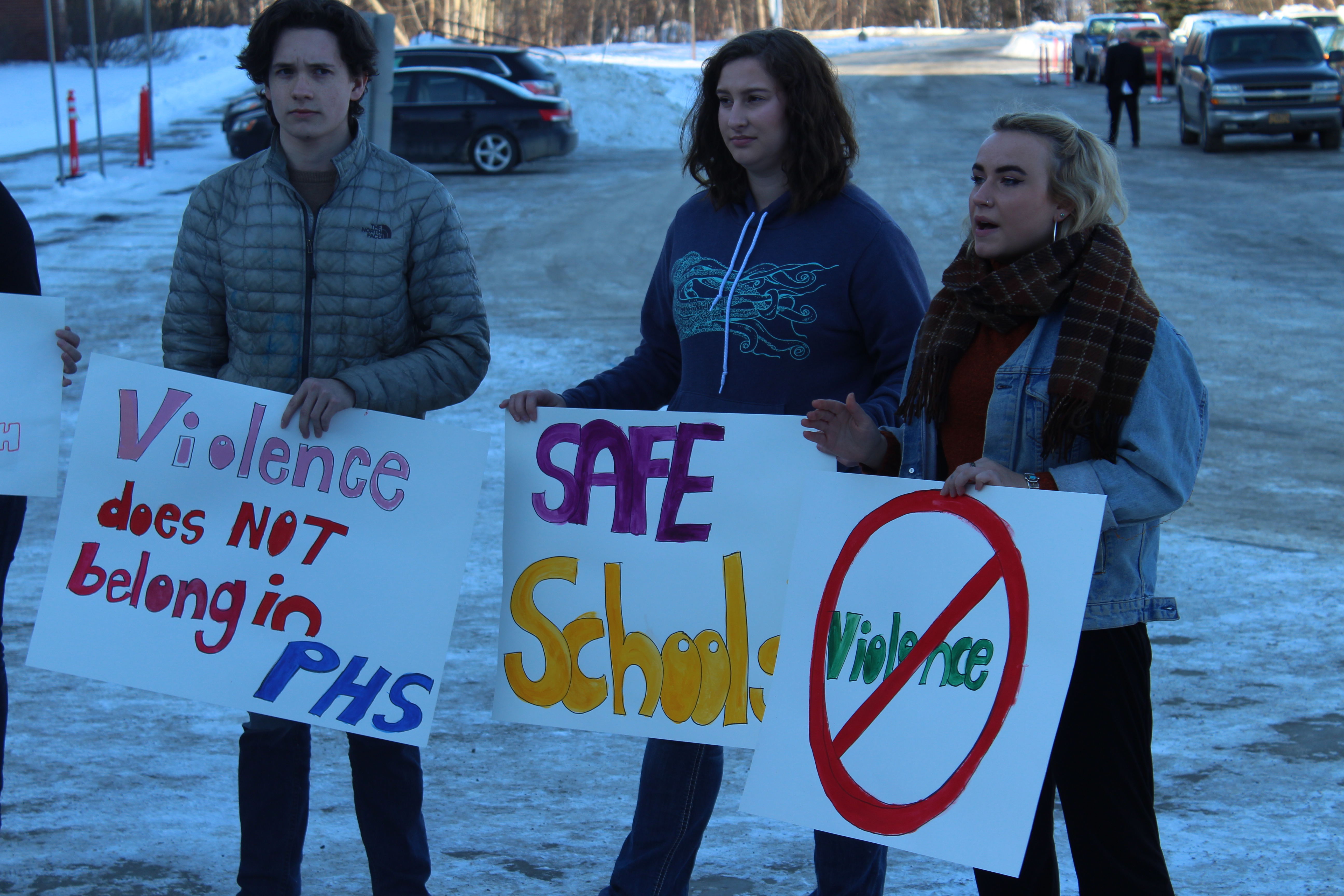
Students Ben Laggis, Anna Miller and Madison Reid led the Palmer High School discussion, which was not focused on gun control, but student unity and safety, they said.
At 10:20 a.m., 75 students walked out of PHS. They were accompanied by nearly every school administrator and Dr. Monica Goyette, Mat-Su Borough School District Superintendent. Students braved the chilling temperatures to get their point across. An Instagram post circulated throughout social media to call students to action in the week following the Parkland tragedy. Students worked with school administrators to plan their protest so that it would not disturb those students who chose to stay in class. None of the students who chose to participate in the protest were marked as truant, according to PHS administrators.
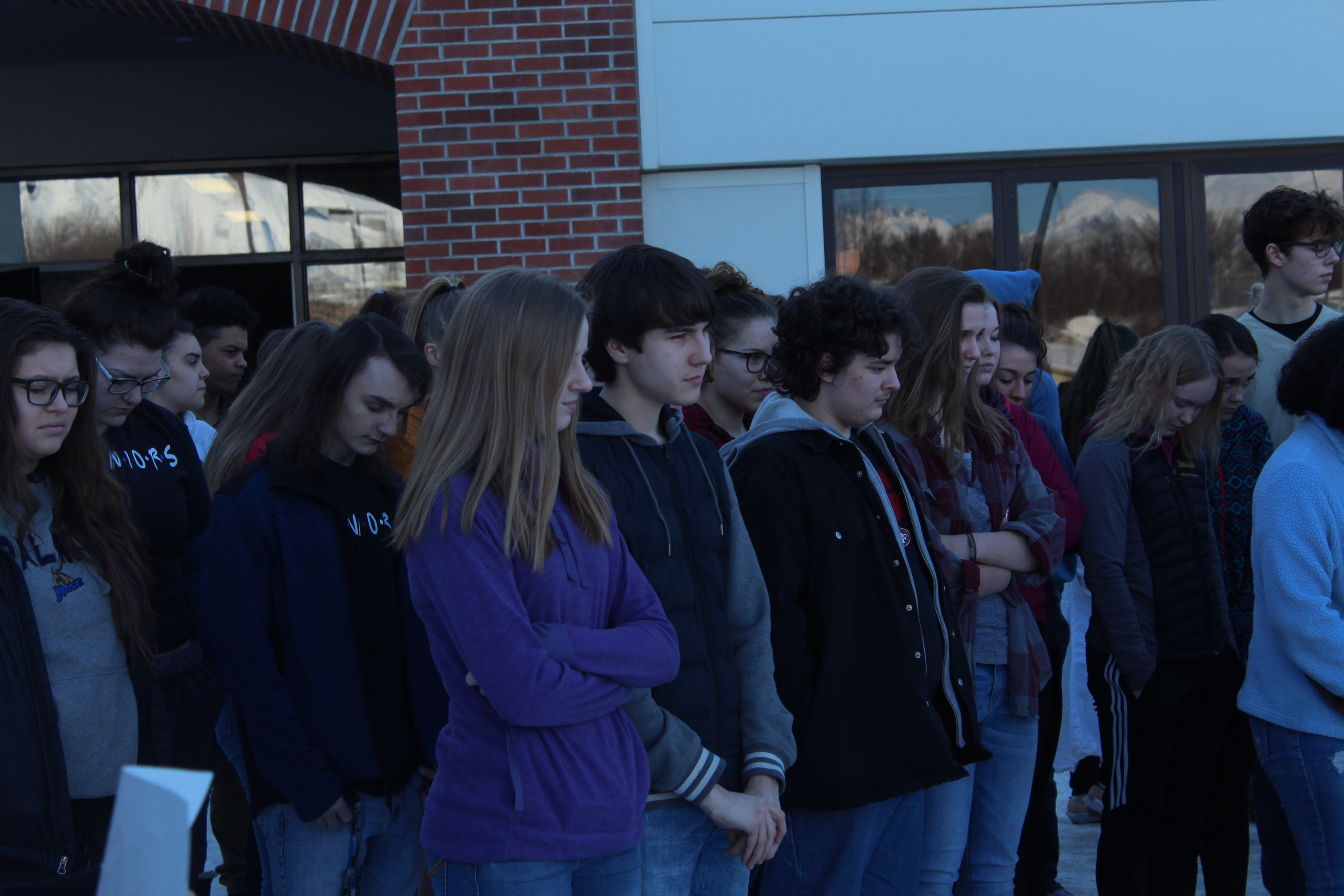
Reid led the conversation, detailing the reasons for the protest and leading a moment of silence for the victims of the school shooting that left 17 dead at Marjory Stoneman Douglas High School in Parkland.
“The first is to honor those who lost their lives in Florida recently. The second is to tell our community that we don’t feel safe in schools anymore and we want something to change to make us feel safer, and the third is to spread kindness and compassion throughout our school and to make this place somewhere that we can all feel accepted and safe,” Reid said.
The PHS administration was aware of the walkout before it occurred. Principal Paul Reid addressed concerns over school safety protocols and the voice of the student protestors in a post on the school’s website.
“We strive to cultivate a culture of caring,” wrote Reid.
The students’ message that was heard in conversations and interviews during the 17-minute protest did not simply dwell on gun legislation, as has been the case nationally and within social media. Students voiced awareness of mental health concerns and a need to combat bullying as a means to prevent further violence.
“Today our goal is for you to meet people you’ve never talked to, to make connections, to strengthen us as a community. Because at the end of the day, what really matters is that we spread kindness and cheer and hope,” Laggis said.
Laggis held a sign that said “violence does not belong in PHS.”
Miller, a junior who also helped organize the protest, held a sign that simply said, “Safe Schools.”
“You have to think about the community. Things start little and they grow and that’s what we’re trying to do here,” Laggis said. “The fact that this has been going on for so long, it really shows that something needs to be done. What we want to do is take that and address gun violence, but we want to get a little deeper than that. We want to get under the surface to what’s really going on and that’s really a big part. Bullying and not feeling accepted, the fact that people feel like they have to be pushed toward this is just not OK at all.”
Palmer High administrators remained watchful over the students during the protest. Dave Bonn, a school safety officer, was first to reach the parking lot. Other administrators followed, setting up a line of adults in between the students and the parking lot.
“We’re creating a culture in our school that would prevent something like what happened in Florida from happening. We’re going to provide safety for our kids and let them exercise their rights. I’ve never seen this happen before,” PHS assistant principal Dave Booth, a longtime district employee, said.
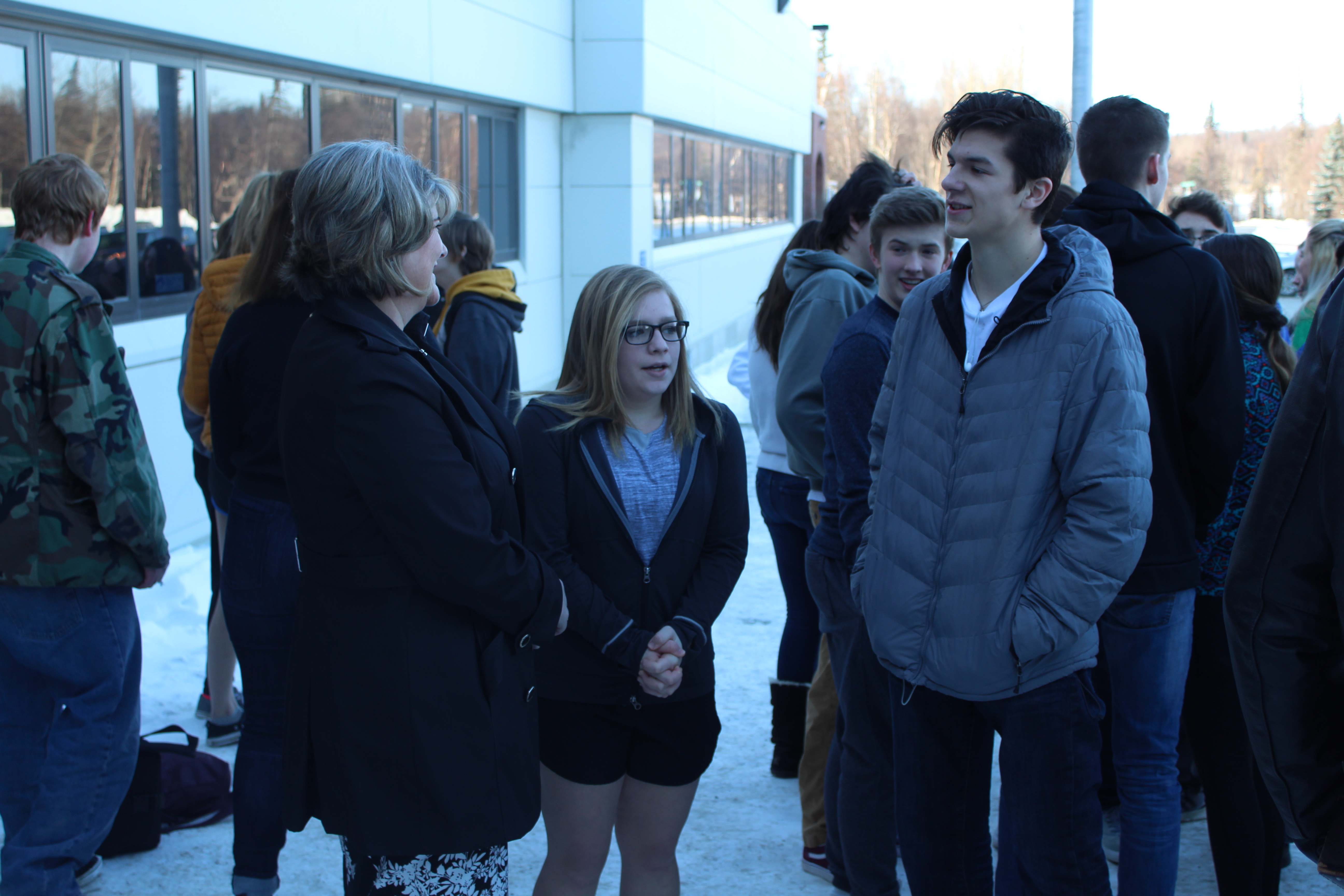
Dr. Goyette was engaged in discussion with students for nearly the entirety of the 17-minute protest. Goyette said she saw the protest as an active part of an education rather than frivolity. Students were encouraged to meet people they hadn’t before. Discussions ranged far and wide, but the word ‘legislation’ was rarely heard.
“There’s a real culture in the United States where it’s, ‘my opinion is right, my opinion is the only one that matters; it is solid it cannot be shifted.’ This is a toxic idea which is holding our nation in a deadlock and if we want to make real change we have to start realizing that other sides, other views have valid points,” said Laggis as he addressed the crowd.
Many of the students had come straight from class, not dressed for the below-freezing temperatures. Students of all grades, ages, and demographics mingled and made a goal to meet 17 new friends during the 17 minute walkout. While the silent moment of observation was somber, the mood was mixed. Desire to act on the issue and promote a healthy, safe school environment and grief from the tragedy motivated students to meet those whom they had not met previously.
“One thing we’d really like to push is kindness, compassion, love in our hallways,” said Miller.
Goyette detailed the district’s prevention techniques. MSBSD elementary and middle schools teach students how to manage emotions and understand the feelings of others. MSBSD is increasing their partnership with the Mat Su Health Foundation and other local agencies to provide more mental health services on site, according to Goyette.
“You can see how they’re walking around, introducing themselves to each other and I’m just really proud of them. I think it’s great for them as a learning opportunity in addition to the reasons that compelled them to come out here,” said Dr. Goyette. “This is learning, this is! I do consider this part of the academic day and learning and they did a great job of working with administration.”
CHS
“School shouldn’t be a warzone,” said one CHS student, Serenity Grunzke.
Aria Wells spearheaded the CHS efforts. She’s friends with Reed and she affirmed her overall message. She said that they were standing for the victims of gun violence, whose deaths affect countless lives.
“This is against gun violence, not guns,” Wells said.
Wells and her fellow classmates may not have been the most politically minded before this, but agreed to start voting once they reach 18. Wells just reached the voting age and said this pushed her to get more involved with her community. She said it’s especially important for change to start on the local level and that this upcoming generation that’s approaching the age to vote needs to talk to their local legislatures.
“It’s our turn. We should be the ones who are in charge of our future,” Wells said.
CTHS
Students at Career Tech High school handled the situation differently. Student government worked in concert with the administration and used the intercom to hold a moment of silence for 17 seconds during the school day which was then followed with 17 minutes of student freedom.
“All we ask is that in this time you show a small act of kindness to someone you normally wouldn’t. A fundamental component of school safety is helping people feel a belonging to their school. Courtesy, appreciation for others, and kindness are values we all hold ourselves to, and they foster a sense of community. For the next 17 minutes, let’s accentuate these values here in our hallways and between all of us; let’s do all that we can to help people feel that they belong here,” ended the letter written by students and administration that was read over the intercom.
Principal Mark Okeson described that student government as a major change agent. Okeson said that the issue came up in a recent faculty meeting where teachers are noticing the diligence of the discussion between students.
“There’s nothing in dispute, nothing to protest, we’re on your side. This was a school exercise in support of school safety and all that means. We will give you time on the intercom and give you the whole school for 17 minutes and you can frame the issues and let students reflect and comment and discuss this whenever, wherever… I’m very impressed. They’re handling this in a very measured, controlled, scholarly way,” said Okeson. “We’re way proud of them.”

By Jeremiah Bartz Frontiersman.com A football coach using a hockey reference as the centerpiece for his keynote address may

Frontiersman.com With its headquarters in Wasilla, the Frontiersman has been a primary source of news for the Matanuska-Susitna

By Katie Stavick Frontiersman.com The next generation of leaders took flight this week as the Houston High School Class

By Kyle Wilkinson For the Frontiersman Keynote speaker and Carry the Cure President Bill Pagaran’s words boomed through the