Retiring teacher, coach urges Colony grads to ‘find their 68’
By Jeremiah Bartz Frontiersman.com A football coach using a hockey reference as the centerpiece for his keynote address may


ANCHORAGE — A second major criminal case has hit the now-defunct Matanuska Creamery.
According to a statement issued Friday afternoon from the U.S. Attorney in Anchorage, Karen Olson, 57, formerly the CEO, manager and a major shareholder of the business, allegedly participated in and covered up fraud at the business.
Olson, who ran Matanuska Creamery — known in corporate documents as Valley Dairy — after Kyle Beus stepped down, allegedly committed fraud to keep the business going through an illegally obtained $430,000 state loan, the statement says. That fraud was allegedly perpetrated “in order to conceal the true nature of Valley Dairy finances and the losses to the dairy caused by the alleged illegal activity of (Kyle) Beus, the former co-owner and president of Valley Dairy.”
Olson also is accused of covering up Beus’ alleged crimes by submitting false statements to the U.S. Department of Agriculture Rural Development “to convince it to allow the state of Alaska to take a first lien position on equipment purchased with proceeds of the USDA Valley Dairy Grants,” the U.S. Attorney’s Office says.
“I have not seen the indictments,” Olson said in an emailed statement Saturday. “They apparently refer to a state of Alaska loan application I put together for Matanuska Creamery in late 2008. The information I provided in those documents and to Rural Development was correct to the best of my knowledge. As far as I am aware of my own knowledge, the information remains correct today. I also deny allegations of engaging in any cover-up, then or at any time. There have numerous errors of fact in recent media reports on this matter. They will be addressed as the legal process goes forward. Matanuska Creamery, its customers, employees, member farmers and investors have been the losers over the past six years. Perhaps these indictments will become the vehicle for setting the record straight.”
The charges leveled against Olson, whose résumé also includes a stint as Frontiersman editor, carry a potential sentence of 30 years in prison, a fine of $1 million or both.
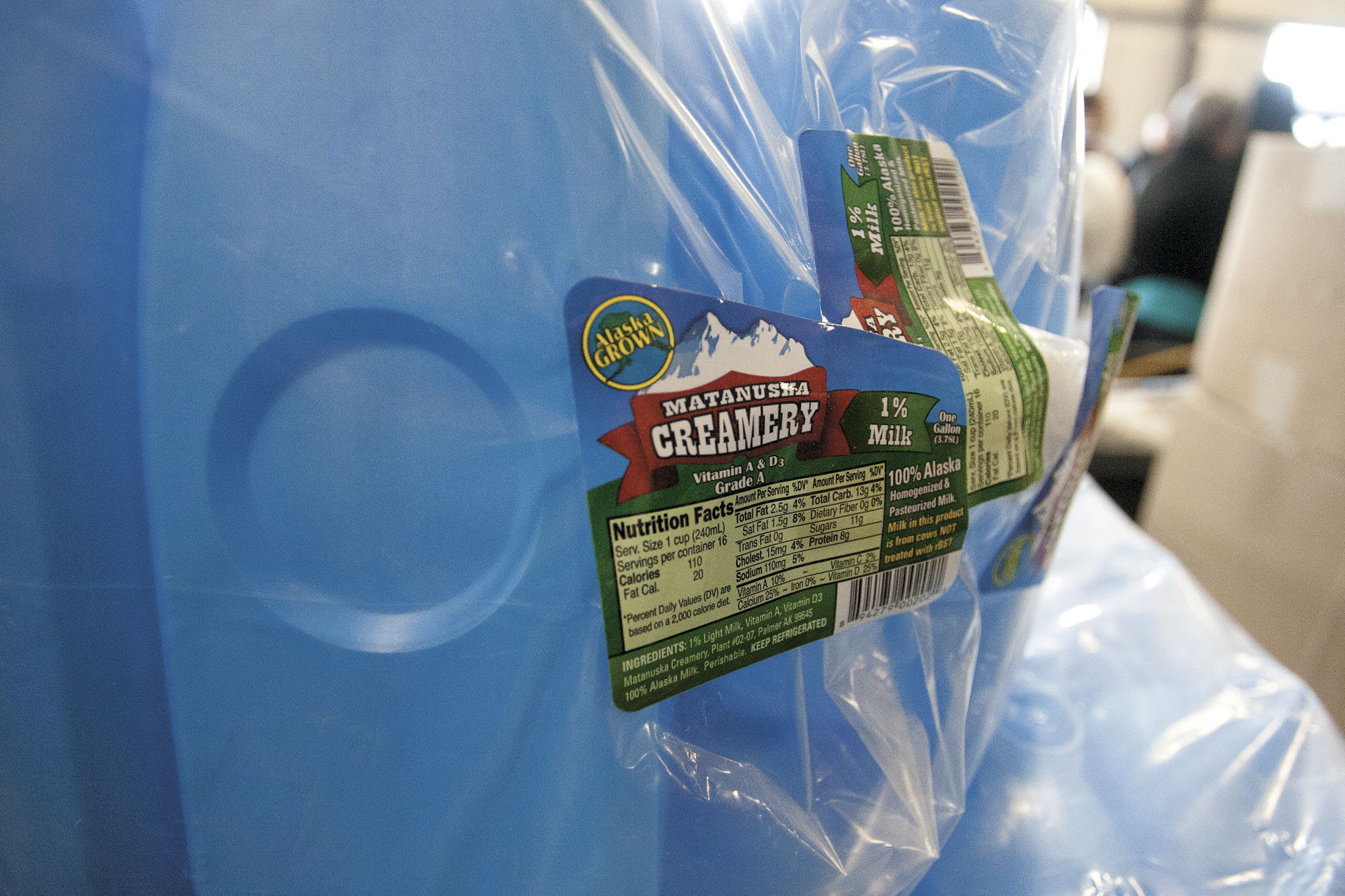
Started in 2007 with a $600,000 federal rural development grant and private investors, and later bolstered by $830,000 in state loans issued in 2008, Matanuska Creamery began making cheese in early 2008, and by May 2008, the first gallon-sized jugs of Matanuska Creamery milk hit the shelves at local Fred Meyer stores. A year later, the dairy was producing about 1,600 gallons of milk a day.
But a series compromising events hampered the dairy venture’s reputation and bottom line. An early batch of cheese tested positive for listeria and plumbing problems at its leased facility on the Palmer-Wasilla Highway led to costly alternatives to disposing of the plant’s milk waste. In 2011, the state Commission for Human Rights ruled that complaints alleging religious discrimination and wrongful termination by two former employees had merit.
In early December 2012, the state announced it was calling in the nearly $900,000 in loans and interest it was owed, and by the end of the month had closed the doors for good.
The loan Olson is accused of misusing was one of a pair of state loans the creamery obtained in November 2008. One was a long-term loan for $430,000 and another was a shorter-term loan for $200,000.
Beus has also been hit with federal charges of fraud and misuse of federal grants. He, Olson and Rob Wells, a former Mat-Su Borough assemblyman, were the three co-owners in the business.
The indictment against Beus alleges he used his Klondike Creamery business to charge Valley Dairy for supplies, materials and services he didn’t provide.
“The purpose of the scheme was for Beus to obtain money from (the United States Department of Agriculture Rural Development) for Beus’ personal and discretionary use unrelated to the construction and management of the dairy processing facility,” according to the indictment.
Beus was indicted at the tail end of 2012 in the same week, as it happened, that Olson was fighting to keep the creamery afloat after the state announced plans to call in nearly $900,000 in loans and interest and potentially liquidate its assets.
“It happened in the context of the state had shut down the only operating creamery and Kyle was the manager and was under a lot of pressure to get going so that farmers didn’t have to continue to dump their milk,” Olson said at the time Beus was charged. “I was not aware of anything until I started working when the company was about to shut down in September of 2008.”
The creamery has since been liquidated. Tons of moldy, rotten cheese was thrown out earlier this year in the wake of its collapse, and the creamery’s assets were auctioned off in March. A new dairy started on a local farm just before the creamery collapsed has taken up some of the slack, expanding enough to take in milk from other dairy farmers that had previously sold milk to Matanuska Creamery.
Contact Andrew Wellner at 352-2270 or andrew.wellner@frontiersman.com.
• July 2007 — State-owned Matanuska Maid creamery announces it will cease production after 71 years of operation.
• September 2007 — Rob Wells announces a plan to open his own creamery, Alaska Natural Milk, in the wake of the Mat Maid closure.
• October 2007 — Wells partners with former dairyman and Valley businessman Kyle Beus to form a local creamery, which became Matanuska Creamery. They used $600,000 from a federal rural development grant and state grant monies to get started.
• November 2007 — State Board of Agriculture agrees to lease some Mat Maid equipment to the new dairy venture. The board also votes to agree to Beus’ request to allow the dairy to use the familiar Mat Maid name and logo.
• November 2007 — Along with the state Board of Agriculture decisions comes a timeline for the new dairy to have its production plant built by mid-December.
• December 2007 — Last Matanuska Maid Dairy products hit store shelves.
• December 2007 — State Creamery Board requests $200,000 to help bridge an expected three-month gap for dairy farmers from when Matanuska Maid shuts down until the new Southcentral Dairy Venture (spearheaded by Wells and Beus) opens.
• February 2008 — Three gold mining companies purchase $75,000 in “cheese futures” from the new dairy. The money was paid in advance of the dairy producing its first batches of cheddar cheese.
• April 2008 — Operating from a former grocery store on the Palmer-Wasilla Highway, Matanuska Creamery is accepting milk from dairy farmers to make into cheese. The dairy plans to have its liquid milk operation running in a couple of weeks.
• May 22, 2008 — Matanuska Creamery’s first gallon-sized jugs of milk hit the shelves of local Fred Meyer stores.
• July 2008 — A malfunction in equipment at the creamery causes some of its milk to expire before the expiration date printed on the containers. Affected milk was recalled from the shelves of local stores.
• November 2008 — The dairy asks the state for a pair of loans totaling $630,000 — one a short-term loan for $200,000 and a long-term loan for $430,000.
• May 2009 — Matanuska Creamery celebrates the first anniversary of shipping its first milk. It’s producing about 1,600 gallons of milk a day.
• March 2010 — State Board of Agriculture approves another $200,000 loan for Matanuska Creamery despite questioning the dairy’s collateral for the loan. Creamery CEO Karen Olson said the new loan would be used to pay of the balance of the previous short-term loan and help pay dairy farmers for their milk.
• September 2010 — Mat-Su Borough School District begins serving Matanuska Maid milk to its students. The contract calls for the creamery to deliver 32,000 half-pint cartons of milk to the district’s core schools.
• May 2011 — The state Commission for Human Rights rules that discrimination and wrongful termination complaints filed by two former Matanuska Maid employees have merit. Both employees, who are Mormon, alleged the dairy’s CEO made disparaging remarks about Mormons and not wanting “any more (expletive) Mormons” working for the company. They also claimed co-founder Kyle Beus did not take their complaints seriously before they were fired.
• August 2012 — The state Department of Environmental Conservation chastises Matanuska Creamery for dumping its waste byproducts at a site near the intersection of Church and Schrock roads when it’s supposed to haul it to Point MacKenzie and spray it on hay fields. An inspection of the dumping site showed the creamery was dumping the waste on the ground at the end of one of the fields.
• Dec. 5, 2012 — State Department of Agriculture calls in nearly $900,000 in loans made to the creamery, effectively ending the business operation of the venture.
• Dec. 11, 2012 — Kyle Beus, one of Matanuska Creamery’s three owners, is indicted on federal charges of fraud and misuse of federal grants. The federal indictment alleges Beus used his Klondike Creamery business to charge Valley dairy for supplies, materials and services he didn’t provide. “The purpose of the scheme was for Beus to obtain money from (the United States Department of Agriculture Rural Development) for Beus’ personal and discretionary use unrelated to the construction and management of the dairy processing facility,” according to the indictment.
• Dec. 30, 2012 — State of Alaska officially takes possession of the creamery, its building along the Palmer-Wasilla Highway and all its equipment and assets.
• February 2013 — State Division of Agriculture officials dispose of about 40,000 pounds of cheddar cheese that had been produced and stored at the creamery. The state also sets a March 2013 date to auction the remaining assets of Matanuska Creamery in an attempt to recoup some of the money lost from the defaulted loans.
• March 16, 2013 — State Division of Agriculture holds a liquidation auction of the remaining creamery assets.
• Aug. 23, 2013 — The U.S. Attorney’s Office in Anchorage announces federal charges have been levied against Karen Olson, former CEO and creamery manager, for allegedly committing fraud to keep the business afloat with that $430,000 loan obtained in 2008. The U.S. Attorney claims that loan was illegally obtained and in a statement announcing the charges said the fraud was motivated in part as an effort to conceal dairy losses caused by Bues’ alleged illegal activity.

By Jeremiah Bartz Frontiersman.com A football coach using a hockey reference as the centerpiece for his keynote address may

Frontiersman.com With its headquarters in Wasilla, the Frontiersman has been a primary source of news for the Matanuska-Susitna

By Katie Stavick Frontiersman.com The next generation of leaders took flight this week as the Houston High School Class

By Kyle Wilkinson For the Frontiersman Keynote speaker and Carry the Cure President Bill Pagaran’s words boomed through the