Retiring teacher, coach urges Colony grads to ‘find their 68’
By Jeremiah Bartz Frontiersman.com A football coach using a hockey reference as the centerpiece for his keynote address may


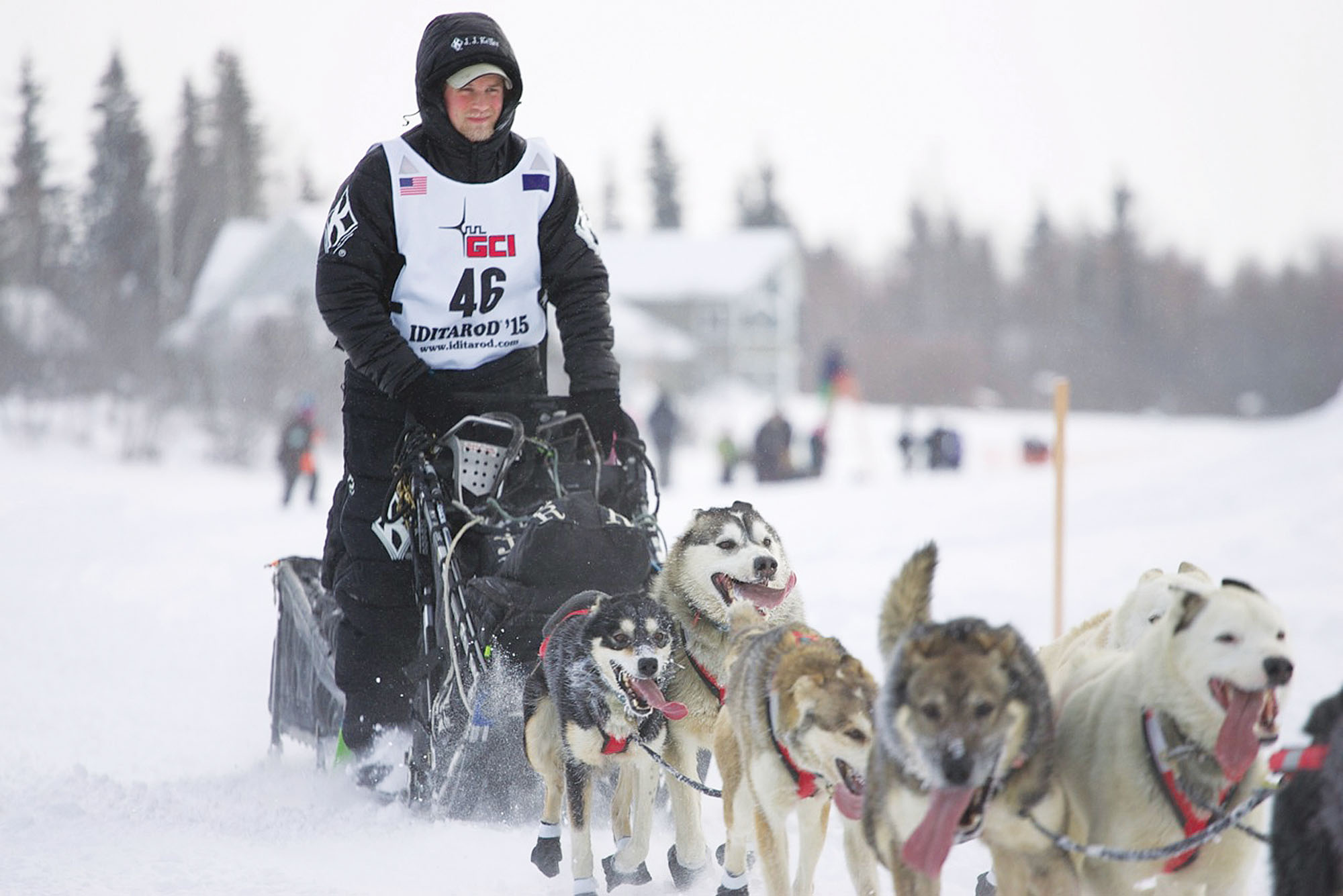
FAIRBANKS — A few more hours and a lot more miles separated the ceremonial start and official restart of the Iditarod Trail Sled Dog Race. Terrible trail conditions forced the restart north to Fairbanks for the second time since 2003. But for mushers who have spent the season going hundreds of miles and several hours out of their way, avoiding unseasonable weather and chasing decent trail, what’s a few extra miles?
“Training was challenging this year for sure. It forced us to travel a lot,” Willow’s Rick Casillo told the Frontiersman at the Iditarod ceremonial start Saturday in Anchorage.
Casillo, one of 78 mushers to leave the starting chute in Fairbanks Monday as part of the 43rd Iditarod, is hopeful the extra travel, and extra effort pays off during the 2015 run from Fairbanks to Nome.
“I have more miles than I did last year with better conditions,” Casillo said. “I’m really happy with where we’re at with this team. We’re ready to go.”
Kristy Berington has been working with Iditarod veteran Paul Gebhardt of Kasilof, but they’ve trained far from their kennels on the Kenai Peninsula.
“There’s no snow down there, pretty barren and wet, lakes are open,” Berington told the Frontiersman Saturday. “We were forced to go find snow.”
Berington and Gebhardt were among the mushers training in the Gunsight Mountain area, near the Eureka Roadhouse, at Mile 128, Glenn Highway.
“Lots of dog mushers there. Great conditions there,” Berington said. “It was grand central station there a couple of weeks ago. A lot of places in Alaska just don’t have favorable training conditions.”
Four-time Iditarod champion Jeff King said he’s excited about the Fairbanks start.
“I’m looking forward to the Fairbanks start,” King told the Frontiersman at the ceremonial start. “They’ve had a lot of snow, and they have not had any serious wet. I’m expecting good, but different trail.”
King of Denali, who posted his last Iditarod win in 2006, said his lead dog, Zig, could be a key to his 2015 race.
“My leader, Zig, a light-coated dog. Frankly she’s one of the main reasons I didn’t continue in the (2015 Yukon Quest). It was just too cold for her. If it’s above 20 below, she’s just lightning fast. Now at 3 years old, she’s in her prime.”
Casillo said he’s using a different strategy when it comes to his team for the 2015 run from Fairbanks to Nome.
“I’m going with a bigger dog team this year for sure,” Casillo said. “Going with bigger dogs. I left a couple back cause I feel longer legged dogs are going to do better with this year’s race. We’re going so flat, we’re going with dogs with a little bit longer of stride.”
Four-time Iditarod champion Martin Buser took an early lead in the 2015 race. The Big Lake musher was the first to arrive in Nenana and leave Nenana. Buser needed just less than five hours to complete the 71 miles from Fairbanks to Nenana. He left the checkpoint just before 3:30 p.m., Monday, making his way 90 miles to Manley.
Teams will pass through 16 checkpoints before hitting the final 22-mile stretch from Safety to Nome.
The 2015 race includes two first-time checkpoints, Huslia and Koyukuk.
For more information, visit Iditarod.com.
Cheryl Metiva contributed to this story.

By Jeremiah Bartz Frontiersman.com A football coach using a hockey reference as the centerpiece for his keynote address may

Frontiersman.com With its headquarters in Wasilla, the Frontiersman has been a primary source of news for the Matanuska-Susitna

By Katie Stavick Frontiersman.com The next generation of leaders took flight this week as the Houston High School Class

By Kyle Wilkinson For the Frontiersman Keynote speaker and Carry the Cure President Bill Pagaran’s words boomed through the