Retiring teacher, coach urges Colony grads to ‘find their 68’
By Jeremiah Bartz Frontiersman.com A football coach using a hockey reference as the centerpiece for his keynote address may


Most people will never need to use 9-1-1, but take comfort in knowing that when needed, it can be accessed, relieved in knowing that when call, someone is on the other line and help is on the way.
But what about those times when help is needed and a mobility or disability prevents someone from reaching out for help? It’s not something most people think about until that moment arises.
It is something that Eric Edwards and his mother Judy faced when Judy was not able to call 9-1-1 and Eric was unable to call. It’s just the 2 of them in their home. Eric is 15, an incredible boy who persists with his problem solving skills and communication skills and loves anything that has to do with “Frozen.”
He also has cerebral palsy, which limits him to a wheelchair, unable to speak, and requires total assistance for his basic needs.
“Although he has multiple disabilities, the people that know him can see far beyond his disabilities. He is so much more than his disabilities,” says Judy of her son.
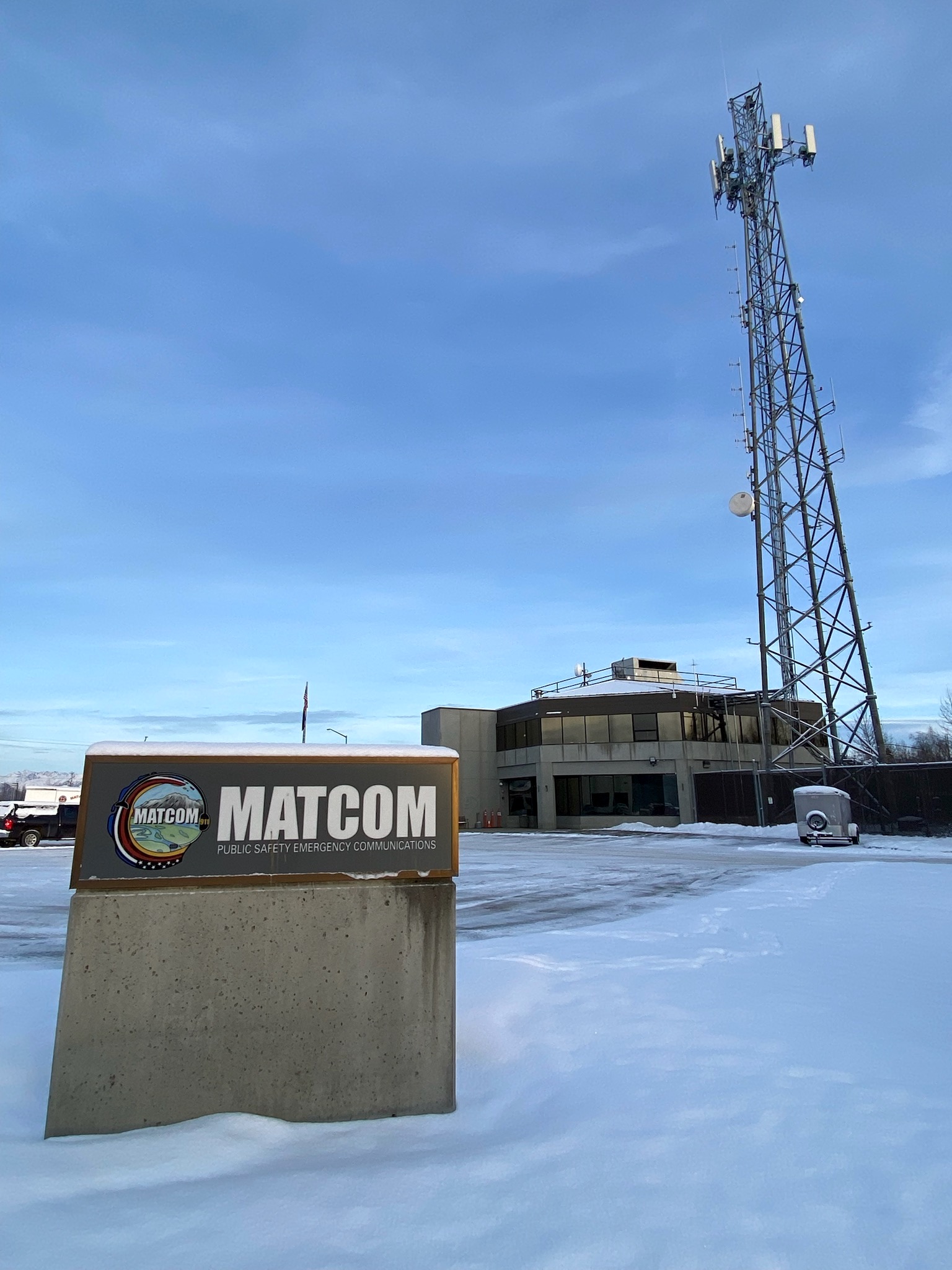
How would Eric call 9-1-1 if there was an emergency and his mother was nonresponsive or otherwise unable to communicate? This triggered a practice phone call with 9-1-1 through MATCOM.
MATCOM is responsible for the dispatch of emergency services for the entire Borough, serving approximately 52,000 square miles. In any emergency, dispatchers are trained to run through a series of questions needed to help get the best assistance in an emergency. MATCOM ran through a similar series of questions that Eric would need to respond to in an emergency. They also offered for Eric and his special education team a visit to MATCOM, and a chance to go ‘behind the scenes’ to see what goes on in the dispatch center. Eric and his mother were also able to set up a ‘Premises Note’ for responders. A “Premise Note’ is a critical, detailed note set up to alert responders of any vital information needed in special cases like theirs. In this case, that Eric is in a wheelchair and unable to communicate without his assistive technology.
To communicate, Eric uses a Tobii-Dynavox Speech Generating Device (SGD), which he accesses through eye gaze (currently the only student in the district that uses eye gaze access with SGD). After a successful trial period to demonstrate success, he was able get his own personal Tobii-Dynavox SGD in September 2021. Currently, he is the only student in the district that uses eye gaze access with SGD.
“This communication device has opened Eric’s world for possibilities within his environment and academic growth,” says his Speech Language Pathologist, Mary Dooher.
The device, much like a tablet, is able to track Eric’s eyes as he selects various icons to navigate through communication messages and maneuver through other accessible options with his device. He can access items within his environment, such as turning his lights on and off or viewing various cameras placed around his home. Eric is able to make phone calls to family and friends, and he can access videos on YouTube.
“It has been tremendous to see him successfully use his device! He initiates communication now, whereas before he was reliant on a communication partner to read his body and facial gestures and ask a series of yes/no questions trying to narrow down what message he was trying to express,” says Judy.
Assistive Technology of Alaska (ATLA) has aided to “smarten” Eric and Judy’s home, which included using Amazon’s “Alexa” to assist Eric with making telephone calls.
“There are still problems that arise with his device, but we are working through them together, and with the support of other team members and community agencies,” his mother adds.
The technology is not without its flaws, one of which is that to use “Alexa” to call 9-1-1, users need to pay for a subscription. Dooher has been working with Wenchelle Lao from Amazon/Alexa on strategies to help Eric communicate in the event of an emergency.
While Eric, Judy, and their team work to improve the assistive technology so Eric will be able to call for help, they have a backup plan if ever needed involving a phone chain within the team and people Eric can reach without using “Alexa.”
While cameras weren’t allowed inside the dispatch center, Eric enjoyed seeing how everything worked, and the dispatchers were able to meet with Eric and were impressed with his abilities and how he is able to communicate by simply using his eye movement. They even offered him a job if he wanted, to which he said:
“Thank you,” with a big beaming smile.
“What was a really informative, special afternoon, to spend with MATCOM! Incredible people doing incredible work!” said Dooher.

By Jeremiah Bartz Frontiersman.com A football coach using a hockey reference as the centerpiece for his keynote address may

Frontiersman.com With its headquarters in Wasilla, the Frontiersman has been a primary source of news for the Matanuska-Susitna

By Katie Stavick Frontiersman.com The next generation of leaders took flight this week as the Houston High School Class

By Kyle Wilkinson For the Frontiersman Keynote speaker and Carry the Cure President Bill Pagaran’s words boomed through the