Retiring teacher, coach urges Colony grads to ‘find their 68’
By Jeremiah Bartz Frontiersman.com A football coach using a hockey reference as the centerpiece for his keynote address may


HOUSTON — Middle school math teacher Kelly Dau brought many things back with her from South Africa.
The Ebola virus almost certainly was not one of them.
Dau returned from visiting her daughter in Africa’s second-most populous democracy over the weekend to a school and town rife with rumors. Someone — school officials aren’t identifying them — posted incorrectly on Facebook that her trip was to West Africa, a region in national and international news for a large-scale epidemic of the Ebola virus, which has recently tallied four cases and one death in the United States. School officials fielded about a dozen phone calls from concerned parents about the trip, with phones ringing even before Dau returned to her math classes Monday morning, said Houston Middle School Principal Ben Howard.
Not only did Dau, a bubbly (one could say infectious) personality, not travel to West Africa, she didn’t visit any hospitals or meet anyone who was ill. Nor did she change planes in any of the countries covered by the Centers for Disease Control’s non-essential travel ban.
She did bring a wealth of information about Africa as well as an awesome video of herself on one of the world’s tallest bungee jumps.
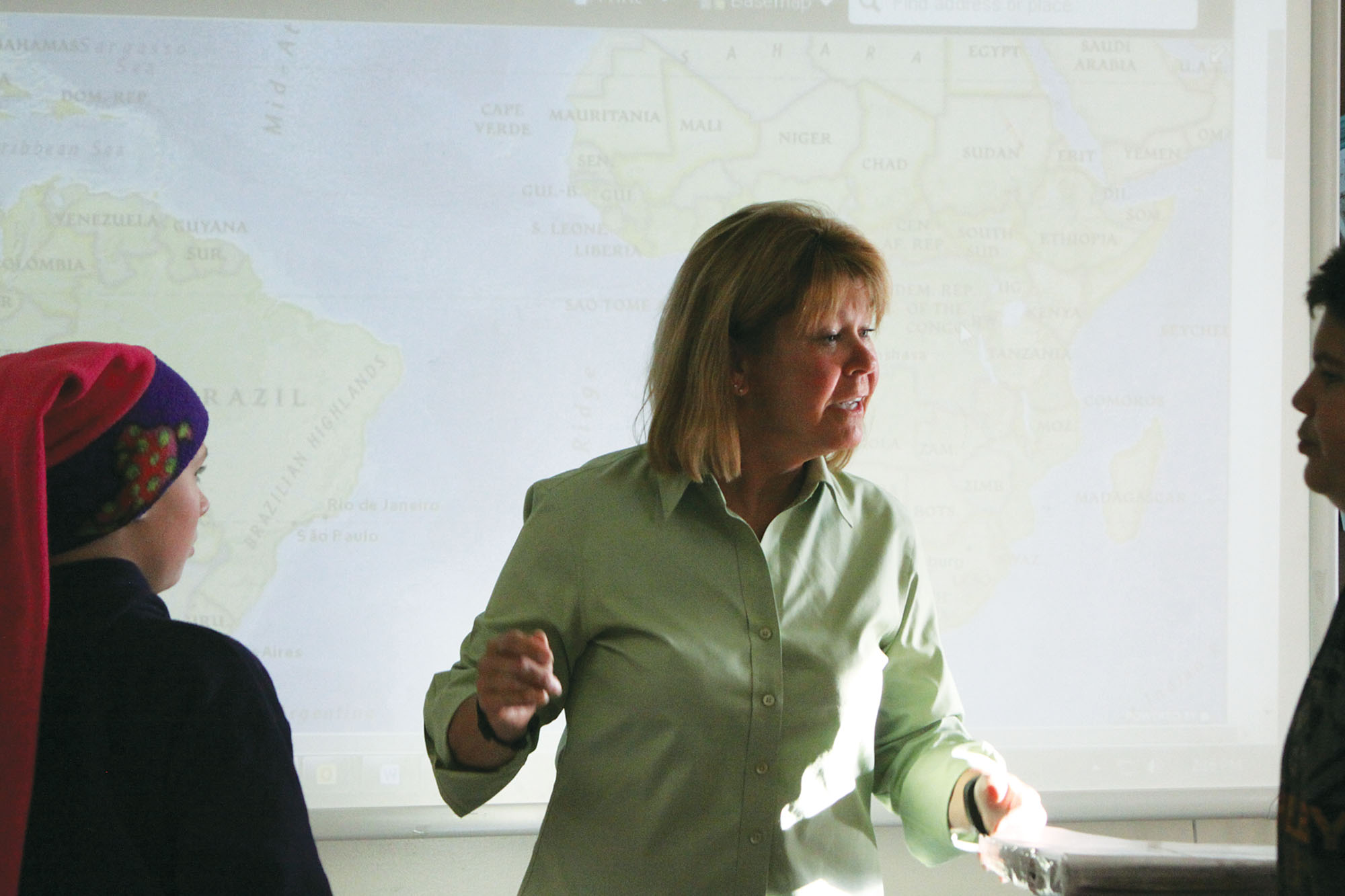
“We went over geography, and we talked about how there are different countries in Africa,” she said.
The reaction to her trip caught her by surprise.
“I’m stunned that I get back here today, and my administrator spent the entire day” dealing with the issue,” she said.
In fact, South Africans were less concerned about the virus than Americans are, she said.
“From my limited experience and exposure, they don’t seem to be concerned at all because they don’t have it in their country,” she said.
South Africa has suffered one outbreak of Ebola virus in the past. In 1996, two cases of Zaire Ebola — the virus species responsible for the latest round of infections — was reported, and one person died, according to the CDC website.
When parents are confused, what can teachers do with students, who might share their concerns? Get out a map.
To that end, a quick lesson in geography: Cape Town, South Africa and Monrovia, Liberia are separated by 5,650 road miles and 13 international boundaries, according to Google Maps. Cape Town is farther from Monrovia than Houston, Alaska is from Houston, Texas. To drive an equivalent road distance in North America, you would have to drive roughly from Houston, Alaska to Guatemala City, Guatemala (5,666 road miles, per Google Maps).
The school is following CDC protocols for travel to and from South Africa, which currently don’t include a waiting or quarantine period because no cases have been reported there in the most recent outbreak, according to school officials and the CDC website.
Health authorities reiterated Monday no cases of Ebola had been reported in Alaska (cases have only been reported in Texas and New York). Officials at local hospitals were screening for the disease, and undergoing training in preparation for potential cases, said Anne Zink, a doctor and Director of the Emergency Medicine Physicians group at Mat-Su Regional Medical Center, who was in Chicago this week attending the American College of Emergency Physicians, where the topic of Ebola was on everybody’s lips.
Screening typically follows a three-step process, Zink said. First, a patient reports symptoms. If those flu-like symptoms are a match for Ebola, doctors and nurses issue a series of questions about their recent travel history, looking for potential connections, of which the key indicator is travel to Liberia, Sierra Leone, or Guinea. If the travel history and symptoms match, samples are collected and tested, Zink said.
“We haven’t had a single case that met the criteria requiring testing,” she said.
Ebola was first described in 1976 after infectious outbreaks in Zaire — now known as the Democratic People’s Republic of the Congo — near the Ebola River. Direct contact with infected bodily fluids, objects, or animals is the only known way to contract the disease, according to the CDC.
Contact Brian O’Connor at 352-2269 or brian.oconnor@frontiersman.com.

By Jeremiah Bartz Frontiersman.com A football coach using a hockey reference as the centerpiece for his keynote address may

Frontiersman.com With its headquarters in Wasilla, the Frontiersman has been a primary source of news for the Matanuska-Susitna

By Katie Stavick Frontiersman.com The next generation of leaders took flight this week as the Houston High School Class

By Kyle Wilkinson For the Frontiersman Keynote speaker and Carry the Cure President Bill Pagaran’s words boomed through the