Retiring teacher, coach urges Colony grads to ‘find their 68’
By Jeremiah Bartz Frontiersman.com A football coach using a hockey reference as the centerpiece for his keynote address may


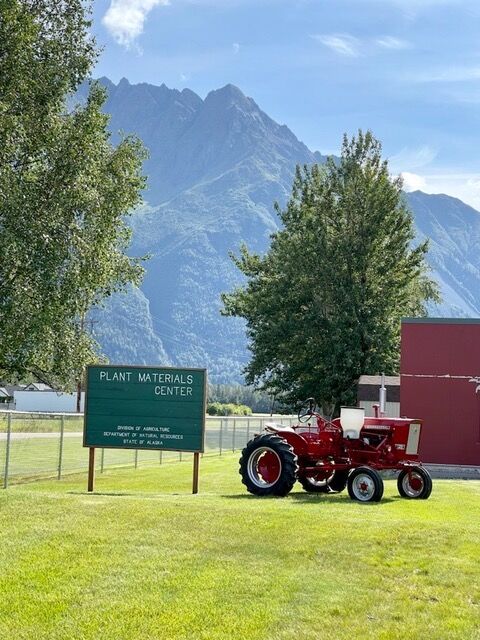
The Division of Agriculture showcased its Plant Materials Center, or PMC, on Aug. 18 to 45 local and state leaders including nine state legislators.
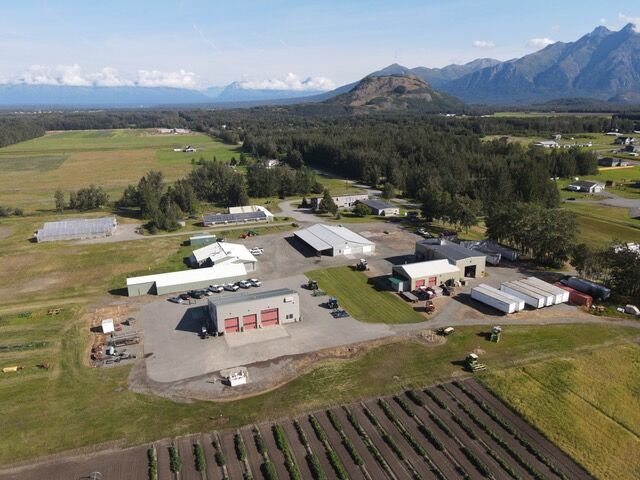
It was a sunny, clear day, ideal for an outdoor lunch of Alaska-Grown products, a tour of facilities of the 271-acre site and explanations from experts of what the center does.
Established in 1972 and operating with 12 full and part time staff, which varies by season, the PMC’s core mission is testing of Alaska agricultural products like seed potatoes and grass seed to ensure purity and quality, said Bryan Scoresby, director of the Division of Agriculture.
The PMC’s budget is $3.6 million this year, of which $277,000 is paid in fees by farmers and others who use services.
The laboratory at the PMC, the state’s only Certified Seed Laboratory – is set up to detect pathogens and diseases in potatoes and other crops, and these inspections are some of the most important functions of the center.
Its staff also complete all regulatory grass and grain tests as well.
“We have 231 varieties of potatoes that we test,” Scoresby said.
Potatoes are an important crop in Alaska and it’s important that farmers have access to disease-free seed potatoes because seed potatoes from the Lower 48 often have diseases that Alaska farmers want to keep out of their fields.
A relatively new mission for the PMC is field testing industrial hemp plants now being grown by farmers to ensure they don’t exceed the legal limit of 0.3 percent THC, or tetrahydrocannabinol compounds.
Hemp that exceeds 1 percent THC is no longer considered hemp and must be destroyed.
THC is the chemical that causes the “high” in marijuana, but does not do so at very low levels. Exceeding the 0.3 percent limit would require hemp to be classified as marijuana, a cousin to the hemp plant, and regulated by the state’s Marijuana Control Board and with state marijuana taxes paid.
Related to this is the PLC’s role in testing hemp products like Cannabidiol, or CBD, oils made from hemp extract and sold at retail stores usually as health products. The division regulates many Cannabidiols as finished goods.
Some Alaska hemp growers are making CBDs for retail sale and these are tested as safe for human and animal consumption by the Division of Agriculture.
Industrial hemp is a new commercial agricultural product in the nation that is related to marijuana but does not have the intensity of compounds to make them mind-altering like marijuana.
The Legislature authorized the new program in an initiative led by Sen. Shelley Hughes, R-Mat-Su, but the agriculture division was required to develop regulations to comply with the Federal Agricultural Action Act of 2018, also known as the 2018 “Farm Bill”. Those are now being updated as the industry evolves, Scoresby said.
Top officials at the Department of Natural Resources including Commissioner John Boyle and Deputy Commissioner Brent Goodrum were along for the Friday PMC tour.
A key message Scoresby and others at DNR wanted to deliver was gratitude to legislators attending for their growing support for agriculture and in particular for a $2 million capital appropriation to buy new equipment to clean seeds brought in by farmers so they can be sold commercially.
The majority of the seed cleaned at the PMC is used in land reclamation and revegetation.
These sales are an important source of income for farmers, but the seeds need to be cleaned with impurities removed and quality assured before they can be sold.
Agriculture is getting more support in the state because of new concerns for food security brought about by the pandemic, which caused disruptions in transportation and food supply chains, and empty shelves at grocery stores in Alaska.
This support is important because the University of Alaska, for decades the dominant partner in Alaska crop and livestock research, has seen its programs decimated by budget cuts.
Except for its education programs through the U.S. Department of Agriculture extension service that is mostly for gardeners, the Division of Agriculture is now left to provide support for farmer.
The division has other responsibilities beyond the Plant Materials Center, too.
Best known among these is the effort to promote locally-grown crops sold in food stores, the “Alaska Grown” program.
As a part of this the division sponsors popular state fair events like the annual giant cabbage and pumpkin contests.
Less known to the public but of vital importance to farmers is the division’s food safety inspections where state inspectors work with local farmers in doing audits of safety procedures in growing and handling crops.
These inspections are required by major grocery chains like Fred Meyer and Safeway before local crops can be purchased for sale in local stores.
Four Mat-Su legislators were on the PMC tour including Sen. Hughes and state Reps. Delena Johnson, R-Palmer; George Rauscher, R-Palmer; Kevin McCabe, R-Big Lake.
That the five other lawmakers were from outside Mat-Su, and included Democrats, is significant in that it shows a broad interest in the Division of Agriculture's work.
They included Sen. Elvi Gray-Jackson, D-Anch., and Reps. Neal Foster, D-Nome; Rep. Donna Mears, D-Anchorage; Sara Hannan, D-Juneau, and Sarah Vance, R-Homer.
There was a contingent of state administration officials aside from the DNR, including new state education commissioner Deena Bishop, formerly superintendent at Mat-Su and Anchorage schools, and state health commissioner Heidi Hedburg.

By Jeremiah Bartz Frontiersman.com A football coach using a hockey reference as the centerpiece for his keynote address may

Frontiersman.com With its headquarters in Wasilla, the Frontiersman has been a primary source of news for the Matanuska-Susitna

By Katie Stavick Frontiersman.com The next generation of leaders took flight this week as the Houston High School Class

By Kyle Wilkinson For the Frontiersman Keynote speaker and Carry the Cure President Bill Pagaran’s words boomed through the