Retiring teacher, coach urges Colony grads to ‘find their 68’
By Jeremiah Bartz Frontiersman.com A football coach using a hockey reference as the centerpiece for his keynote address may


Republicans in the Alaska Legislature voted down a new funding source for public school programs Thursday as they sustained Gov. Mike Dunleavy’s veto of Senate Bill 113.
The vote on overriding the governor was 35-25, 10 votes short of the 45 needed for an override.
Speaking after the vote, Senate President Gary Stevens, R-Kodiak, and Speaker of the House Bryce Edgmon, I-Dillingham, said the action is a sign that the Alaska Legislature will struggle to pass a long-term state financial plan like the one Dunleavy is expected to propose later in the day.
“It’s a preview of the debate that we’re going to undergo on a fiscal plan,” Edgmon said.
All of the “no” votes came from Republicans in the House and Senate minority caucuses. Among those voting no were some legislators, such as Sen. Rob Yundt, R-Wasilla, who had strongly supported the bill last year.
If SB 113 had been enacted, the bill would have shifted some corporate income tax payments from other states to Alaska by requiring them to pay based on the location of their sales, not the location of their server farms or offices.
The result was expected to be between $25 million and $65 million per year in new revenue for the state treasury, and the bill called for much of that money to go to programs that help young children learn how to read and to career-technical education programs that teach Alaskans non-college trades.
Dunleavy vetoed the bill last fall, saying he was unwilling to approve any tax measure that was not part of a comprehensive, long-term plan intended to balance state revenue and expenses.
Under the Alaska Constitution, that veto needed to be taken up during the first five days of the regular session if lawmakers wanted to override it.
Legislators against the override offered a variety of reasons — worries about costs that might be passed to consumers, concern about the lack of regulations needed to implement the change and doubts that the bill would actually send its proceeds to education.
“I don’t think the tiny amount of revenue we’re going to garner from this bill is worth overriding the governor’s veto,” said Rep. Kevin McCabe, R-Big Lake.
Dunleavy’s office drafted the original version of what became Senate Bill 113 in 2021 but never introduced it.
Some supporters of the bill pointed to the governor’s authorship as a sign that opponents should reconsider and vote for an override to enact it.
But that was within the context of a full fiscal package, said Sen. Rob Myers, R-North Pole, explaining his decision to vote against an override.
Rep. Will Stapp, R-Fairbanks, offered a variety of technical reasons for voting against an override, including the idea that the bill was slated to take effect at the start of the year without regulations for its implementation.
A variety of legislators spoke in favor of the override, none was more impassioned than Sen. Bill Wielechowski, D-Anchorage.
He noted that dozens of states across the country have adopted similar legislation by wide, bipartisan margins and demonstrated that there is no price difference in online sales to states that have adopted similar bills and those that have not.
The change in taxes would fall on large, non-Alaskan companies who do their business online, Wielechowski said. Many of those are located in the Lower 48 or China.
“If you think we should be collecting revenue from Chinese corporations before we ask Alaska residents to start paying tax, you should vote yes on this bill,” he said.
He observed that Dunleavy’s fiscal plan is expected to include a sales tax levied on Alaskans, while SB 113 would not be paid by Alaskans.
“We have constitutional obligations to pay for our government, and when we let outsiders, tech billionaires, slip by and pay nothing, how dare we go to Alaskans to say, ‘We want to tax you, want to take your dividend before we’re going to tax, collect revenue from tech billionaires?’” he said. “Really? Is that where we’re going with this?”
After the override vote failed, Stevens and Edgmon said they expect SB 113 to return in a new form.
“I will say that this bill will come back in another form eventually, and will be considered in the future,” Stevens said.
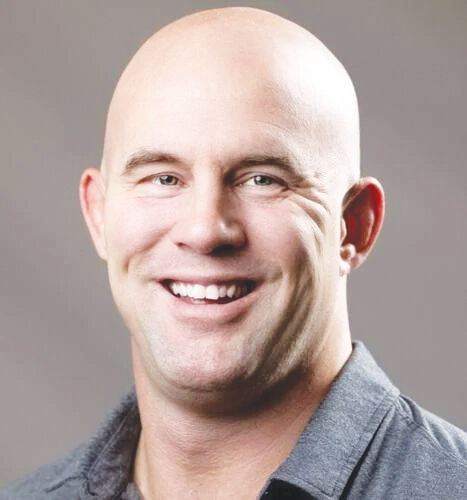

By Jeremiah Bartz Frontiersman.com A football coach using a hockey reference as the centerpiece for his keynote address may

Frontiersman.com With its headquarters in Wasilla, the Frontiersman has been a primary source of news for the Matanuska-Susitna

By Katie Stavick Frontiersman.com The next generation of leaders took flight this week as the Houston High School Class

By Kyle Wilkinson For the Frontiersman Keynote speaker and Carry the Cure President Bill Pagaran’s words boomed through the