Retiring teacher, coach urges Colony grads to ‘find their 68’
By Jeremiah Bartz Frontiersman.com A football coach using a hockey reference as the centerpiece for his keynote address may


TALKEETNA — From time beyond memory, the K’dalkitnu drainage — the area where the Talkeetna, Chulitna and Susitna rivers converge to become the Big Susitna — has been an important location for trading, fishing and food caching.
History records the region’s first known human inhabitants as the Dghelay Teht’ana, a band of Dena’ina who lived a subsistence lifestyle in the area.
But tremendous change came to the Susitna Valley in 1915 when Talkeetna was selected as the site for the Engineering Commission Headquarters for the construction of the Alaska Railroad, which surveyed and auctioned 80 lots there in 1919.
The railroad would remain the community’s primary link to the outside world until 1964, when road access opened. Decades before the Parks Highway and Talkeetna Spur Road provided vehicle access, local air services began providing flights to remote camps, or to cities like Anchorage or Fairbanks.
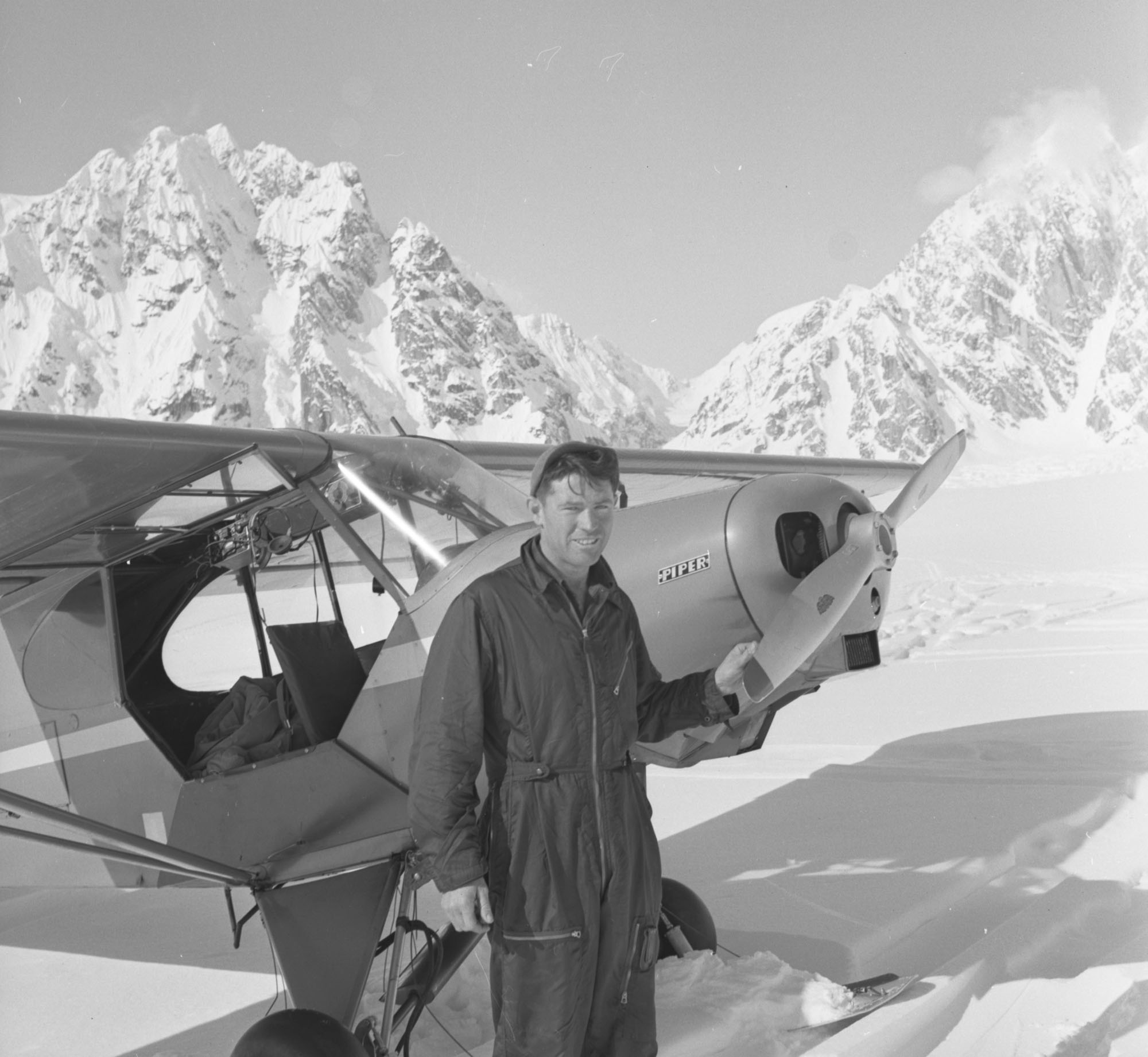
Pilot Glen Hudson opened Talkeetna’s first air service in 1946, Hudson Air Service, to shuttle outdoorsmen to prime hunting and fishing spots. His brother, Cliff Hudson, purchased the business after Glen died in a crash at Disappointment Creek.
Cliff Hudson’s motto of “Fly an hour or walk a week” succinctly extolled the value of airplanes in the vast Alaska wilderness.
Before long, Hudson Air would add mountaineering and later flightseeing trips to its menu of services.
Cliff, and then his son Jay, operated Hudson Air for more than six decades. The business was sold in 2010 after Jay’s death, adding another chapter to the Hudson family’s flying legacy.
Strong rivalries often produce extraordinary outcomes; such is the case with pioneering Alaska Bush pilots Cliff Hudson and Don Sheldon, who operated competing air services in Talkeetna for nearly 30 years.
Cliff was born Oct. 27, 1925, to Charles and Mina Hudson in Malott, Wash., and died at the Alaska Veterans and Pioneers Home in Palmer March 5, 2010. He graduated from high school in 1944. After an honorable discharge from the U.S. Army, he came to Alaska in 1948 to help operate Hudson Air.
Sheldon was born in Mt. Morrison, Colo., in 1921, made his way to Seattle at 17, and on to Anchorage via passenger ship. In Anchorage, he worked 16-hour shifts at Step and a Half Dairy for six weeks before he ran into a sailor friend, Jim Cook. The two decided to pool their money and head north. They had $12 between them and purchased two one-way tickets north on the Alaska Railroad to Talkeetna.
Sheldon stayed in Talkeetna until World War II, when he enlisted and flew 26 missions as a tail gunner in a B-17. After the war, he opened Talkeetna Air Service in 1947 with the financial backing of Stub Morrison, who died in a crash in 1951.
Although Hudson and Sheldon were said to have nearly opposite personalities and flying styles, both airmen are revered throughout Alaska today as pioneering aviators.
Sheldon Air Service braids together the separate histories of three pioneering families in Alaska Bush aviation, Bob Reeve, Cliff Hudson and Don Sheldon. All three men started separate air services in Alaska, but in Sheldon Air the legacies of all three families continue.
Holly Sheldon Lee is descended from two of Alaska’s most famous flying families; she is the daughter of Don Sheldon, who married Roberta, Bob and Tilly Reeves’ eldest daughter. And now she is a part of the Hudson family’s long flying history.
The Hudson and Sheldon families united in 2010 to write a new chapter in local aviation history when the Hudson family agreed to sell their air service to Holly and David Lee.
Sheldon Air Service, opened on David’s birthday in 2010, May 28, and operates from Hudson Air’s former hangar at the Talkeetna State Airport.
David and Holly attended Su Valley and even rode the bus together, but never really spent time together, they say. After reconnecting at a class reunion, they began attending church together in Wasilla and were soon married.
“Aviation really — definitely — brought us together,” said David, who fell in love with Alaska at the age of 13.
He came to Alaska back then to visit his brother, who was managing a lodge about 60 miles from Talkeetna. Now he’s in his 34th year of flying, David has more than 12,000 hours of mountain flying time and more than 10,000 safe landings.
“Today there are still valleys people haven’t walked in,” he said.
He’s been flying in Talkeetna long enough that he remembers thinking how weird it was when the first tourists inquired in the 1970s about chartering a flight just to go look at the mountain.
“Airplanes opened wide the mountains for climbers, hikers, gold miners and tourism,” David said. “It really opened Alaska up wide.”
Holly’s training includes a degree in Aviation Technology from the University of Alaska Anchorage, as well as a private pilot certificate, instrument rating and commercial pilot certificate.
After she finished her college education and began pursuing her dream of operating an air service, her plans stalled.
For four years she contacted everyone she could think of, from the National Park Service to the Federal Aviation Administration and the Alaska Legislature, looking for away to get a Single Pilot Part 135 Air Taxi Operator’s Certificate to land customers at her dad’s Mountain House.
Then during the Lees’ first year of marriage, they learned that Jay Hudson was ill and that the Hudson family was considering selling its longtime business.
The Lees say they owe the Hudson family a debt of gratitude.
“I think it’s a miracle that I got to begin my dream,” she said. “We’re so grateful to the Hudson family for allowing us this opportunity.”
Hudson Air had a Part 135 certificate, and the NPS concession, so when the Lee family purchased the business, they applied, and were granted, authority to operate a flight concession in the national park, she said.
“It’s really a miracle,” Holly said. “When things get hard, I just think how lucky we are.”
Although Don Sheldon died of cancer in 1975, he still managed to help his daughter realize her dream. That’s because Holly used Super Cub N4023Z, as collateral against a loan for operating capital for the business.
“It’s the biggest gamble I ever took,” she said.
Until the loan is repaid, the historic plane must be kept maintained and in a covered hangar. But next year — if the numbers work out — Holly said the loan will be repaid and the Super Cub will become the third plane on Sheldon Air’s ticket to fly.
It’s been challenging, so far, the Lees say. Like the six hours they spent shoveling silty river water away from their hangar during the September 2012 flooding.
“It has been an incredible experience,” Holly said. “It isn’t easy, but I wouldn’t do anything else.”
“We like the lifestyle,” David said. “We like meeting the people.”
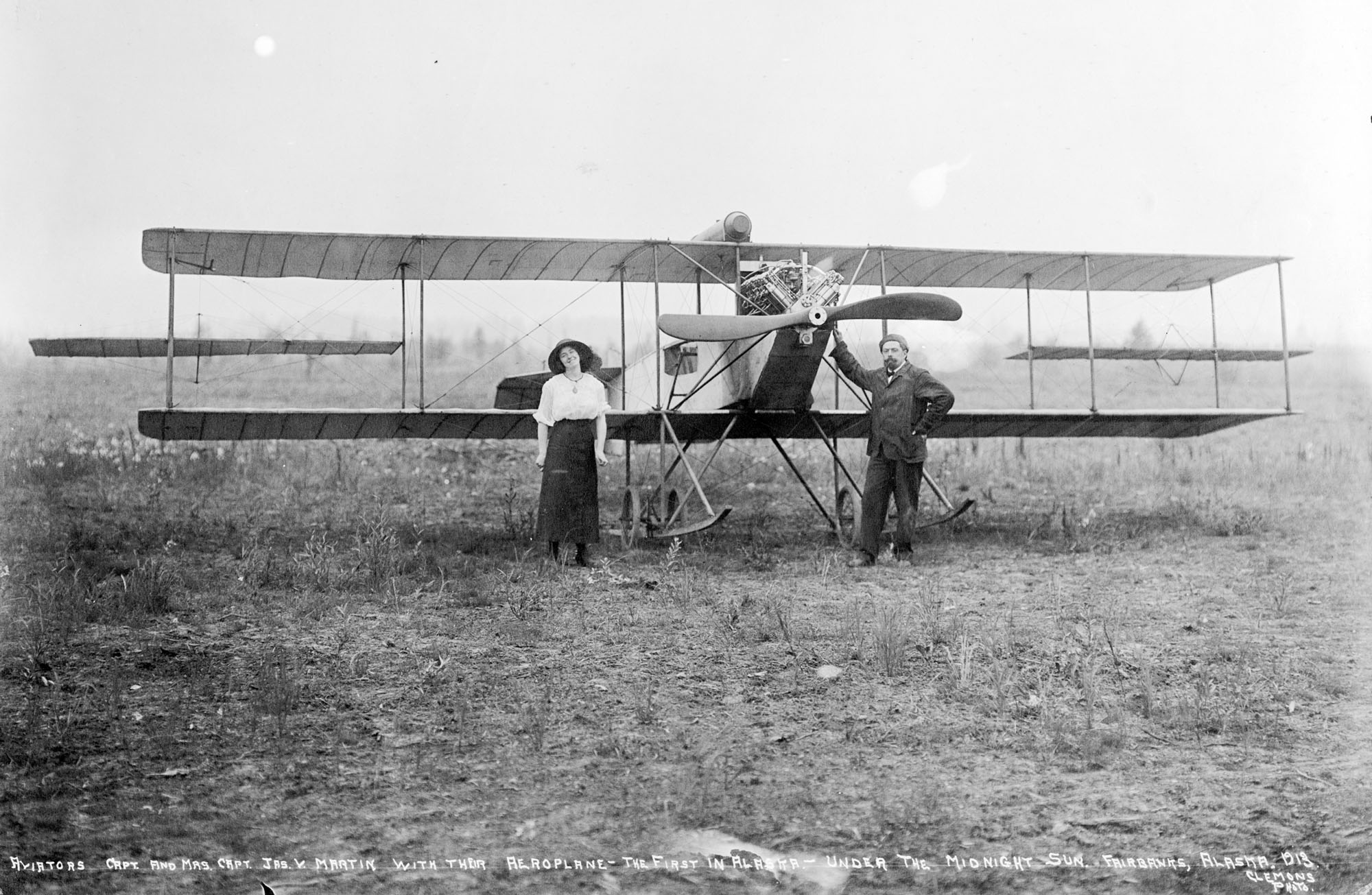
Alaska marks a pair of centennials this summer; the first summit of Mt. McKinley and the first airplane flight in Fairbanks were both in 1913.
Even now a team of climbers descended from that first group of climbers to summit McKinley is struggling toward the mountain’s summit.
And an Anchorage exhibit called “Arctic Flight,” on display at the Anchorage Museum at the Rasmuson Center until Aug. 11, commemorates the centennial by exploring how flight has opened new parts of Alaska to mineral development, mountaineering, hunting, homesteading and tourism.
The first airplane flew in Alaska after a group of Fairbanks merchants shipped it from Seattle via steamboat, and sold tickets for a flying exhibition July 3, 1913, at Weeks Field in Fairbanks.
Today, Alaskans fly 30 times more per capita than other U.S. citizens, in part because only about 20 percent of the state is accessible by road, according to the exhibit.
Alaskans fly to work, to school, to the doctor, to get groceries, to attend meetings and to get to Juneau; the only state capital in the U.S. accessible only by air or sea. The U.S. Census says Alaska has the highest number of pilots per capita in the U.S., with about 8,550 pilots, or one of every 78 of the estimated 663,661 residents.
Holly grew up near the corner of D and Main streets in the mustard-colored house with the red metal roof and chocolate trim. Behind it, the old green shed was her dad’s wolf house where he skinned the wolves he shot from his plane and prepared their hides for sale or trade at the Fairview Inn.
Across the alley is the old red schoolhouse she attended through eighth grade. Just down the road is the Talkeetna Village Airstrip.
A joyful laugh escapes when Holly tells how she used to walk across the alley at recess to help her dad fuel the plane between flights.
This summer day, a plane is parked on the village’s gravel airstrip and Katie Rider’s small daughter plays in the grass nearby; not much has changed in Talkeetna really since this was Holly as a toddler helping her father with his plane.
But much has changed in Talkeetna since Holly was born in 1966. More change arrived when large-scale hotels and other concessioners began moving into Talkeetna’s small tourist market about 15 years ago.
“All that Talkeetna has been has been admired by the world and that has changed Talkeetna,” Holly said. “The past is gone. It will never be the same, but the change has afforded a lot of families a living.”
People like Pat McGee, whose hostel offers bunk space and a hot shower for $20 a night; or $25 if people get under the covers. McGee provides lodging for many of Sheldon Air’s customers; independent climbers on a shoestring budget.
“It’s a whole experience,” Holly said. “We host and celebrate international climbers.”
For now, Sheldon Air operates two planes and can carry as many as eight climbers and all their gear to base camp.
The work tends to be mostly hauling mountain climbers in the spring, tourists in the summer and freight and passengers in the winter.
“It’s the trip of a lifetime, really,” Holly tells a family of three booking a flightseeing tour of the mountain July 2.
Here are a couple of activities related to Alaska’s centennial of flight celebration:
Wasilla Air Show, sponsored by the Alaska Air Show Association, begins at the Wasilla Airport at 11:30 a.m., July 5 when the pilots will barnstorm Wasilla as they arrive.
Select aircraft will then fly a “race-track” pattern and runway flybys, re-enacting the events of the First Flight in 1913.
A meet and greet with the pilots is from noon to 2:30 p.m., in the general aviation parking area at the Wasilla Airport.
The event includes a drawing for free prizes, free posters will be available for pilot autographs and interpretive panels about the First Flight, historically significant pilots and regional events will be available for viewing in the pilot shack at transient parking.
Alaska’s century-long love affair with flying is celebrated in an exhibit called “Arctic Flight: A Century in Alaska Aviation” on display through Aug. 11 at the Anchorage Museum at the Rasmuson Center. According to a description of the exhibit, the installation shows “how, in just 100 years, airplanes have evolved from frivolous spectacle to crucial part of the Alaska way of life.”

By Jeremiah Bartz Frontiersman.com A football coach using a hockey reference as the centerpiece for his keynote address may

Frontiersman.com With its headquarters in Wasilla, the Frontiersman has been a primary source of news for the Matanuska-Susitna

By Katie Stavick Frontiersman.com The next generation of leaders took flight this week as the Houston High School Class

By Kyle Wilkinson For the Frontiersman Keynote speaker and Carry the Cure President Bill Pagaran’s words boomed through the