Retiring teacher, coach urges Colony grads to ‘find their 68’
By Jeremiah Bartz Frontiersman.com A football coach using a hockey reference as the centerpiece for his keynote address may


PALMER — The Alaska State Fair has come to an end.
For many, that means summer is officially over and it’s time to prepare for winter. The weekend’s events showcased talent with an Alaskan flair from across the state with competitions like the Fiddler’s Contest, the Beard Contest, the Homesteader Competition and the growing Alaska’s Got Talent showdown. The traditional fireworks topped off the fair on Saturday. The last day was on Monday.
The last weekend of the fair was the busiest of the season, with traffic barely budging for miles. There were reports of people trying to cover the roughly 2 1/2 miles from the Equestrian Acres subdivision to the fair in a trip of an hour and 45 minutes. The Old Glenn Highway was backed up all the way to the Eklutna flats.
The fair has evolved substantially over the years, forming into a giant carnival and event hub of the state. It is by far the largest gathering of people in Alaska.
“I don’t want to say it’s the backbone of the Valley, but it’s a very big part of it,” said Sara Post, one of three event coordinators for the Alaska State Fair. “The fair is so little but means so much.”
People from across the state competed in the annual Alaska’s Got Talent competition. The competition has had many acts of various mediums, but this year was all musicians. First place got $2,500, second got $1,500, and third got $750. This year’s winner was 7-year-old Katie Rowekamp, whose tiny body belied a big voice. Her songs left people in tears.
“Katie sang with her entire body and sang awesomely,” said one of three judges, Kelly Lee Williams. “She easily beat everyone else. She shouldn't have. The others should have scored higher. They lost points on presentation and overall entertainment. Katie was almost perfect. She can teach everyone else on that stage a thing a two about passion. She wanted it. It was obvious.”
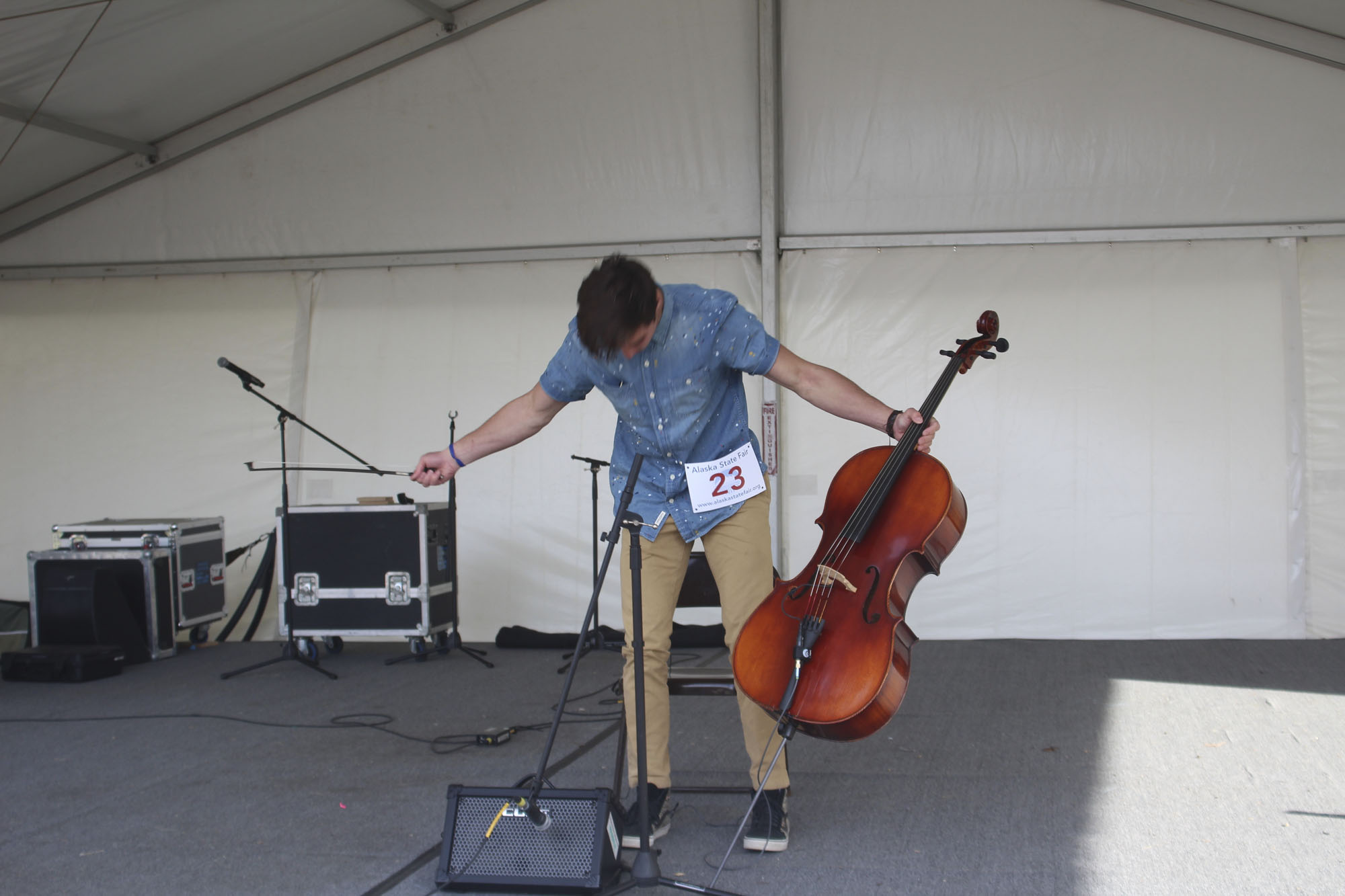
A cello player, Caden Gerlach, placed second in the competition. Due to the massive traffic jams, Gerlach had to ditch the family car and run to the fair to make it in time. He said that music has the power to bring people together.
“What keeps me playing is the way it can influence people,” Gerlach said.
Rhoda Grace entered the contest with her haunting, acoustic songs. She compared music to prayer, saying both are very intimate. She was happy to see so many young people auditioning their talents. She thought the contest was a great outlet for Alaskan artists. She said there’s an abundance of talent in the Valley but they are typically “your daily grind kinda’ folks.”
“In the Valley, there’s a lot of talented artists that hide in the woods,” Grace said.
She’s lived in Alaska for 20 years. She said she recently moved from Anchorage and is homesteading in Chickaloon with her husband and kids. She said she enjoys the wholesome lifestyle, mountains and solitude — saying it was a great place to write music. She aims to start a farm with crops and animals. Having worked as a caregiver previously, she envisions a future of her family farm as a care center for children and elderly.
“Many of the original (Matanuska) colonists are still living here,” she said. “The next generations need that. They need the hard work ethic. They’re losing those old-time skills: how to farm, how to fish, how to find your way around in the woods. I love that the fair is promoting those skills.”
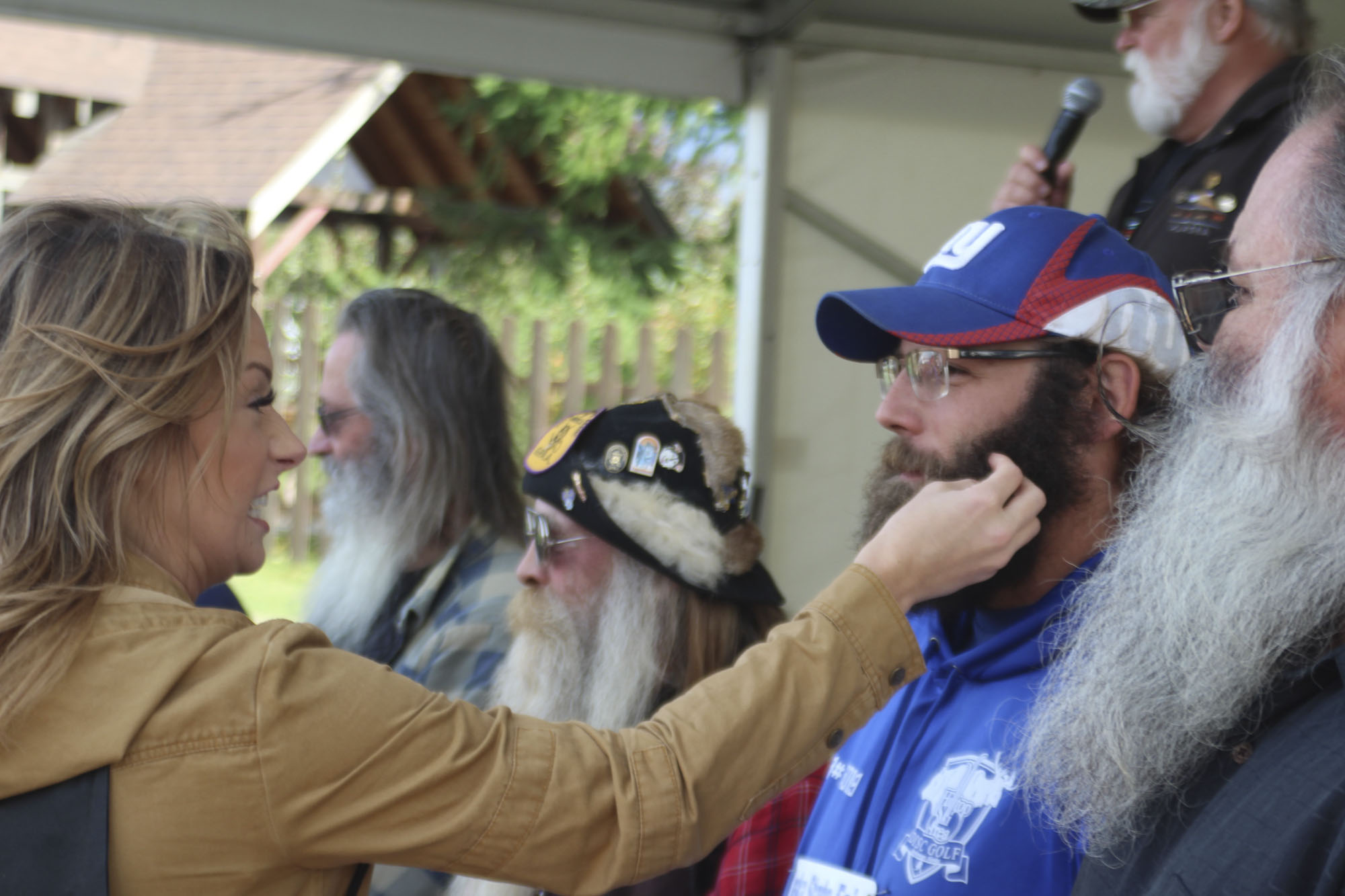
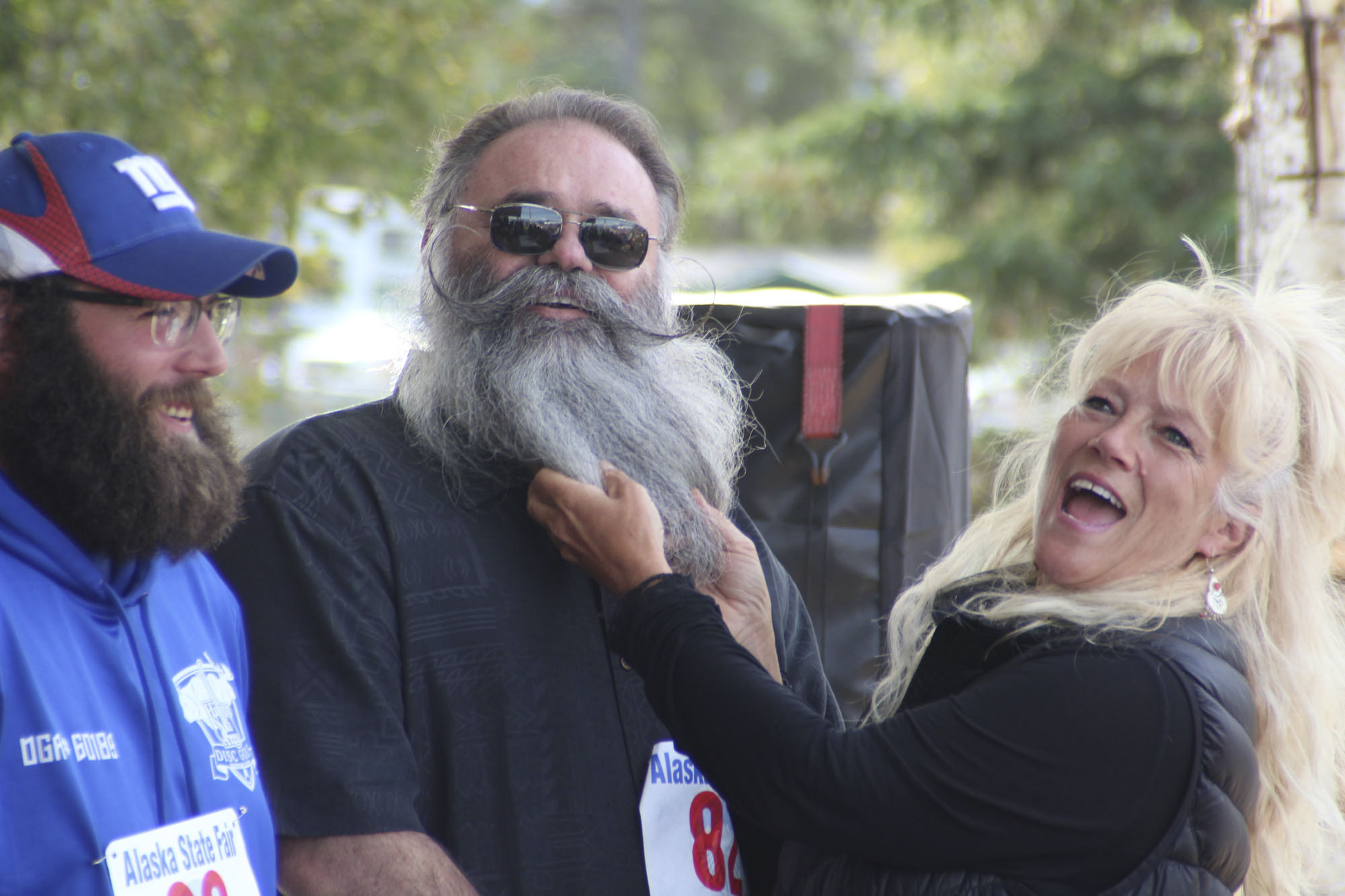
At the annual Beard Contest in the SBS Woodlot, more than a dozen men from across the state threw their beards in the ring. There were four different categories with varying qualifications like the Colonist Beard Contest, where a contestant’s beard had to be 50 percent or more gray or white.Another, the Urban Alaska contest, called for more trimmed and styled facial hair.
Each first-place winner received $50 in cash and competed for the overall winning title of Mr. Sourdough. This year’s winner was the young Justin Lawson. Lawson received tickets to the Miners and Trappers Ball in Sutton and a gift card to Cabelas.
Ken Felber enters the beard contest every year. Last year, he won the Soup Strainer contest, which is for the best moustache. Felber has lived in Alaska for 27 years. He said he’s seen more people with “hairy faces” in Alaska than anywhere else.
“People in Alaska treasure their facial hair,” Felber said.
One of the three Judges, Chantel Grover, felt each beard during the “petting zoo” session of the contest and evaluated them. She said she was thankful not to find any crumbs or caramel during her examination. She said that beards and Alaskans go hand in hand
“They like to keep their face warm in the winter and I guess it goes hand-in-hand with our rugged lifestyle,” Grover said.
Off the Red Trail, near the gate, Palmer’s Colony history was showcased within the Wineck Barn. The barn itself is an original Colony building. Joan Juster and Helen Munoz curated the historic exhibits. There were informational stands, relics, newspaper clippings, clothes, journals, and models of the old Matanuska settlements like the famous “Tent City” and historic family farms. They answered questions and periodically showed two locally made films — “Alaska Far Away” and “Where the Mighty Matanuska Flow.” Both films depict the history of how Palmer was colonized.
Juster and her co-producer, Paul Hill, made the films. They are both San Francisco residents, but after a vacation to the Valley, they wound up enamored, particularly intrigued by the New Deal history. Juster said the story touched them deeply and they felt compelled to document it. It took more than a decade to complete the two films. “Where the Mighty Matanuska Flow” was released in 2005 and “Alaska, Far Away” in 2009. More than 120 people were interviewed for the films — many original Colonists and their descendants.
Juster said there’s sense of deep roots in the Valley. To this day, she said the Valley’s sense of community is like nothing she has seen anywhere else. She said all of the original Colonists came up at the same time.
“They all grew up together in an insulated community and formed a strong communal bond,” Juster said. “You’ve got something special. Don’t let it go. Don’t let it get paved over.”
Juster advocated for the preservation of Palmer’s vast natural beauty. She noticed that there has been a recent push to protect it, with movements like the Alaska Farmland Trust purchasing land to protect it from development. She advises everyone to keep diaries.
“Don’t wait for a couple of crazy outsiders to write your history,” Juster said. “It’s up to each of us to preserve our own history.”
According to Sheri Hamming, President of the Palmer Historical Society, the Alaska State Fair was originally centered on hard work and agriculture — the bounty. Those roots are still evident with giant vegetable contests, lumberjacks, Colony buildings, and animal shows. In 1936, the original Palmer farmers began hosting an annual fair to celebrate all their hard work and show that the New Deal investment in Alaskan agriculture was paying off.
“We have a young history and our history is still here,” said Hamming.
Grover said the fair is a seasonal landmark. She said it represents the highlight of summer. Like many Valley residents before her, since she was a kid, she always loved going to the fair, going on the rides and getting the photo buttons.
“It’s just the big thing to do every year; I mean, what else is there to do?” Grover said. “I think everybody comes back because it’s a reason to get everyone together, everybody can celebrate and everybody loves Friar Tucks — you gotta’ go get your corn on a cob every year.”
According to Hamming, the Palmer colonists had to live off their wits and special talents. They survived through “creativity, ingenuity and hard work.”
“Those who couldn’t handle the hard work left,” Hamming said. “So it left a good number of them that were good, hard workers- creative thinkers and made the most of what they had.”


By Jeremiah Bartz Frontiersman.com A football coach using a hockey reference as the centerpiece for his keynote address may

Frontiersman.com With its headquarters in Wasilla, the Frontiersman has been a primary source of news for the Matanuska-Susitna

By Katie Stavick Frontiersman.com The next generation of leaders took flight this week as the Houston High School Class

By Kyle Wilkinson For the Frontiersman Keynote speaker and Carry the Cure President Bill Pagaran’s words boomed through the