Retiring teacher, coach urges Colony grads to ‘find their 68’
By Jeremiah Bartz Frontiersman.com A football coach using a hockey reference as the centerpiece for his keynote address may


What happens when two sisters embark on a mission to preserve a piece of Palmer Alaska’s rich pioneering history? They unleash a torrent of transformation.
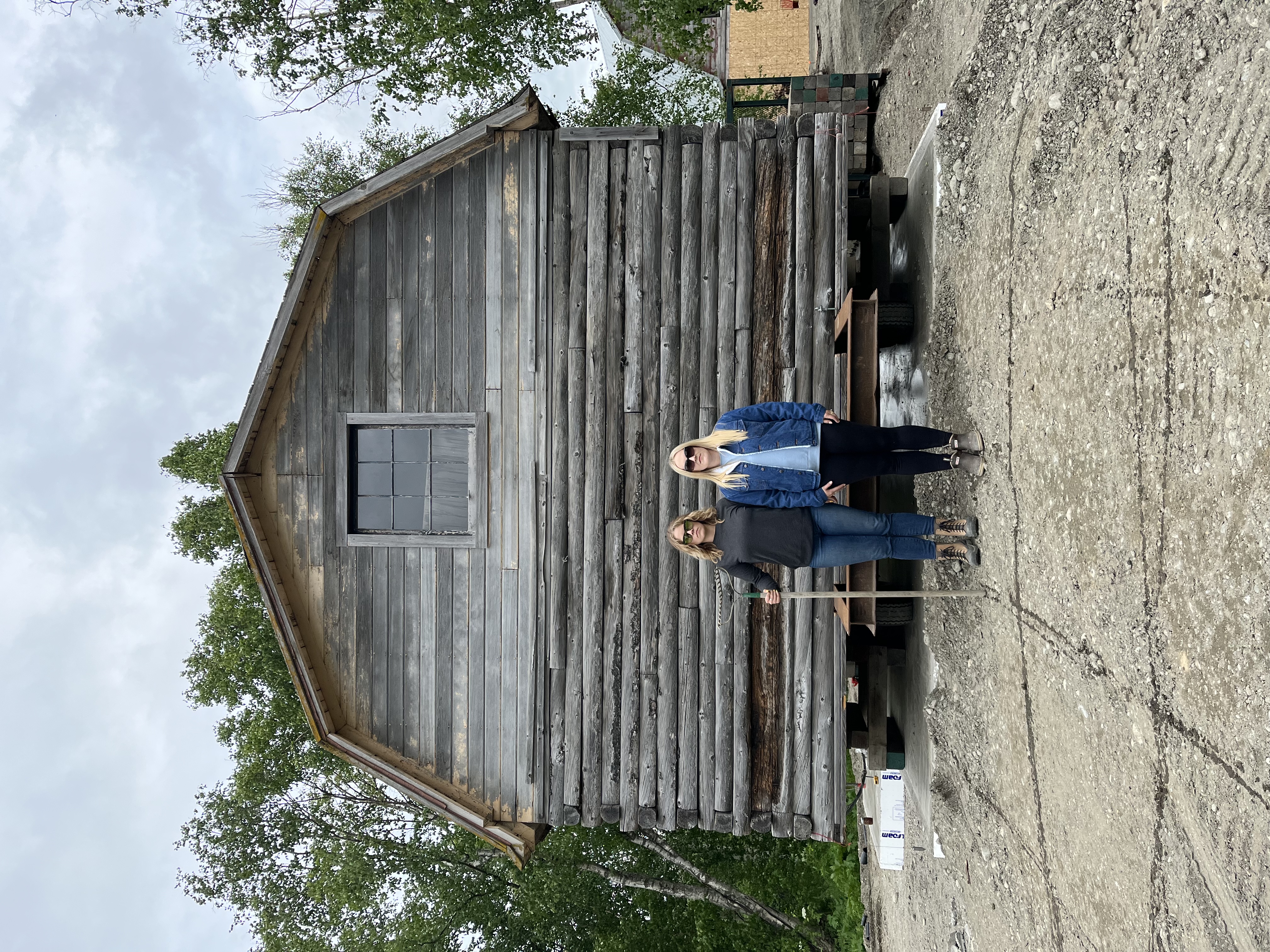
Alaskan sisters Sarah Lorimer and Jennifer Johnston are on a mission, striving to save the historic Matanuska Colony barns of Palmer.
Sarah and Jen bought their first two colony barns at auction with no warning and no plan, purchasing the Meehan family’s colony barn with big plans to renovate two original Colony barns, one of which is to be featured on ‘In with the Old’ featured on the Magnolia Network.
“I’ve always liked old barns, I’ve always been into them. I went to an auction at a lawyer’s estate, and the Meehan barn was available, so I jumped on it.”
The barn had been moved to a lawyer’s estate, and while they don’t know how long the barn sat on the property, during an estate sale, the barn came up available and the sisters jumped on the opportunity to own and restore the barns.
The next item on the list was to find land to re-settle the barns, and while dealing with COVID and looking for land, the sisters scrambled to find and buy two acres of lakefront property to house them on. They finally found a 2.5 acre lot last summer in Palmer.
The vacant lot needed major clean-up, with multiple dumpsters hauling away garbage and trash, broken down vehicles, there was even a run-down little house that squatters sometimes used.
“We live down the road, and when kids wanted to go biking or walking, we would tell them to not go past this property because of the creepy house that was here.”
Sarah says that while most were happy to see that the property was being cleaned up, some were a bit more apprehensive, that perhaps they were digging into the lake the property sits on after some trees needed to come down to make way for the barn. Not to mention idle curiosity of what they were doing, which led to the installation of cameras to ensure safety.
“I don’t mind showing it to people if they ask. We’re excited about what we’re doing out here, but we worry about safety at the same time.”
The sisters also shrug off any concerns, knowing they are following protocol, and they are proud to have a piece of history come to life.
“A couple of people didn’t like it, but it’s all good because it’s not their land, and we’re following the rules and being positive. We’re going to preserve this and do everything to we can to share it with the community.”
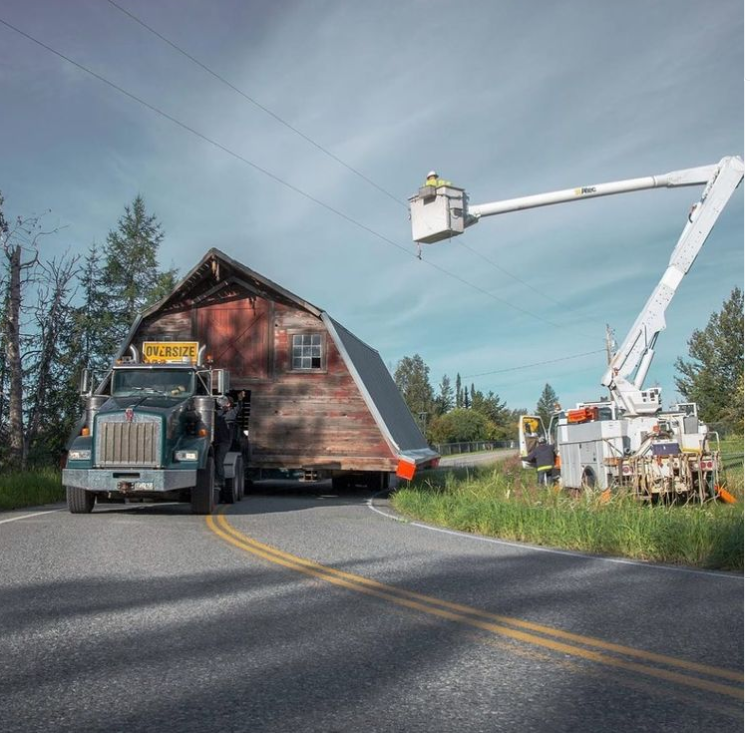
Then came the Herculean task of moving the barn to their property. The task had more than a few challenges, the first being the sheer size of the barn versus the needed navigation through the streets to the barn’s new home.
“It’s not as if you can just call someone and ask them to come move something, not like this,” said Jennifer. “It came down to crunch time and we were on the verge of taking it apart board by board and using a Connex box to store it, then reassemble it. We really didn’t want to do that, so luckily it came together last minute.”
Indeed, this was no ordinary undertaking. The 32’ x 32’ loft required power lines, phone lines, and street signs be temporarily lifted to make way for the loft. The path had to go past the Alaska State Fairgrounds, down some side streets to avoid the major highways, and even passed the stretch of road in front of Colony High School and over to Trunk Road, at points veering into oncoming traffic when making turns to get around the stoplights.
Once the sisters had the barn at its new home, it rested on blocks, so the barn was vulnerable sitting over ten feet in the air, especially to the winds. They have been hard at work already, pouring the footers, getting the walls up and roof design, which includes removing the roof, then adding insulation before re-roofing. It’s been important to them to try and keep the original architecture when possible, which meant designing a new roof.
Sarah says that the main barn will remain a traditional/classic/mid-century farmhouse with industrial touches, and they have been collecting pieces from around the lower 48, as far away as Pennsylvania where they picked up some vintage couches and chairs. Sarah and Jennifer also found a small tub manufactured in 1893 to add some historic authenticity.
And closer to home, they have sourced finds from Vintage Poppy and Bill’s Country Antiques, to bring in the Alaskan and funky touches too.
“We want to make it unique and not out of the box or cookie cutter,” says Jennifer.
They have also used the Palmer Historical Society as a resource from answering questions to helping find more resources as they work on the restoration project.
“I use them as resources all the time, because I want to be as historically correct and know what I’m actually talking about. This is all we have, this is what we have, and preserving this is important,” says Sarah.
The barns are a large part of the history of Palmer. In 1935, in an effort to settle and develop a pioneering community, the Colony Project brought 202 Midwest farm families to the Valley to help take people off, or keep them off, relief programs as a result of the Great Depression; to demonstrate whether or not Alaska had a settlement frontier with the fortitude to withstand excess population; and to further support the Alaskan economy by growing and producing more locally produced food, lessening the need for costly and vulnerable waterborne shipments.
When the farmers arrived that spring, they were assigned 40 -80 acre tracts via a lottery drawing, with the farmers agreeing to liquidate the government advance over 30 years.
The government designed five practical and functional house plans the families could choose. The barns, however, came in only one design. The compact design had each barn at 32’ x 32’ with a gambrel roof soaring another 32’ into the air.
Of the 202 original Matanuska barns, today there are less than 50. The remaining Matanuska barns can be found in all stages of repair and disrepair, from beautifully restored barns to collapsing and decaying remnants of the originals, slowly being reclaimed by the land. A few have been added to the National Register of Historic Places, the nation's official list of cultural resources worthy of preservation, and there have been enormous efforts to save some Colony barns, most notable has been the Wineck barn at the Alaska State Fairgrounds, and the Linn-Breeden double barn at the Museum of Alaska Transportation and Industry, both moved from their original locations.
All of this caught the eye of Magnolia Network and they were offered an episode on “In With the Old.” The sisters are huge fans of Chip and Joanna Gaines and were honored at the idea of being featured on their network. This sisterly duo proves to be a formidable force in their quest to bring these iconic structures back to life for generations to come.
The show chronicles designers, builders and old-home enthusiasts in across America as they transform and re-imagine abandoned structures by preserving their historical integrity while giving them new purpose.
“It’s very surreal, bizarre, how this is all working. But we’re excited,” says Jennifer, who adds that the idea had been pitched to other networks, but in the end, the Magnolia Network greenlit the show. The production crew filmed during the summer. The sisters are especially grateful producers Randy Tat and James Macnab.”These guys made it happen for us. They hired local guys for the production crew which was amazing.”
Sarah and Jen also enjoyed that the show doesn’t need to create fake drama, instead focusing on everything for the renovation and the story behind the barn, not just the restoration.
“It’s kind of neat, and I think it’s going to be a really cool project,” says Jennifer.
“This is our history, and it’s up to us as a community to help save and preserve our history. Involving the community along the process has made people excited, and that’s what we want-for people to be excited about what we’re doing. And who knows, maybe get others interested in doing this too.”
Tune in December 29th and watch the barn sisters premiere of their show on Magnolia Network “In With the Old,” which will be streaming on Discovery + and HBO Max to hear about their mission to save the barns: rekindling Alaska's historic hot spots, one ‘colony barn’ at a time.

By Jeremiah Bartz Frontiersman.com A football coach using a hockey reference as the centerpiece for his keynote address may

Frontiersman.com With its headquarters in Wasilla, the Frontiersman has been a primary source of news for the Matanuska-Susitna

By Katie Stavick Frontiersman.com The next generation of leaders took flight this week as the Houston High School Class

By Kyle Wilkinson For the Frontiersman Keynote speaker and Carry the Cure President Bill Pagaran’s words boomed through the