Retiring teacher, coach urges Colony grads to ‘find their 68’
By Jeremiah Bartz Frontiersman.com A football coach using a hockey reference as the centerpiece for his keynote address may


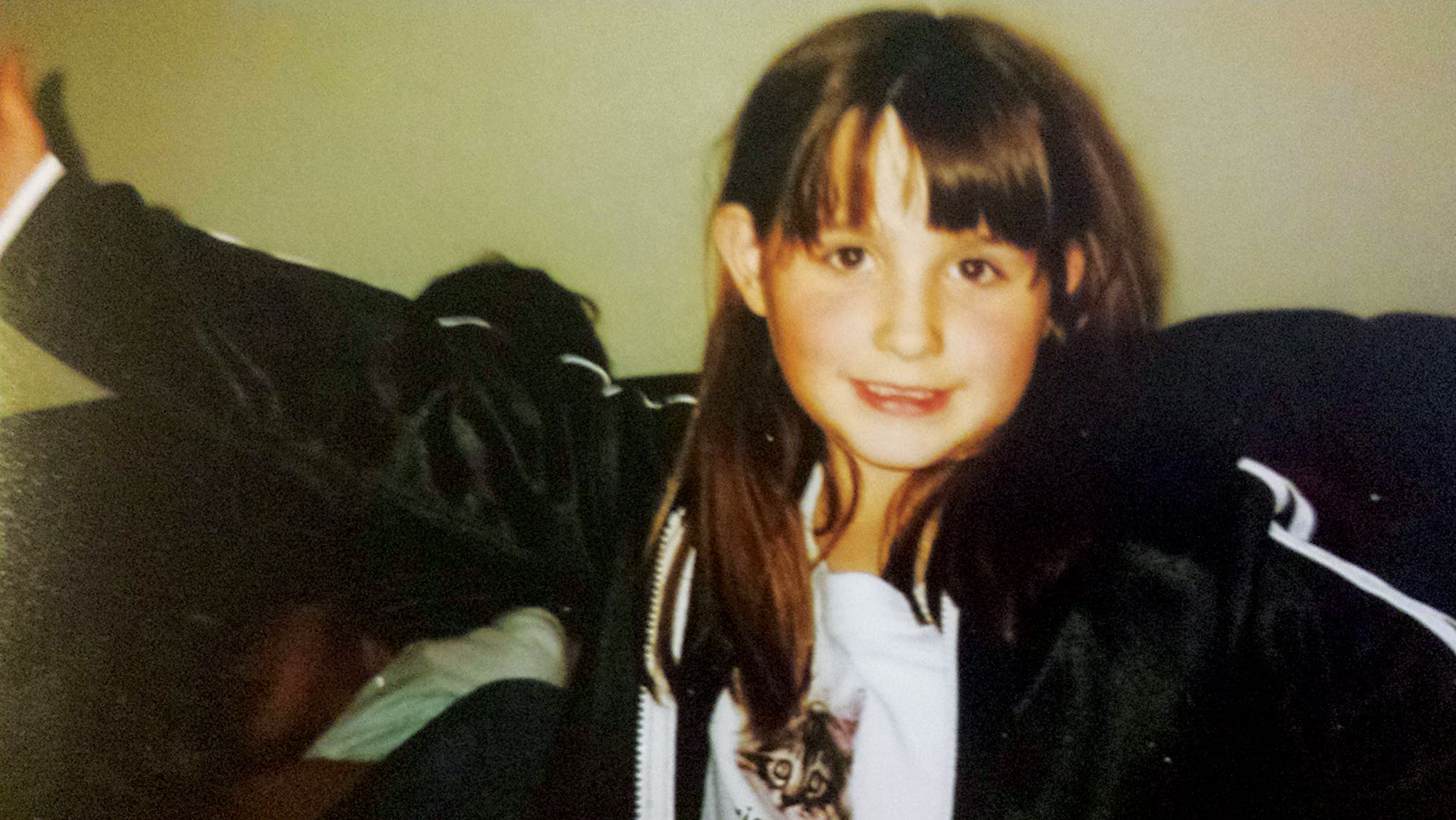
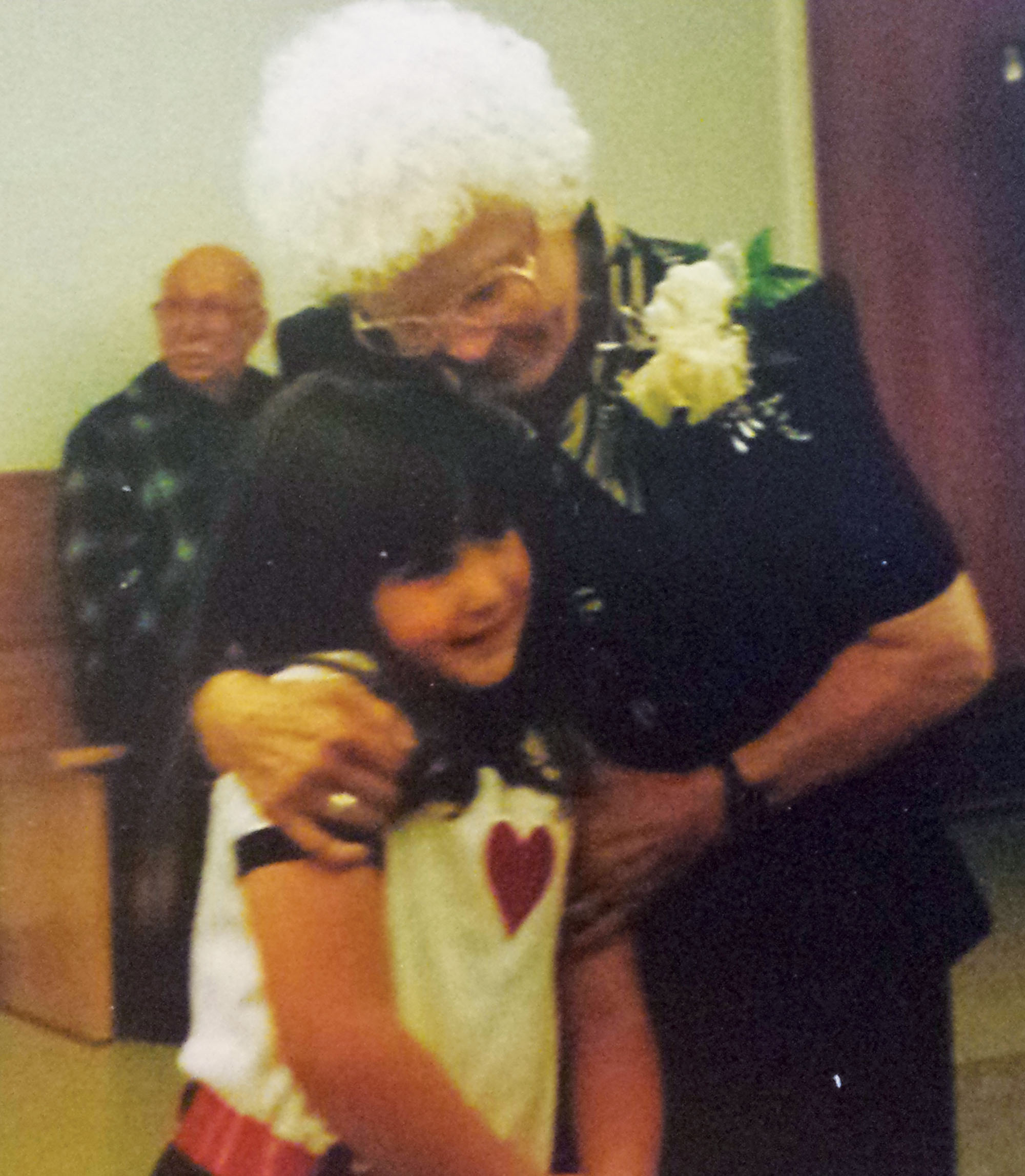
PALMER — Her childhood seems ordinary, laid out in a series of photos spread on her family’s kitchen table, and in a video playing on her family’s TV.
She is there in her mother’s arms on the day she was born, at Christmas with her big family, with her high school friends laughing and smiling, and in photos showing her loving her own daughter.
The video was kindly prepared for the family by the funeral home that also prepared her body for burial.
She was a beloved daughter who was beautiful, talented, vivacious, spiritual and loving, her mother said. She was a sister, an outgoing, charismatic, and contagiously energetic granddaughter. And she was a fiercely devoted mother to her own young daughter, Lily Vogel.
But it isn’t simply the loss of her first-born child that haunts Terina Alcantra of Palmer. It’s also the manner of her child’s death three years ago today.
“She died alone,” her mother says sobbing at her kitchen table, her mother and former mother-in-law by her side. “She died alone on the floor of a public bathroom.”
Emergency crews responded that Thursday evening to the Tesoro station at the corner of Seward Meridian Parkway and the Palmer-Wasilla Highway for a report of an unresponsive woman. They tried to revive her, but it was too late. She was pronounced dead at 7:25 p.m., March 8, 2012.
Alaska State Troopers say their investigation determined she died of a drug overdose.
Her mother sees things differently. She says she thinks the shot her daughter bought that day was intended to be lethal. The family says gas station video shows her daughter entering the Tesoro bathroom and leaving on medics’ gurney about an hour later, dead.
“I talked to my kids about drugs, but not heroin,” Alcantra said. “I had no idea that heroin was available or what to look for.”
Alexi Mykaela Bickers was born Oct. 15, 1991, in Palmer to Terina Alcantra and Eric Bickers. She lived most of her life in Alaska, except for a few years when the family lived in Arizona.
Alexi changed schools a few times in the process and by the time they returned to Palmer, Valley Pathways was her best option to graduate. She was on course to earn her diploma that May.
She died two months short of graduation and an eternity from her dreams for herself.
“I want people to know she wasn’t a junkie. She was an addict,” Alcantra said. “She needed help and there wasn’t any to be found.”
Although she said she suspects her daughter may have used heroin before her pregnancy, things didn’t spiral out of control until a few months after her daughter’s birth.
Lily has a type of epilepsy called “West syndrome,” a genetic condition that produces infantile spasms.
When she was born, the doctor in the pediatric intensive care unit at Providence Alaska Medical Center told her 19-year-old mother there was nothing medically he could do for the child. Take her home and love her as best she could, the doctor advised.
The catalyst may have been an incident in January 2012 when Alexi and Lily were living with Alexi’s father, Eric Bickers.
Father and daughter got in a fight and Alexi took off, leaving her daughter with her father, Alcantra said.
“Said she needed to cool off and would be home in the morning,” she said.
One thing led to another and Alexi began to spiral out of control.
Alcantra said she suspected her daughter was an addict, but Alexi denied it. Instead she confessed the truth to her father and said she needed help.
Several months later — less than a week before her death — Alexi finally admitted the truth and tearfully asked for her mom’s help.
She was on the waiting list, but the Ernie Turner Center in Anchorage had called that morning to say they had an open bed. Her grandmother Sandy Thomas was scheduled to drive her there for an intake appointment that night. She died before she could be admitted.
“I had her with me in the car and we didn’t get there,” Thomas said.
Alexi told her grandmother she had an errand to run that Thursday morning before heading to intake in Anchorage. She had a friend to drive her, she said.
Their first stop was a pawn shop along the Palmer-Wasilla Highway where Alexi sold some of her mother’s jewelry before continuing on to the Seward-Meridian Tesoro to buy heroin from a dealer in the parking lot, and use the drugs in the store’s bathroom.
Alcantra said her first hint something was wrong came when she returned home from work that day and discovered her room ransacked and jewelry missing. She suspected Alexi was the culprit. She called the Palmer Police Department and an officer came over to take her report.
That afternoon he called to say he’d found her property outside of Wasilla. He said she could come and buy it back, or he could take it as evidence and file criminal charges against Alexi.
Alcantra said she’d go the next day and buy back her things.
She was on her way home to cook dinner after work that night when she pulled over for the flashing lights of emergency vehicles. She was still making dinner when the same officer returned to her door.
At first she thought he was there about her jewelry, but when he took off his hat, she said her heart began to race — she knew something was wrong.
“We found Alexi dead,” he told her.
“That’s when I lost it,” Alcantra said.
Alexi is just one of the people in Alaska whose death certificate lists heroin as either an “underlying cause,” or a “contributing factor” that year, according to the Alaska Bureau of Vital Statistics.
The Alaska State Troopers’ Alaska Bureau of Investigation, Statewide Drug Enforcement Unit’s annual drug report has mentioned the increase in heroin deaths every year since 2012 without including data to show the sharp rate of increase in heroin deaths during the past decade.
“The State Medical Examiner’s office has seen a steady increase in the number of heroin/opiate related deaths over the past three years,” the drug enforcement unit’s 2012 report says.
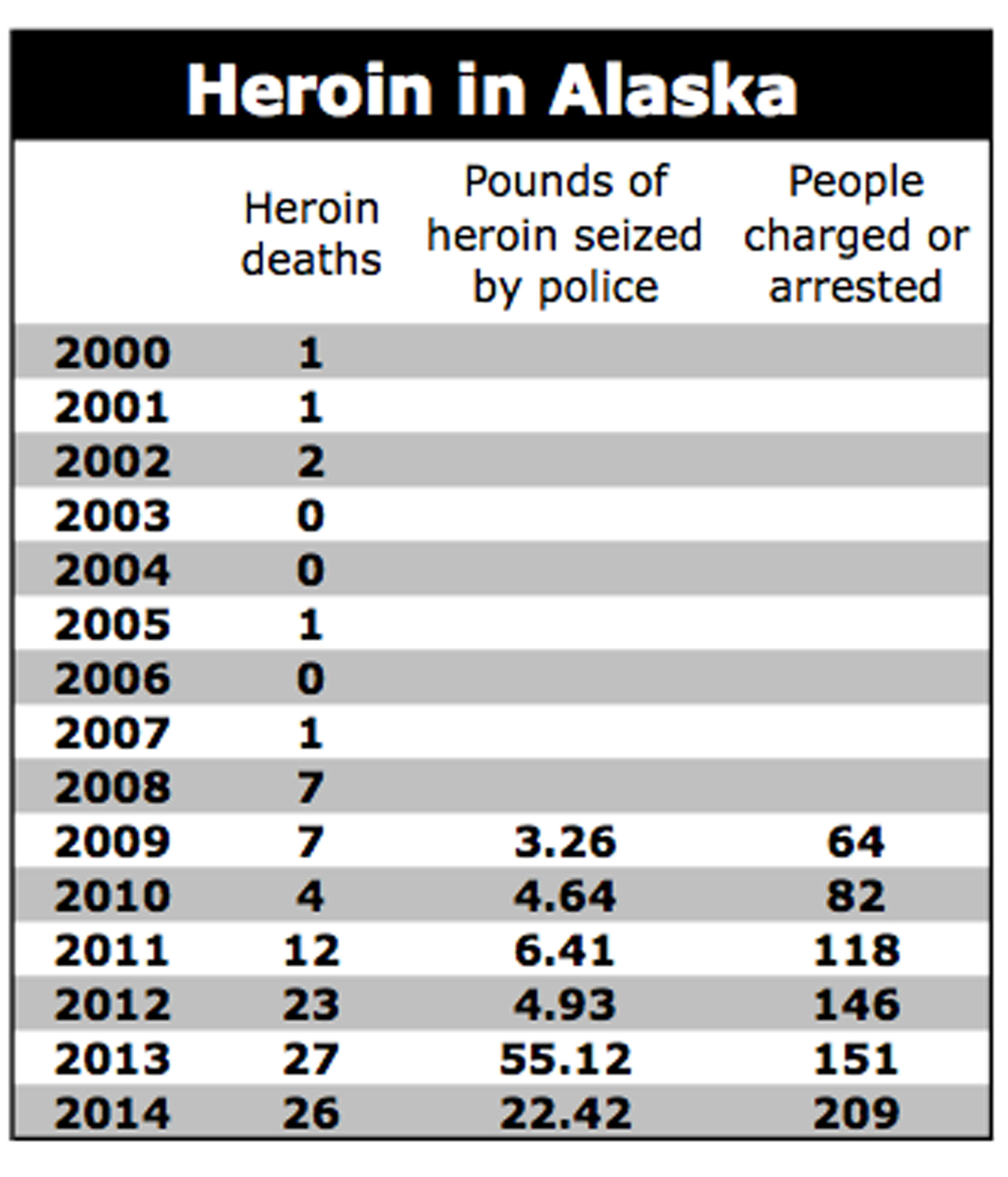
The Alaska Bureau of Vital Statistics shows 23 people died of heroin related causes in 2012, up from zero as recently as 2006. A decade ago just six people died of heroin in an eight-year period in Alaska from 2000 to 2007. Then things began to shift in 2008 and 2009 when seven people died — 14 in two years — more than twice as many deaths as during the seven years prior.
Heroin death rates continued to increase exponentially through 2013 when deaths peaked at 27. More than 55 pounds of heroin was seized that year and 151 people were charged or arrested, according to the state’s 2013 annual drug report.
Released this month, the 2014 report says 209 people were charged or arrested, and 22.42 pounds of heroin was seized with a street value of nearly $12 million.
Alcantra said she didn’t want her daughter arrested for stealing and selling her property. Instead, she said she wanted to help her treat her addiction so she could finish high school, raise her daughter, Lily, and pursue her life’s goals.
Her grandparents, parents and other family members were all onboard to help.
“We thought we had it,” LaFrance said. “We were doing all of the stuff we thought we needed to do and she still died.”
The family says they decided to share their story on the anniversary of Alexi’s death to encourage other parents to talk with their kids about heroin. And to talk to their kids about the 911 Good Samaritan law Alaska passed in 2014, which establishes “restrictions on the criminal prosecution for certain offenses for a person who seeks medical assistance for a person experiencing a drug overdose.”
Because accidental overdose deaths now exceed motor vehicle accidents as the leading cause of accidental death for 25 to 64 year olds in the U.S., Alaska and 20 other states have passed laws that provide people limited immunity in overdose situations to prioritize medical necessities over legal consequences.
“Kids shouldn’t die because they are afraid to call for help,” Alcantra said. “Call for help and worry about the consequences later.”
The family said they’d also like to see Narcan — a drug commonly used to counteract the effects of heroin by medics on scene of overdoses — made available by prescription to partners and parents of addicts so they can intervene during OD incidents.
“All I wanted was to fix her,” Alcantra said. “And she slipped right through our fingers.”
Contact Heather A. Resz at 352-2268 or heather.resz@frontiersman.com.


By Barbara Hunt Palmer Buzz It was 6:43 on Friday morning and the Plant Owner was sound asleep when

By Kyle Wilkinson Frontiersman Memorial Day Weekend was filled with a variety of events in Willow. From live music to

By Kyle Wilkinson For the Frontiersman The Susitna Valley Emergency Preparedness Fair will be held at the Willow Community Center

By Barbara Hunt Palmer Buzz Green-Up happened at exactly 9:34 am on Saturday morning in Palmer. This was