Retiring teacher, coach urges Colony grads to ‘find their 68’
By Jeremiah Bartz Frontiersman.com A football coach using a hockey reference as the centerpiece for his keynote address may


WASILLA — Not many people may have heard of tuberous sclerosis, but those affected by the rare genetic disease know the value of shared experience and community support.
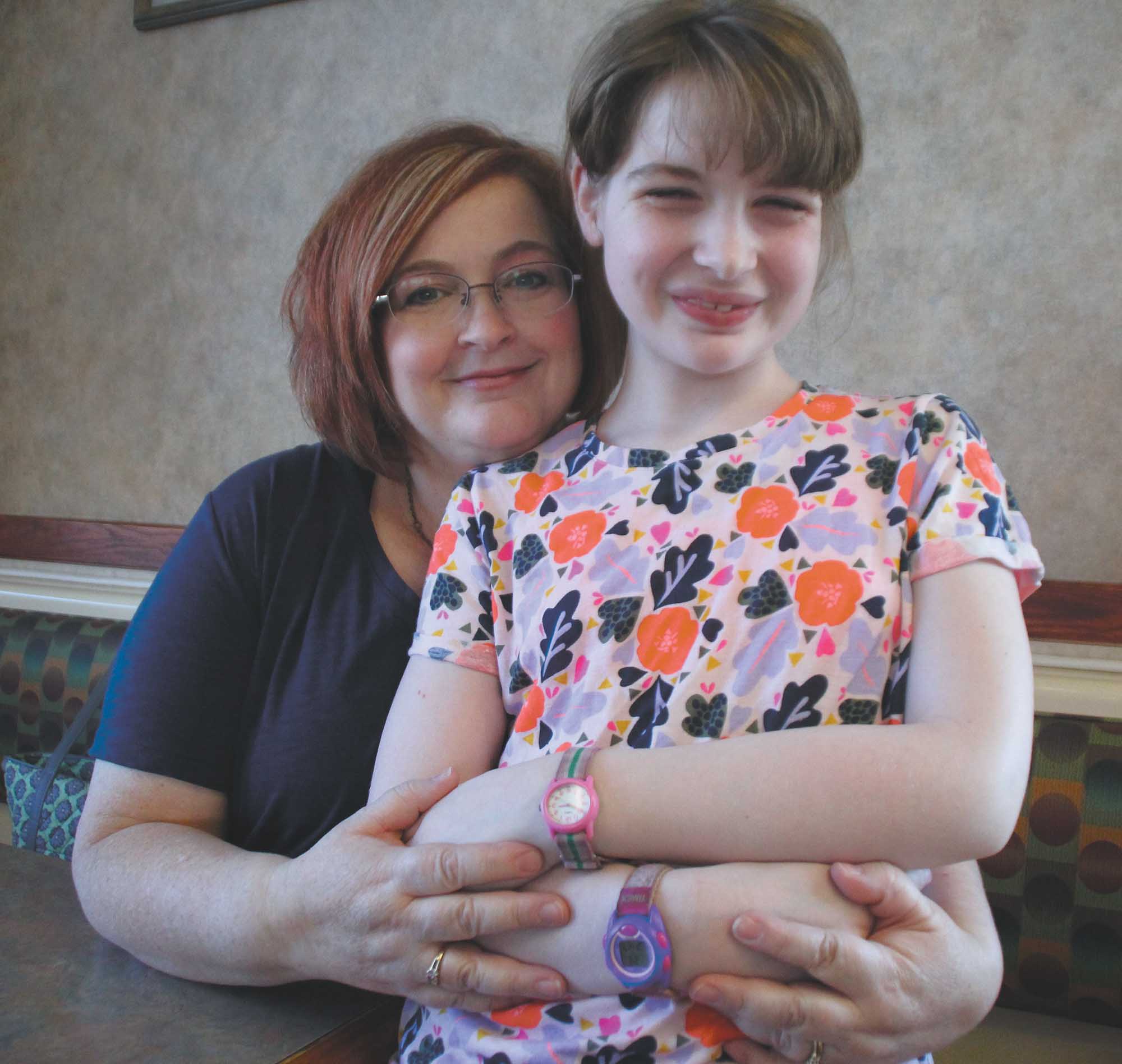
Wasilla mother Rebecca Racenet has spent the last 10 years learning about and caring for her 10-year-old daughter, Caitlin, who was diagnosed with tuberous sclerosis complex (TSC) after she started having seizures at 16 months. The seizures, they found out, were caused by tumors growing on her brain, and could debilitate her up to 30 times a day.
Caitlin is also autistic, as are 50 percent of people who have TSC, Rebecca said. Some people with TSC also develop kidney disease, lung disease, diabetes or other health issues that require additional care, she said, but just as many grow old in normal, healthy lives.
As Caitlin has grown, so have the severity of her seizures, though the frequency has decreased. She’s now able to attend school for up to five or six hours a day — compared to the initial one or two — and listens to Meghan Trainor more than Mozart, her former favorite. Loud noises like babies crying or dogs barking can be very upsetting for Caitlin — who recently began calling herself “Letter W,” and insisting that others do the same — but cameras bring out a big smile on her face.
She also enjoys traveling around Alaska with her service dog, Zinger, and she loves numbers. Whether it’s doing math in her head, counting down the days to when she gets to ride the Denali Highway — 15, as of the Friday interview — or observing the seconds and minutes pass on her two pink watches, Caitlin knows all about numbers.
“A lot of girls have Barbies and toys on their bed, but she has a clock in a box,” Rebecca said.
She could even tell you, of the 777 photos she decided to take over a 1.5-year period, where a single photo stood in that sequence, with a description of the photo.
The Racenets didn’t know their youngest daughter would be affected by, or be able to do all those things, when she was born.
“When she was first diagnosed … we had never heard of tuberous sclerosis,” Rebecca said. “Thankfully we’re living in the day and age where they have resources online.”
The Racenets quickly found TSAlliance.org, learning about the disease and how to treat it, though there is no known cure. The alliance offered them support via telephone and email, Rebecca said, connecting the family with specialists when needed — there’s only one pediatric neurologist in Alaska, she said, and Caitlin often has to fly south for medical care.
One thing that was hard for the national organization to provide for the Alaskan family, though, was community. The Racenets had done some networking through Facebook, and met other people affected by the disease Outside, but still felt a bit isolated — as Alaskans often do.
Still, Rebecca worked hard to contribute the alliance from afar. Once Caitlin started school, she was able to spreading awareness about TSC there, and last March hosted a “Sip & Shop” fundraiser for TSC research. She’s also spent the last nine years in conversation with Alaska’s senators and congressman about her daughter and the disease, sending pictures and updates on Caitlin as well as national findings related to TSC.
“Even though we’re such a large state, we’re pretty in touch with our delegates,” she said.
As a result of Rebecca’s efforts, Congressman Don Young supported a funding package in 2014 that secured $6 million for TSC research through the Department of Defense’s Congressional Directed Medical Research Programs.
Though TSC is rare, the great variance and number of other conditions associated with TSC have made study of the disease a governmental priority, Rebecca said.
“Tuberous sclerosis has been determined to be what’s known as a lynchpin disease — because it affects so many body systems and has a characteristic of a lot of other diseases, if you unlock the cure to TSC, you could unlock the cure to other diseases,” she said.
Excited by Rebecca’s enthusiasm, the alliance asked if she would be willing to chair an Alaska chapter, and she immediately agreed.
“I think they realized that we have a really good group of people up here that take a little more personal concern (in each other),” Rebecca said.
The Racenets recently discovered a young man in Wasilla and a young boy in Soldotna with TSC, whom Rebecca said she hopes to meet some day soon.
In the meantime, she and Caitlin will continue to reach out to more Alaskans with information about TSC, planning the 2017 Sip ‘n’ Shop fundraiser and looking for other ways to ensure people with TSC get the care and support they need.
For more information about the Alaska chapter of the Tuberous Sclerosis Alliance, contact Chair Rebecca Racenet at 907-357-5160 or rebecca.racenet@gmail.com.
To learn more about TSC in general, visit www.tsalliance.org.
Contact reporter Caitlin Skvorc at 352-2266 or caitlin.skvorc@frontiersman.com.

By Jeremiah Bartz Frontiersman.com A football coach using a hockey reference as the centerpiece for his keynote address may

Frontiersman.com With its headquarters in Wasilla, the Frontiersman has been a primary source of news for the Matanuska-Susitna

By Katie Stavick Frontiersman.com The next generation of leaders took flight this week as the Houston High School Class

By Kyle Wilkinson For the Frontiersman Keynote speaker and Carry the Cure President Bill Pagaran’s words boomed through the