Retiring teacher, coach urges Colony grads to ‘find their 68’
By Jeremiah Bartz Frontiersman.com A football coach using a hockey reference as the centerpiece for his keynote address may


WASILLA — While skiers and other winter sports enthusiasts bemoan the lack of snow caused by the recent warm temperatures, some hungry birds might benefit from the relative brownness of our surroundings.
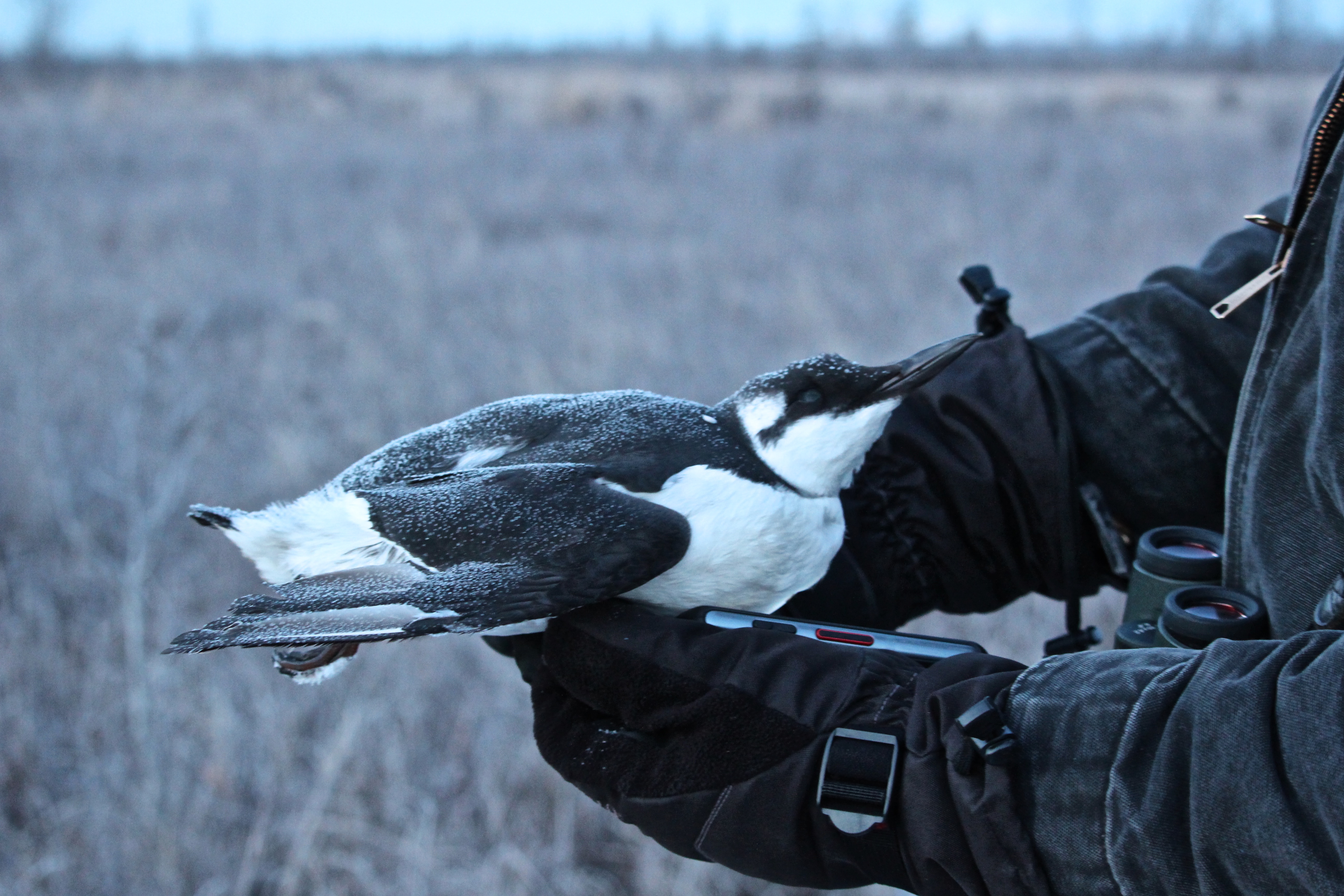
Figures from the annual Christmas Bird Count this year recorded higher totals of bald eagles, black-capped chickadees, red-breasted nuthatches, gray-crowned rosy-finches and snow buntings than ever before, according to event organizers. They also found another example of one of the most perplexing bird-related trends this year: a dead common murre stranded on ice near the Palmer Hay Flats.
“That’s a sea bird, and something has been driving them crazy,” said Bob Winckler, coordinator of the local count.
The penguin-like birds have been showing up across inland locations in Southcentral in droves, which leaves them stranded because they can't take off again. Winckler said the MatSu Birders web site received between six and eight notifications about the birds just on Wednesday, many stemming from remote Flat Horn Lake in the Sustna River watershed. The murre mire might be the most pronounced change this year attributable to the climate, at least of the feathered variety, Winckler said.
“Some combination of global warming and El Nino has changed the stuff they eat,” he said. “They’re trying to get to cooler water.”
Apart from the murre, the bird data didn’t provide any definitive conclusions about the local environment, though there are some hints that the lack of snow may be affecting some environmental relationships, said organizer Bob Winckler.
“It went pretty good,” he said. “There was nothing really amazing, though really pushed up the bald eagle count.”
Counters also spotted an unusually high number of northern goshawks, which he said are typically migrating south at this time of year. Winckler thinks the lack of snow is making one of their favorite meals — snowshoe hares — stand out in seasonal winter white fur, leading more of the birds of prey to stay in Alaska over the winter. That might also be the case for other raptors, like the daytime-hunting short-eared owl, another migratory bird lagging behind its usual winter departure date, which counters not only spotted, but photographed.
The biggest surprise came in a new bald eagle record. The count for this year, 277 birds, is 107 more than the previous record of 170. The majority of those were observed in the area of the borough landfill and adjacent Crevasse Moraine areas.
Snow buntings — a small white sparrow-like bird — also showed up in higher numbers, and Winckler speculated that might be because the lack of snow cover means foods like summer-grown seeds and berries are more easily obtained.
Winckler said 57 counters — 33 in the field and 24 watching local feeders — scoured an area ranging from the foothills of Hatcher Pass south to Mirror Lake, west to Schrock Road and east to the Butte area. In all, they covered a 15-mile-radius circle centered on the Trunk Road and Palmer-Wasilla Highway intersection. The group counted 4,853 birds of 32 different species. That’s three species short of the record 35 set during the 1999 count.
The full list of results is available on the Mat-Su Birders club website, including a full list of all the new records and all species spotted this year at www.matsubirders.org/2015_Mat_Valley_CBC_Results.pdf

By Jeremiah Bartz Frontiersman.com A football coach using a hockey reference as the centerpiece for his keynote address may

Frontiersman.com With its headquarters in Wasilla, the Frontiersman has been a primary source of news for the Matanuska-Susitna

By Katie Stavick Frontiersman.com The next generation of leaders took flight this week as the Houston High School Class

By Kyle Wilkinson For the Frontiersman Keynote speaker and Carry the Cure President Bill Pagaran’s words boomed through the