Retiring teacher, coach urges Colony grads to ‘find their 68’
By Jeremiah Bartz Frontiersman.com A football coach using a hockey reference as the centerpiece for his keynote address may


WASILLA — STEM is an acronym for Science, Technology, Engineering, and Math. STEM workers use their knowledge to understand the world around them and problem solve. With the age of technology growing rapidly the demand for people with the ability to do these jobs have increased. Some STEM jobs include being a civil engineer, web developer, IT manager and a software developer. STEM workers are also less likely to experience joblessness than their non-STEM counterparts. In 2010, there were 7.6 million STEM workers in the United States, representing about 1 in 18 workers.
Consequently, the importance of school programs that prepare students for these jobs is pertinent.
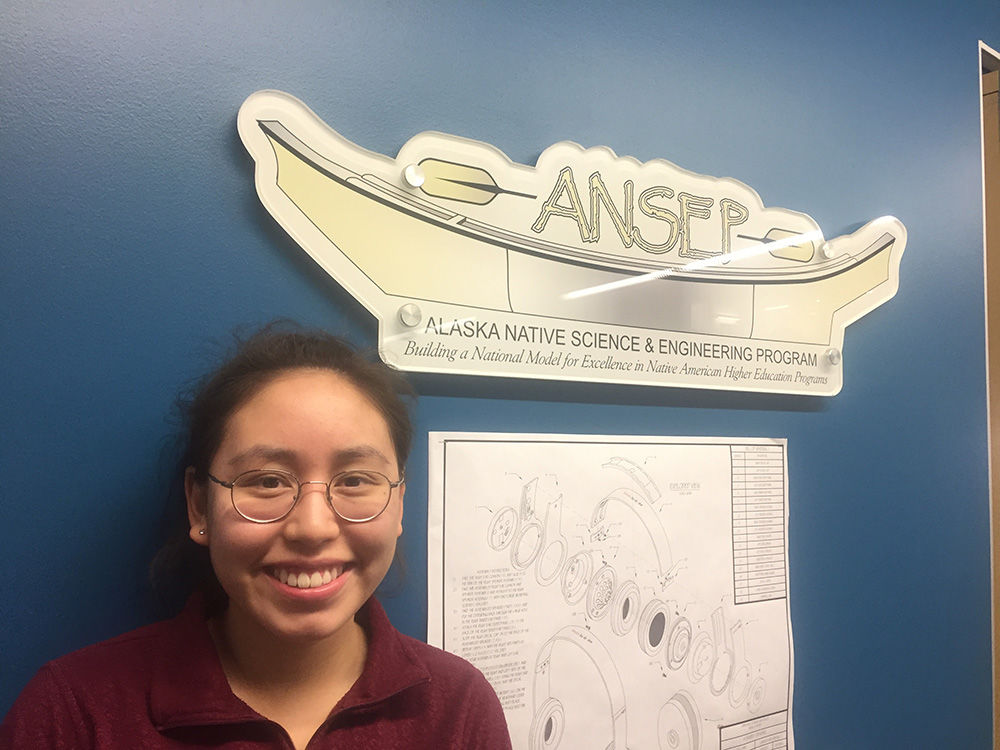
ANSEP (the Alaska Native Science and Engineering Program) was founded in in 1995 by Herb Schroeder. While doing research for Ted Stevens in rural Alaska in sanitation issues, Schroeder saw that there was a lack of Alaska Native stem professionals. He then looked at data from UAA and saw that there were a small amount of Alaska Natives receiving engineering degrees. So, Schroder in partnership with UAA and the Mat-Su School District decided to work together and change the stats with the ANSEP Accelerated High School.
ANSEP itself has over 70 funding sources. The majority of funds are philanthropic or private funding. Funding for the Accelerated High School comes from the Mat-Su School District’s Federal Programs and also UAA.
ANSEP originated as a scholarship program providing scholarships to Alaska Native students pursuing engineering degrees. “Our goal is to increase the amount of Alaska Native and American Indian professionals in the STEM field,” pre-college director Josephine Mattison said.
Last year, the ANSEP program was housed within Valley Pathways High. It had 27 students and two teachers.
Assistant Federal Program Director Meghan McCarthy-Grant said that the program was aligned with Career Technical High because of its population size, the common goal and the space Career Tech provides. Grant also stated that the students secure base funding.
“I like that we have fewer classes that are longer and we have our own little community. Working in groups with people I'm familiar with really helps my school work get done,” ANSEP junior Katherine Sakeagak said.
Mat- Su teacher and ANSEP instructor Jenny Barnes said she likes the ANSEP saying, ‘We succeed.’
Barnes is the only Mat-Su teacher on the ANSEP staff. In the morning she teaches CS50 to ANSEP students as an ANSEP teacher and in the afternoon she teaches Algebra II and computer science CS50 to as a regular MSBSD instructor.
Barnes said that STEM degree holders enjoy higher earnings, regardless of whether they work in STEM or non-STEM occupations. And this too can assist rural Alaska, a subject Barnes is particularly attached. She worked seven years in the rural village of Kokhanok in the Lake and Peninsula School District.
Barnes is impressed with the amount of autonomy the students have in ANSEP. “The students have to choose to be responsible for the program and that builds a lot of maturity.” Not only do the students gain in maturity they earn double credits- for high school credit and university credit.
UAA professor and ANSEP Matthew Gho grew up in Fairbanks and was a UA Scholar. He started his career first as a teacher at West High in Anchorage for nine years teaching math. From there he advanced his degree and began working as an adjunct professor at UAA and high school ANSEP students.
“I started teaching for ANSEP around 2010 in their summer programs. Students from all across the state come to take a whole semester course condensed into six weeks”, Gho said.
Gho uses his job at ANSEP to not only teach ANSEP students math but to also help them learn about important Alaska Native culture and history.
“I enjoy teaching my content but I also enjoy educating Alaska native more about their cultural history. Something that they don't always get in the public school system,” Gho said.
ANSEP works to benefit Alaska by preparing students to enter the University and helping students all over Alaska. This is important because STEM occupations are projected to grow by 17.0 percent from 2008 to 2018, compared to 9.8 percent growth for non-STEM occupations. And, on top of that, STEM workers command higher wages, earning 26 percent more than their non-STEM counterparts.
“It's not only good for your education as a high school student, but it also prepares you for where you want to be in the future,” Sakeagak said.
Janee Wilson is a senior and Journalism III student at Wasilla High. She is a member of the Warrior Daily News Broadcast team. Janee is considering UAA as her next step after high school.

By Jeremiah Bartz Frontiersman.com A football coach using a hockey reference as the centerpiece for his keynote address may

Frontiersman.com With its headquarters in Wasilla, the Frontiersman has been a primary source of news for the Matanuska-Susitna

By Katie Stavick Frontiersman.com The next generation of leaders took flight this week as the Houston High School Class

By Kyle Wilkinson For the Frontiersman Keynote speaker and Carry the Cure President Bill Pagaran’s words boomed through the