Retiring teacher, coach urges Colony grads to ‘find their 68’
By Jeremiah Bartz Frontiersman.com A football coach using a hockey reference as the centerpiece for his keynote address may


A controversial plan changing how near lakefronts Borough residents and developers can build will be tackled by a working group tasked with making recommendations rather than simply passed into law.
The taskforce was approved unanimously by the Borough Assembly during their July 18 meeting.
Currently, most structures may not be built within 75 feet of a waterway, a no-construction zone known as a “riparian setback.” The Borough does not currently issue any building permits and performs very limited code enforcement due to lack of staffing. The current law does not apply to anything built before 1987, when the setback was put in place, so long as the current property owner did not know about the rule before the structures were built. In those cases owners can apply for an exception.
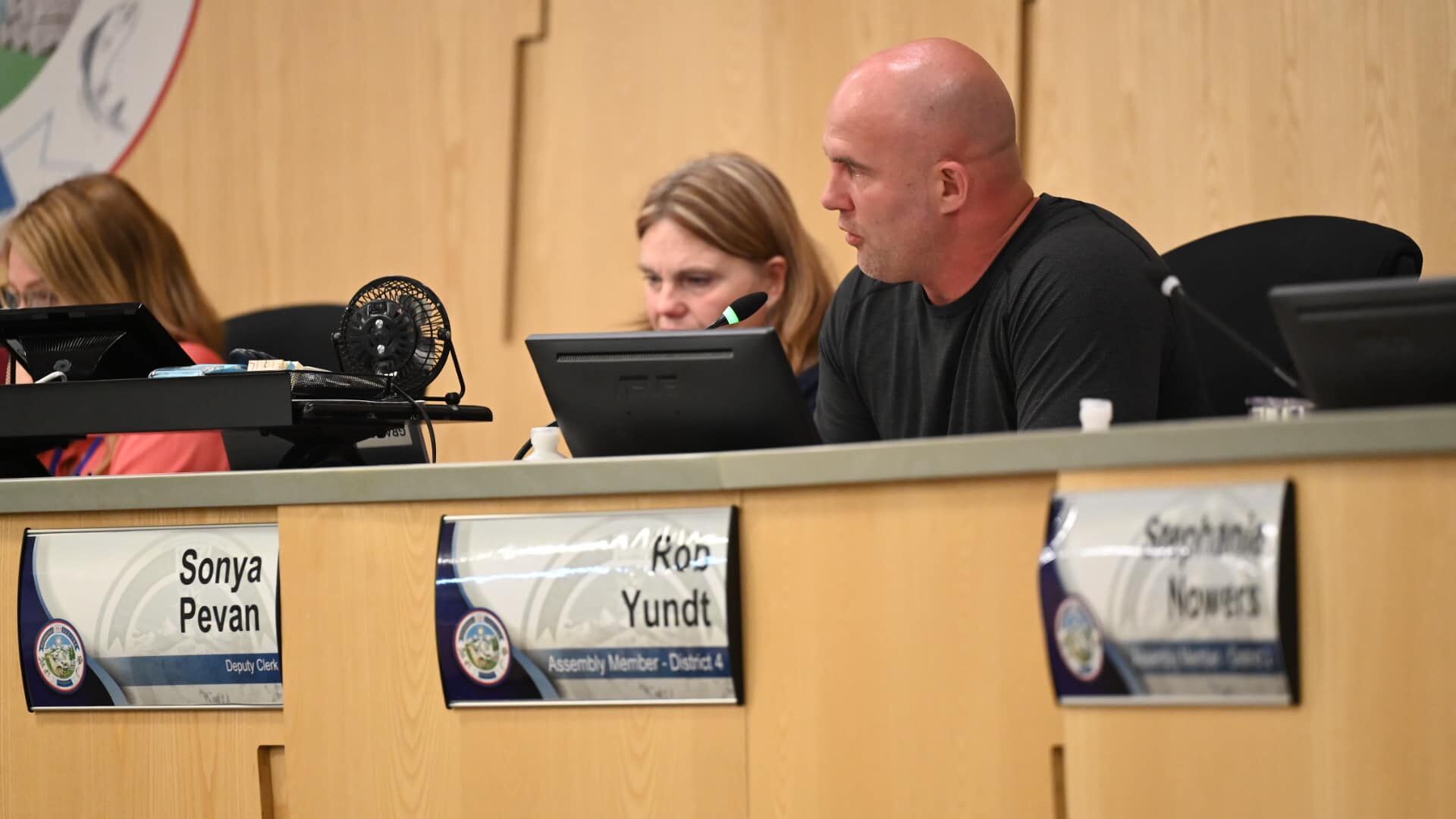
An ordinance previously proposed by Assemblymembers Rob Yundt, District 4, and Mokie Tew, District 5, would have dropped that required setback from 75 to 25 feet so long as plans were given the OK by a civilian engineer and included buffers to block any pollution runoff. Under the proposal those plans must be approved through a mandatory Borough permitting process.
The new taskforce replaces that proposal. The offered ordinance is postponed indefinitely and is unlikely to come back up for consideration in its current form. The taskforce was proposed by Yundt, who attended the meeting via telephone and was not available for comment.
The current setback rules create a big problem for homeowners with violations who want to sell their properties or do substantial upgrades, Yundt said at a Fish and Wildlife commission hearing on the matter early this year. A professional home inspection is likely to note the violation, and unless it’s torn down or owners have a way to get it approved, they may be unable to change their properties so long as it exists.
Violating the zone, however, puts at risk clean water and salmon habitat thanks to pollution or runoffs created by structures sitting too close to the waterfront, according to a 1998 setback study produced for the Borough.
An estimated 700 properties on lakes around the Borough are in violation of the rule, Alex Strawn, the Borough’s planning and land use director, told officials at the Fish and Wildlife hearing.
The new taskforce will be open for applications and ultimately include seven members nominated by Borough Mayor Edna DeVries and approved by the Assembly, Borough Manager Mike Brown said during the meeting. It will likely include representatives from the Borough’s Fish and Wildlife commission, planning commission, the area’s homebuilder and real estate communities and the Matanuska Susitna Basin Salmon Habitat Partnership, he said. The meetings will be public and aimed at forming an official recommendation on how, if at all, to change the setback, he said.
“Their recommendation could be don’t change anything, change a lot of stuff, change this,” he said. “They’ll be essentially starting with a blank slate.”
Changing the setback is a hot topic and drew to the meeting about 22 residents looking to comment on the issue, with those who said they were against lowering it outweighing those who said they were for it.
“We need a clean slate, a blind slate on this,” said Jean Holt, a resident who worked on the current setback rules initially passed in the mid-1980s. She said she opposes lowering the setback, but hopes the taskforce can create thoughtful recommendations.
“This isn't something wham-bam, thank you ma'am. We need to take care of this -- it’s been going on way too long,” she said.
But others worried the current rules harm property owners.
“I think that the setbacks as they are currently written are punitive and damage to property owners who have property that was developed, platted, zoned before the setback was put in place,” said Jeff Byrne. “I’m in support of an ordinance or a change in the ordinance to allow habitable structures closer than 75-foot to a waterway.”
In addition to his assembly duties, Yundt co-owns Robert Yundt Homes, LLC, a general contractor which constructs homes in the Valley, according to the company’s website.
A federal lawsuit filed in April against Yundt and his business by the Environmental Protection Agency states that Yundt failed to perform his agreed-to fixes on violations of the Clean Water Protection Act (CWPA) created when his team at three sites dumped construction debris, including gravel and soil into Cottonwood Lake and Wasilla Lake, according to court documents.
Yundt had previously signed an order agreeing to clean-up the properties and paid a $29,500 fine in June, 2022 after he was first found in violation of the CWPA by the court. His failure to abide by the decree could carry an up to $50,000 per-day fine, according to U.S. law.
“I’ve done everything that I can to protect the environment,” Yundt said during assemblymember comments at the meeting, which stretched until 11 p.m. “I don’t agree with the EPA - I never have, I never will. … I’ve never put any pollutants into lakes.”
Tew, who co-sponsored the original setback measure, co-owns Tew Inc., an excavation company.
A task force application window will be announced via official public notice.

By Jeremiah Bartz Frontiersman.com A football coach using a hockey reference as the centerpiece for his keynote address may

Frontiersman.com With its headquarters in Wasilla, the Frontiersman has been a primary source of news for the Matanuska-Susitna

By Katie Stavick Frontiersman.com The next generation of leaders took flight this week as the Houston High School Class

By Kyle Wilkinson For the Frontiersman Keynote speaker and Carry the Cure President Bill Pagaran’s words boomed through the