Retiring teacher, coach urges Colony grads to ‘find their 68’
By Jeremiah Bartz Frontiersman.com A football coach using a hockey reference as the centerpiece for his keynote address may


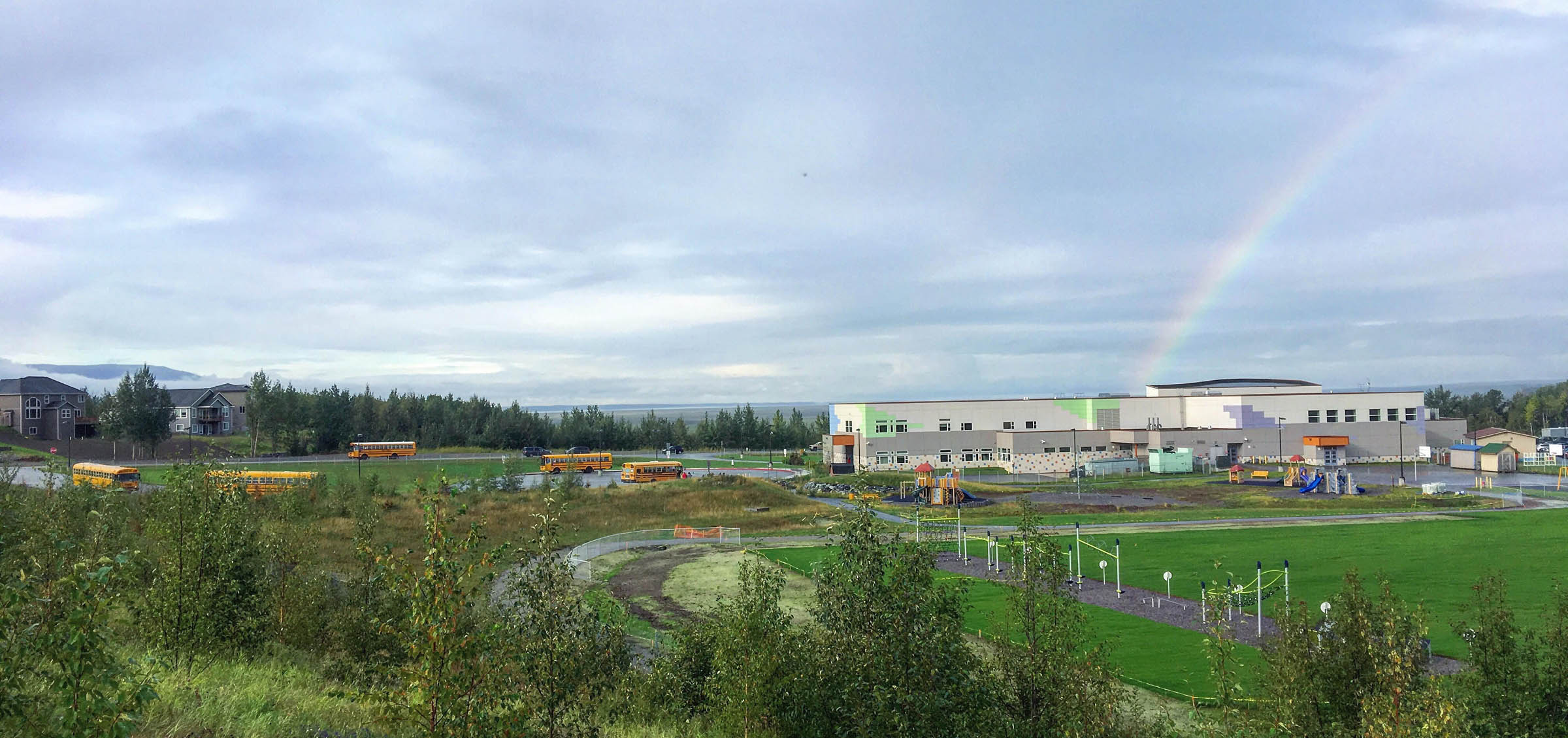
WASILLA — It’s official, the school year has started and those fleets of yellow school buses are back on the road again. The drivers, dispatchers, managers, mechanics, and other pieces of the First Student school transportation crew at the Wasilla bus barn keep student safety at the forefront of everything they do, according to First Student location manager, Mike Wilson.
“My team is completely sufficient. They’re awesome at what they do,” Wilson said.
First Student currently uses 188 buses, driving about 11,000 miles a day to pick up students from across the school district. They transport about 7,500 students with 154 routes, according to lead dispatcher, Andrew Good.
Class is back in session and the kids aren’t the only ones learning something new. All First Student drivers must complete extensive safety training and perform several dry (practice) runs before they get behind the wheel and carry all that precious cargo.
Scot Oxford, location shop manager and Jene Hodges, location safety manager have more than 60 years of combined experience with school transportation.
The biggest hazard on the road for each school bus is by far, other drivers, according to Hodges. She said that the bus drivers must always be wary of impatient drivers who either don’t want to be stuck behind a bus or even worse, aren’t paying attention and don’t even see it. All too often, these impatient drivers tailgate people, exceed the speed limit and make reckless decisions on the road, veering past whomever is in their way.
“When they do that, they put the kids at risk,” Hodges said.
She said that about 80 percent of the accidents they see are by people hitting them, not the other way around.
“I can’t remember the last time we hit somebody; usually it’s people who hit us,” Hodges said.
To counter this, every driver has “defensive driving” drilled into their daily routine, ever present and ever ready for the worst to happen because eventually, the worst happens, Hodges said. Each driver is trained to anticipate and think ahead, always aware of their surroundings.
“Most people don’t realize that the average driver has over 45 hours of training,” Hodges said.
Drivers are required to attend monthly safety meetings, complete annual training and refresh their CPR training every other year.
There are about 50 school bus related accident per winter. Wilson said that kids inside a bus are 70 percent safer than walking and 10 times safer than driving with mom or dad. Oxford agreed to those numbers and has the mechanical know how to back it up after fixing up these rigs for decades. He said that in cases of vehicle collisions, the other drivers are usually the ones whom are killed and the children passengers usually get nothing more than a bump or a scratch.
“That bus is built with nothing but safety at its core,” Oxford
Due to the high number of accidents on the Palmer-Wasilla Highway, the speed limit was reduced over the summer. But thankfully for the children inside each bus, these yellow tanks are built sturdy and driven by people with extensive training whom more often than not, do it because they love the kids.
“The drivers here are good people; they’re the life blood of operation” Wilson said.
Bus drivers to many, are the unsung heroes of the school year. It’s clear that there’s more to it than just driving around. A simple thank you from a kid or parent has the potential to fill their tanks much better than gas.
Slow down! Back to school means back to sharing the road. With the school year comes congestion. Children of all ages will now be scurrying to their designated bus stops, parents will be dropping off their brood before work; and now, more than ever, it’s important to slow down and pay attention than when kids are present – especially before and after school.
The following are some general driving safety tips for the road, according to authorities:
Dropping Off: Schools usually have very specific drop-off procedures, varying from location to location. Make sure you know those safety procedures not just for your kid’s sake but every kid’s sake. More children are hit by cars near schools than at any other location, according data from the National Safe Routes to School program.
Don't double park because it blocks visibility for other children and vehicles and don't load or unload children across the street from the school. Try carpooling to reduce the number of vehicles on the road.
Sharing the road with young pedestrians: A majority of young children who get killed in bus-related incidents are 4 to 7 years old, and it occurs while they're walking, according to research by the National Safety Council. Most often, it’s when a driver illegally passes a bus.
A few precautions: Don't block the crosswalk when stopped at a red light or waiting to make a turn, which could prompt pedestrians to go around the vehicle; thus putting them in the path of moving traffic and harm’s way.
When flashers are blinking in a school zone, stop and yield to pedestrians crossing the crosswalk or intersection.
Always stop for school patrol office, or crossing guard, holding up a stop sign. Take extra time and consideration to look out for children in school zones, near playgrounds and parks, and in all residential areas.
Refrain from honking your horn or revving up your engine to scare a pedestrian, even if you have the right of way. Never pass a vehicle stopped for pedestrians and always exercise extreme caution to avoid striking pedestrians wherever they may be.
Driving when the school buses are out: If you're driving behind a bus, give them some room, more than you would with a car and this will also give you more time to stop once the yellow lights start flashing. It’s completely illegal in all 50 states to pass a school bus that is stopped to load or unload children, so never pass a bus from behind if it is stopped to load or unload children. If the yellow or red lights are flashing and the stop arm is extended, traffic must stop. The area 10 feet around a school bus is the most dangerous for children, so stop your car far enough back to allow them space to safely enter and exit the bus. And lastly, keep in mind that children are often unpredictable, and they tend to ignore hazards and take risks so it’s up to you, not them to watch out.

By Jeremiah Bartz Frontiersman.com A football coach using a hockey reference as the centerpiece for his keynote address may

Frontiersman.com With its headquarters in Wasilla, the Frontiersman has been a primary source of news for the Matanuska-Susitna

By Katie Stavick Frontiersman.com The next generation of leaders took flight this week as the Houston High School Class

By Kyle Wilkinson For the Frontiersman Keynote speaker and Carry the Cure President Bill Pagaran’s words boomed through the