Retiring teacher, coach urges Colony grads to ‘find their 68’
By Jeremiah Bartz Frontiersman.com A football coach using a hockey reference as the centerpiece for his keynote address may


WASILLA — Across the state, thousands of students are enrolled in school and are homeless.
In 2018 the United States Interagency Council on Homelessness found that in Alaska 3,784 students were homeless. Legally, homeless youths “lack a fixed, regular, and adequate nighttime residence” 42 U.S.C. § 11434a(2) (2002), often times resulting in children couch-surfing, living out of their vehicles and places not meant for sustained living.
Michelle Overstreet, founder and executive director of My House, said there are two main obstacles homeless children face: sex-trafficking and drug use. According to Fairbanks Youth Advocates, homeless youths are often sexually exploited in exchange for favors, and nearly half of the homeless youth say they were kicked out of their homes.
Overstreet said that in 2016, 11 of the 200-plus youths that went through My House died of opioid overdoses. Around that time the Mat-Su Opioid Task Force began distributing naloxone, commonly known as narcan, rescue kits. In 2017 that statistic shrunk down to one, followed by zero in 2018. Overstreet accredits the naloxone rescue kits as part of the reason for this decrease.
My House is one of many organizations fighting to end homelessness. The case managers in their Youth 411 program offer at-risk teens and young adults opportunities to better themselves so they can become self-sufficient by offering employment services, legal help, medical care and transitional housing. Of those who complete job training, 97 percent move into housing two to three years after according to Overstreet. My House also partners with Nine Star which offers employment assistance, high school completion and GED courses.
Many of My House’s ideas have the youth perspective incorporated into them. In its bylaws it says that there must always be a youth board member.
Last October, Gov. Mike Dunleavy, Dr. Tamika Ledbetter commissioner of Labor and Workforce Development, and Overstreet announced that the state had secured the Youth Homelessness Demonstration Program grant. This grant which they learned about from the Department of Housing and Urban Development, will be perpetually funded and will be a youth lead project.
“Those individuals that have experienced these issues probably often times have the best answers,” Dunleavy said.
The governor also said that this program will be designed to intervene at an early age “before homelessness becomes the life for that individual.”
Communities will have to compete for portions of the $1.65 million grant. Overstreet says that My House is working with the state and groups within the Valley.
Alaska has one of the highest per capita rates of homelessness of all ages and other classifications in the nation. According to the National Alliance to End Homelessness, Alaska’s homelessness rate is higher than the national average of 17 per 10,000 people. Alaska’s is 27 per 10,000 people exceeded by only six other states, the top two being New York’s at 46 per 10,000 and the District of Columbia at 99 per 10,000.
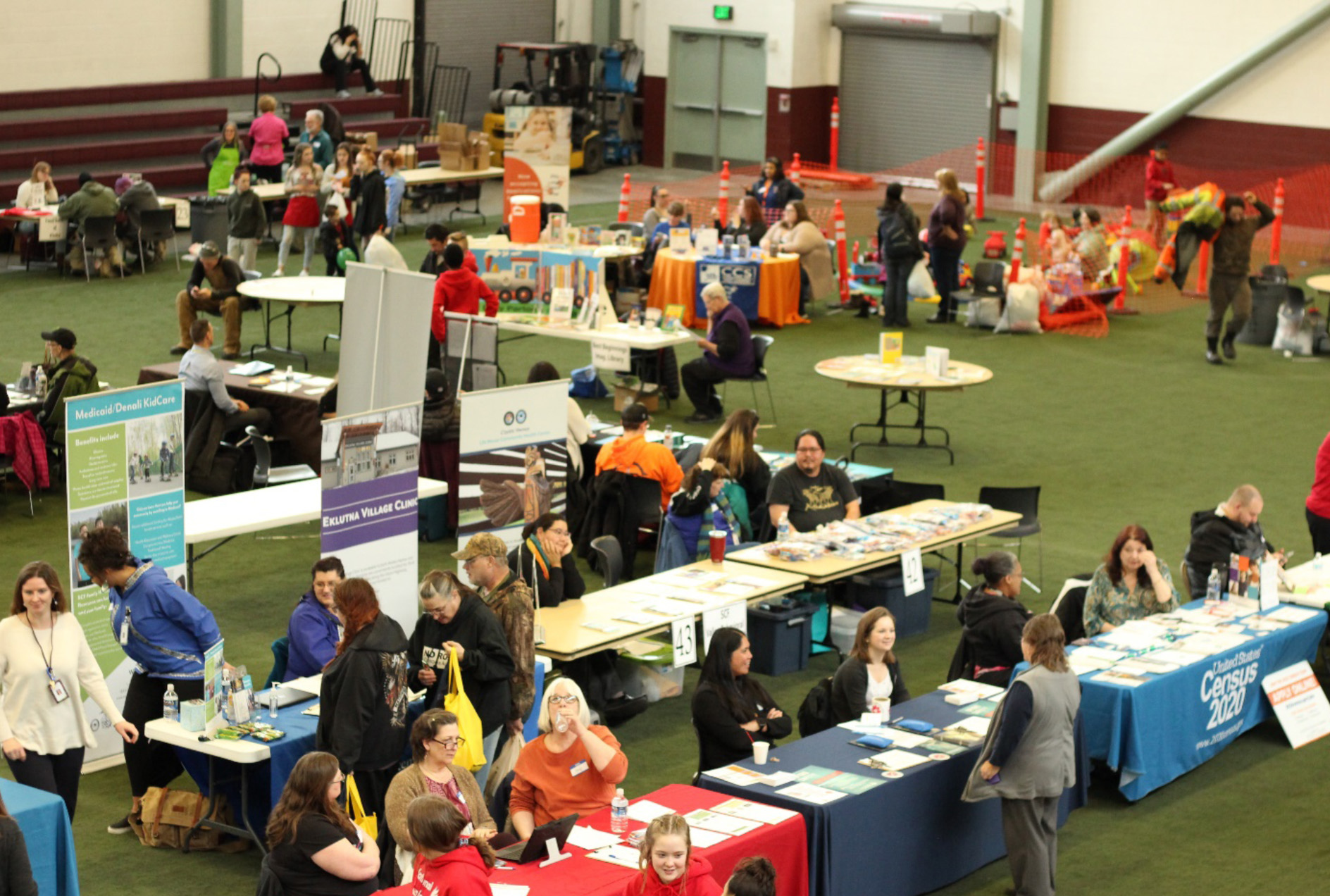
For nearly a decade, Project Homeless Connect has been helping the homeless and those who need assistance to get back on their feet. Dave Rose, one of the organizers for the event said that it has grown from initially 40 vendors to around 65, and from 100 to 120 people came seeking assistance initially to last year having 375 people show up.
“At one point the dream was to end homelessness and I now believe we will never end homelessness. There will always be people that have misfortune and problems and need the community to come around them and help them out,” Rose said, “as you walk around, you’re going to see this community really enjoys helping each other.”
At PHC, vendors are there offering a variety of services. Great Clips gave haircuts, Matanuska Valley Credit Union helped with finances, local charities and many more.
“We’re here to help them out of the ditch when they get into the ditch on occasion so they can get going and be self-sustaining,” Rose said.
From Wasilla Middle School, 22 National Junior Honor Society members offered their assistance to help facilitate the event by ushering people in and making them feel welcome according to their advisor Kathryn Sharp.
“I think the main thing as future leaders of our community is for our students to realize how important it is to help others who are less fortunate; to give back to your community and that’s how we truly build leaders,” Sharp said, “and I think it makes it real but also makes it real personal for they can visit and realize that there aren’t a lot of differences between people.”
Anthony Jones is a senior at Mat-Su Career and Technical High School and a Frontiersman intern for the 2019-2020 school year.

By Jeremiah Bartz Frontiersman.com A football coach using a hockey reference as the centerpiece for his keynote address may

Frontiersman.com With its headquarters in Wasilla, the Frontiersman has been a primary source of news for the Matanuska-Susitna

By Katie Stavick Frontiersman.com The next generation of leaders took flight this week as the Houston High School Class

By Kyle Wilkinson For the Frontiersman Keynote speaker and Carry the Cure President Bill Pagaran’s words boomed through the