Retiring teacher, coach urges Colony grads to ‘find their 68’
By Jeremiah Bartz Frontiersman.com A football coach using a hockey reference as the centerpiece for his keynote address may


MEADOW LAKES — In 1955, Mel and Peggy Behnke lived in San Diego, California. One day Mel came home from his work as a carpenter’s apprentice and told Peggy that work would be slow for the next couple weeks.
“Let’s go to Alaska,” he said. When Mel told his dad they were leaving for Alaska (something his dad always wanted to do) his father responded, “Crazy people have more fun!”
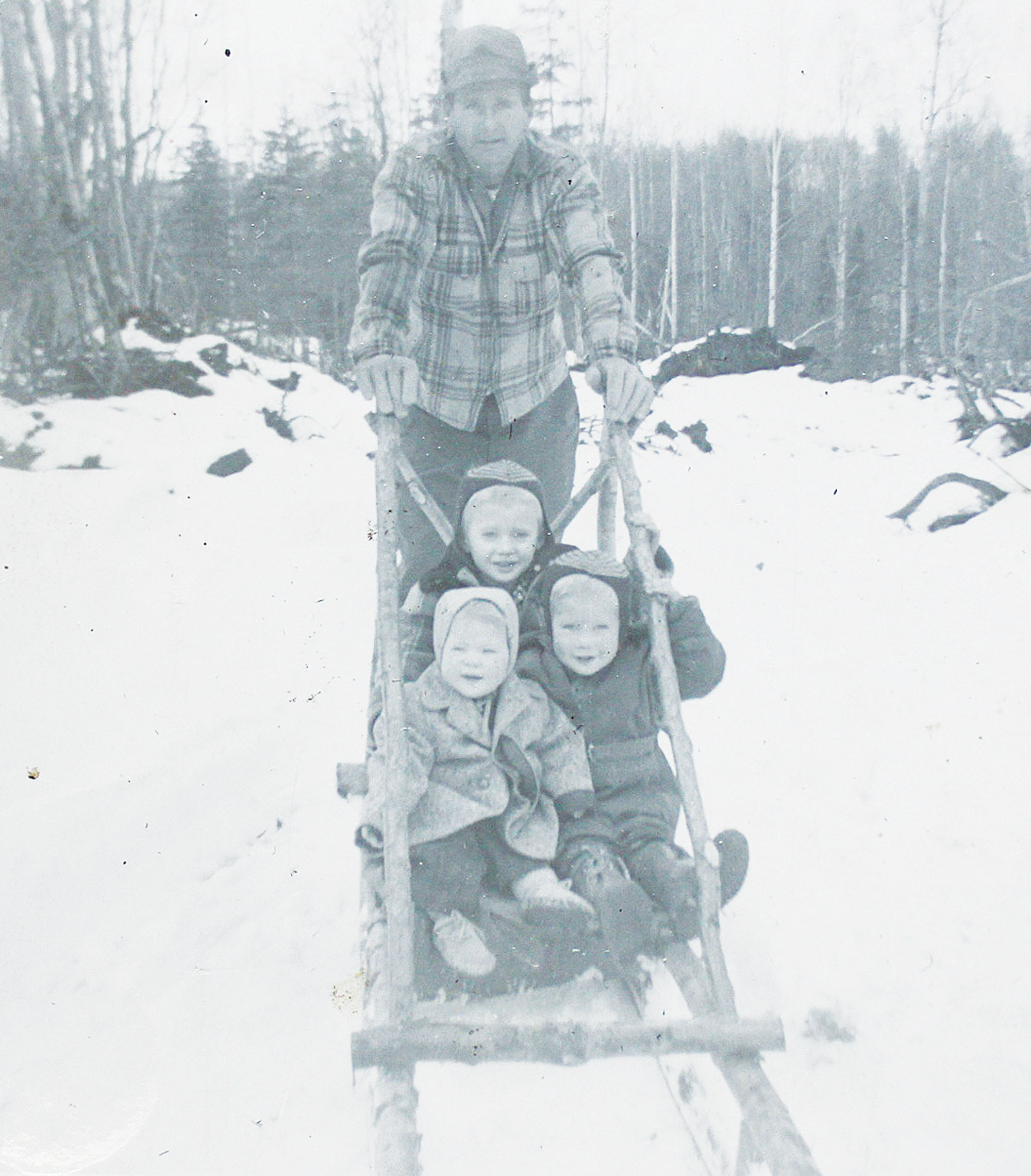
So they packed their Willy’s Jeep and their 18 foot trailer with supplies, loaded up their three young children; Steve, 5, Dan, 4, and Jean, 2, and headed north. Evidence of a greater plan emerged when Mel confessed that they carried all his carpentry tools on the journey. Along the way they met a man traveling the opposite direction who warned them to turn back; they would never make it. Mel claimed the Alcan was horrendous — nothing but dust and rocks. Peggy added, “We never planned a lunch break, we just stopped at the next flat tire.”
They arrived in Fairbanks and visited a local museum that displayed a huge, stuffed, brown bear. Peggy decided they should live somewhere those bears did not. They continued farther south and eventually crested the hill on the outskirts of Palmer. The Behnkes loved what they saw. They continued on to the land office in Anchorage where they collected information on how to stake a homestead and maps of the Wasilla area. They returned to the Valley and drove out to Big Lake, eventually meeting Lynn Wright, who told them about a place near Meadow Lakes. The family drove there, viewed the property, complete with a small creek in back and a lake below. The very next day the Behnkes filed homestead papers.
Peggy called her mom, told her they were going to stay, asked her to clear out their San Diego home, and to send their belongings north. Peggy’s mom seemed resigned to the task and added, “I always knew you would do something goofy like this!”
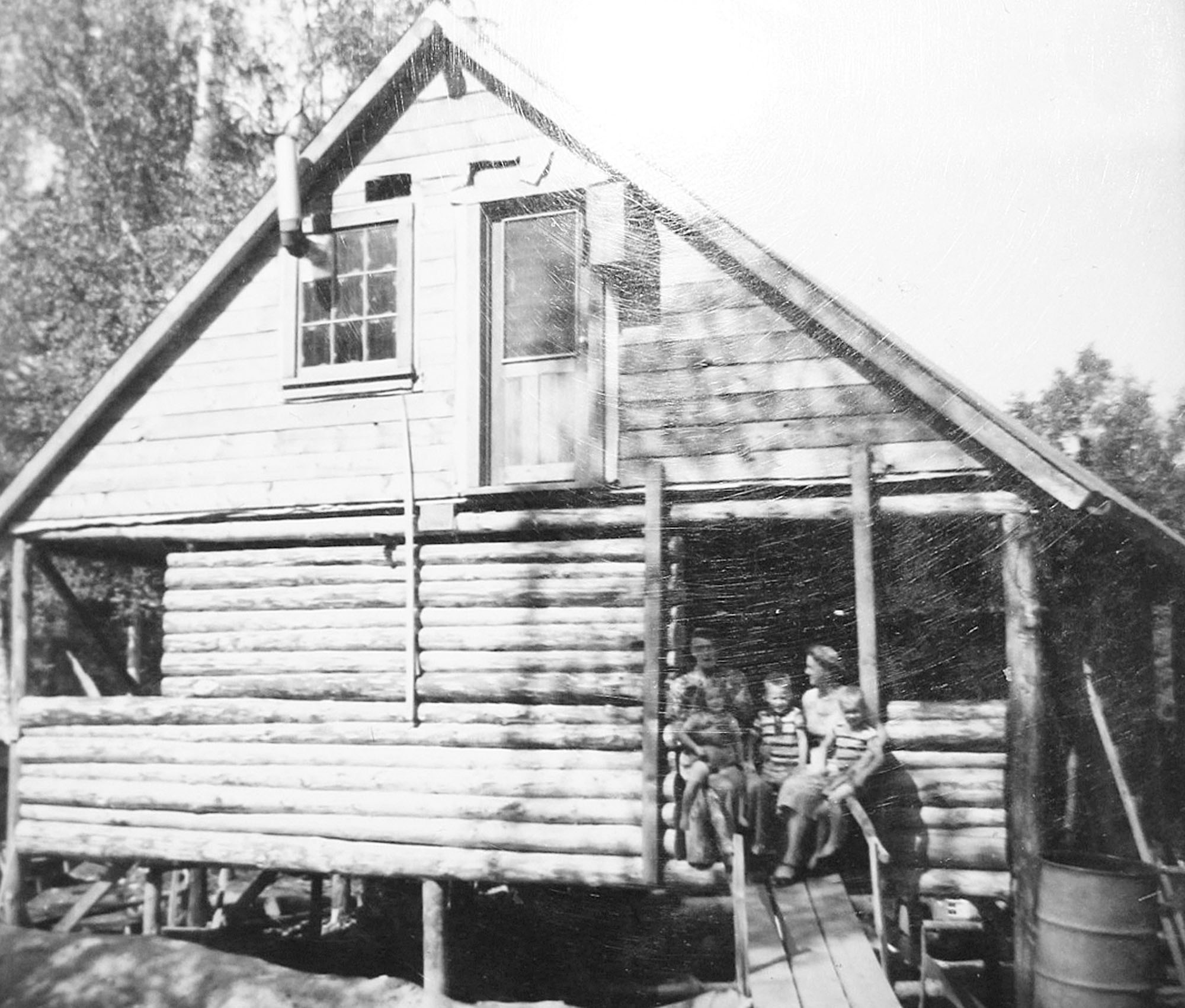
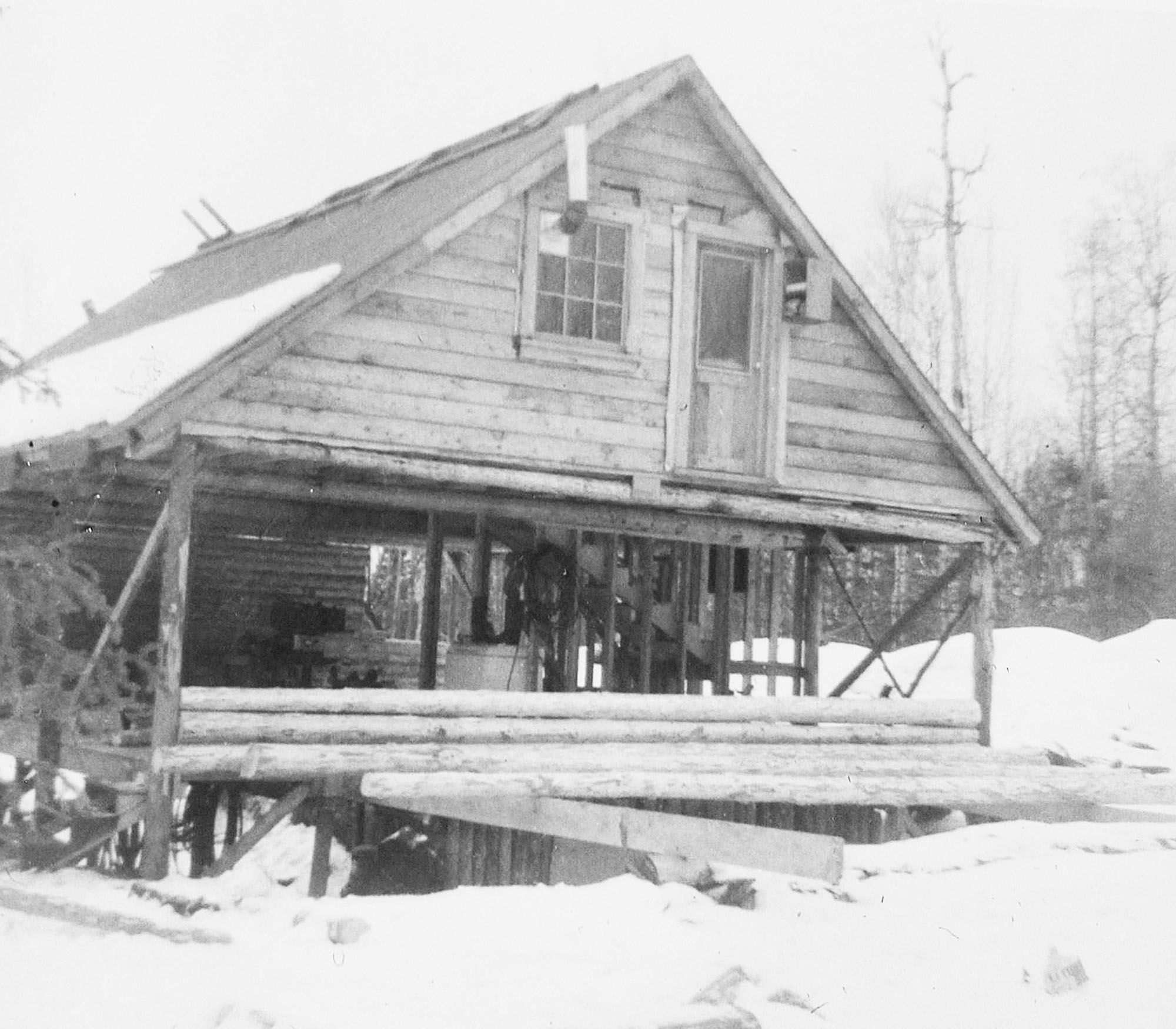
Thus began a Behnke lifetime adventure at their 80-acre homestead. Wright, with his equipment, helped the Behnkes clear 15 acres in exchange for Mel’s help to build Wright a house. With no electricity at the site, Mel used mostly hand tools to build a log home. He employed a two-dog team to help move the logs and told how the dogs would jump up and down, just raring to go, until they gained forward momentum to move the huge logs. Mel used a block and tackle to hoist the logs into place. Eventually Mel acquired a war surplus generator.
In 1958, the Behnkes accessed electricity to the property. Their fourth child, Melissa, was born. The family still lived in only the top portion of their house and continued building.
The site today features a landing strip, hanger, a small former horse barn, and a rambling house that includes multiple levels, garages, shops, utility rooms, an atrium, and a quilting center. The beautiful log interior of the main house reveals Mel’s fine craftsmanship, with logs that run straight and true with only the minutest of cracks that require chinking. When asked how he learned to build a log house, Mel explained that there was a short chapter on log construction in his carpenter’s apprentice manual. “The rest was common sense,” he added.
Eventually, Mel began work with the Department of Corrections. As a carpenter he supervised inmate crews that helped build two wings of the current Palmer Correctional Center. In 1964, after the Alaskan earthquake, Mel traveled to Valdez with crews tasked to dismantle a school destroyed by the quake. He brought back fixtures to use at the Palmer prison. Mel retired after over 20 years.
Mel began flying with the influence of his older brother who was a military pilot. On a return trip to California to visit family, Mel began his flight career and continued his quest in Alaska as a student pilot. He soon obtained his license and purchased a J3 on floats. “There’s nothing difficult about flying at all,” said Mel, “It’s the easiest thing in the world.”
Peggy concentrated on raising her young family. She planted a garden, then harvested and stored food for the winter. The children attended school in Wasilla and Peggy helped them stay on task with their homework. After an incident concerning a mistaken overdue library book, Peggy began volunteering two days a week at the Wasilla library. Eventually she became librarian. She purchased both new and used books on a meager budget. She worked with the architect who planned the current library building. After 10 years, Peggy too, retired. She is a charter member of the North Star Quilters of Big Lake and her quilt room (once the girls’ bedroom) overflows with beautiful quilts and wall hangings in various stages of completion. Peggy was featured at a one-woman show last Saturday at the Transportation Museum, with over 30 of her creative works displayed.
This competent and confident, yet unassuming couple met years ago as young teens, just 6 months apart in age. Peggy’s friend invited her to ice skate and her friend’s boyfriend brought along his younger brother, Mel. Peggy did not know how to skate so she and Mel sat on a bench and watched. They did not talk. “You can underline that,” said Peggy. After weeks they struck up a conversation. Mel taught Peggy to skate. “He’s quite a good skater,” she said, with a smile and a twinkle in her eye.
After high school graduation, with urging from her mom, Peggy attended UC Berkeley. The intention was to separate the two. After all, Mel had no formal prospects. But Peggy was in love and she missed Mel terribly. After just one semester, she quit school and returned to San Diego. In 1948 they married.
Although neither of the Behnkes graduated from college, each of their four children did. When asked if they pushed their offspring into college they both shook their heads. “It was just assumed that they would go,” commented Mel. When asked how their family became such over-achievers, the Behnkes, and son Steve, commented directly they don’t believe they did. But the evidence is in the accomplishments.
Steve attended UAF and then graduate school in Canada. His wife, Larri, and daughter, Megan, now live in Juneau where Steve worked for the Alaska Department of Fish and Game. Megan attends the University of Alaska Southeast and is currently in Russia on a research expedition. Steve commented that his parents were so very competent. He believed there really wasn’t anything they could not do if they wanted to.
Daniel obtained an ocean engineering degree from an east coast college where he met and married his wife Cathy, a speech teacher. After living in Anchorage for awhile they moved back to the east coast. Their daughter Helen is hiking the Appalachians. Younger daughter, Kaitlyn lives at home.
Jean attended school in Fairbanks for a semester but then moved to attend college in Bellingham. She married her roommate’s brother, who is now a judge. They have two children, Jeffry and Lisa. Jeffrey and his family are soon on their way to Abu Dhabi for three years. Lisa works for non-profits in New York.
Youngest daughter, Melissa, also attended college and now lives in Palmer. Married to David Cheezem, together they own and operate Fireside Books. Melissa believes her parents instilled in their family “a love of reading and learning.”
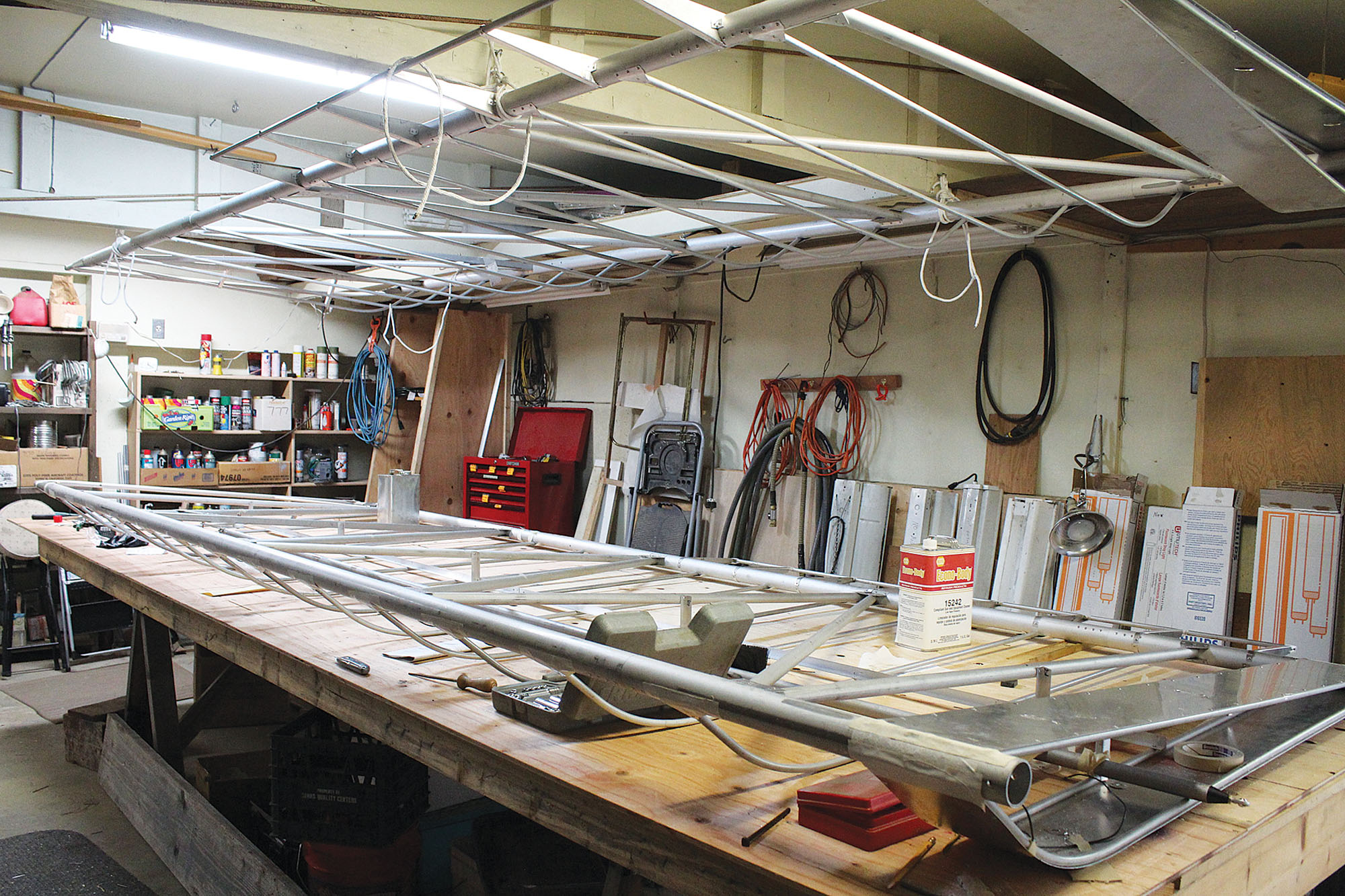
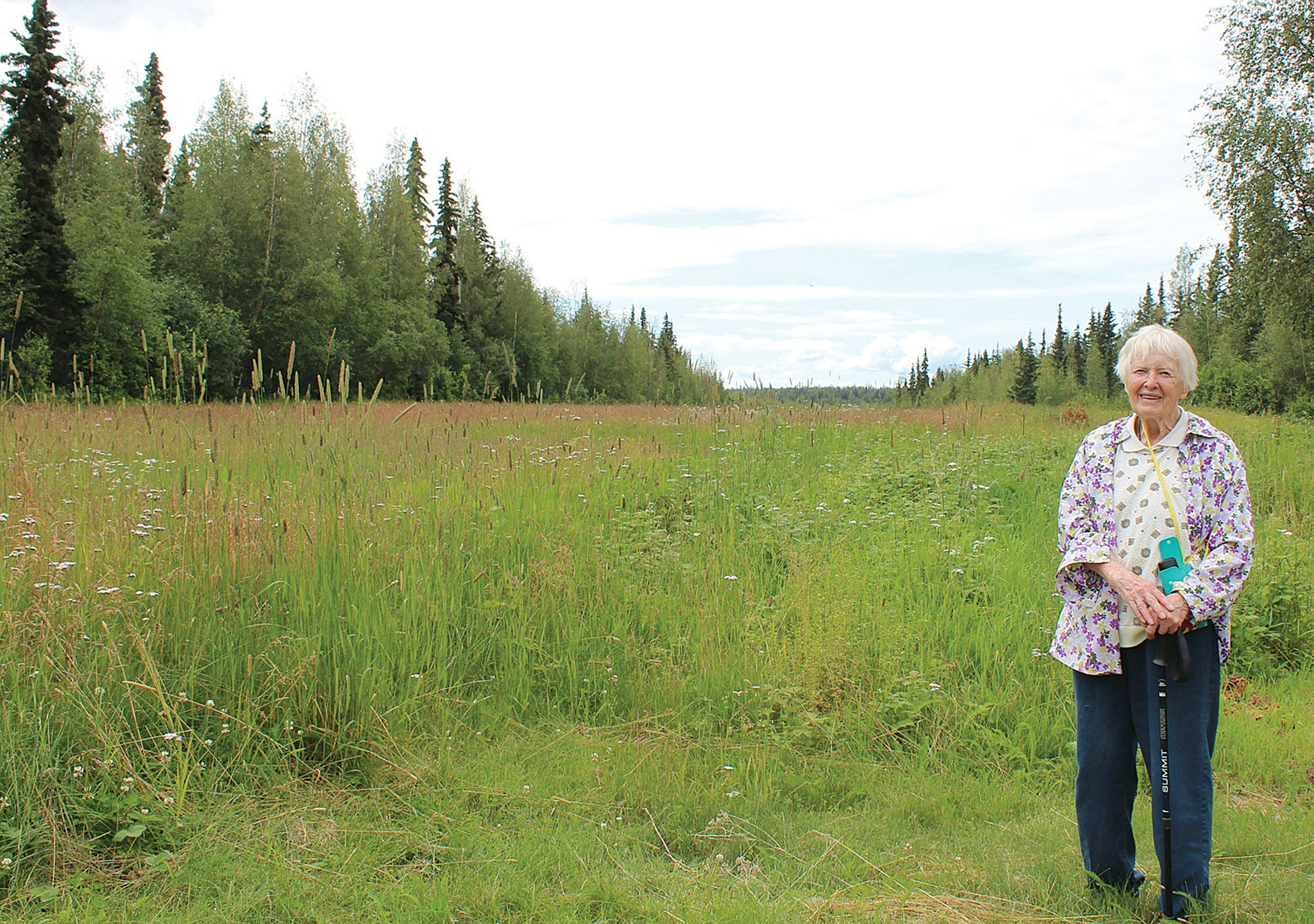
During a tour of the property, Peggy shared her large raspberry patch and rock garden full of showy perennials. The airfield is tall with wild grass and flowers. An atrium boasts colorful geraniums and tomato plants that stretch to the ceiling. In one of Mel’s shops are the makings of a kit plane he is currently building. The body is mostly complete, the wings have taken shape.
As with many folks their age, health issues hamper the Behnkes and prevent them from completing many tasks. Still, they are bright and articulate; loving partners, very modest and matter-of-fact about the adventure they embarked upon years ago and their life accomplishments. Yet here they live today on the same peaceful homestead and in the same sturdy home they built nearly 60 years ago.
Reflecting on the joy of her childhood, youngest daughter Melissa said, “Life was simple, but life was rich. It was an incredibly special place to grow up. We had such a loving home and family.”

By Barbara Hunt Palmer Buzz It was 6:43 on Friday morning and the Plant Owner was sound asleep when

By Kyle Wilkinson Frontiersman Memorial Day Weekend was filled with a variety of events in Willow. From live music to

By Kyle Wilkinson For the Frontiersman The Susitna Valley Emergency Preparedness Fair will be held at the Willow Community Center

By Barbara Hunt Palmer Buzz Green-Up happened at exactly 9:34 am on Saturday morning in Palmer. This was