Retiring teacher, coach urges Colony grads to ‘find their 68’
By Jeremiah Bartz Frontiersman.com A football coach using a hockey reference as the centerpiece for his keynote address may


TALKEETNA — The birch sap is running in the boreal forests of Talkeetna, and so is the crew at Kahiltna Birchworks, racing the warming weather that is slowly creeping into the Susitna Valley.
“We are hoping the temperature stays in the 40s and 50s,” said Birchworks co-owner Dulce East.
Any warmer than that, and the sap season ends.
“When it starts to hit 60 and the trees start to leaf out, it is done,” East said. “The sap is also highly perishable, so when it gets warm yeast begins to grow in the sap and it consumes the sugar.”
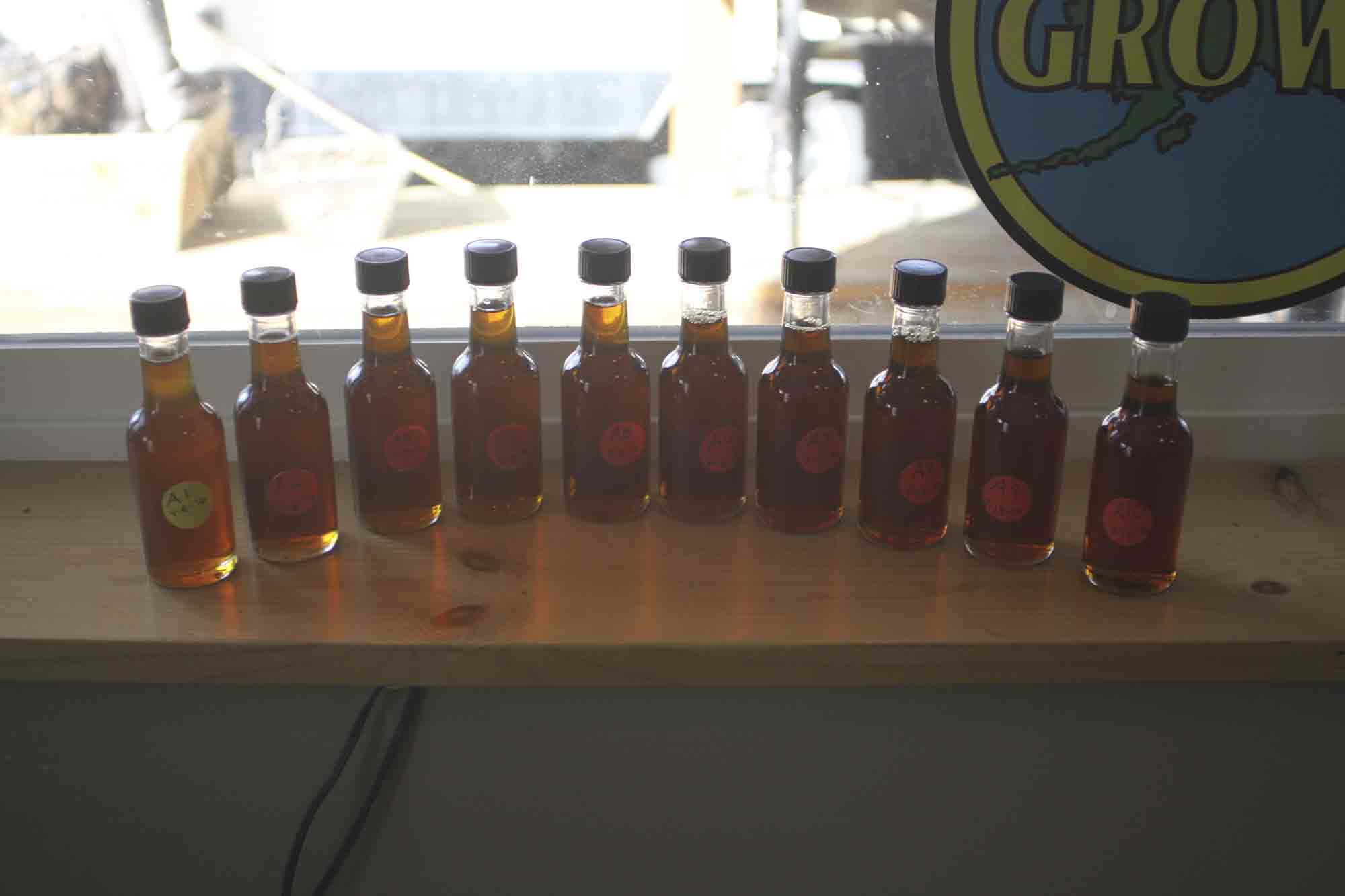
Since April 1, activity has been in high gear at the Birchworks processing facility along the Talkeetna Spur Road or on leased land off the Parks Highway nearby, where some 10,500 birch trees have been tapped for years to harvest the pure, translucent sap. That sap is eventually turned into the company’s well-known “Kahiltna Gold” syrup along with caramels, jellies and other toppings.
A longtime Wasilla company, Alaska Birch Syrup Co., recently moved its syrup production equipment to Talkeetna as well.
A typical birch-tapping season lasts between three to four weeks, a period in which Dulce and her husband Michael’s operation hope to produce upward of 1,500 gallons of syrup. It is a Herculean task — it takes 100 gallons of birch sap to make one gallon of syrup, compared to 40 gallons of maple sap per gallon of syrup.
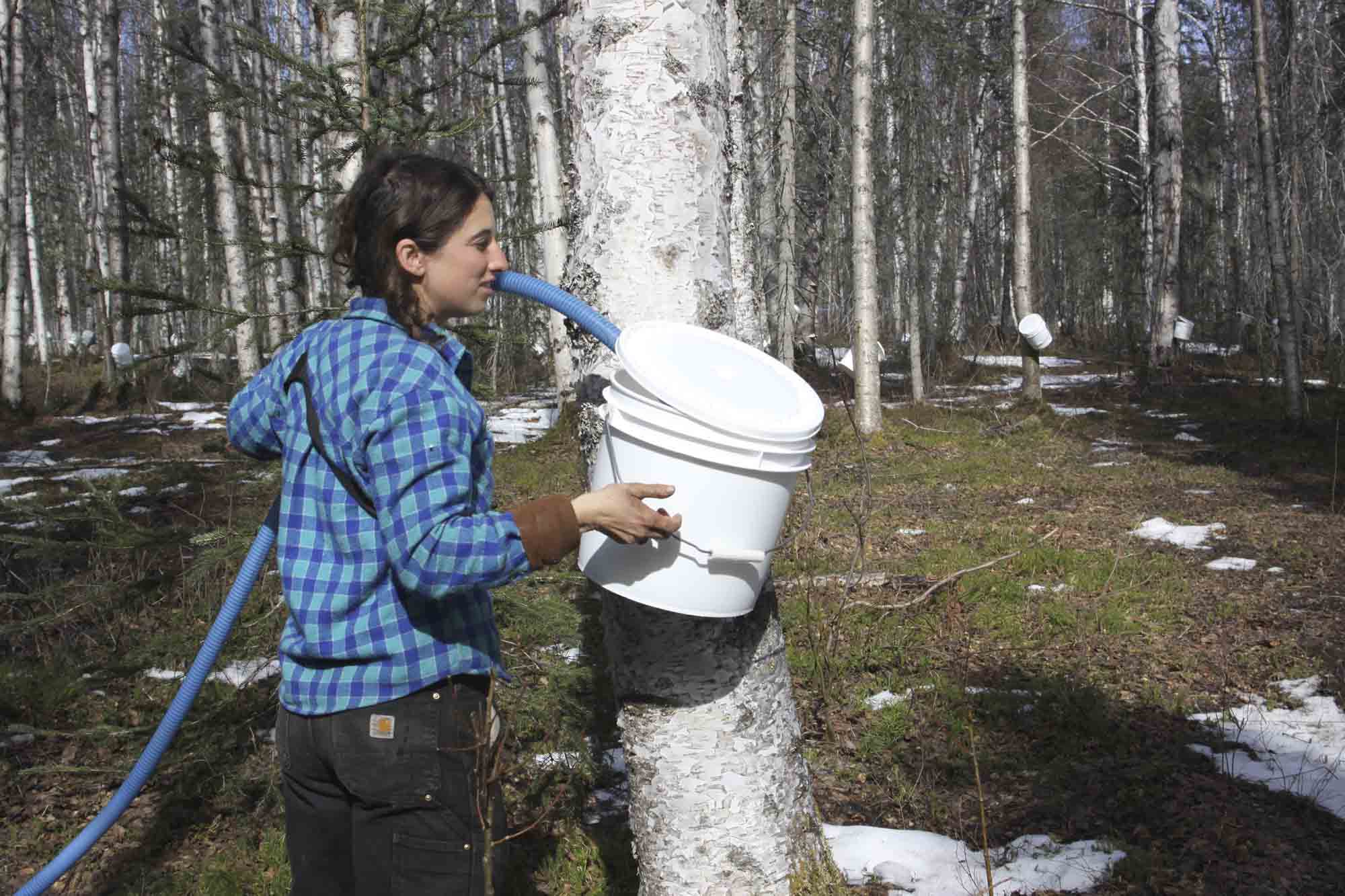
It approaches a round-the-clock operation for the crew of 10, which range from “sapsuckers” in the forest manually emptying the familiar five-gallon buckets to pickup drivers hauling trailer-mounted tanks back and forth from the field.
Along with the leased land, a local resident has tapped another 2,000 trees to bring the harvest total to one of the largest ever, East said.
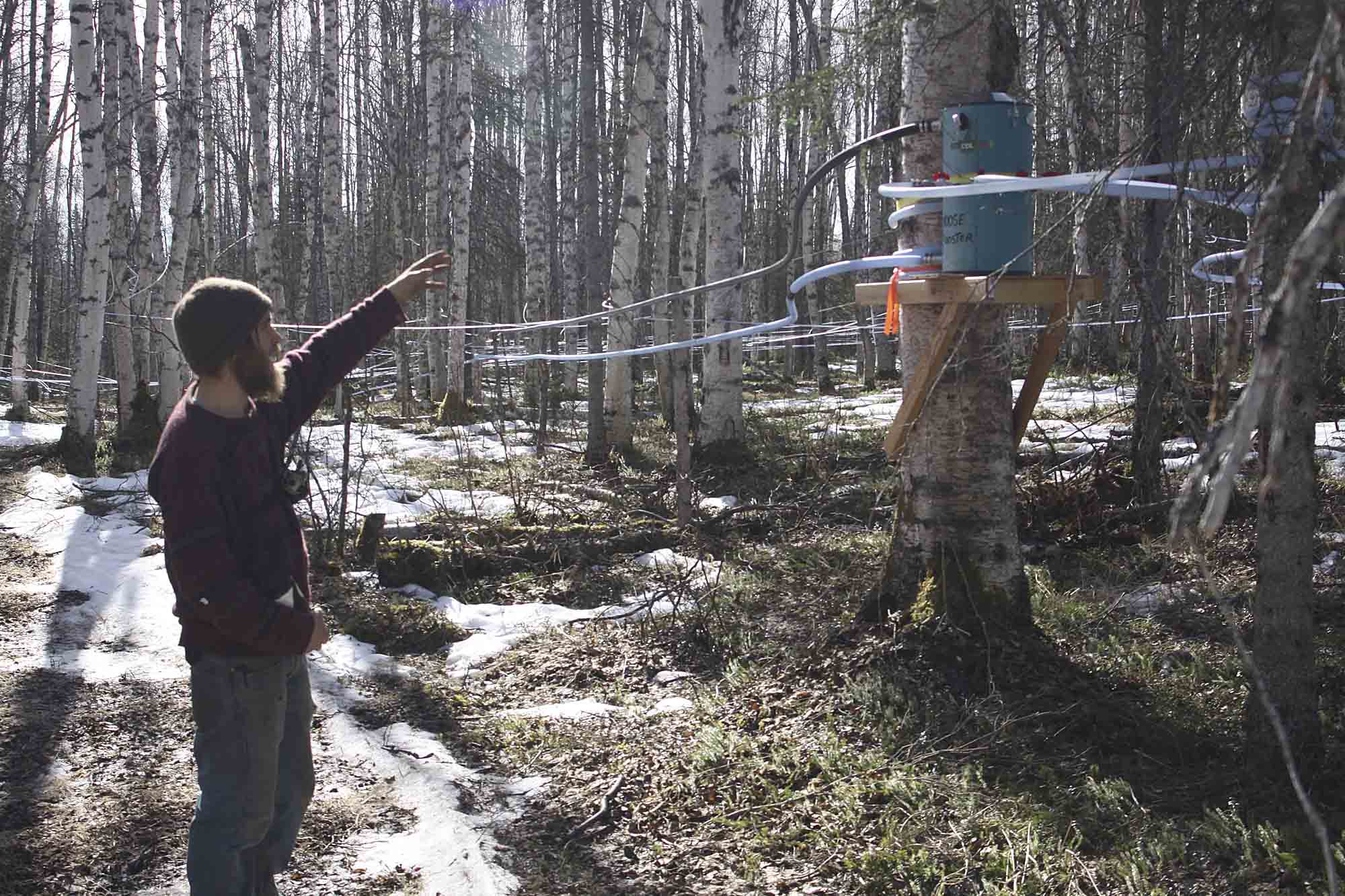
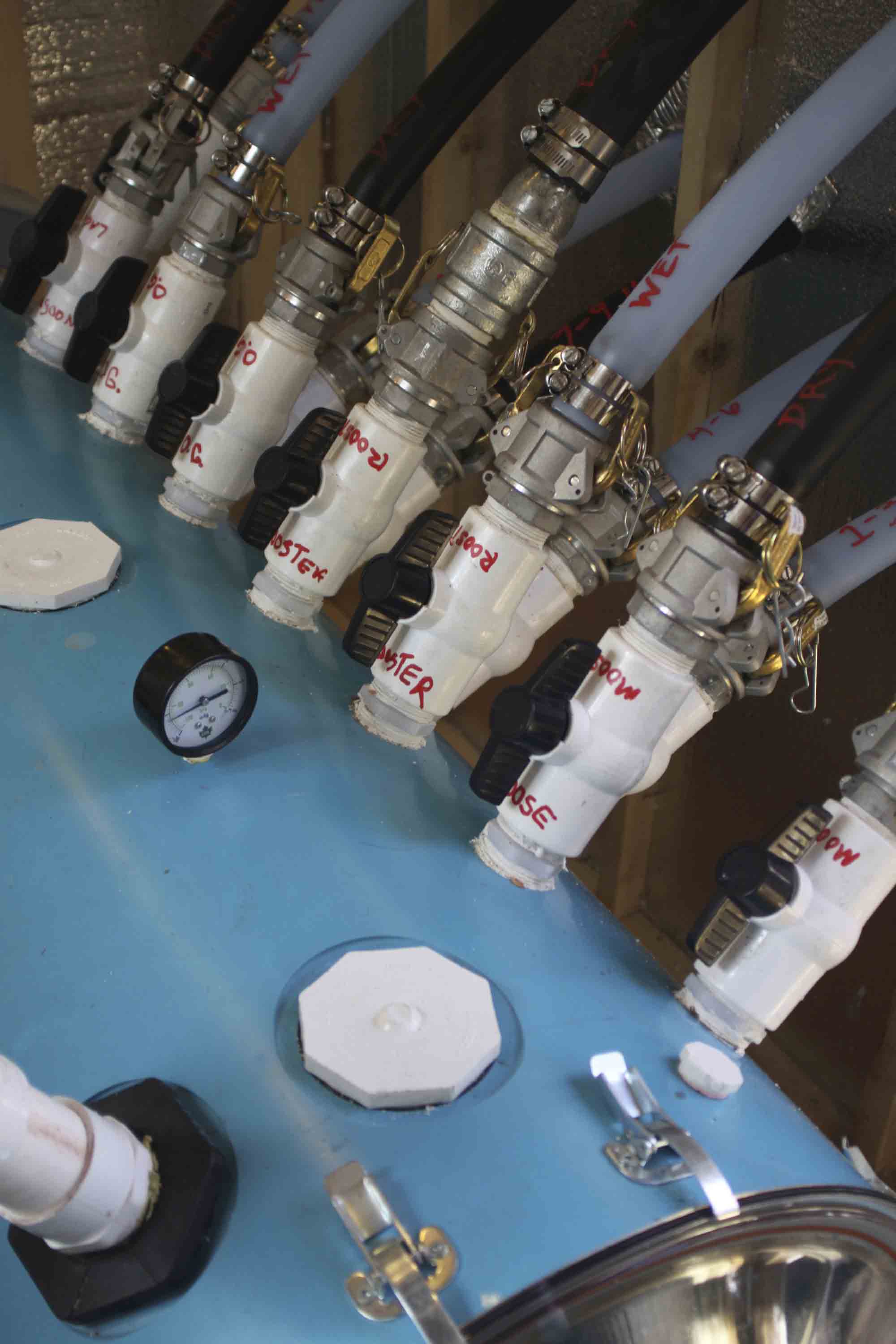
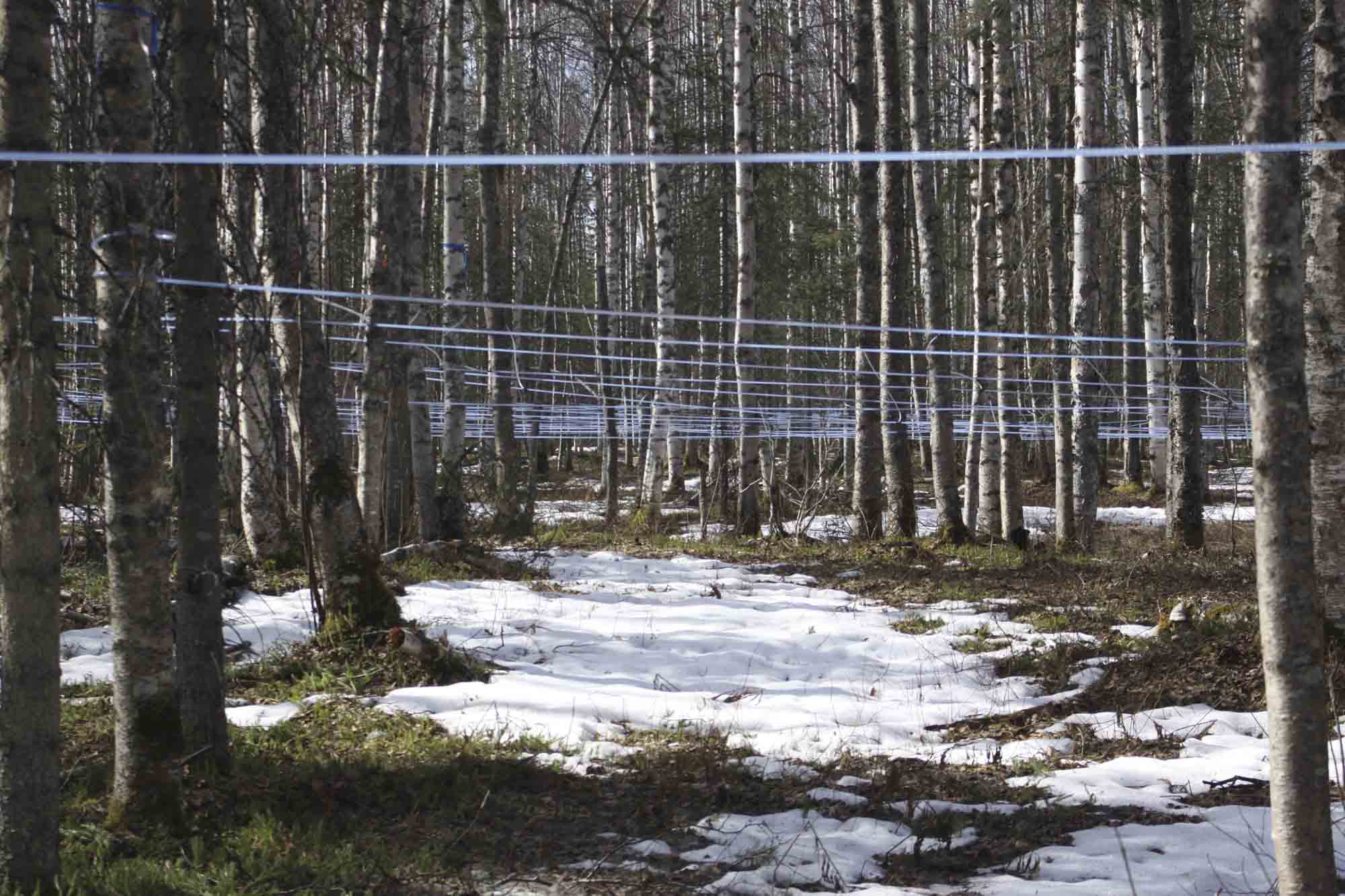
Dulce and Michael have come a long way from boiling birch sap at their Kahiltna River homestead more than 25 years ago. Now, the buckets and taps are used less, replaced by an elaborate vacuum system and miles of tubing and hose that draws the sap into collection tanks.
Once delivered from the field, the sap — usually a little more than 1 percent sugar in its raw form — first goes through a reverse osmosis system, which concentrates the sugars to around 10 percent. The concentrated sap, which requires less cooking than the raw form, is then slowly boiled in a large evaporator, pushing the sugars up to a thick 67 percent.
What emerges from the evaporator is run through a filter press, transferred to buckets and sent to the company’s facility in Palmer, where the familiar eight-ounce bottles are filled and packaged.
Contact reporter Steven Merritt at 352-2269 or steven.merritt@frontiersman.com

By Jeremiah Bartz Frontiersman.com A football coach using a hockey reference as the centerpiece for his keynote address may

Frontiersman.com With its headquarters in Wasilla, the Frontiersman has been a primary source of news for the Matanuska-Susitna

By Katie Stavick Frontiersman.com The next generation of leaders took flight this week as the Houston High School Class

By Kyle Wilkinson For the Frontiersman Keynote speaker and Carry the Cure President Bill Pagaran’s words boomed through the