Retiring teacher, coach urges Colony grads to ‘find their 68’
By Jeremiah Bartz Frontiersman.com A football coach using a hockey reference as the centerpiece for his keynote address may


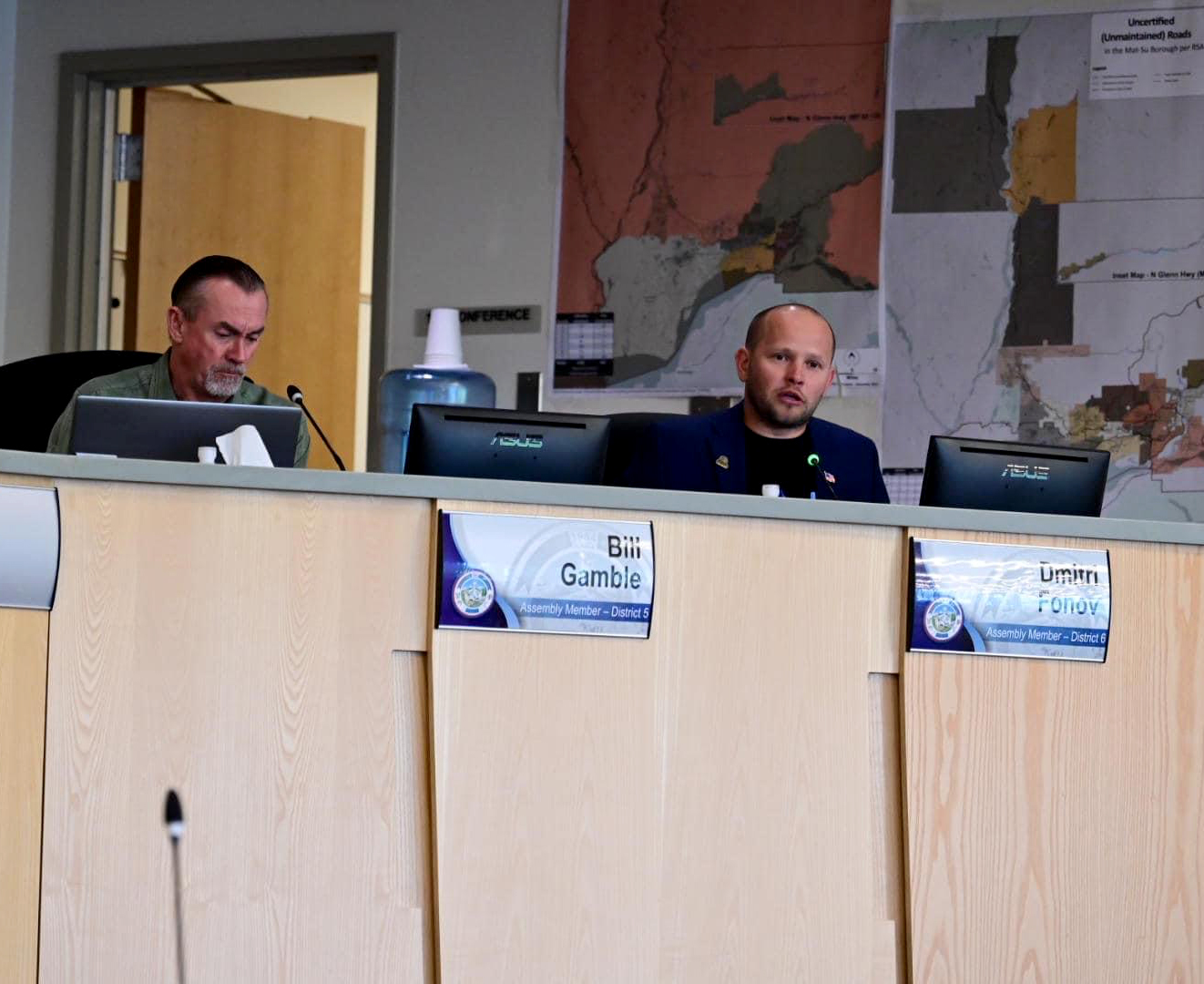
The Matanuska Susitna Borough assembly voted last Tuesday in support of a resolution asking the Mat-Su Health Foundation to allow its members to vote on the foundation’s board instead of having directors appoint its members.
Assembly member Rob Yundt sponsored the resolution. Assembly members Stephanie Nowers and Tim Hale voted against it.
Yundt is a candidate for the state Senate in the upcoming fall elections and is running against incumbent Sen. David Wilson, R-Wasilla. The Mat-Su Health Foundation initiative is being supported by conservative groups in the region.
The resolution is only symbolic in that it has no binding effect. To do what Yundt wants the foundation, a private nonprofit corporation that owns part of Mat-Su Regional Medical Center, must modify its bylaws to change the organization’s internal structure.
The foundation’s annual meeting is set for next Monday, June 10. It is too late for a change of bylaws to be put on the agenda for the meeting. The deadline for any proposed change was April 26, said Angela Cox, the foundation’s external affairs director.
This means any proposal for a change must wait another year unless a special membership meeting is called within the year, Cox said.
Private nonprofit corporations like the Mat-Su Health Foundation can have members elect directors or have other directors do it. Most nonprofits in Alaska have other directors do it, using different ways of recruiting and vetting candidates for boards.
The Mat-Su Health Foundation had members elect its board in the late 1980s and early 1990s its CEO, Elizabeth Ripley, told the borough assembly in the public hearing on Yundt’s resolution.
The process became political, however, with factions among the membership electing directors with an agenda that was different than the core principles of the foundation that have existed since its founding in 1948.
“The membership’s political agenda hurt our hospital and weakened its governance,” Ripley told the assembly.
“Our hospital was about saving lives and healing the sick. It (the hospital) had no political agenda, but the member-elected board did. Our hospital was a complex set of services serving the (state’s) fasted growing borough in a highly-regulated industry. The (foundation’s) administrative team was constantly redirecting board members to focus on the real mission and operations,” Ripley said.
She warned the assembly about the borough, which has not assumed health powers, appearing to influence a private organization, “to bend to its political interests,” Ripley said. “The resolution was authored by someone (Yundt) who has never been a member of the Mat-Su Health Foundation,” she said.
The bottom line is that the health foundation and Mat-Su Regional Hospital have improved things for the region. “According to the Robert Wood Johnson Foundation County Health Rankings, over the last 15 years the Mat-Su population continues to become healthier, which is our goal. That’s our ‘true north,’ a measurably healthier Mat-Su population,” Ripley said.
However, Yundt has a perspective he thinks is worth considering, and his resolution spells it out. Mat-Su Regional Hospital’s prices are the highest in the state and are a real burden for residents of Mat-Su who use the hospital, he said in the resolution. “Other hospitals in Anchorage offer the same services for lower costs,” Yundt’s resolution said.
Yundt thinks the health foundation should use its influence as a part-owner of the hospital to seek lower prices, even at the expense of some of hospital profits that are shared.
The health foundation does support a wide variety of regional health initiatives and the resolution acknowledges that it has made over $100 million in contributions in the region since 2008. However, the foundation has received over $330 million over roughly the same period, Yundt’s resolution said. Just in the last seven years the foundation’s share of hospital profits have been $226 million, the resolution said.
“An overwhelming majority of people would prefer to pay less (for medical care) in the first instance rather than have some portion of their hospital billings to be siphoned off through a foundation where the Board of Directors controls itself,” and decides where money will be spent,” Yundt’s resolution said.
Mat-Su’s health foundation has a long history, beginning in 1948 as Valley Hospital Association to build and operate Valley Hospital in Palmer. In 2003 the foundation formed a partnership with a private equity partner, Triad Hospitals, to raise capital for Mat-Su Regional Medical Center, which opened in 2006. In 2007 Triad was purchased by Community Health Systems.
In 2015 the Mat-Su Health Foundation increased its profit share from the hospital from 25 percent to 35 percent, excercising an option that had been agreed earlier.

By Jeremiah Bartz Frontiersman.com A football coach using a hockey reference as the centerpiece for his keynote address may

Frontiersman.com With its headquarters in Wasilla, the Frontiersman has been a primary source of news for the Matanuska-Susitna

By Katie Stavick Frontiersman.com The next generation of leaders took flight this week as the Houston High School Class

By Kyle Wilkinson For the Frontiersman Keynote speaker and Carry the Cure President Bill Pagaran’s words boomed through the