Retiring teacher, coach urges Colony grads to ‘find their 68’
By Jeremiah Bartz Frontiersman.com A football coach using a hockey reference as the centerpiece for his keynote address may


A call comes in to 911-a house is on fire. There are family members outside, including a distraught mother whose baby is still inside. The Mat-Su Borough is sending out first responders directly.
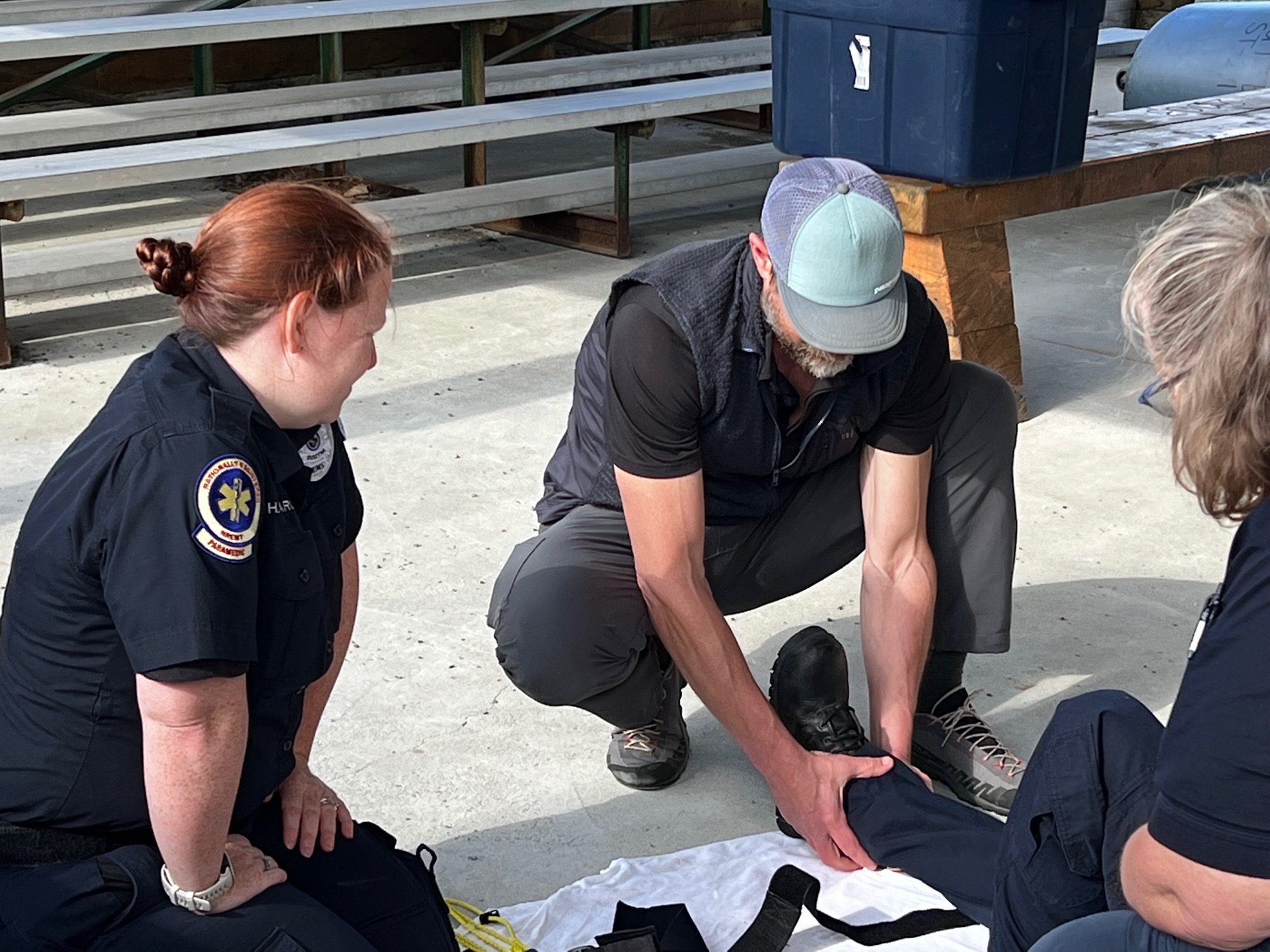
That was the scenario used recently during a multi-agency training session with Mat-Su Borough Emergency Medical Services (EMS), Butte Fire Department, Medic-1, Mat-Su Regional Medical Center, and LifeMed Alaska.
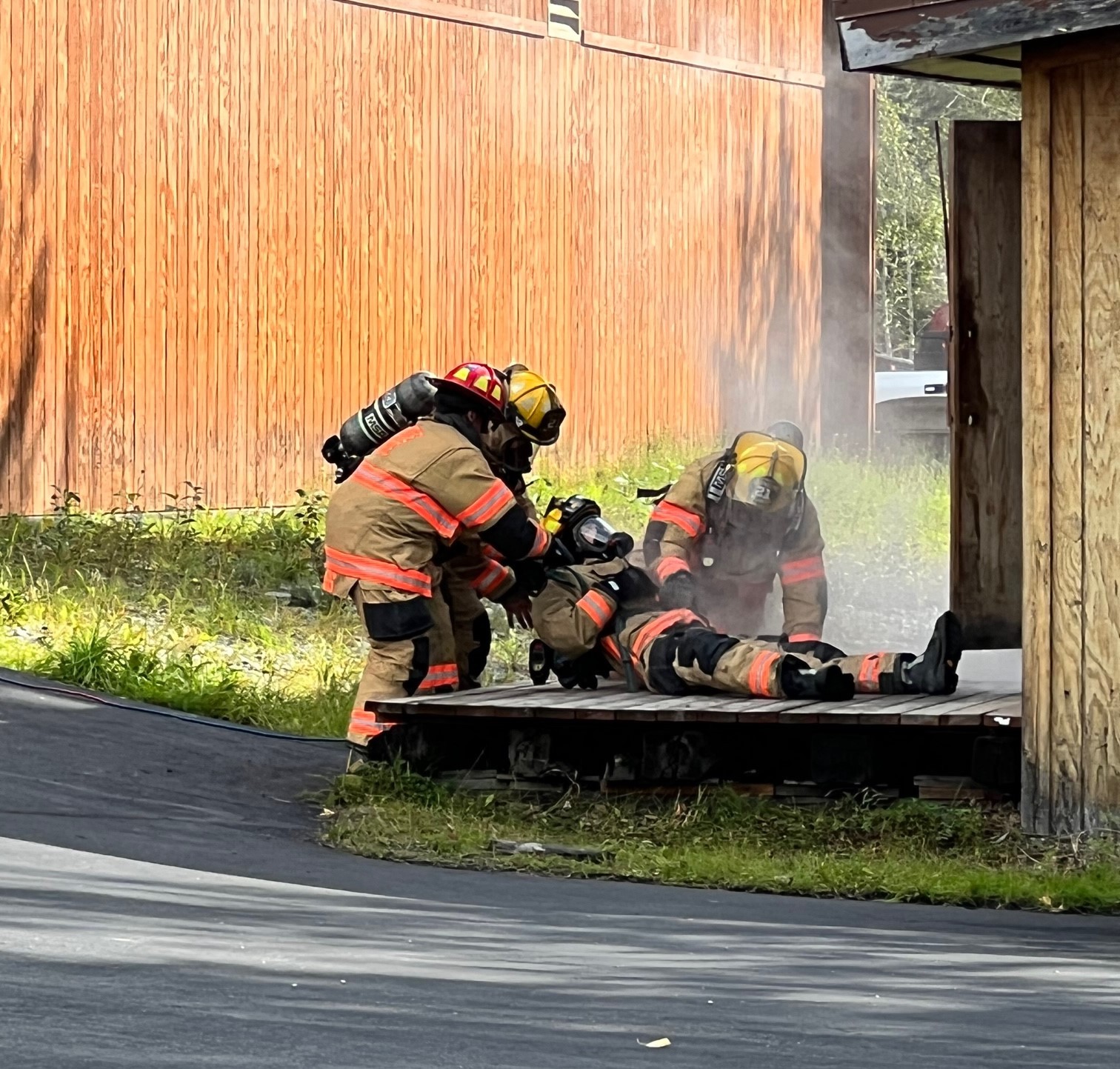
Using a smokehouse fire simulator to simulate a structure fire with five volunteer patients and a high-fidelity mannequin, as well as an infant mannequin, fire crews responded, donning their bunker gear and oxygen tanks to enter the structure. In the middle of extricating an adult, a firefighter also went down as part of the drill.
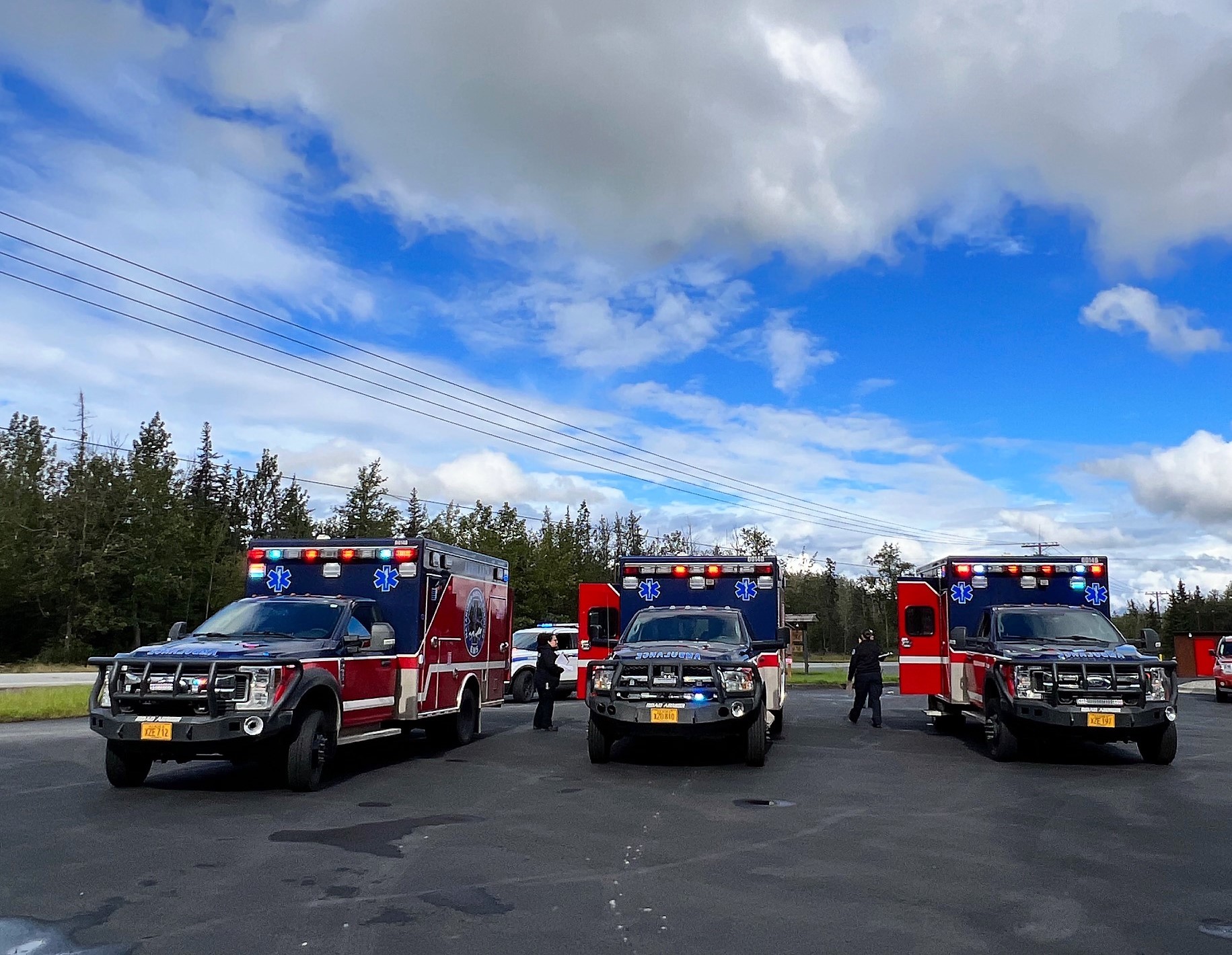
Ambulance crews also responded to triage the patients and attempt to contain the distraught mother who kept returning to the home, acting every bit the panicked and worried mother whose baby was still inside the structure.
“This is a simulation, so it will be faster than a normal response, so it will be more of a timed entry, not as instantaneous than a real entry,” explained EMS Quality Assurance Manager Jennifer Hales.
The exercises were not meant to have responders perform or applying real life-saving measures, nor actually transport patients, but more as practice making the decisions and where improvements on care can be made, strengthening relationships between all the different agencies.
The primary focus of the training this day was triage. Triage is the practice of sorting and assessing patients according to urgency of care relative to the treatment required. In the field, or out on a call, EMTs must triage once on scene, and continuously reassess as situations evolve and patient needs change.
“The crews have been assigned different ambulances based on their experiences, and this gives the different levels of experience an opportunity to do the triage assessment and giving the newer EMTs an opportunity to practice those skills and getting feedback without direct oversight from their battalion chief or captain,” Hales said.
During the training, there were opportunities for individual feedback on how responders interact with patients and the application of SALT-Sort, Assess, Life-Saving Interventions, and Treatment/Transport, an acronym all EMTs are familiar with.
“This scenario has enough patients in a remote setting to tax us for a bit, and responders need to make those triage assessments and give a verbal plan of care,” said Hales.
In an area roughly the size of West Virginia, it doesn’t take much to stretch the resources of fire, EMS, and other first responders.
Past training exercises like this included scenarios such as an ATV accident at Jim Creek and motor vehicle accidents along the highways. The scenarios are based on real-life situations that have occurred or are likely to take place.
“Training is necessary,” says Michael Thompson, EMS Operations Chief. “When we train, and keep the training the same for everyone, it doesn’t matter who they’re working with, when they arrive on scene, there’s no question because they’ve been trained the exact same, so they just do. Everyone speaks the same language; every ambulance stows its gear in the same exact place to reduce brain friction you’re going have under stress.”
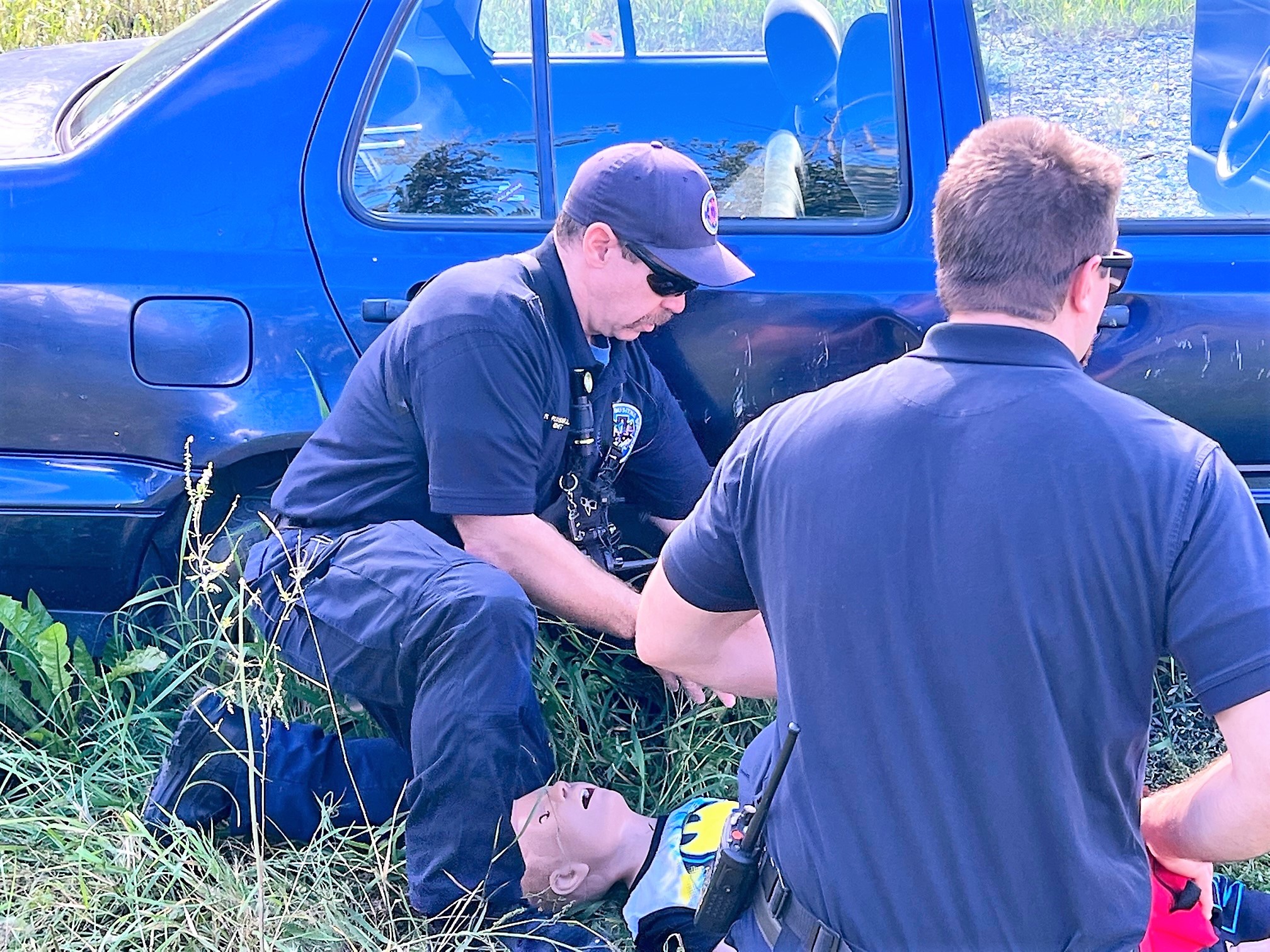
EMS participants also ran through a scenario involving a car crash on the Parks Highway with multiple victims. EMTs had to do a rapid-fire assessment of the victims and then triage, or sort patients depending upon the severity of the injuries and decide which needed the most urgent transport. Ginny Jackson, EMS Operations Deputy Chief, oversaw this part of the training.
Jackson kept the scenario changing, forcing the EMTs to switch up their thinking to fit the different real-life scenarios that may arise at any time, such as having to wait hours for another ambulance if the accident was out near Denali, or tapping into other resources, like LifeMed or departments outside of the normal range of operations.
The rapid fire questions also reflect how quickly a situation may change given the size and scope of the Borough and the resources available.
“Think outside the box. Consider reaching out to units to pull drivers from other areas, use Medic-1, even think about where to situate patients within your own ambulance to maximize resources without delaying care to the others,” she told one pair of EMTs, reinforcing the need to plan ahead while en route to calls.
In this particular scenario, Jackson set the accident out at MP 172 of the Parks Highway as a way to stretch resources
“It’s different if it’s at mile 2 of KGB with five patients than if it’s 172 of the Parks, and maybe people are coming. It’s easy to get complacent and not think about what resources are out there,” she said.
She wanted the EMTs to also be reassured with the training, and that this will strengthen their skills in assessments.
“If you function within your scope of training with your patients’ best interests in mind, you will seldom be wrong,” Jackson said.
Meanwhile, LifeMed Alaska had a crew with a helicopter on-site to discuss optimal settings for landing a helo in some of the different terrain they have encountered in the past, explaining that it would be optimal to have a landing zone of 100-by-100 feet, and the 70-by-70 is about the smallest their helos can handle. along with showing what capabilities they have onboard.
The crew also reassured EMTs that while it may seem chaotic when they arrive on scene, it is intentional as the crew covers all sides of patient care, from how they approach a scene to communicating what needs to be done to treat the patient en route to a hospital, because they all maintain the same duties and capabilities of one another to ensure a cohesive response during a call.
When asked what she would like the public to know about conducting this type of training, EMS Deputy Director Tracey Loskar said, “This department is young, having gone full time in 2016. In a rural service, with low volume and low resources, the only way these guys get good at it is with practice, quality practice.”
The outlying units, away from Central Mat-Su can go days without a call, but then that one call could be something unusual, the likes of which might never be seen again, so while units may not be able to anticipate everything, one thing they can do is build up their layers of quality training.
“If one of us gets to you, even in Deshka Landing, it’s going to be the same quality training as anywhere else in the Borough. The only cure to rural medicine, or the tyranny of distance, is to build resilience, and that is through proper preparation,” says Loskar.

By Jeremiah Bartz Frontiersman.com A football coach using a hockey reference as the centerpiece for his keynote address may

Frontiersman.com With its headquarters in Wasilla, the Frontiersman has been a primary source of news for the Matanuska-Susitna

By Katie Stavick Frontiersman.com The next generation of leaders took flight this week as the Houston High School Class

By Kyle Wilkinson For the Frontiersman Keynote speaker and Carry the Cure President Bill Pagaran’s words boomed through the