Retiring teacher, coach urges Colony grads to ‘find their 68’
By Jeremiah Bartz Frontiersman.com A football coach using a hockey reference as the centerpiece for his keynote address may


ANCHORAGE, Alaska (AP) — An endangered fin whale that washed up near a coastal trail in Alaska's largest city has attracted curious onlookers while biologists seek answers as to what caused the animal's death.
The carcass found over the weekend near Anchorage was 47 feet (14.3 meters) long — comparable to the width of a college basketball court — and female, according to National Oceanic and Atmospheric Administration biologists.
Barbara Mahoney, a NOAA biologist examining the whale, told the Anchorage Daily News the whale was likely 1 to 3 years old.
Fin whales are the second-largest whale species, according to NOAA Fisheries, and fully grown can reach up to 85 feet (25.9 meters) long and weigh between 40 tons and 80 tons. Strikes by ships, entanglements in fishing gear, underwater noise and the effects of climate change are among the threats that fin whales face, according to the agency.
Mandy Keogh, a NOAA marine mammal stranding coordinator, said fin whales generally aren't seen this close to Anchorage and that recent high tides may have pushed the animal further into the Knik Arm.
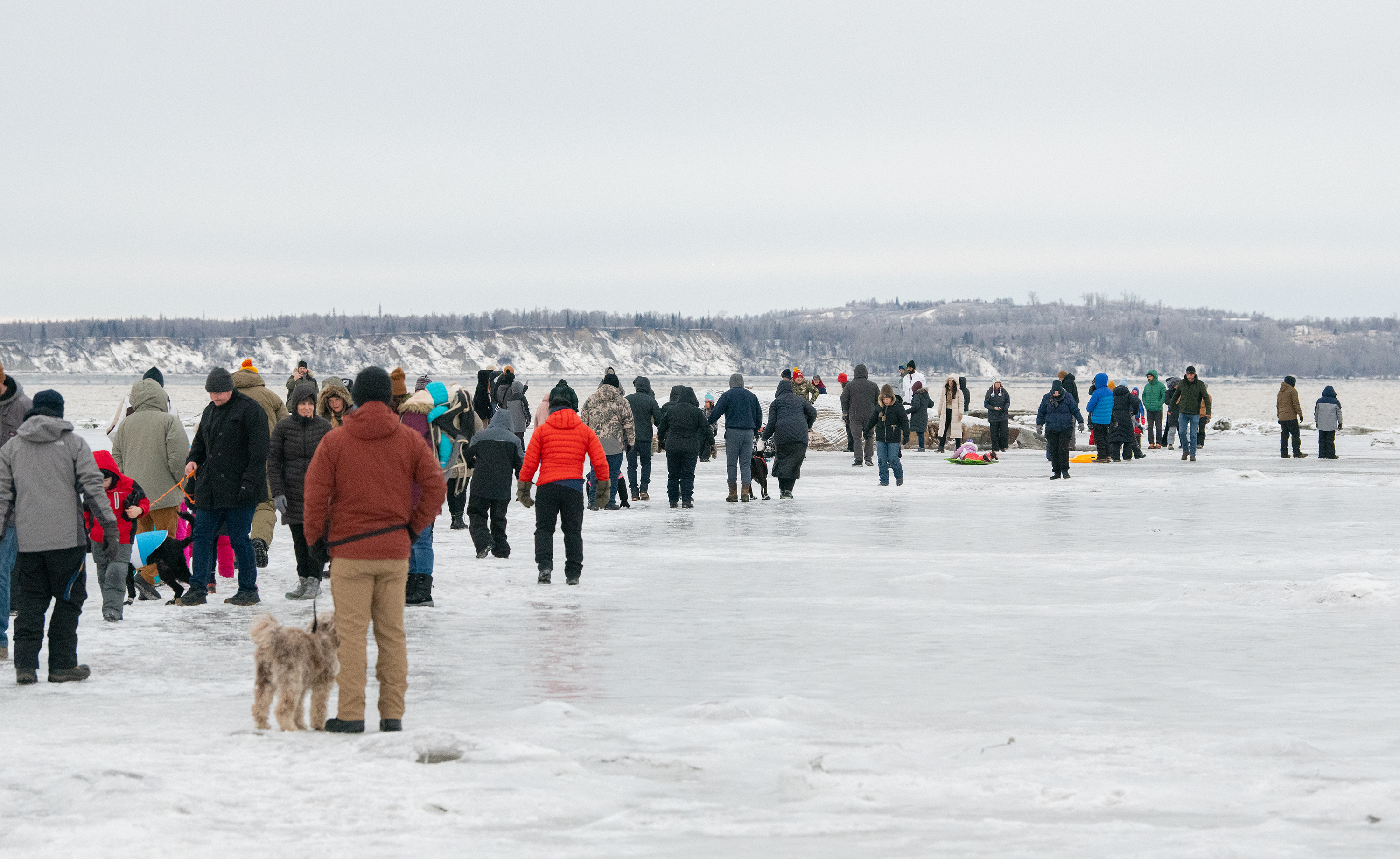
People trekked across the mudflats to see the whale, which NOAA biologists and staff from Alaska Veterinary Pathology Services had anchored to the shore Sunday so they would be able to gather samples from the animal. But even after samples are analyzed, it can be difficult to determine a cause of death because of decomposition or a lack of obvious injuries, Keogh said.
Daisy Grandlinard was among the parents who accompanied a group of children to see the whale Monday. As they drew closer, they could smell it, she said.
“It was really interesting for the kids to be able to feel it, touch the bottom because it kind of had tracks on it, like a sled almost. And just to see the size of it, that was pretty cool,” she said. “We had already studied whales a couple of weeks ago, so it was fun to see one in person and say, ‘Oh, that’s what the baleen looks like in real life,’ and ‘Where is the blow hole?’ ”
Biologists hoped to complete their work Tuesday, untether the carcass and "let the tide push it or move it,” Mahoney said. “Whatever it does or doesn’t do — we don’t know.”

By Jeremiah Bartz Frontiersman.com A football coach using a hockey reference as the centerpiece for his keynote address may

Frontiersman.com With its headquarters in Wasilla, the Frontiersman has been a primary source of news for the Matanuska-Susitna

By Katie Stavick Frontiersman.com The next generation of leaders took flight this week as the Houston High School Class

By Kyle Wilkinson For the Frontiersman Keynote speaker and Carry the Cure President Bill Pagaran’s words boomed through the